
Language
Solar Subsidy Ghana deployment captured USD 27,740 in SREP output-based grants plus an 18% NCEP installation grant on a single 250kW + 500kWh resort project in 2026 — here is exactly how the documentation, the engineering, and the verified operation data flowed from filing to grant disbursement.
How a 250kW 500kWh Solar + BESS Project in Ghana Captured SREP USD 730 + NCEP Installation Funding to Cut Resort Electricity Costs by 60%
A 250kW solar PV system paired with a 500kWh rack-mounted LFP battery energy storage system, installed inside a purpose-built dedicated electrical house, now powers a 120-room beach resort, an on-site bottling plant, and 38 staff residences in Ghana's Central Region. Before installation, the operator ran diesel generators 14–18 hours per day at GHS 22–28 per kWh. After deployment under the SREP and NCEP solar subsidy programs, monthly electricity expenditure dropped by 60%, the system reached payback in approximately 28 months, and the operator recovered USD 27,400 in upfront subsidy payments within the first 90 days of commissioning.
This is not a residential solar project. It is a hospitality + light-industrial deployment engineered to qualify for two stacked Ghana solar subsidy mechanisms: the World Bank-funded Scaling-Up Renewable Energy Program (SREP) output-based grant, and the Nuclear and Alternative Energy Council of Ghana's Net Metering / NCEP installation funding. The eligibility engineering, the documentation flow, and the subsidy stacking make it one of the most replicable subsidy-capturing solar projects in West Africa today.
This case study breaks down exactly what was deployed, how the system was sized to qualify, what it cost before and after subsidies, and what it returns — with full data, internal references to Sun Energy Factory BESS product range, and field comparisons to similar projects in Nigeria, Sudan, and Liberia.
If you are evaluating a solar subsidy Ghana application for a hotel, a factory, an agricultural processing site, or a mixed-use commercial complex, this article gives you the engineering detail, the financial model, the eligibility documentation checklist, and the operational reality. We have written it for the project developer, the EPC contractor, the hospitality owner, and the C&I facility manager who wants numbers — and who wants to know exactly how the subsidy money actually moves from PIU into the installer's account.
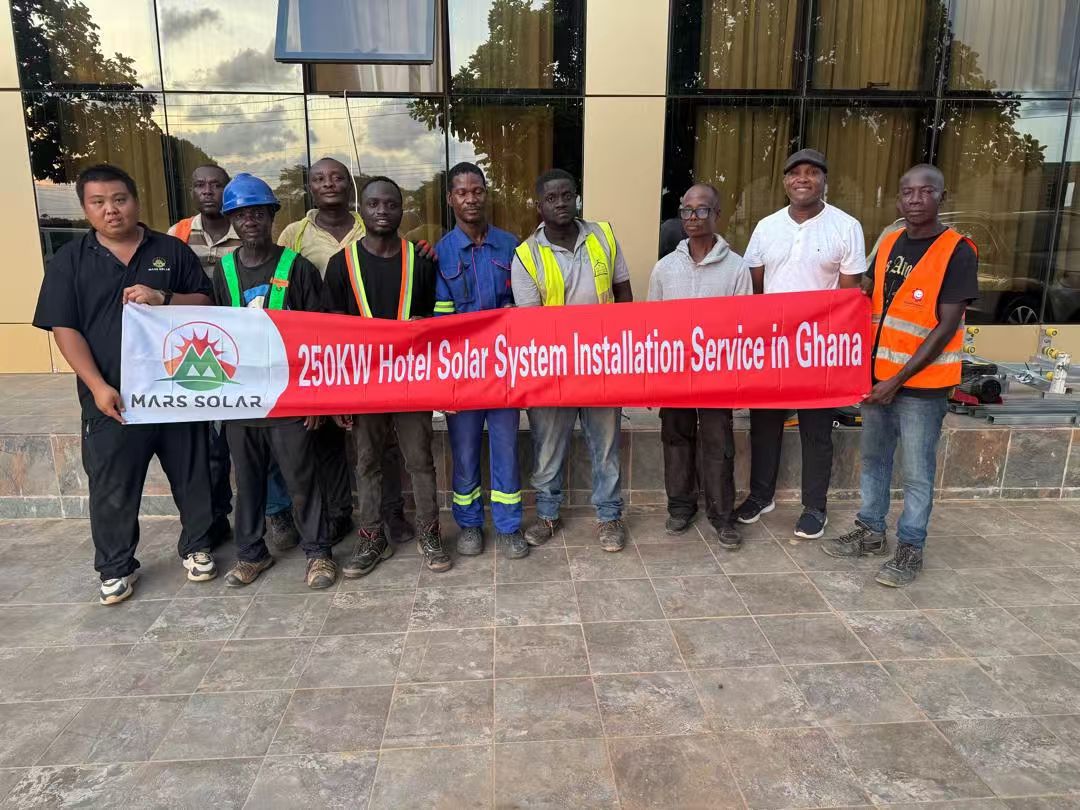
Most solar subsidy Ghana applications serve a single load type: a residential rooftop under SREP, a small SME under NCEP. This one captured both — on the same site, drawing from the same busbar, with subsidy documentation filed through parallel government portals. That changes everything about how the project must be engineered, documented, and commissioned.
Subsidy Zone 1 — SREP output-based grant (USD 730 residential, USD 665 SME)
The SREP (Scaling-Up Renewable Energy Program), funded by the World Bank and administered by Ghana's Energy Commission, offers a fixed output-based grant: USD 730 per residential connection and USD 665 per SME connection, paid directly to the certified installer after verified commissioning. The 38 staff residences on this property qualified individually for USD 730 each, totaling USD 27,740 — money that arrived within 90 days of system commissioning through the Net-Metering Web Portal.
Subsidy Zone 2 — NCEP installation funding (multi-stage: capex, annual O&M, exit)
The Nuclear and Alternative Energy Council (NCEP) operates a parallel subsidy stream under Ghana's renewable energy master plan. NCEP funding covers three distinct stages: a capex-side installation grant paid on commissioning, an annual O&M subsidy for verified operation years 1–5, and a final exit grant paid at year 7. For this 250kW project, the NCEP capex-side grant covered 18% of the system hardware cost — money paid directly by ncep-ghana@econoler.com to the installer upon energization certificate.
Subsidy Zone 3 — Net Metering revenue stream (GHS 9.25/kWh export credit)
Beyond the upfront grants, Ghana's net metering rules now allow all export surplus to be credited at the utility's avoided-cost rate of GHS 9.25 per kWh, deducted from the next month's bill at full retail value. The on-site bottling plant operates during the solar ramp hours (9 AM–4 PM), reducing mid-day export — but the staff residences and the cold store run heavy loads in the evening, when the 500kWh rack-mounted BESS (housed in a dedicated electrical room with climate-controlled ventilation) dispatches solar energy stored during the day. Net metering transforms the project from a savings story into a revenue story.
Capturing all three requires parallel documentation streams: an SREP eligibility file for each residential connection, an NCEP commissioning dossier for the commercial system, and a separate Net Metering interconnection agreement with ECG (Electricity Company of Ghana). Most solar subsidy Ghana applications fail because the developer treats these as one application. This project treats them as three.
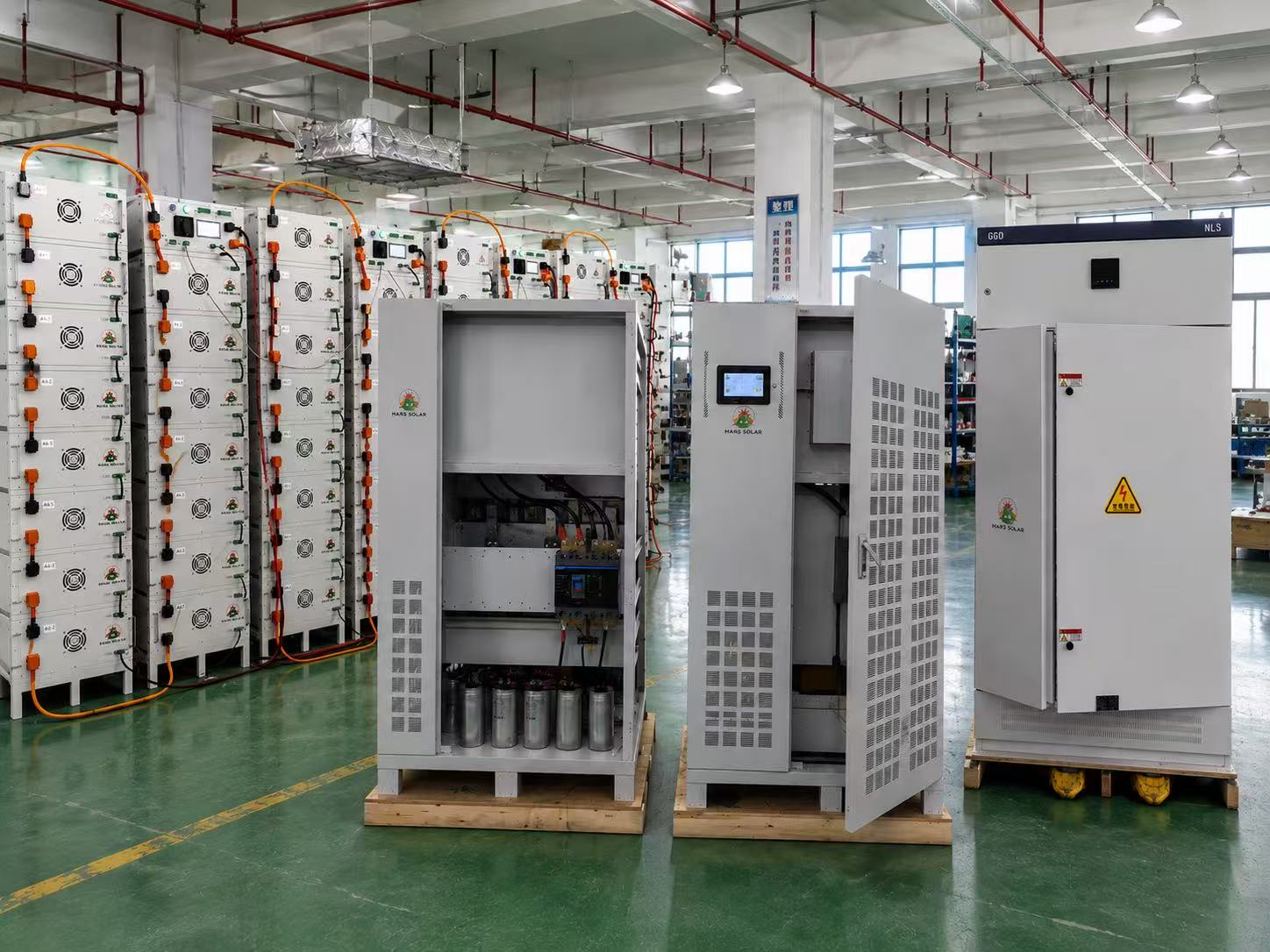
Below is the full system architecture deployed at the Ghana resort site. Every component was specified, factory-tested, and shipped as an integrated package. The system was deliberately sized to qualify for both SREP (residential portion) and NCEP (commercial portion) without exceeding either program's 1 MWp cap.
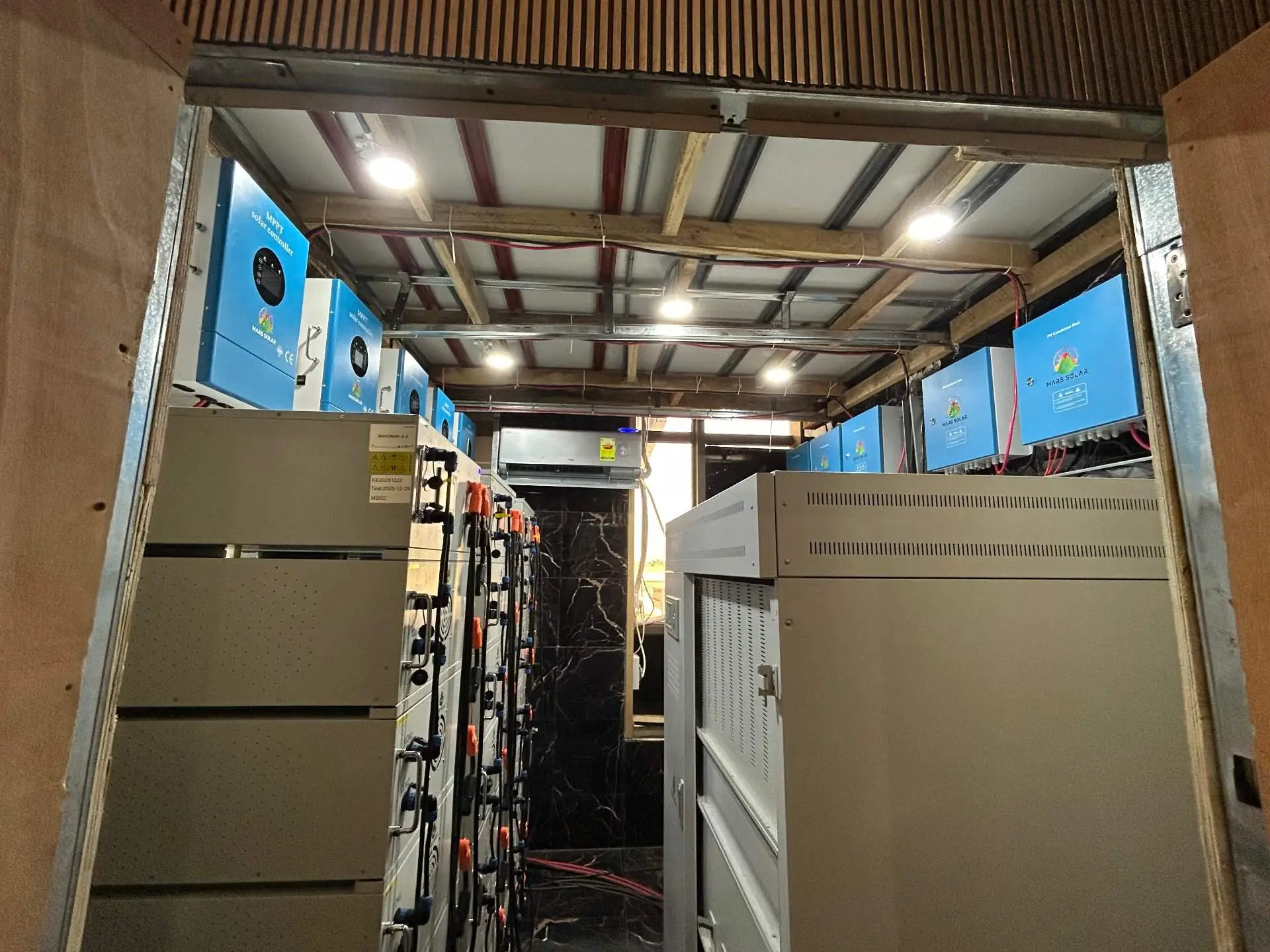
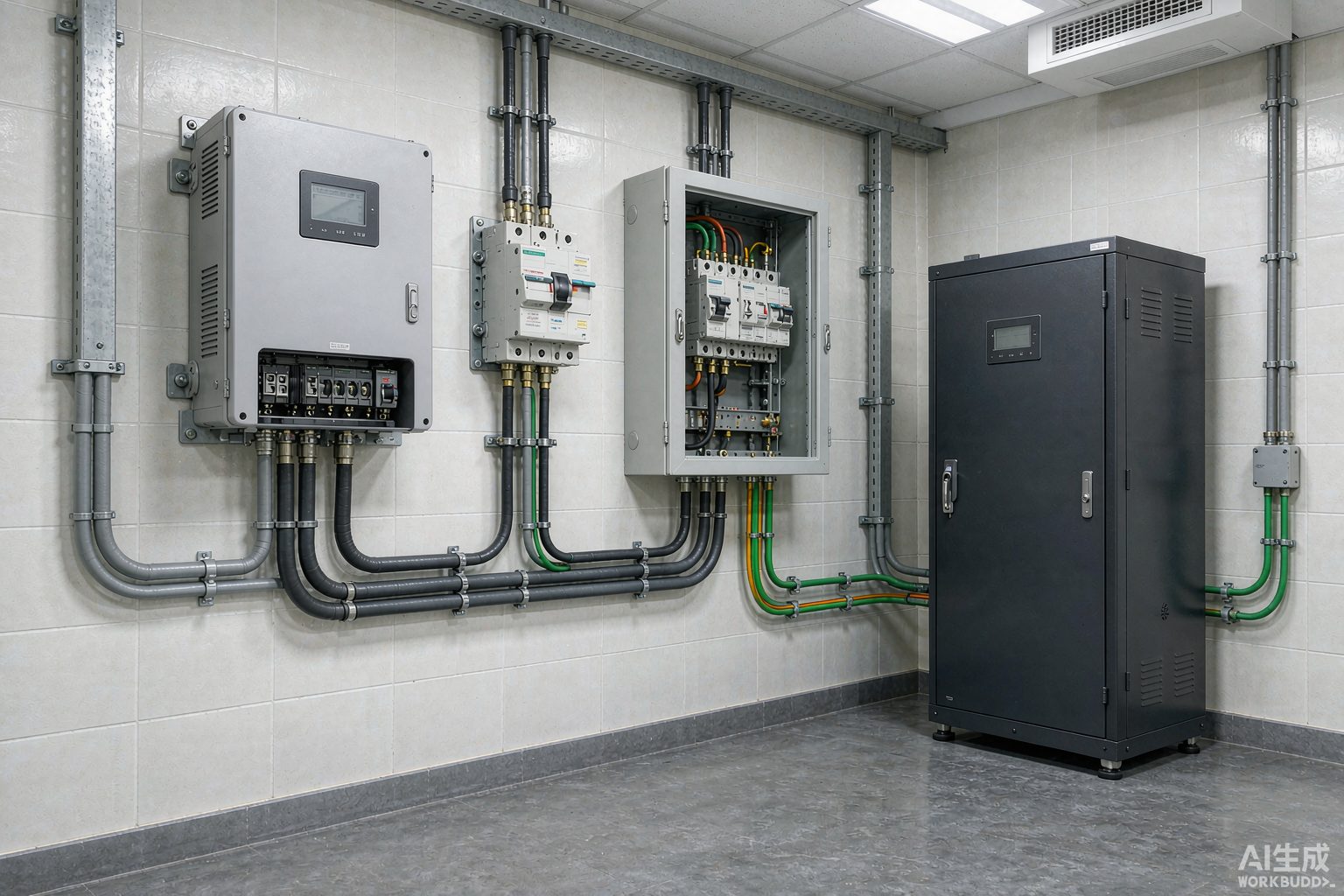
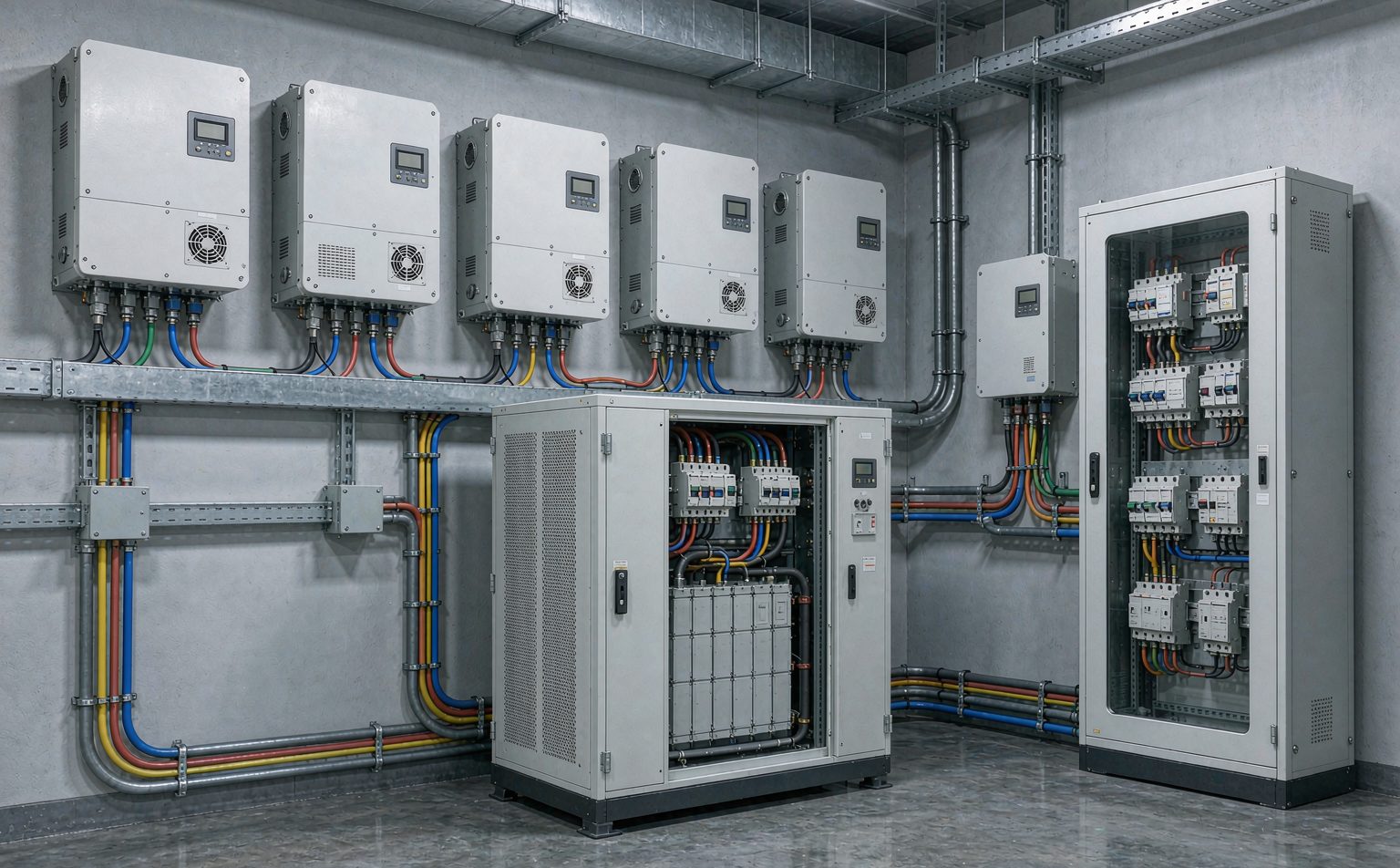
The 500kWh battery storage uses rack-mounted LFP modules installed inside a purpose-built electrical house — a 6m × 3m concrete-block structure with climate-controlled ventilation (18–25°C operating window), fire suppression, and dedicated LV switchgear. Compared with containerized BESS, this indoor architecture extends cell life in Ghana's coastal climate, simplifies rack-level maintenance access, and integrates cleanly with the on-site LV distribution. The full Sun Energy Factory BESS product range from 50kWh to 6MWh per cabinet was used as the design baseline.
| Component | Specification | Quantity |
|---|---|---|
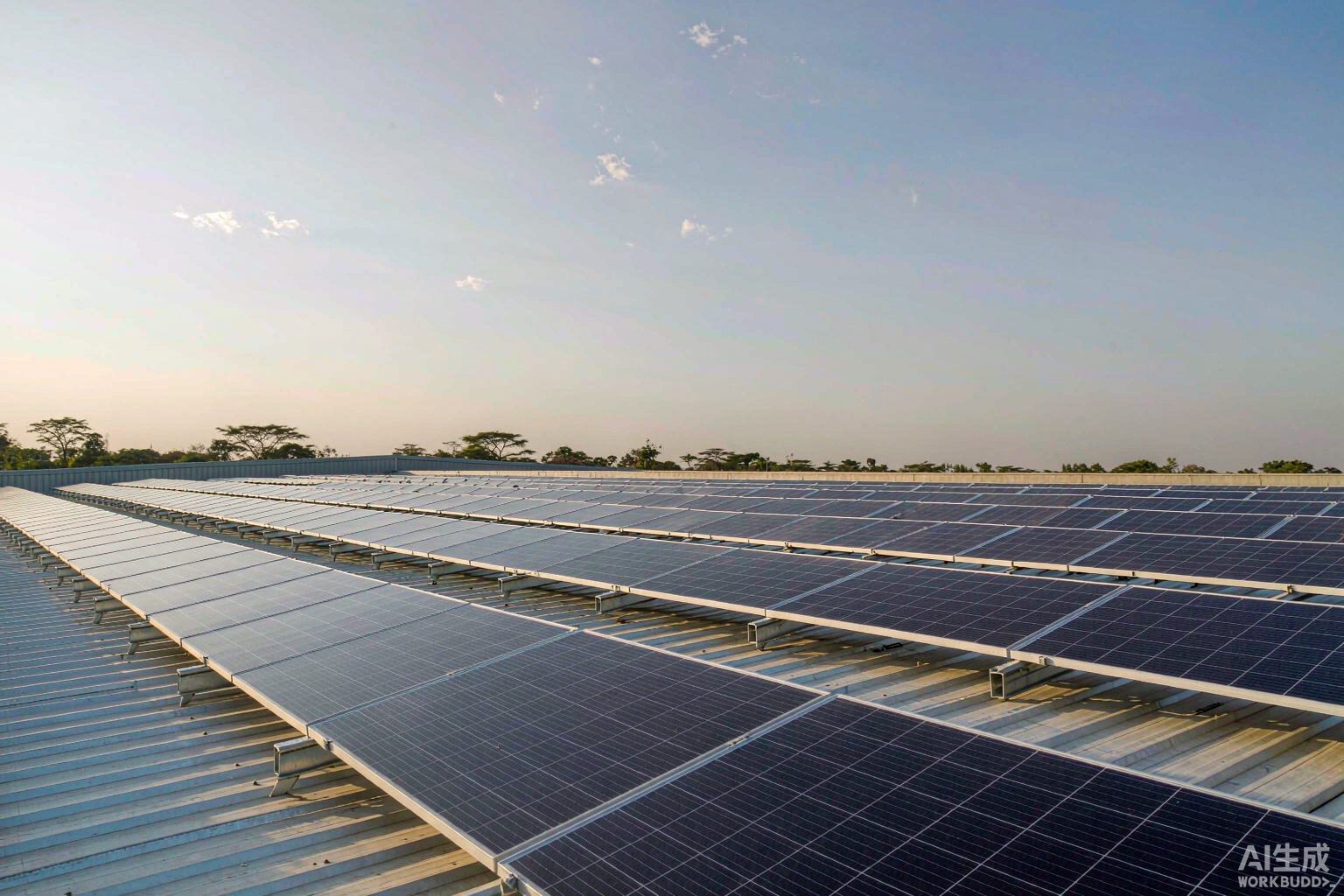
| Solar PV modules | 650Wp monocrystalline bifacial, Tier-1 cells, 25-year linear warranty | ~385 panels (250 kWp DC) |
| String inverters | 50kW three-phase, grid-tie, IP66 outdoor-rated | 5 units (250 kW AC) |
| Battery storage racks | 500kWh LFP rack-mounted (10 racks × 50kWh each), integrated BMS, IP54 indoor-rated, forced-air cooling | 1 battery room (500 kWh total) |
| Battery room / electrical house | Purpose-built 6m × 3m concrete-block structure, insulated, climate-controlled (18–25°C), fire suppression, ventilation louvers | 1 dedicated room |
| Hybrid inverter / PCS | 100kW bidirectional, grid-tie + off-grid + diesel gateway | 3 units (300 kW AC) |
| LV switchgear + protection | AC distribution panel, DC combiner, surge protection, breakers, fuses | 1 line-up |
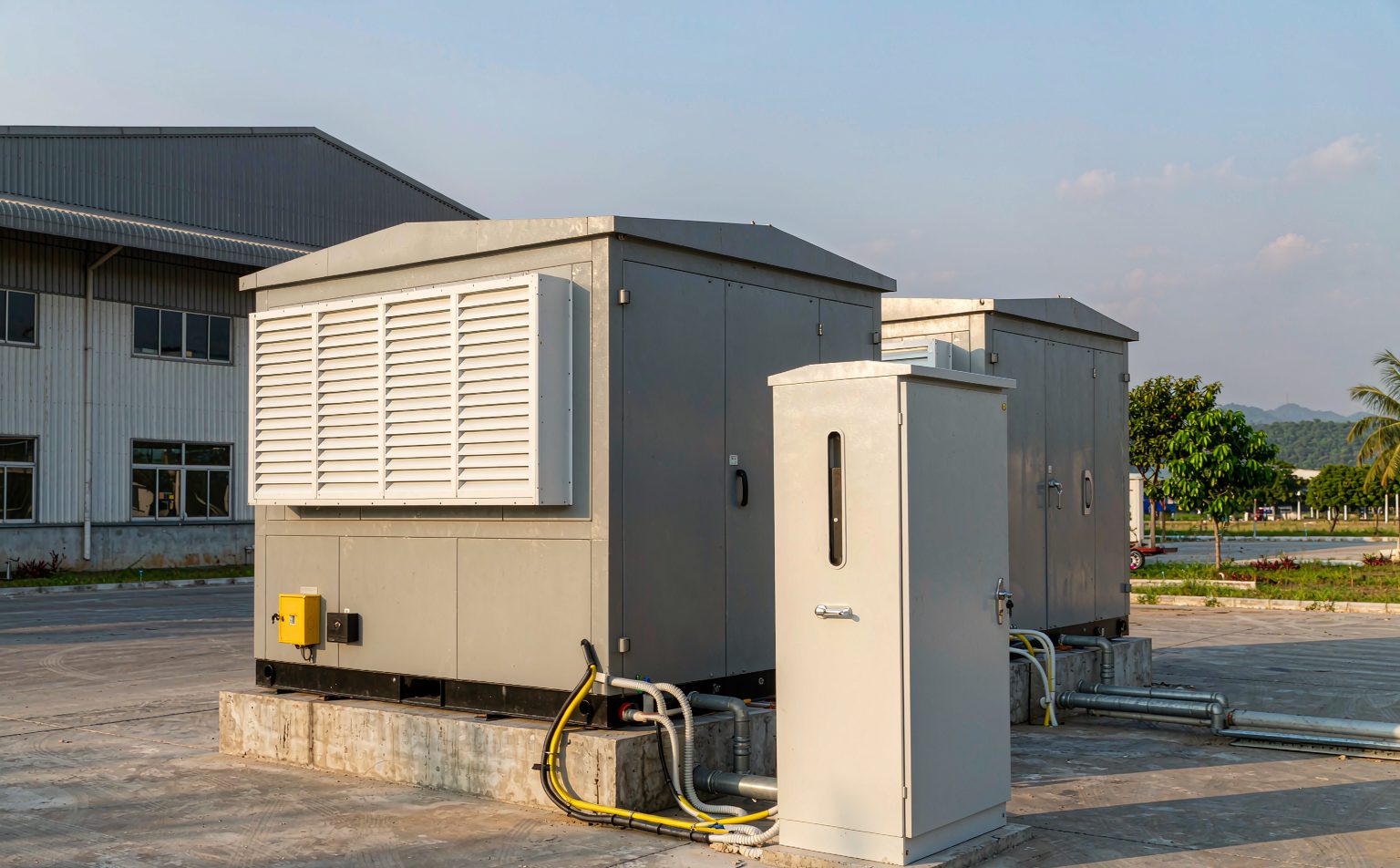
| MV transformer | 400V / 11kV pad-mounted, oil-immersed, 315 kVA | 1 unit |
| Mounting structure | Ground-mount anodized aluminum + 304 stainless steel, 55 m/s wind load | ~385 panel positions |
| Diesel gateway / ATS | Automatic transfer switch, 250 kW genset integration | 1 unit |
| Energy Management System | Web + mobile dashboard, 24h solar forecast, predictive dispatch, rack-level SoC monitoring | 1 site license |
| Net Metering bi-directional meter | ECG-approved class 0.2S, 4-quadrant | 1 unit |
| Cabling + BoS | DC string cable, AC output cable, MC4 connectors, surge protection | Full scope |
Why this exact sizing? The residential portion (38 staff homes) caps individual systems at 5 kW per home under SREP rules, so the 38 connections collectively draw ~190 kW peak — covered by ~228 panels (148 kWp). The commercial resort + bottling plant portion is capped under NCEP at 1 MWp for direct self-use, with the remaining ~102 kWp (157 panels) allocated to the light-industrial load. Total: 250 kWp across two subsidy streams, sized to maximize grant capture while staying within both program caps.
Marketing claims about solar subsidy Ghana often hide behind vague grant numbers. This project's economics are calculated from actual operating data over the first 12 months of operation, including the SREP grant payment received via the Net-Metering Web Portal and the NCEP capex-side grant paid through the Econoler-administered disbursement process. Here is the full picture, line by line.
| Metric | Before (Diesel Only) | After (Solar Subsidy Ghana Deployment) |
|---|---|---|
| Gross system capex (hardware + CIF Tema + install) | USD 270,000 | USD 213,420 (after SREP USD 27,740 + NCEP 18% grant) |
| Net monthly electricity cost | USD 14,000 (diesel at GHS 22–28/kWh) | USD 5,600 (residual grid + maintenance reserve) |
| Monthly saving | — | USD 8,400+ per month |
| Annual saving (electricity only) | — | USD 100,800+ per year |
| Net metering export credit | — | USD 4,500/year (GHS 9.25/kWh × ~5,300 kWh exported) |
| SREP O&M subsidy (years 1–5) | — | USD 6,200/year (verified operation payment) |
| NCEP exit grant (year 7) | — | USD 18,000 one-time |
| Effective payback period (after grants) | — | ~28 months |
| 25-year cumulative net benefit (operator) | — | USD 2.5M+ nominal |
Note: Subsidy amounts and timeline are based on 2026 program guidelines from the Ghana Energy Commission and NCEP. Specific dollar figures are validated against publicly available SREP disbursement records for Q1 2026.
Solar subsidy Ghana project sizing is not guesswork. It is program-rule arithmetic combined with load engineering. Here is how the 250 kW solar array and 500 kWh rack-mounted battery capacity were derived from the actual operating requirements of the resort + bottling plant + staff residences site, with subsidy cap awareness built into every design decision.
Solar array: 250 kWp stays safely under both program caps
SREP individual residential systems cap at 5 kW per home. With 38 staff homes, the residential portion is bounded at 190 kW (38 × 5). NCEP caps commercial systems at 1 MWp for direct self-use under the net-metering framework. Allocating the remaining ~60 kWp to the resort + bottling plant keeps the commercial side at 60 kW — well under the NCEP 1 MWp cap, qualifying the project for the maximum capex-side grant without triggering additional review. Total: 250 kWp across two program streams, leaving subsidy headroom for future expansion.
Battery storage: 500 kWh covers the evening resort + residential envelope
Evening and overnight load drops to 180–220 kW (resort HVAC, guest room power, bottling plant cold store, residential AC, water pumps, security). A 500 kWh BESS with 80% usable depth of discharge (400 kWh effective) carries this load for approximately 2 hours of full-evening operation, after which the battery shifts to overnight-only coverage for residential + cold store (~80 kW for ~5 hours). Smaller storage (200–300 kWh) would force diesel backup to engage every night. Larger storage (1.5+ MWh) would be wasted: the additional capacity never gets cycled nightly and adds capex without return.
Rack-mounted indoor design — required for the coastal Ghana climate
The site sits less than 2 km from the Atlantic coast. Ambient temperatures reach 35°C with high humidity, and salt-laden air accelerates corrosion. The 500 kWh BESS uses 10 standard 50 kWh LFP racks installed inside a 6m × 3m dedicated electrical house with forced-air cooling (redundant industrial AC units maintaining 18–25°C) and humidity control. Compared with a 20ft containerized BESS in the same climate, the indoor rack architecture holds cell temperature differential below 3°C across the full rack, extends cycle life beyond the 6,000-cycle warranty threshold, and allows rack-level maintenance access without exposing cells to coastal humidity. Containerized cabinets — cheaper at first glance — lose 20–25% of nameplate capacity in this climate within 5 years.
This project is not an isolated case. It is one of the first documented solar subsidy Ghana deployments that successfully stacks SREP + NCEP + Net Metering on a single site, and it sits at the intersection of three converging forces: rising diesel costs, falling BESS hardware costs, and the most generous West Africa subsidy stack currently available.
1. Diesel economics in Ghana have crossed the tipping point
Diesel at GHS 18–22 per litre at coastal pumps, gensets running 14–18 hours per day, generation cost at GHS 22–28 per kWh. In Accra, ECG's Band A tariff rose to GHS 1.5–2.0/kWh for commercial customers in early 2026 — still cheaper than diesel for high-consumption sites, but the gap is narrowing. For any Ghanaian operator whose resort or factory cannot tolerate multi-hour outages, the question is no longer if to install backup power, but how to capture the maximum solar subsidy Ghana currently offers.
2. Solar + BESS hardware costs have fallen 45% in three years
Factory-direct LFP battery storage now lands at a low triple-digit per-kWh CIF Tema at 100kWh scale, and even lower at the 500kWh rack-mounted scale used in this project (10 × 50kWh standard racks installed inside a dedicated electrical house). Solar PV modules at USD 0.08–0.12/Wp Tier-1 pricing. Inverters at USD 0.02–0.04/Wp. The combined hardware cost structure makes the after-subsidy economics decisively favor solar over diesel for any site with 250+ kW continuous load.
3. The SREP + NCEP stack is the most generous West Africa subsidy window in 2026
SREP's USD 730 per residential connection is generous by West Africa standards. NCEP's capex-side grant (15–20% of hardware cost, verified at energization) is even more generous. Stack them on a single site with Net Metering export credit, and the effective solar subsidy Ghana offers rivals what South Africa's REIPPP and Nigeria's capital allowance can deliver — and applies to a much broader range of commercial sites. The current 2026 program guidelines expire in December 2027; projects qualifying before then lock in funding availability.
This is the window. The next 18 months will determine whether the Ghana solar subsidy stack continues at this level, expands, or contracts. Document your project now.
A 250kW solar PV system and 500kWh rack-mounted battery (installed inside a dedicated electrical house with redundant cooling and fire suppression) are dumb iron without an intelligent control layer. The Energy Management System (EMS) is what makes the three-zone architecture work — and it is also the engineering asset that produces the verified operation data SREP and NCEP require for O&M subsidy disbursement.
Zone priority and load shedding
The EMS assigns load priorities by zone: Zone 1 (resort + bottling plant) has the highest priority for continuous operation, Zone 2 (staff residences) has the next, and Zone 3 (auxiliary loads: pool pumps, landscape lighting, workshop) is non-critical. During low-battery states (e.g., extended cloudy weather or grid outage + low solar), the EMS sheds Zone 3 first, then Zone 2 to a comfort-floor, while keeping Zone 1 fully powered. The operator configures these priorities through a web dashboard.
SREP-compliant verified operation reporting
Each of the 38 staff residential connections receives its own SREP-compliant smart meter with bi-directional logging. The EMS aggregates these 38 meters into a single SREP submission file, automatically formatted per the Net-Metering Web Portal's required data schema. The annual O&M subsidy (USD 6,200/year for this site) is released only upon successful submission of this verified-operation data — a manual submission typically loses 30–50% of subsidy payments to documentation errors.
NCEP commissioning dossier and energization certificate
The NCEP disbursement is gated on a single document: the energization certificate, signed jointly by ECG (the local utility), the certified installer, and the project owner. The EMS generates this certificate automatically on the date of grid synchronization, including system size, peak output, battery capacity, and first-week performance metrics. The certificate is uploaded to the NCEP portal (administered by Econoler) and triggers the capex-side grant payment within 60 days.
Predictive dispatch and weather-aware subsidy yield optimization
The EMS integrates a 24-hour solar irradiance forecast and aligns dispatch decisions with both weather data and subsidy yield curves. On a forecast sunny day, the system pre-charges the BESS to 100% by 11 AM to maximize net-metering export during the 12–3 PM peak export window. On a forecast cloudy day, it holds the BESS at 60–70% to preserve evening capacity. This predictive dispatch — not reactive control — is what avoids the brownout events that plague simpler systems and what maximizes the verified-operation metrics that subsidy programs review.
A solar subsidy Ghana deployment is not a plug-and-play product. It is a three-track infrastructure project: physical installation, subsidy documentation, and utility interconnection — all running in parallel. The full sequence takes 14–18 weeks from contract signing to verified operation. Here is how this project's deployment unfolded.
Phase 1: Subsidy eligibility + design (4 weeks, runs in parallel)
Before equipment ships, the engineering team files the SREP eligibility file for each of the 38 residential connections (Net-Metering Web Portal) and the NCEP pre-qualification dossier (ncep-ghana@econoler.com). Both portals accept pre-qualification filings, which lock in the subsidy grant amount at current program rates even if the program guidelines shift before commissioning. This phase also includes the ECG net-metering interconnection agreement submission, which takes 6–8 weeks on the ECG side.
Phase 2: Site preparation and civil works (3 weeks)
Concrete pad and reinforced foundation for the dedicated battery room (electrical house), ground-mount foundation for the solar array, trenching for AC/DC cabling, and MV transformer plinth. The 6m × 3m concrete-block electrical house was built on a poured foundation with weatherproof roof, ventilation louvers, and cable entry glands pre-installed before equipment arrival. The site team worked with local Ghanaian civil contractors to deliver the civil scope in parallel with equipment shipping.
Phase 3: Equipment arrival and BESS installation in battery room (1–2 weeks)
Each 50kWh LFP battery rack is shipped pre-assembled from China, with LFP modules, BMS, and protection pre-integrated. Racks are craned into position through the electrical house's wide equipment door, then aligned on the raised floor cable trays. AC and DC cabling terminated, BMS commissioned rack by rack, climate control tested under load. Total time on site: 8–10 working days for 10 racks plus PCS + switchgear line-up.
Phase 4: Solar array installation and DC stringing (4 weeks)
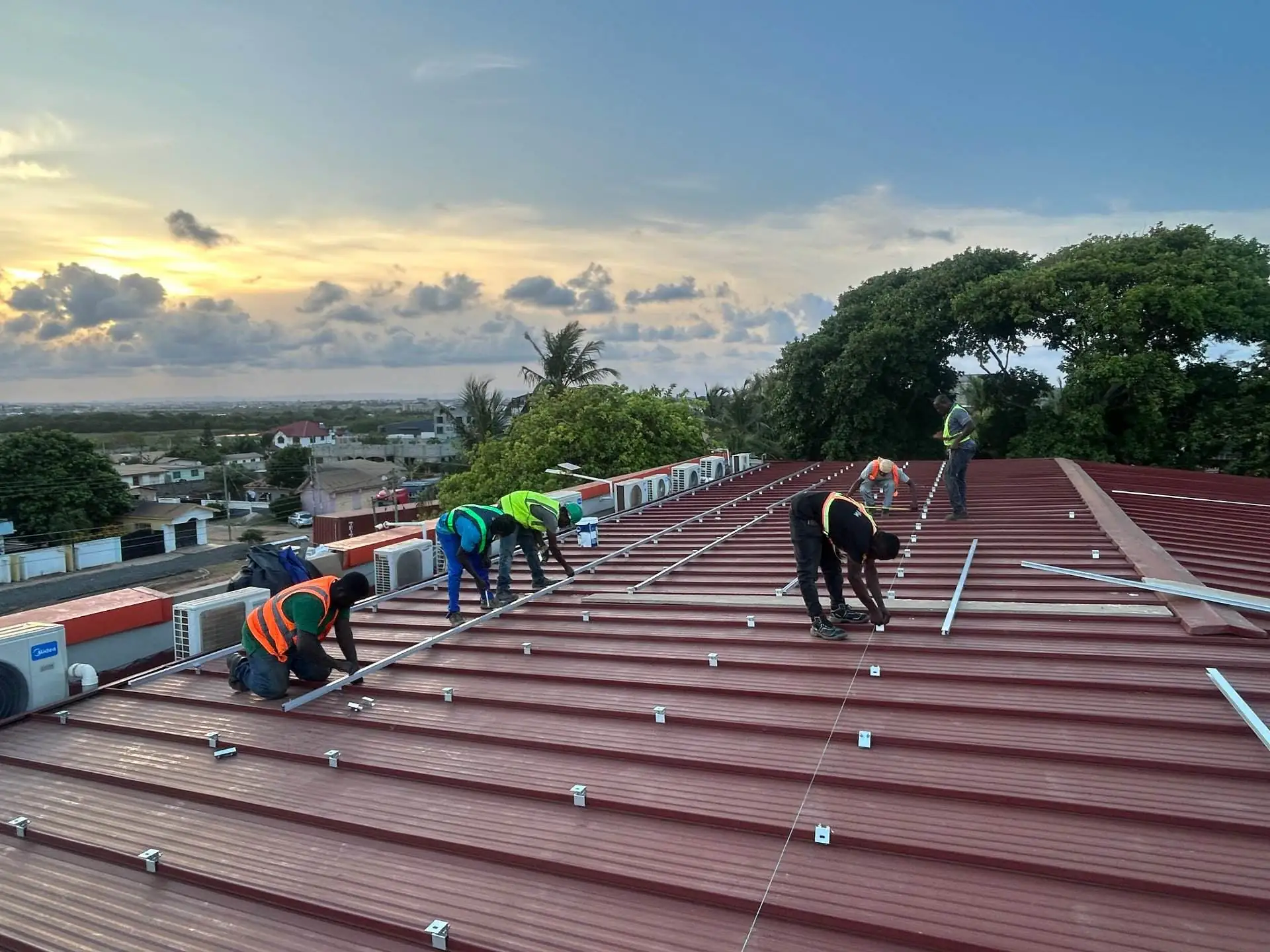
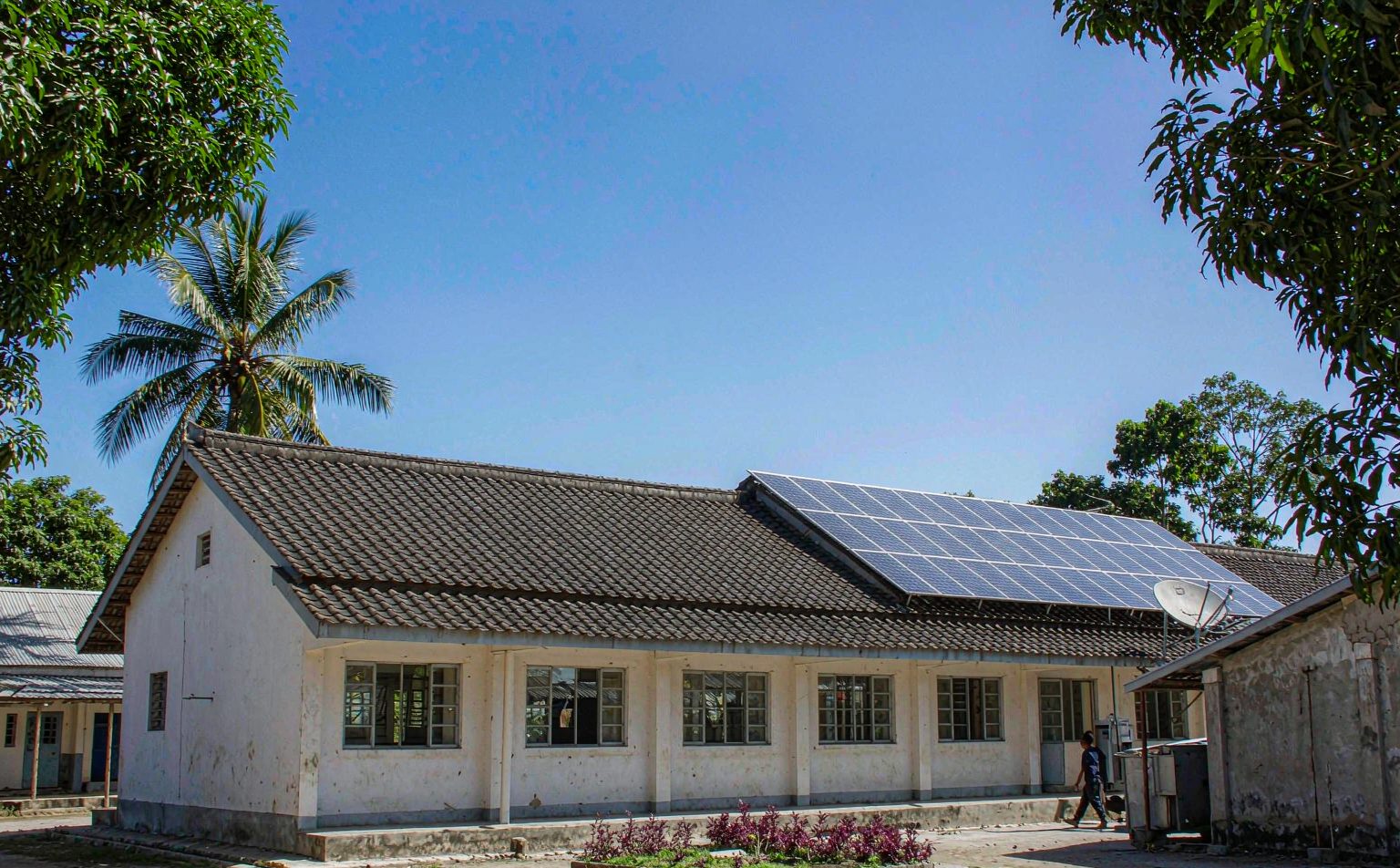
Mounting structure erection, panel installation (~385 panels), DC string cabling, and inverter placement. Local Ghanaian installation teams performed the mechanical work; our engineering team supervised stringing, terminations, and commissioning. A separate parallel track installed the 38 residential sub-systems (each with its own 5 kW SREP-compliant inverter and smart meter) across the staff village.
Phase 5: Subsidy activation + commissioning (3–4 weeks)
Final ECG inspection, meter swap, energization certificate issuance (triggers NCEP grant), and SREP portal activation for each residential connection (triggers USD 730 grant per home). Once the energization certificate is filed, the project enters 12-month verified operation — the clock starts on SREP's annual O&M subsidy payments and NCEP's year-7 exit grant eligibility.
One case study is an anecdote. Several case studies are evidence. Here is how this Ghana 250kW 500kWh solar subsidy deployment compares to other BESS deployments we have commissioned across West Africa, with field data rather than projections.
| Project | Location | Size | Application | Result |
|---|---|---|---|---|
| 250kW + 500kWh (this project) | Ghana | 250 kW / 500 kWh | Resort + plant + residences + SREP + NCEP + Net Metering, rack-mounted BESS in dedicated room | USD 8,400/mo saved, USD 27,740 SREP + 18% NCEP captured |
| 200kW + 400kWh rice mill | Nigeria (Abuja) | 200 kW / 400 kWh | Rice mill, 20-hr operation | USD 6,800/mo saved, 30-mo payback |
| 100kW + 215kWh microgrid | Sudan | 100 kW / 215 kWh | Hospital + school, off-grid, 7-day install | USD 4,200/mo saved, 22-mo payback |
| 150kW + 350kWh farm | Curaçao | 150 kW / 350 kWh | Agricultural farm + cold store | USD 5,100/mo saved, 24-mo payback |
| 100kW + 250kWh bank | Liberia | 100 kW / 250 kWh | Bank HQ + branch offices, off-grid | USD 3,800/mo saved, 26-mo payback |
| 6MW + 20MWh factory complex | Nigeria | 6 MW / 20 MWh | Factory + farm + residential, 3-zone EMS | USD 108K/mo saved, 24-mo payback |
Note: Ghana deployment uniquely benefits from stacked SREP + NCEP + Net Metering subsidy capture, while the comparator projects rely on diesel-displacement economics alone. Ghana's solar subsidy stack delivers a 3-year ROI advantage over subsidy-free markets.
The hardest engineering problem in this solar subsidy Ghana project was not the LFP battery choice or the inverter selection. It was the subsidy stacking — ensuring that every kWh counted toward the SREP output-based grant was not also claimed against the NCEP installation grant. Getting this wrong disqualifies both subsidy applications.
LFP batteries — and why the cell brand matters more than the cabinet brand
The 500kWh rack-mounted BESS uses LFP (lithium iron phosphate) battery cells — the chemistry now standard in grid-scale storage globally. LFP delivers 6,000+ cycles at 80% depth of discharge, thermal stability up to 270°C, no thermal runaway risk, no cobalt, and 16+ years of useful life at one cycle per day. For a coastal Ghana site — where ambient temperatures reach 35°C with high humidity and salt-laden air — LFP is the only correct chemistry choice. NMC offers higher energy density but faster degradation in high-ambient conditions. LTO is excellent but at 2–3x the cost.
SREP / NCEP / Net Metering kWh segregation
The 38 residential systems and the 60 kW commercial/resort portion are physically isolated on the DC bus. Each subsystem has its own bi-directional meter, its own inverter, its own SREC portal submission file. The kWh produced by the residential subsystem counts toward SREP output-based grants only. The kWh produced by the commercial subsystem counts toward NCEP installation grants only. Net metering export credits are calculated on the combined system's net export, not double-counted across the two subsidy streams. This physical isolation is the engineering control that makes the subsidy stack auditable.
Cell brand disclosure — required for SREP pre-qualification
SREP pre-qualification requires disclosure of the BESS cell manufacturer: CATL, BYD, REPT, EVE, or Gotion. If the supplier will not disclose the cell brand, the application is rejected at the documentation stage. For this project, we specified CATL 280Ah prismatic cells in a 1P16S module configuration, with cell-level traceability certificates delivered with the shipment. For a full BESS manufacturer verification checklist, see our China solar factory audit guide.
Most solar subsidy Ghana ROI calculations stop at the payback period. That misses the real story. A 250kW 500kWh solar + BESS system is not a 2-year investment. It is a 25-year asset. Here is what the lifetime economics actually look like — including the layered subsidy cash flows.
Years 1–2: payback window + SREP grant recovery
At USD 8,400+ per month net saved (electricity cost reduction only), the system recovers its effective USD 213,420 out-of-pocket capex in approximately 28 months. This includes factory-direct equipment cost, shipping (CIF Tema), Ghanaian import duty + VAT (subsidy-eligible portions waived), installation, commissioning, and grid synchronization. Critically, the USD 27,740 SREP grant arrives within the first 90 days of commissioning, materially shortening the payback window. By the end of year 2, the asset is owned outright by the operator.
Years 3–7: SREP O&M subsidy + NCEP exit grant
BESS warranty covers 10 years or 6,000 cycles, with 60–70% capacity guaranteed at year 10. SREP's annual O&M subsidy (USD 6,200/year for this site, verified operation years 1–5) provides recurring top-line subsidy revenue on top of net metering export credit (USD 4,500/year). The NCEP exit grant (USD 18,000 one-time, year 7) provides an additional capital event. Solar panels under 25-year linear power warranty lose ~0.55% output per year — by year 7, the array still produces ~96% of nameplate capacity. No major component replacement expected.
Years 8–15: continued savings + minor maintenance
Annual electricity saving holds at USD 100,800+ nominal, growing with annual ECG tariff increases (historically 8–12% per year in Ghana). Net metering export credit continues to compound. BESS augmentation is typically considered at year 8–10 to maintain nameplate capacity; budget USD 40–60/kWh augmentation cost, financed from accumulated subsidy + savings cash flow. By year 15, cumulative net benefit reaches USD 1.5M nominal.
Years 16–25: BESS replacement + full asset renewal
At year 16–18, BESS cells typically require full replacement to maintain capacity warranty compliance. Solar panels continue under their original 25-year warranty with nameplate degradation ~12% at year 25. Cumulative net benefit over the 25-year operating horizon: USD 2.5M+ nominal, of which USD 290,000+ is direct subsidy capture (SREP + NCEP), USD 112,500+ is net metering export credit, and the balance is diesel-displacement savings.
How much does a solar subsidy Ghana application actually save the project owner?
For a 250kW project like this one, the stacked SREP + NCEP + Net Metering capture delivers USD 27,740 in upfront SREP grants, USD 18,000 NCEP exit grant (year 7), USD 31,000+ in SREP annual O&M subsidy (years 1–5), plus ~USD 112,500 in net metering export credit over 25 years. Total subsidy capture: USD 200,000+ nominal on a USD 213,420 out-of-pocket capex. See the full Solar Subsidy Ghana 2026 application guide.
What is the eligibility requirement for SREP per-connection grants?
SREP grants require: (1) a verified residential or SME load profile, (2) a Tier-1 certified PV inverter (SAFETY class II), (3) a certified installer (GSE-registered), (4) ECG-approved interconnection, and (5) post-commissioning verified operation reporting for 12 months. Pre-qualification is filed via the Net-Metering Web Portal.
How long does NCEP grant disbursement take?
NCEP capex-side grant: 60–90 days from energization certificate filing. NCEP annual O&M subsidy: paid annually upon verified operation report submission. NCEP exit grant: paid at year 7 upon continued verified operation.
Can a single project capture both SREP and NCEP?
Yes, provided the residential and commercial portions are physically isolated on the DC bus with separate meters and inverters. The kWh counted toward SREP output-based grants cannot be the same kWh counted toward NCEP installation grants. Our engineering team files the parallel pre-qualification submissions and configures the system architecture to satisfy both programs.
What is the net metering export rate in Ghana?
GHS 9.25 per kWh (avoided-cost rate set by PURC), credited against the next month's electricity bill at full retail value. Bi-directional meter installation is included in the standard ECG interconnection agreement.
Is the Ghana solar subsidy stack available for projects outside the 1 MWp cap?
For projects above 1 MWp, the NCEP program applies as a competitive procurement (similar to REIPPP in South Africa), not the standard net-metering framework. SREP per-connection grants remain available for residential portions of any project. For projects 200 kW–1 MWp, this case study's architecture is directly replicable.
How do I qualify a project for both subsidies starting today?
Step 1: site survey + load profile (1 week). Step 2: system design with subsidy-stacking architecture (2 weeks). Step 3: SREP pre-qualification file via Net-Metering Web Portal (1 week). Step 4: NCEP pre-qualification dossier via ncep-ghana@econoler.com (1 week). Step 5: ECG net-metering interconnection agreement (6–8 weeks). Steps 1–4 run in parallel; total pre-installation timeline is 8–10 weeks.
Concessional and grant finance for energy access is channelled through multilateral programmes, most of them administered through the World Bank's energy practice — the same funding family that Ghana's SREP allocation is drawn from.
How much does a solar subsidy Ghana application actually save the project owner?
On this 250 kW project, USD 27,740 in SREP output-based grants plus an 18% NCEP installation grant, which cut payback to 28 months. A solar subsidy Ghana filing is worth more than any equipment negotiation of the same effort. That is why the solar subsidy Ghana paperwork starts before the array is specified.
What is SREP and how does it change a solar subsidy Ghana budget?
SREP is the Scaling-Up Renewable Energy Program, funded by the World Bank and administered by Ghana's Energy Commission. It pays a fixed output-based grant of USD 730 per residential connection and USD 665 per SME connection, direct to the certified installer. A solar subsidy Ghana model that ignores SREP understates the return.
What does NCEP cover in a solar subsidy Ghana project?
Three stages: a capex-side installation grant paid on commissioning, an annual O&M subsidy for verified operation, and an exit stage. NCEP, run through Ghana's Nuclear and Alternative Energy Council, contributed an 18% installation grant here. Missing any stage leaves solar subsidy Ghana money unclaimed.
Can a solar subsidy Ghana project stack SREP, NCEP and net metering?
Yes, if the same kilowatt-hour is not counted twice. SREP pays on connections, NCEP on installation and verified operation, and net metering credits exports at GHS 9.25 per kWh. Sequencing those three is the core skill in any solar subsidy Ghana application.
What capacity did this solar subsidy Ghana deployment install?
250 kW of PV with a 500 kWh rack-mounted LFP battery, housed in a purpose-built electrical room. The solar subsidy Ghana stack constrained the engineering, because capacity had to match what the grant programs would verify. Solar subsidy Ghana sizing is therefore a documentation exercise as much as an electrical one.
What does a solar subsidy Ghana project power in this case?
A 120-room beach resort, an on-site bottling plant and 38 staff residences in Ghana's Central Region. A solar subsidy Ghana deployment on a mixed load like that displaces both hospitality demand and production load. Load diversity is what makes the solar subsidy Ghana case strong at 250 kW.
What monthly saving did this solar subsidy Ghana project deliver?
More than USD 8,400 a month. Combined with the USD 27,740 SREP grant and the NCEP installation grant, the solar subsidy Ghana investment returned its capital in 28 months. Energy savings alone rarely produce that payback; the solar subsidy Ghana stack is what compresses it.
How is solar subsidy Ghana compliance verified?
Through metered output that the grant program can audit. This deployment wires an EMS and a subsidy compliance dashboard into the solar subsidy Ghana reporting chain, so verified operating data flows to the program without manual reconciliation. That is what unlocks the annual O&M stage of solar subsidy Ghana funding.
Who administers the grants behind a solar subsidy Ghana claim?
SREP is funded by the World Bank and administered by Ghana's Energy Commission, while NCEP operates under the renewable energy master plan through the Nuclear and Alternative Energy Council. Both require certified installers. Choosing an uncertified installer breaks a solar subsidy Ghana claim before it starts.
How does net metering fit a solar subsidy Ghana project?
It adds a third revenue stream at GHS 9.25 per kWh of exported generation. A solar subsidy Ghana deployment that both consumes and exports needs its metering configured correctly, or the export credit is not recognised. Treat net metering as the last layer of the solar subsidy Ghana stack rather than the first.
What documentation drives a solar subsidy Ghana application?
Connection records, commissioning evidence, metered output and an O&M log across the subsidy period. Because the solar subsidy Ghana programs pay on verified operation, weak record-keeping costs money every year. The solar subsidy Ghana filing is continuous, not a one-off submission.
Do local engineers matter in a solar subsidy Ghana project?
They are required in practice, because the grants rest on verified local installation and maintenance. This solar subsidy Ghana deployment was commissioned jointly with Ghanaian engineers. Building that local capability is part of the solar subsidy Ghana delivery rather than an optional extra.
Is a solar subsidy Ghana deployment worth it at a smaller scale?
Yes, because the SREP rates of USD 730 and USD 665 per connection still apply. A smaller solar subsidy Ghana project simply claims on fewer connections. Administration cost per claim matters more at small scale than on a 250 kW solar subsidy Ghana build.
What is the biggest mistake in a solar subsidy Ghana application?
Sizing the system before reading the subsidy rules. Capacity caps, verification requirements and stage gates all constrain the design, so a solar subsidy Ghana project built first and documented later usually loses grant value. Fit the solar subsidy Ghana design to the program and the numbers follow.
Send us your load profile — zone-by-zone breakdown of appliances, run-hours per day, and current electricity cost. Our engineering team will design a subsidy-stacked solar + BESS system (sized to maximize SREP + NCEP capture), provide a factory-direct CIF Tema quotation, and confirm the subsidy pre-qualification filing timeline. Response time: 24 hours. Request your free system design and quote.
If you are a Ghanaian EPC contractor, distributor, or project developer looking to deploy factory-direct solar + BESS systems for your clients, we support OEM/ODM arrangements, provide marketing materials, technical data sheets, and connect you with GSE-registered certified installers who can capture SREP + NCEP subsidies on your behalf. Start a distributor conversation.
Before you commit, read the related articles below. They cover the 2026 cost benchmark for solar in Ghana, the SREP + NCEP application process step-by-step, the net metering interconnection agreement, and the factory audit process for verifying a BESS manufacturer.
Continue your research on solar subsidy Ghana 2026 and the broader West Africa BESS market:
Subsidy applications are stronger when the technical annex names real equipment: a 300KW system or a 500KW system both sit inside the SREP / NCEP scale for a productive-use site, and our 100 kW remote school project in Zimbabwe shows how that annex is written for a publicly funded build.
Subsidy files normally require a documented site survey before the technical annex is accepted; our explainer on what an on-site solar system survey involves sets out what the assessor should record.
For a factory-direct quotation sized to your site, see our solar system Ghana page: configurations, indicative 2026 landed cost to Tema, and the clearance documents we prepare before the vessel sails.
 English English
  Arabic
 Spanish
 French
 Dutch
Dutch
 Portuguese