
Linguagem
Any two quotations for solar panel price in Ghana can differ by more than double for what looks like the same system. The module is rarely the reason. Storage, mounting, the import route and installation labour all sit outside the panel price, and together they often exceed 60 percent of the delivered cost.
This guide takes the number apart line by line: module cost per watt, what a hybrid inverter and an LFP battery bank add, how clearance at Tema or Takoradi changes the landed figure, and what a realistic 10kW, 50kW or 100kW budget looks like. Treat every figure as an indicative range for sanity-checking quotations, not as a price list.
If you are working backwards from a load profile rather than a budget, and there is no reliable solar panel price in Ghana benchmark to work from, the fastest route is to shortlist fornecedores de sistemas solares de confiança and ask each one for a component-level breakdown before you compare totals.
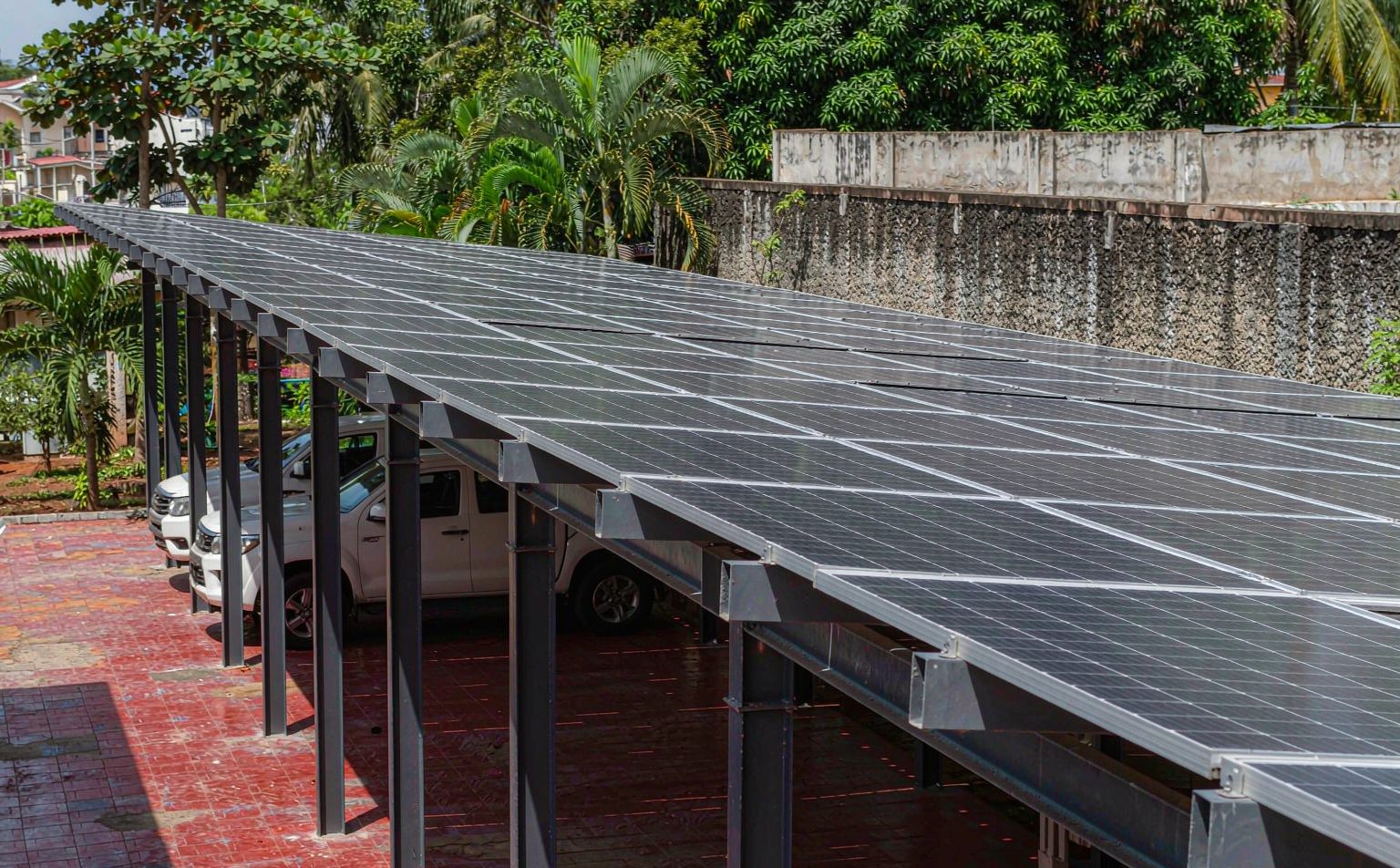
Modules are the easiest line to benchmark. In 2026 Tier-1 monocrystalline panels trade in the USD 0.10 to 0.16 per watt band ex-works in container volumes, with bifacial formats at the top of that range. What a buyer pays at the end is that figure plus freight, duty treatment, clearance and dealer margin, which is why solar panel price in Ghana tracks policy as closely as it tracks commodity markets.
| Componente | Indicative 2026 price | What moves it |
|---|---|---|
| Tier-1 monocrystalline module | USD 0.10–0.16 / W | Cell format, container volume |
| Bifacial module | USD 0.13–0.19 / W | Yield gain versus frame cost |
| Rack-mounted LFP battery | USD 110–170 / kWh | Order size, C-rate, warranty |
| Three-phase hybrid inverter | USD 60–110 / kW | MPPT count, backup rating |
| Roof mounting structure | USD 25–55 / kW | Roof type, wind loading |
| Ground mounting structure | USD 55–110 / kW | Foundations, soil, tilt angle |
| DC and AC cabling, protection | USD 35–70 / kW | Cable runs, earthing |
| Installation labour in Ghana | USD 40–90 / kW | Crew skill, site access |
Two consequences follow. A larger battery raises solar panel price in Ghana more, per dollar spent, than a larger array does. And the gap between a 10kW and a 20kW system is frequently smaller than the gap between two 10kW systems with different storage.
Buyers sourcing directly should also check how Tier-1 manufacturers are graded, because the tier label is applied loosely in retail channels and it feeds directly into solar panel price in Ghana at the retail end.
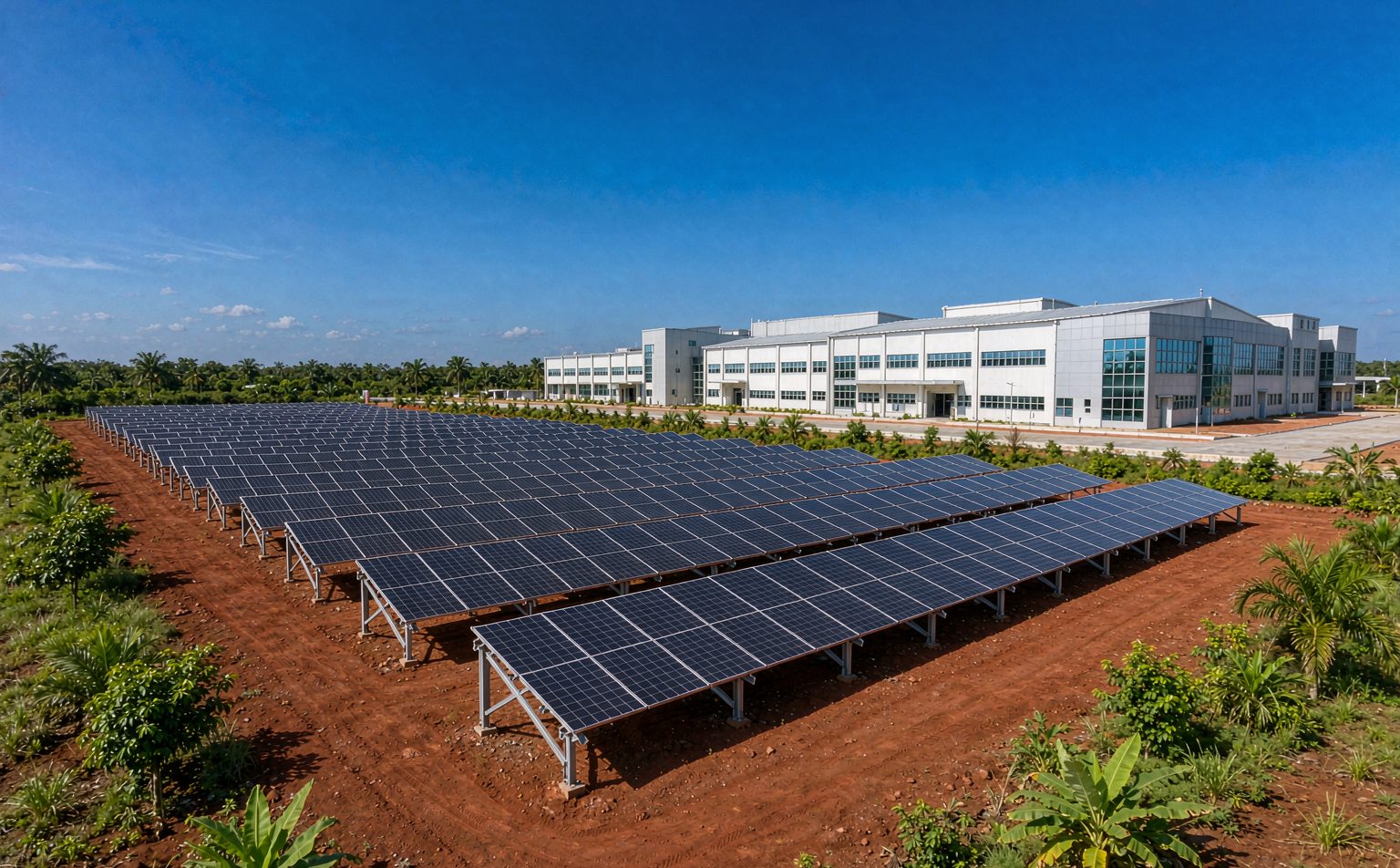
Storage is where budgets separate, and it is where solar panel price in Ghana diverges most between quotations. A 10kW array with a 10kWh bank is a different purchase from the same array with 30kWh of storage, and the battery block, not the panels, is what keeps a factory or hotel running through an evening peak.
Rack-mounted LFP is now the default for commercial work in West Africa. It costs more per kilowatt-hour than flooded lead-acid up front, but delivers roughly three to four times the cycle life, and cycle life is what actually determines the lifetime cost of solar panel price in Ghana.
| Storage option | Indicative cost | Cycle life at 80% depth | Best fit |
|---|---|---|---|
| Rack-mounted LFP | USD 110–170 / kWh | 4,000–6,000 | Commercial, daily cycling |
| Containerised BESS | USD 130–200 / kWh | 5,000–8,000 | 250kW and larger industrial sites |
| Flooded lead-acid | USD 70–110 / kWh | 1,200–1,800 | Low-budget backup duty only |
Rule of thumb: budget one kilowatt-hour of usable storage for every two to three kilowatts of array if the goal is evening coverage, and more where night shifts run. Get this ratio wrong and the site pays twice, once for the wrong battery and again for the right one. It is the largest avoidable swing in solar panel price in Ghana.
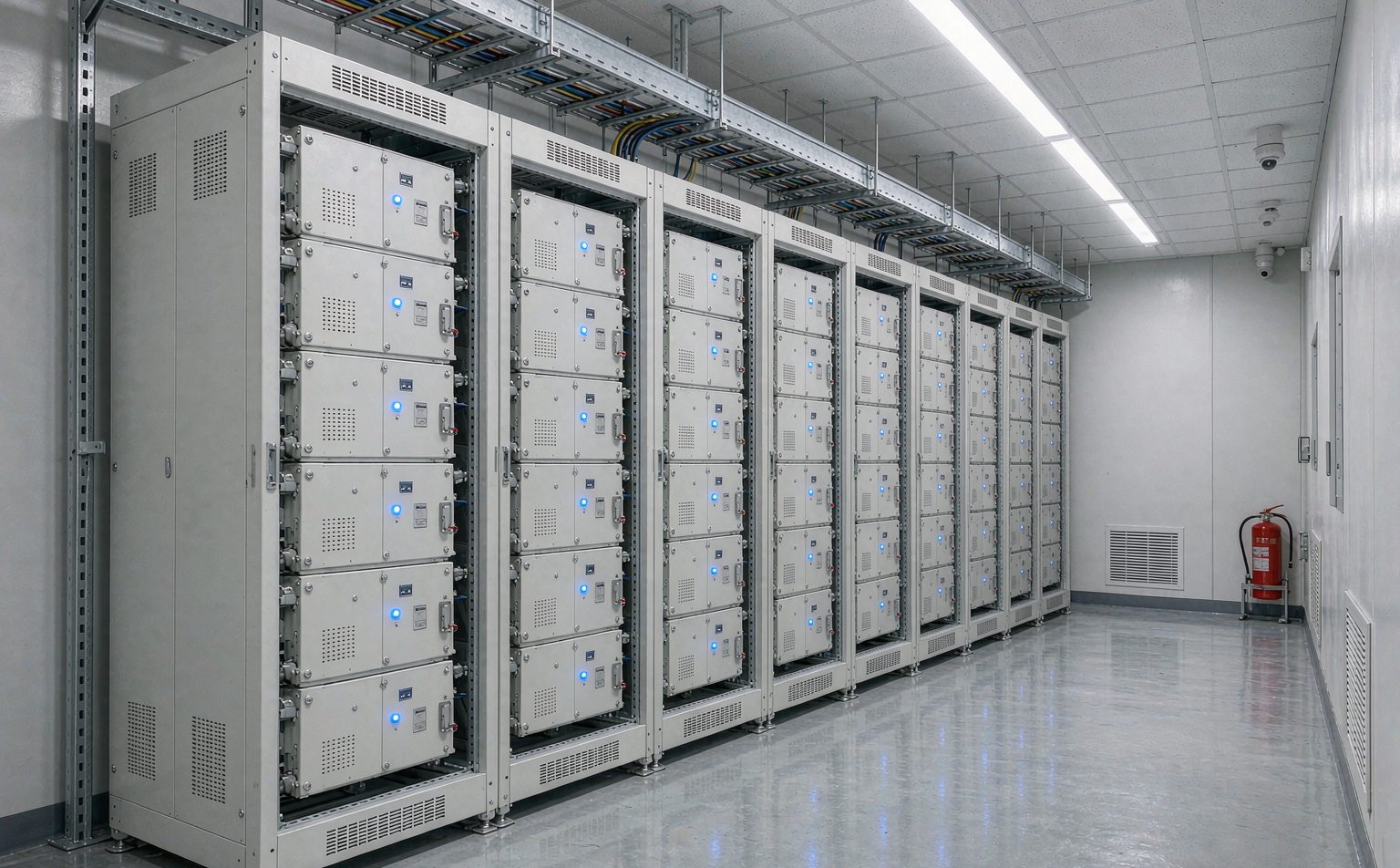
Hybrid inverters have largely replaced separate grid-tie and off-grid units at commercial sites in Ghana. The inverter is the second-largest line in solar panel price in Ghana, and a three-phase hybrid unit in the 50kW to 500kW class runs roughly USD 60 to 110 per kilowatt and handles PV, battery and grid on one bus, which simplifies both wiring and later expansion.
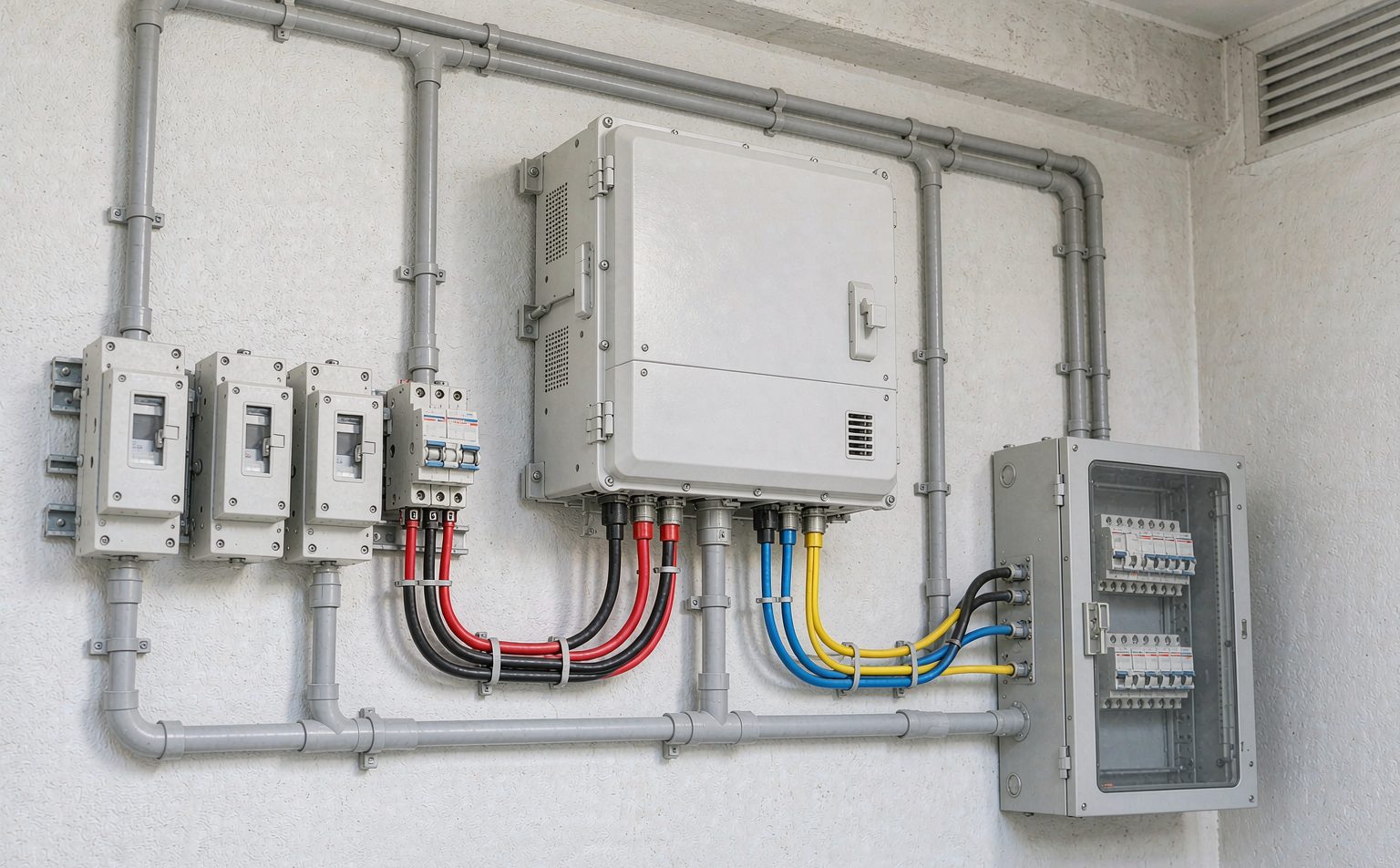
Everything outside module, inverter and battery is grouped as balance of system: mounting, cabling, combiner boxes, earthing, surge protection and monitoring. A tropical site is the wrong place to economise here. UV exposure, humidity and Harmattan dust are hard on cheap connectors and enclosures, and failures appear after commissioning rather than before.
Balance of system typically accounts for around a fifth of solar panel price in Ghana, so ask for the list itemised. A quotation that bundles it into one line usually conceals a downgrade. Sites that skip this step often rebuild the wrong configuration within two years.
Ghana has at times exempted solar modules, inverters and certain batteries from import duty and VAT under specific HS codes, and at other times narrowed those exemptions. This is the most volatile input in solar panel price in Ghana, and it is the one buyers most often price from outdated information.
Before accepting a landed figure, confirm the current treatment for each HS code in your shipment with the Ghana Revenue Authority. Exemptions are amended and re-issued; a rate that applied to last year’s shipment may not apply to next month’s. Budget a contingency for solar panel price in Ghana movements caused by duty changes alone.
Three practical points repeatedly surprise importers. Mixed shipments are assessed line by line, so a container holding modules plus lead-acid batteries does not attract one blended rate. Documentation errors at Tema or Takoradi create demurrage that quietly dwarfs the duty saved. And clearance cost scales with the number of line items rather than the value of the cargo. The document chain is similar across the region, and our Nigerian import walkthrough lists it end to end, while the container loading guide covers how to pack a mixed shipment so it clears in one pass.
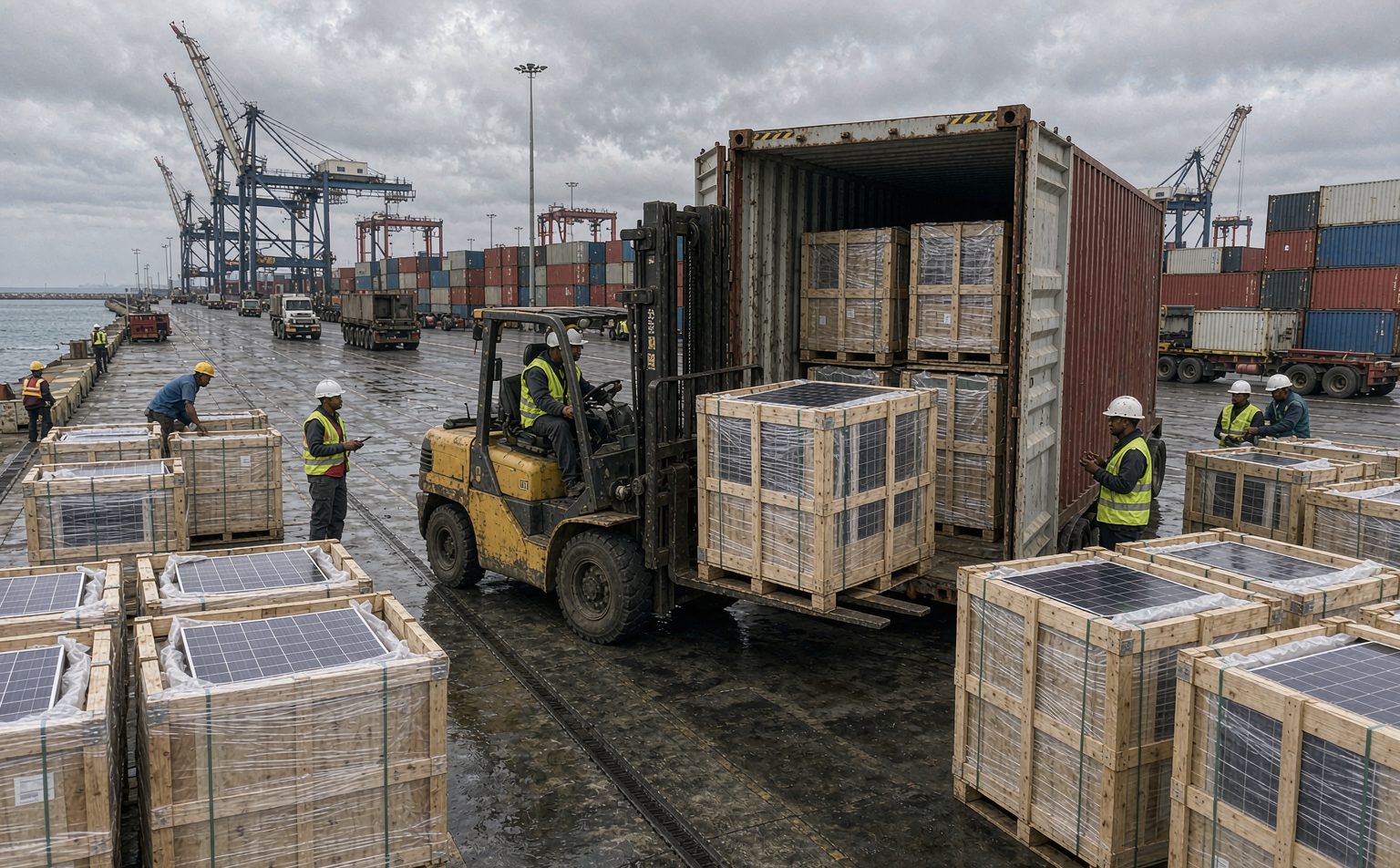
Certification barely moves solar panel price in Ghana, but it decides whether the system arrives at all: compliance is a clearance gate, not a formality. Modules should carry IEC 61215 and IEC 61730 certification, and inverters should carry IEC 62109. Without them, inspection can hold a shipment while the site stands unfinished and the installation crew is paid to wait.
Verify certificates against the model numbers actually shipped rather than against a generic product family, because the certificate is what allows the consignment to land at the quoted solar panel price in Ghana. The Ghana Standards Authority sets out the applicable requirements, and our guia de certificação solar walks through the documents a supplier should hand over with the goods. Buyers who skip this step inherit the delay, not the supplier.
Installation labour is the most locally variable element of solar panel price in Ghana, generally USD 40 to 90 per kilowatt for a competent crew, higher for steep roofs, long cable runs or sites that need scaffolding. Ground-mounted arrays cost less to mount and more to trench.
Logistics is the most commonly underestimated component of solar panel price in Ghana. Port clearing, inland transport to Kumasi, Takoradi or Tamale, crane hire for containerised storage, and site security during commissioning all sit inside the budget and none of them appear in a per-watt module price.
Rooftop and ground-mounted layouts carry different risks. Roof arrays avoid land cost but depend on the structural capacity of the building. Ground arrays are easier to service but need fencing, drainage and, in some regions, land-rights documentation. Compare them on total installed cost rather than equipment cost, the same trade-off we analysed for the Philippines.
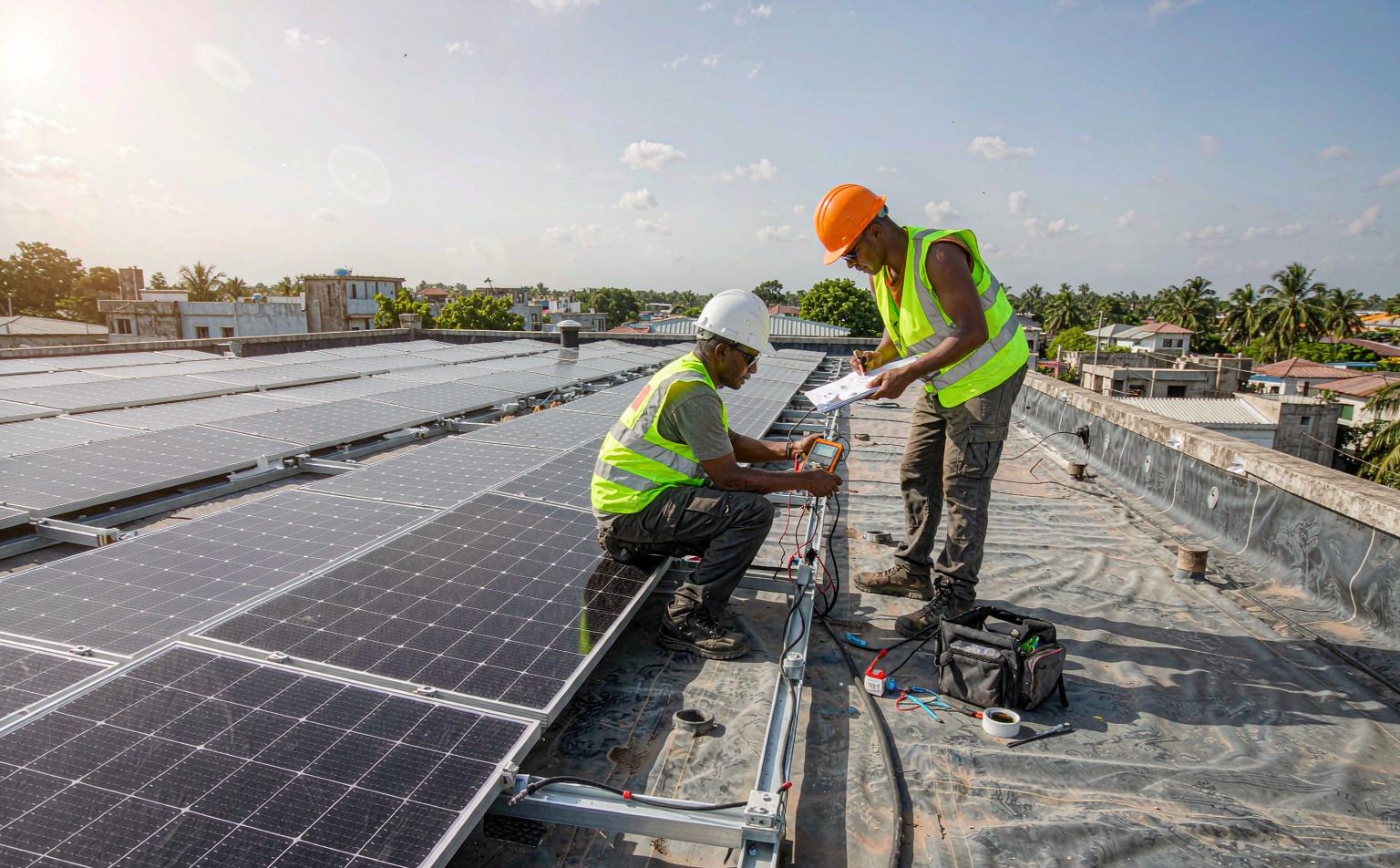
A 10kW sistema híbrido with a 20kWh LFP bank is the most common commercial entry point in Ghana. It is enough for a guesthouse, clinic, small workshop or a retail site running air conditioning, and it is the size most buyers treat as a reference point for solar panel price in Ghana. Landed, installed and commissioned, budget the following ranges.
| Scope | Indicative landed cost (USD) | Typical site |
|---|---|---|
| 5kW hybrid with 10kWh LFP | 5,000–7,500 | Home, small shop |
| 10kW hybrid with 20kWh LFP | 9,000–14,000 | Guesthouse, clinic, workshop |
| 20kW hybrid with 40kWh LFP | 16,000–24,000 | Retail mall, small factory |
| 50kW hybrid with 100kWh LFP | 38,000–58,000 | Factory, hotel, cold store |
| 100kW hybrid with 200kWh LFP | 72,000–110,000 | Industrial line, large hotel |
| 250kW hybrid with 500kWh BESS | 170,000–260,000 | Manufacturing plant |
Convert to cedis at the rate your supplier actually used, not at the rate you remember. The cedi has moved sharply over the past two years, and quotations that quietly embed a favourable exchange rate tend to grow by the time the final invoice arrives.
At 50kW and above, solar panel price in Ghana per kilowatt falls, but by less than buyers expect. Module cost per watt improves with container volume, while mounting, cabling and installation scale almost linearly. The real saving comes from engineering: better string design, fewer and larger inverters, and a storage block sized to the measured load curve instead of a round number.
A 50kW hybrid system with 100kWh of storage typically lands in the USD 38,000 to 58,000 band; a 100kW system with 200kWh lands in the USD 72,000 to 110,000 band. Spread across 25 years, that works out at a levelised cost of roughly USD 0.045 to 0.075 per kilowatt-hour, below commercial grid tariffs in Ghana and a fraction of diesel generation. That levelised figure, not the equipment total, is the honest basis for comparing solar panel price in Ghana between suppliers.
Sites that get this wrong usually oversize the array and undersize the battery, producing a solar panel price in Ghana that looks competitive on paper and never performs on site. A factory running a single day shift rarely needs more than four hours of storage, while a hotel with evening occupancy needs six to eight. Model the load first, then size. Our BESS cost guide sets out the storage-first method in detail.
Payback is decided by the tariff you displace rather than by the equipment price, so solar panel price in Ghana is only half of the calculation. Ghana’s commercial tariffs sit in an indicative GHS 1.5 to 2.4 per kilowatt-hour band after recent PURC-approved adjustments, and diesel or small generator power costs several times that. Confirm the band that applies to your meter with ECG or PURC before modelling. Ghana’s irradiation averages roughly 4.5 to 5.5 kilowatt-hours per square metre per day, which is why a modest array carries a disproportionate share of a site’s load.
| Source | Indicative cost per kWh | Note |
|---|---|---|
| ECG commercial tariff | GHS 1.5–2.4 | Confirm current PURC-approved band |
| Diesel generator | GHS 6–11 | Fuel plus maintenance |
| Solar LCOE over 25 years | USD 0.045–0.075 | Hybrid configuration with battery |
Worked example: a 50kW hybrid with 100kWh of storage costing USD 45,000 at a factory consuming 300kWh a day. Assuming 4.6 kilowatt-hours generated per installed kilowatt per day across 330 operating days, the array produces about 75,900kWh a year. Self-consumed at 85 percent against a GHS 1.9 tariff, that displaces roughly GHS 122,000 of grid energy annually, a simple payback near four and a half years before any diesel offset. These assumptions are editable and should be checked against your own bills. Where a site cannot fund the capital, a power purchase agreement model is the usual alternative.
There are legitimate ways to reduce solar panel price in Ghana and illegitimate ones. The legitimate levers:
What is not a legitimate lever: reducing cable sizes, omitting surge protection, or accepting uncertified modules. Those savings are recovered by the site within the warranty period, and never by the buyer. Buyers weighing bifacial against monofacial panels should also confirm that the yield gain justifies the price premium at their latitude and mounting height.
Most disputes about solar panel price in Ghana begin with a quotation that was ambiguous rather than dishonest. Watch for these patterns.
The countermeasure is a component-level bill of materials with model numbers, plus a written statement of which currency, which exchange rate and which duty assumption the price uses. Ask for a delivery schedule and an acceptance test plan as well, because a low solar panel price in Ghana delivered late is not a saving: our Africa installation planning notes show how commissioning milestones are sequenced on a factory-direct project.
How much does a solar panel cost in Ghana in 2026? A single Tier-1 monocrystalline panel in the 550W class typically trades in the USD 60 to 90 range depending on order size and format, before duty and clearance. In container quantities the module is the cheapest part of the system, usually under 20 percent of a complete hybrid installation.
What does a complete 10kW solar system cost in Ghana? A 10kW hybrid system with 20kWh of LFP storage usually lands between USD 9,000 and USD 14,000, installed and commissioned. Mounting method, cable runs and certification requirements account for most of the spread.
Is solar cheaper than the grid in Ghana? For commercial sites, yes. Solar with storage produces electricity at an indicative LCOE of USD 0.045 to 0.075 per kilowatt-hour, against a commercial grid tariff in the GHS 1.5 to 2.4 band and diesel generation several times higher. Confirm current tariffs with ECG or PURC before modelling.
How long does a solar system in Ghana take to pay for itself? A well-sized commercial hybrid system typically pays back in four to six years at current tariffs. Systems that displace diesel pay back faster, and systems sized mainly for backup rather than daily cycling pay back more slowly.
Are solar panels and batteries exempt from import duty in Ghana? Exemptions have applied to certain HS codes and have been narrowed at other times. Confirm the current treatment with the Ghana Revenue Authority before accepting any landed price, and ask the supplier to state which HS codes the quotation assumes.
How long do solar batteries last in Ghana’s climate? LFP batteries are typically rated for 4,000 to 6,000 cycles at 80 percent depth of discharge, which is roughly 12 to 16 years of daily cycling. High ambient temperatures accelerate degradation, so battery rooms in Ghana should be ventilated and shaded even when the cells are rated for tropical operation.
Mars Solar manufactures PV systems and LFP battery storage in China and ships factory-direct to Ghana with certification packs and dangerous-goods documentation, which is why our solar panel price in Ghana quotations carry no distributor layer. Send your load profile, peak target and site constraints and we will return a sized system with an indicative budget, with the storage block priced separately so you can see exactly what the battery is buying you.
Request a quotation or message us on WhatsApp with your utility bills attached. If the configuration is still open, start with an on-site solar survey.
For a factory-direct quotation sized to your site, see our solar system Ghana page: configurations, indicative 2026 landed cost to Tema, and the clearance documents we prepare before the vessel sails.

 English English
  Arabic
 Spanish
 French
 Dutch
Dutch
 Portuguese