
What Can a 100kW 215kWh BESS Actually Power?
A 100kW 215kWh BESS is a 100 kW converter paired with 215 kWh of LFP storage. Together they deliver roughly 184 kWh of usable AC energy per cycle — enough to carry a 40 kW commercial load for about 4.5 hours, a 60 kW hotel evening block for three hours, a 100 kW pump station at full rate for 1.8 hours, or a 25 kW cold store through a nine-hour outage. The number that decides which of those you get is not the 100 kW. It is how long the load must survive without you touching it.
Most buyers arrive with the wrong question: whether the cabinet is big enough for their premises, as if a battery were a generator sized against a building. It is not. A 100kW 215kWh BESS is a power ceiling and an energy budget stacked in one enclosure, and the two limits fail in completely different ways. This page works through both, load type by load type, with the arithmetic.
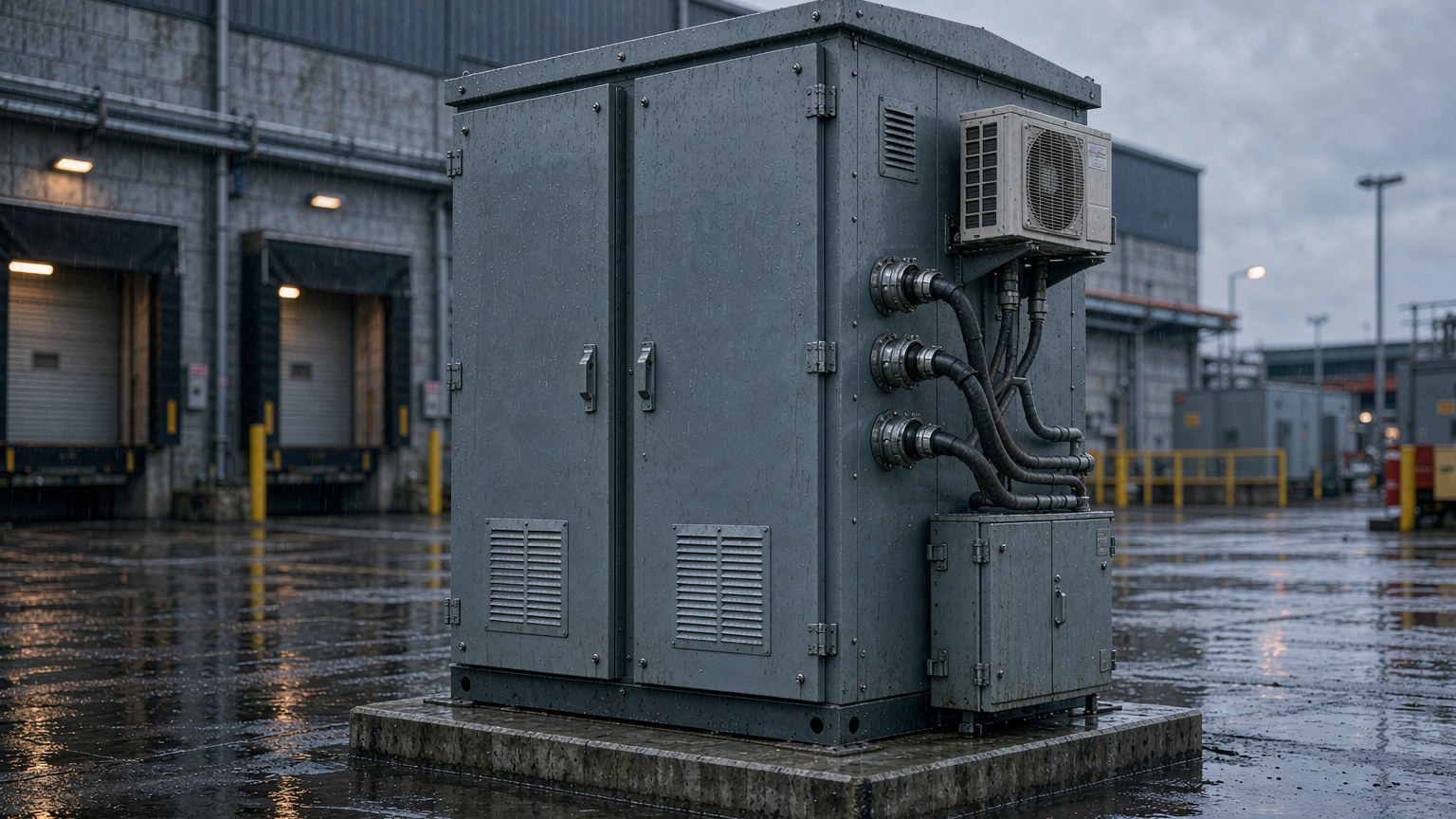
Quick answer: 100kW 215kWh BESS
- 184 kWh per cycle, not 215. After 90% depth of discharge and a 95% round-trip efficiency, the 100kW 215kWh BESS puts about 184 kWh on the AC side. Quoting the nameplate as usable energy overstates the runtime by 17%.
- 1.8 hours at full power, 9 hours at a fifth of it. Runtime is delivered energy divided by load. Drop the load to 20 kW and the same 100kW 215kWh BESS runs for more than nine hours.
- It fits hotels, cold stores, pump stations and single-shift factories. All four sit under 100 kW of peak and under 184 kWh of nightly energy — which is why the 100kW 215kWh BESS has become the default commercial cabinet.
- It does not fit a site that idles above 7 kW around the clock. A 100kW 215kWh BESS cycled once a day can only cover 7 to 8 kW of continuous baseload. Anything more needs a second cabinet or a smaller duty.
- Motor starting, not running load, is the usual failure. A 100 kW inverter starts a 100 kW motor only if the starting method keeps inrush inside its overload window.
Two numbers with two different jobs
The 100 kW is a ceiling enforced by the power conversion system. Ask for 105 kW and the cabinet does not deliver 105 kW slowly — it clips, or trips, or leans on the grid. The 215 kWh is a budget you spend down and refill. Confusing the two is the most common reason a 100kW 215kWh BESS gets blamed for a problem it did not cause.
Two multiplications turn the nameplate of a 100kW 215kWh BESS into delivered energy, and both are printed on the datasheet a supplier should send with the quotation:
Delivered AC energy = nameplate kWh × DoD × RTE
| Basis | Multiplier | Energy available at the AC terminals |
|---|---|---|
| Nameplate | 1.00 | 215 kWh — the number on the quotation |
| 90% depth of discharge | 0.90 | 193.5 kWh of DC energy inside the operating window |
| 95% round-trip efficiency | 0.95 | ≈184 kWh delivered AC — the figure to plan against |
| 80% daily cycle depth (warranty-friendly) | 0.80 × 0.95 | ≈163 kWh if you hold the daily swing to 80% |
That last row is the one to argue about with your supplier. Running the 100kW 215kWh BESS to 90% every day is technically fine on LFP and gives you 21 kWh more per cycle. Holding to 80% costs you that 21 kWh but buys margin on cycle life. Either way, both rows are honest; the dishonest number is 215.
How long it runs at a given load
Once you accept 184 kWh, runtime is one division. The table below is the answer most buyers actually wanted when they asked what a 100kW 215kWh BESS can power.
Runtime (h) = 184 kWh ÷ average load (kW)
| Steady load | Runtime | Typical site that sits at this level |
|---|---|---|
| 15 kW | 12.3 h | Bank branch, clinic, small telecom shelter |
| 20 kW | 9.2 h | Guesthouse outside peak, small cold room |
| 30 kW | 6.1 h | Restaurant and retail floor after closing |
| 40 kW | 4.6 h | Single-shift workshop, mid-size office block |
| 50 kW | 3.7 h | Hotel at night with air conditioning running |
| 70 kW | 2.6 h | Food retail with refrigeration and HVAC together |
| 100 kW | 1.8 h | Pump station, wastewater plant, production line at rate |
A 100kW 215kWh BESS is a superb tool at 40 kW and a mediocre one at 100 kW. Both are inside its rating, but only the first gives you a working day. The C-rate tells the same story: 100 kW into 215 kWh is 0.47C, an easy continuous duty for LFP, which is why the pairing survives daily cycling rather than merely passing a commissioning test.
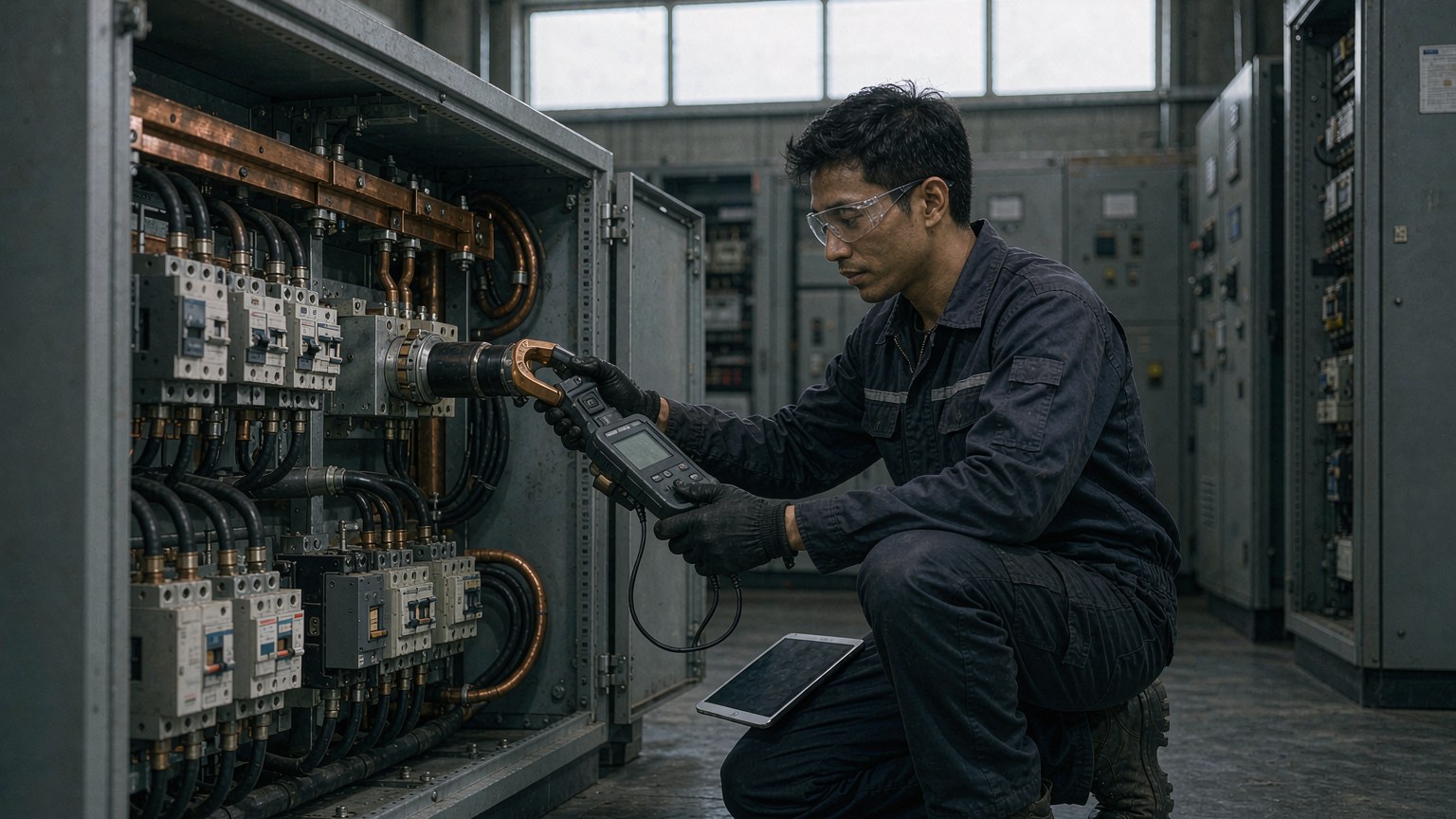
What it powers well: five load types
The categories below are not marketing segments. Each has a different relationship between peak kW and nightly kWh, and that relationship is what decides whether one 100kW 215kWh BESS is enough.
Hotels and guest houses
A hotel's load is dominated by air conditioning, which follows occupancy and ambient temperature rather than the clock. In our Abuja project the evening block — rooms, kitchens, banqueting — was the load that diesel generators were carrying every night, at roughly ₦650 per kWh once fuel, maintenance and depreciation were counted. That project used 250 kW of PV with a 500 kWh bank, because 250 kW of connected load does not fit in one cabinet.
A smaller property fits cleanly. A 100kW 215kWh BESS covers 50 kW of evening load for three and a half hours, which is the window between sunset and the point where occupancy-driven cooling drops.
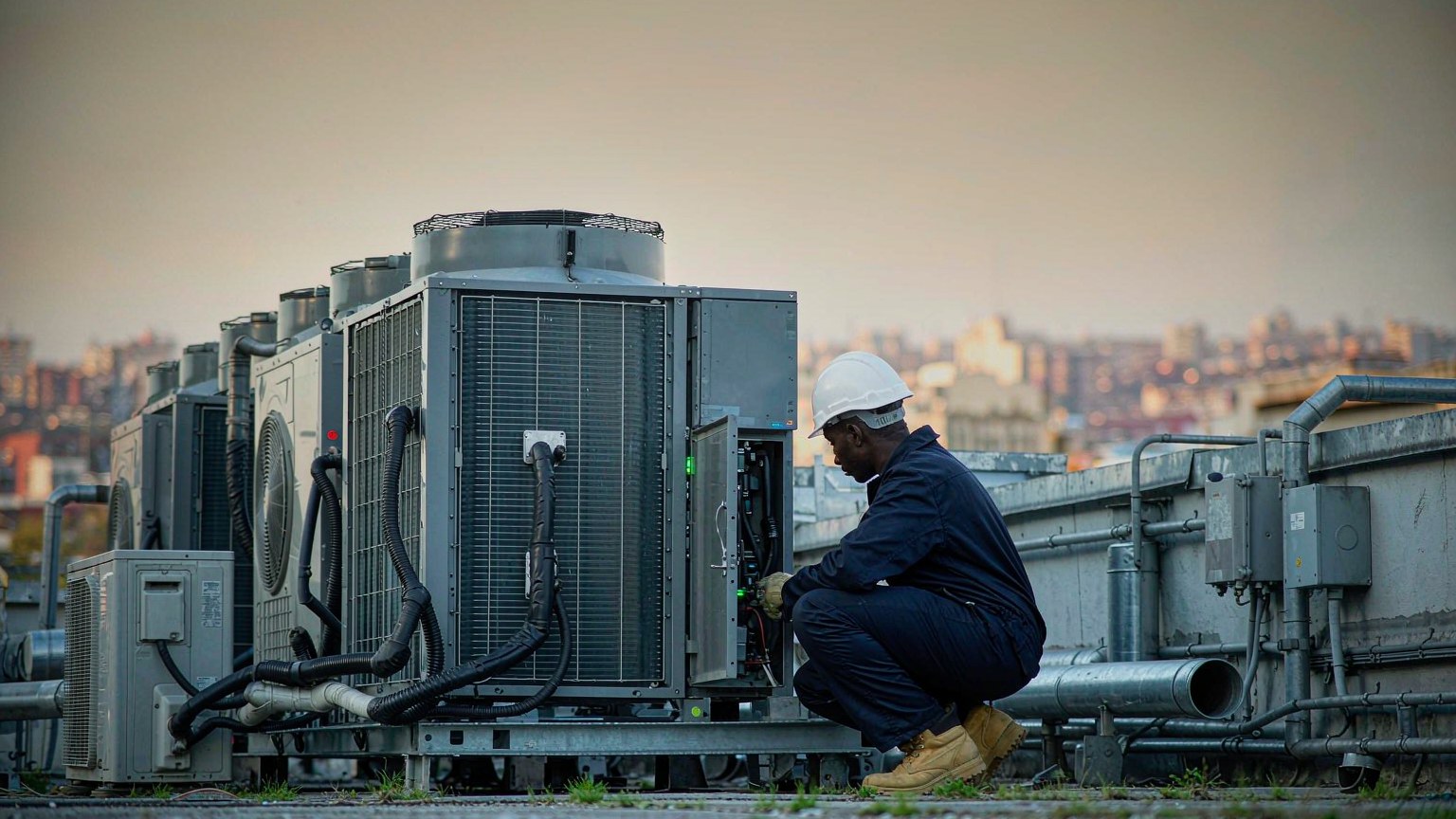
Cold storage and food retail
Refrigeration is the load that refuses to be deferred. A cold store in Laguna running between −18°C and −25°C carries a monthly bill above PHP 320,000, and a 100 kW solar array cut that by 30% — about PHP 96,000 a month, with a 23-month payback on the PV alone. That project had no battery, because its problem was cost per kWh rather than continuity.
Add a 100kW 215kWh BESS and you are buying a different thing: the ability to ride through an outage without letting the product warm. At a 70 kW pull that is 2.6 hours of cover, which clears most urban outages and does not clear a multi-day grid failure. Sizing a 100kW 215kWh BESS here must start from the longest credible outage, not from the demand charge — the rule we set out in the sizing method for 100kW peak loads.

Single-shift factories
A factory that runs one shift has a load shape a battery likes: high during the day, near zero at night, and a peak created by a handful of motor starts. If the connected peak is 100 kW and the average is 45 kW, a 100kW 215kWh BESS covers the evening and the early shift without stress. The factory load guide for Nigeria works through that profile in more detail.
Two-shift and three-shift plants are a different case. Continuous operation at 80 kW draws 1,920 kWh a day, and no 100kW 215kWh BESS covers that; you would be looking at four units or a containerised block. The honest test is simple: multiply your average kW by the hours you refuse to lose, and compare the answer to 184.
Water treatment and pump stations
Pumping is the load type where a 100kW 215kWh BESS earns its reputation, because the danger is not comfort but compliance. Our Sudan project runs a municipal wastewater plant 24/7 — submersible sewage pumps, aeration blowers, sludge dewatering, UV disinfection and SCADA — on 30,000 to 50,000 kWh a month. The 215 kWh cabinet absorbs the surge when the pumps start and carries critical processes for more than two hours through an outage.
Two details from that installation transfer to any pump site. First, the BMS and dispatch logic were calibrated to the plant's actual pump and blower cycles over the first two days on site, because a pump duty is not a constant load. Second, the cabinet was specified for 55°C ambient and an IP55 enclosure, since a pump station is a hot, wet, dusty place. Neither is optional in the tropics.

Clinics, bank branches and telecom sites
These are the easiest duties in the catalogue and the ones most often over-specified. A bank branch with lighting, servers, ATMs and split units typically peaks at 30 to 50 kW and averages far less; our Liberia installation paired 50 kW of PV with 150 kWh for exactly that profile. A 100kW 215kWh BESS on the same site would give the branch two full days of autonomy with headroom.
The real requirement at these sites is transfer time, not capacity. A server room does not tolerate a two-second gap, so the transfer time of a 100kW 215kWh BESS — under 20 milliseconds on a properly specified unit — matters more than the extra 60 kWh.
What actually fits inside 184 kWh
Add up a plausible nightly block for a 100 kW-class commercial site and the budget disappears faster than most buyers expect.
| Load | kW | Hours | kWh | Running total |
|---|---|---|---|---|
| Air conditioning, occupied areas | 35 | 5 | 175 | 175 — budget gone |
| Lighting and small power | 12 | 5 | 60 | 235 — over |
| Kitchen and lifts | 15 | 2 | 30 | 265 — well over |
| Server and security | 4 | 5 | 20 | 285 — over |
The conclusion is uncomfortable: a 100kW 215kWh BESS does not carry a fully occupied building for five hours. It carries it for about two and a half hours, or it carries a reduced set of loads for five. That is why every credible design starts by naming the loads that must survive and giving the rest to the grid or the generator. The arithmetic belongs before the order, not after the first outage.
Surge: why a 100 kW inverter will not start a 100 kW motor
The 100 kW rating on a 100kW 215kWh BESS is a running rating. Motors do not draw their running current at the instant of start — direct-on-line starting pulls five to eight times nameplate for a second or two, and the inverter has to supply that from its DC bus or refuse.
| Starting method | Inrush vs running | Largest motor a 100 kW cabinet starts in practice |
|---|---|---|
| Direct on line (DOL) | 5 – 8× | Roughly 15–20 kW, and only one at a time |
| Star-delta | 2 – 3× | Roughly 30–40 kW, sequencing starts |
| Soft starter | 2 – 3×, longer ramp | 40–50 kW, with the ramp kept inside the overload window |
| Variable frequency drive | 1.1 – 1.5× | Close to the full 100 kW, since the drive limits current itself |
Those multiples are the assumption the table rests on — standard motor characteristics, not a claim about any particular pump or compressor. What you must obtain from the cabinet supplier is the overload window — how much above 100 kW the unit holds and for how long — and then check every motor against it. A 100kW 215kWh BESS paired with VFD-driven pumps behaves like a 100 kW machine. The same cabinet behind three DOL compressors behaves like a 25 kW one.
Practical rule. Add up the running kW of every load you want on the battery, then add the largest single starting surge on top. If the total exceeds the cabinet's short-term overload rating, sequence the starts or fit drives — a design decision, not a battery upgrade.
What a 100kW 215kWh BESS cannot power
Being explicit about the failures is more useful than another list of strengths. Six requests should be declined or re-scoped:
- A whole site that demands more than 100 kW. The ceiling is hard. If the site's peak is 140 kW, the battery covers part of it and the grid covers the rest; you cannot ask the cabinet for the difference.
- Continuous baseload above 7 to 8 kW, 24 hours a day. 184 kWh spread over a day is 7.7 kW. A site that never drops below 15 kW cannot be carried around the clock by one cabinet, however good the peak shaving looks.
- Thermal process loads. Electric boilers, drying ovens, induction heating and melting furnaces run for hours at full rating. They are energy sinks, not peaks, and they empty a 100kW 215kWh BESS in under two hours.
- Several large motors started together. Three 30 kW pumps starting simultaneously look like a 300 kW load for two seconds. The cabinet will trip, and the site will blame the battery.
- EV charging depots. Two 60 kW DC chargers exceed the ceiling on their own, and a depot cycles far more energy per day than 184 kWh.
- Sites with no recharge window. A cabinet that discharges 184 kWh needs those kWh back. Where the grid is present six hours a day and there is no array, the duty is not repeatable, and the second night is when the shortfall appears.
Load shape decides more than load size
Two sites with identical monthly consumption can need completely different answers, because a battery is a tool for reshaping a curve rather than shrinking it.
| Shape | Signature | What the cabinet delivers |
|---|---|---|
| Spiky | Short peaks to 100 kW, average 30 kW | Excellent. Peaks are clipped for minutes, energy lasts all evening |
| Flat-topped | 70–90 kW held for ten hours | Poor. The battery rides the plateau for under two hours, then the plateau returns |
| Night-heavy | 20 kW by day, 60 kW after sunset | Good, if a solar array refills the cabinet during the day |
The flat-topped site is the one to walk away from, or to sell a tariff review to instead. A 100kW 215kWh BESS cannot flatten a ten-hour plateau; it can only shave the first two hours of it. In that case the cheaper intervention is usually load sequencing or a contract change, and saying so is worth more than the order.
The recharge window is part of the rating
A 100kW 215kWh BESS is a daily-cycle machine, and a daily cycle needs a daily refill. Delivering 184 kWh at 95% round-trip efficiency means putting roughly 194 kWh back in. Spread over five daylight hours that is an average charge power near 39 kW; from a grid connection limited to 50 kW it is four hours of charging with almost nothing left for the building.
Two consequences follow for a 100kW 215kWh BESS. Where solar is present, the array size — not the battery — sets how deep you can cycle every day, because a 40 kWp array on a cloudy day will not refill 184 kWh. Where the grid is the only source, the tariff window sets it, and a cheap overnight window that overlaps your own peak is worth checking before the equipment is ordered.
Commissioning checks that prove the claim
Everything above is a prediction until the cabinet is measured. Five tests turn the claim about a 100kW 215kWh BESS into a fact, and all five should be in the commissioning scope before it ships.
- 72-hour continuous run at rated load. Thermal behaviour and cell balancing appear over days, not in a two-hour demonstration.
- Discharge against the real load profile. Use logged interval data, not a resistive bank, and record the delivered AC energy at the meter.
- Surge test on the largest motor. Start the worst offender three times and confirm the cabinet holds without transferring to bypass.
- Transfer and reserve test. Force an outage at the end of a discharge window and confirm the reserved state of charge is still there.
- Recharge timing. Measure how long the cabinet actually takes to return to full on the site's own source, and compare it to the window the design assumed.
Background on stationary storage sizing and grid applications: the U.S. Department of Energy Solar Energy Technologies Office publishes an open overview of solar and storage research and deployment programmes. Cabinet-level safety testing for industrial lithium systems follows IEC 62619 and UL 9540A; ask for both certificates rather than a summary sheet.
Frequently asked questions
How many kWh does a 100kW 215kWh BESS actually deliver?
About 184 kWh at the AC terminals. The 215 kWh nameplate falls to 193.5 kWh at 90% depth of discharge, then to roughly 184 kWh after 95% round-trip efficiency. Plan the load against 184 and the system behaves as promised.
How long can a 100kW 215kWh BESS run a 50 kW load?
Approximately 3.7 hours at a steady 50 kW. If the load varies — it always does — integrate the curve; peaks above 50 kW consume energy faster than the average suggests.
Can a 100kW 215kWh BESS run a whole hotel?
It can run the loads that matter: lighting, air conditioning in occupied areas, refrigeration, servers and security. It cannot run a fully occupied building for a full evening at 100 kW, which is 1.8 hours. Name the critical circuits first, then size.
Will it start a 100 kW motor?
Only with a drive or a soft starter in front of it. Direct-on-line starting pulls five to eight times running current, which exceeds the cabinet's overload window. With a VFD the same 100 kW motor starts comfortably, because the drive limits current itself.
What is the largest continuous load it can carry around the clock?
About 7 to 8 kW: 184 kWh over 24 hours is 7.7 kW. Anything above that needs a second cabinet, a smaller duty, or an arrangement where the grid carries the baseload.
Does the cabinet work in 45°C ambient heat?
Yes, if it was specified for it. Our cabinets ship with forced-air cooling sized for 45°C operation, and the Sudan unit was built for 55°C with an IP55 enclosure. One quoted for 35°C ambient will derate exactly when you need it most.
Can one 100kW 215kWh BESS both shave peaks and provide backup?
Yes, if the design reserves a state-of-charge floor — commonly 20% — for backup duty. Without that floor, an outage late in the shaving window finds the cabinet nearly empty, and the reserve becomes the whole point of the argument afterwards.
How much space does the cabinet need?
Plan on the footprint of two large refrigerators, plus clearance for door swing, cable entry and airflow. Outdoor placement on a concrete pad is normal, so there is no plant room and no structural work.
What does a 100kW 215kWh BESS cost?
Indicative 2026 CIF pricing sits between $150,000 and $185,000 depending on destination port, driven by cell pricing, whether the converter is grid-forming, and the certification file. Our cabinet specification and pricing guide breaks the number down line by line.
When should I choose 125 kW / 261 kWh instead?
When the corrected nightly requirement lands between 240 and 290 kWh, which usually happens once you add a 20% reserve or size for a four-hour evening block. The 125kW 261kWh cabinet is the same architecture with more energy, and it is often cheaper than a bespoke build.
Next step
Send us the load list with running kW and hours for each circuit, and we will tell you which of those circuits a 100kW 215kWh BESS can carry, for how long, and what has to stay on the grid. If the answer is that one cabinet is not enough, we will say so and show the arithmetic — including the cases where storage is the wrong first purchase.
Start from the 100kW 215kWh cabinet specification, or read the Filipinas e Nigéria market guides if the site is already identified. Two reference installations are worth ten minutes each: the Sudan wastewater plant on 100kW 215kWh and the Laguna cold store. Request a load review and we will return a sized configuration within two working days.



 English
 Arabic
 Spanish
 French
 Dutch
 Portuguese