Linguagem
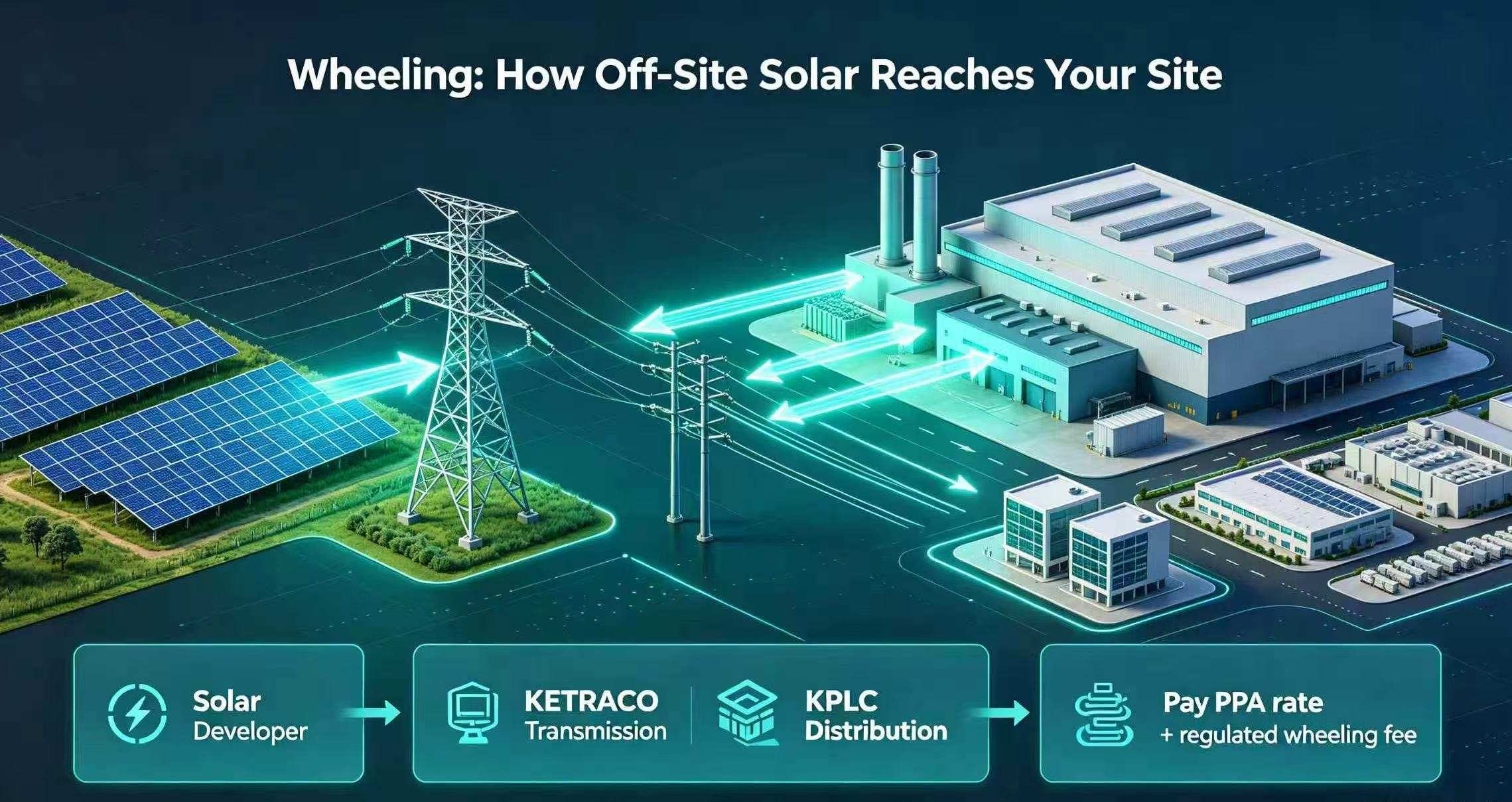
Solar PPA Kenya is now open to every large power consumer, not just utilities. Under the Energy (Electricity Market, Bulk Supply and Open Access) Regulations of 2026, gazetted by the Energy and Petroleum Regulatory Authority (EPRA), a factory, industrial park, data centre or commercial complex can sign a 10–20 year power purchase agreement directly with a solar developer — and KPLC is no longer the mandatory buyer in between. You simply pay the developer the contracted PPA price per kWh, plus a regulated “wheeling” fee to use KPLC and KETRACO’s transmission lines.
This is the biggest structural change to Kenya’s electricity market since the Energy Act 2019, and it is aimed squarely at the businesses that currently pay the highest rates. Here is exactly what changed, how a solar PPA works, what it costs, and whether it is right for your site in 2026.
Kenyan businesses have long paid some of the highest commercial electricity prices in East and Central Africa — an effective KSh 18–28 per kWh all-in once fuel cost charges, forex adjustment, levies and 16% VAT are added. Large industrial users (70% of KPLC’s sales by revenue) have been subsidising cheaper residential tariffs. The 2026 Open Access Regulations let those same industrial users bypass KPLC’s retail margin and contract a solar generator directly, often locking in a rate well below grid.
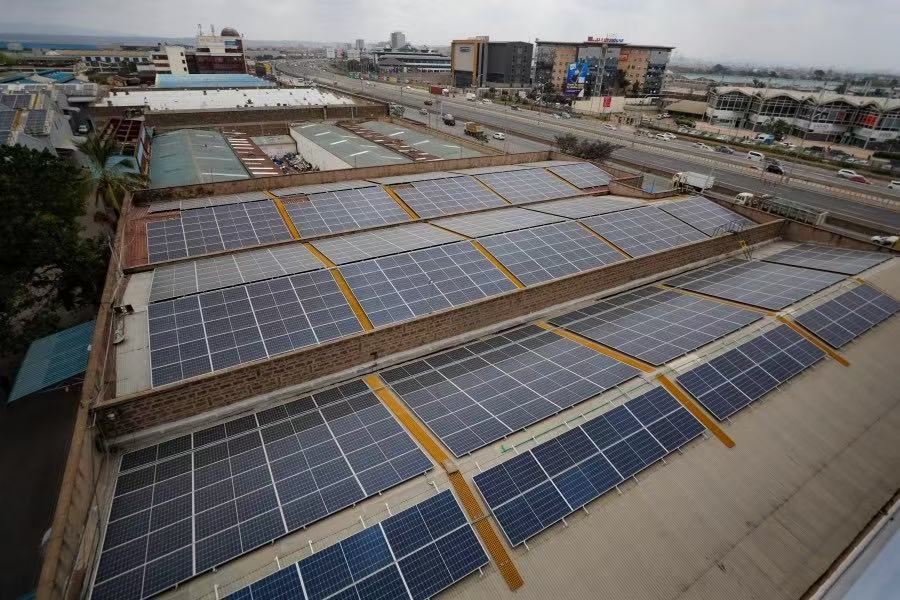
A Power Purchase Agreement is a long-term contract where a solar developer builds, owns and operates the system, and you agree to buy the electricity it produces at a fixed price per kWh. You pay nothing upfront — the developer finances the project, and your savings start from day one.
| Step | O que acontece |
|---|---|
| 1. Feasibility | Developer audits your load, roof/land and consumption profile. |
| 2. PPA signing | Agree a fixed ₹/kWh (KSh) price for 10–20 years, often with an annual escalation cap. |
| 3. Permits | EPRA compliance, NEMA approvals, KPLC interconnection — handled by the developer. |
| 4. Construction | Developer funds, builds and commissions the plant. |
| 5. Operation | You pay only for the solar kWh you consume, at the PPA rate. |
The two ways a solar PPA is delivered in Kenya after the 2026 rules:
Commercial and industrial tariffs are a moving target because EPRA adjusts fuel and forex surcharges monthly. Here is the real 2026 picture.
| Componente | Typical 2026 Cost |
|---|---|
| KPLC C&I base tariff (CI1, 400V) | KSh 13.44/kWh |
| Fuel Cost Charge (FCC) + Forex (FERFA) | KSh 4–7/kWh, monthly variable |
| REP + ERC + WRMA levies | ~KSh 0.50–0.55/kWh |
| 16% VAT + demand charge | applied on top |
| Effective all-in grid rate | KSh 18–28/kWh |
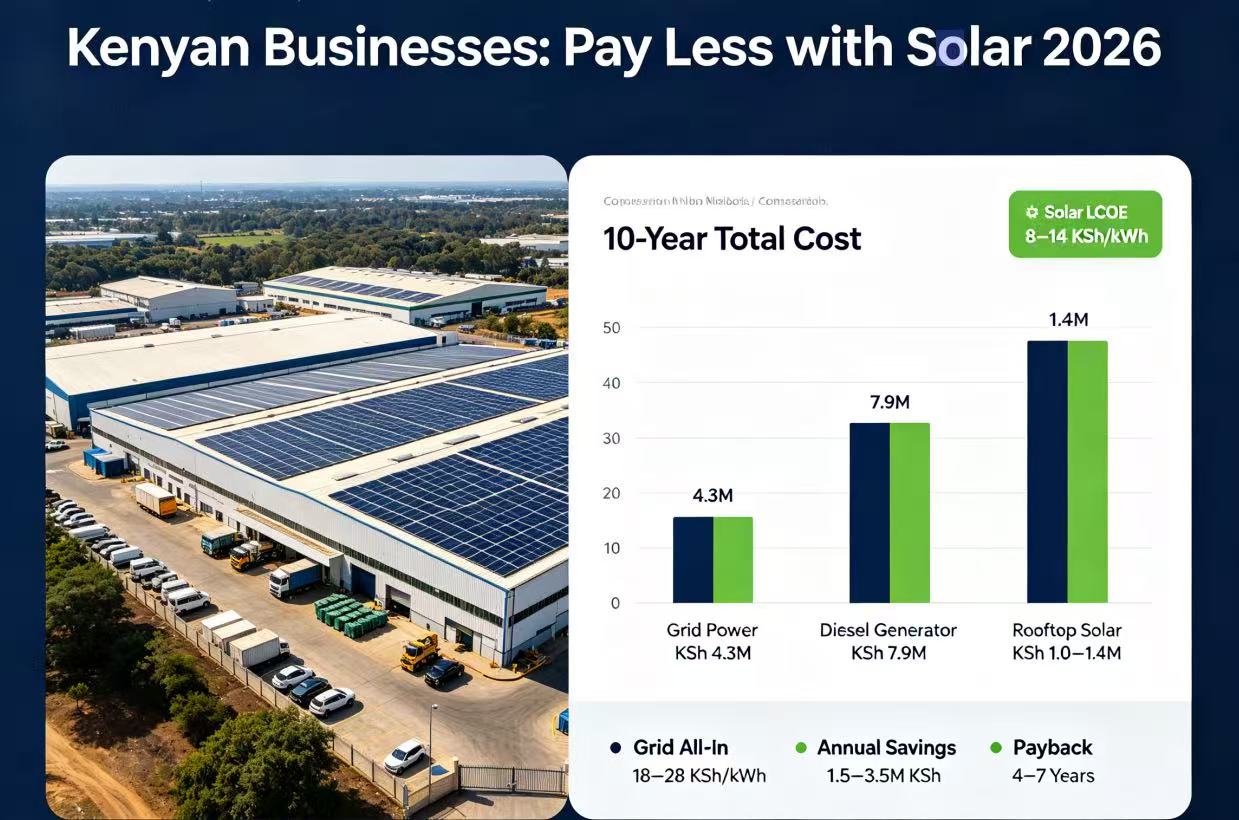
A well-sized commercial solar system delivers electricity at an LCOE of KSh 8–14/kWh over 25 years — roughly half to a third of grid. A 200 kW rooftop system on a Nairobi factory generates ~290 MWh per year and cuts annual electricity cost by KSh 1.5–3.5 million, with a 4–7 year payback.
Even compared with diesel backup — which many Kenyan factories run for hours daily — solar is dramatically cheaper. Over 10 years, grid power costs a typical SME about KSh 4.3 million and diesel generators about KSh 7.9 million, while solar totals just KSh 1.0–1.4 million including maintenance.
O Energy (Electricity Market, Bulk Supply and Open Access) Regulations of 2026 formally ended KPLC’s near-exclusive right to be the counterparty for large power deals. The key provisions:
| Provision | What It Means for You |
|---|---|
| Direct PPAs | Generators can sell straight to large consumers — no KPLC PPA required. |
| Open access / wheeling | KPLC & KETRACO must give non-discriminatory network access for a regulated fee. |
| Bulk-supply threshold | Consumers above it can contract a solar farm anywhere in Kenya. |
| Retail competition | Licensed retailers can buy and resell power to businesses. |
This builds on the November 2025 lifting of the two-year PPA moratorium, which also allowed new PPAs to be denominated in shillings, foreign currency, or a mix — cutting currency risk for locally-financed projects. Solar and battery storage are the fastest routes to new capacity, and the first renewable energy auction is expected in late 2026.
Kenya’s tax framework keeps solar equipment cheap to import. Bare solar cells and modules are exempt from import duty and VAT (VAT Act 2013, Section 15(n)). The Business Laws Amendment Bill 2026 goes further, proposing to cut import VAT on broader green energy equipment from 16% to 8%. One caution: a separate Finance Bill 2026 proposal could move batteries from zero-rated to exempt VAT, which would raise battery prices — so lock in battery-heavy quotes early.
O que é um PPA solar no Quénia?
Um contrato de compra de energia em que um promotor de energia solar constrói e é proprietário do sistema e você compra a eletricidade a uma tarifa fixa — sem custos iniciais, poupanças desde o primeiro dia.
Posso agora adquirir energia solar sem ter de recorrer à KPLC?
Sim. O Regulamento de Acesso Aberto de 2026 permite que os grandes consumidores celebrem contratos de aquisição de energia (PPA) diretamente com os promotores de projetos solares, utilizando a rede da KPLC/KETRACO apenas para o “transporte de energia”, mediante uma tarifa regulamentada.
Quanto é que um contrato de aquisição de energia solar (PPA) pode poupar à minha empresa?
A energia solar comercial custa entre 8 e 14 KSh/kWh, contra os 18 a 28 KSh/kWh da rede elétrica com todas as despesas incluídas — o que representa, normalmente, uma redução de 40 a 60% na parte da sua fatura relativa à energia solar.
Tenho de pagar alguma coisa adiantado?
Não. Num PPA, é o promotor que financia a central; o cliente paga apenas pela eletricidade que consome, à tarifa contratada.
A minha empresa é elegível?
São elegíveis fábricas, parques industriais, centros de dados, cimenteiras e grandes complexos comerciais que ultrapassem o limiar de fornecimento a granel. As instalações de menor dimensão podem ainda optar por energia solar no local (cativa) com potência inferior a 1 MW, sem necessidade de licença da EPRA.
Grandes consumidores de energia acima do limiar de fornecimento a granel: fábricas, parques industriais, centros de dados, cimenteiras e grandes complexos comerciais. Um PPA solar deste tipo no Quénia permite que uma instalação celebre um contrato diretamente com um promotor solar, em vez de adquirir energia através da tarifa de retalho da KPLC. As instalações de menor dimensão não estão excluídas da energia solar; simplesmente utilizam geração cativa no local com potência inferior a 1 MW, que não requer licença da EPRA, em vez de um PPA solar externo no Quénia.
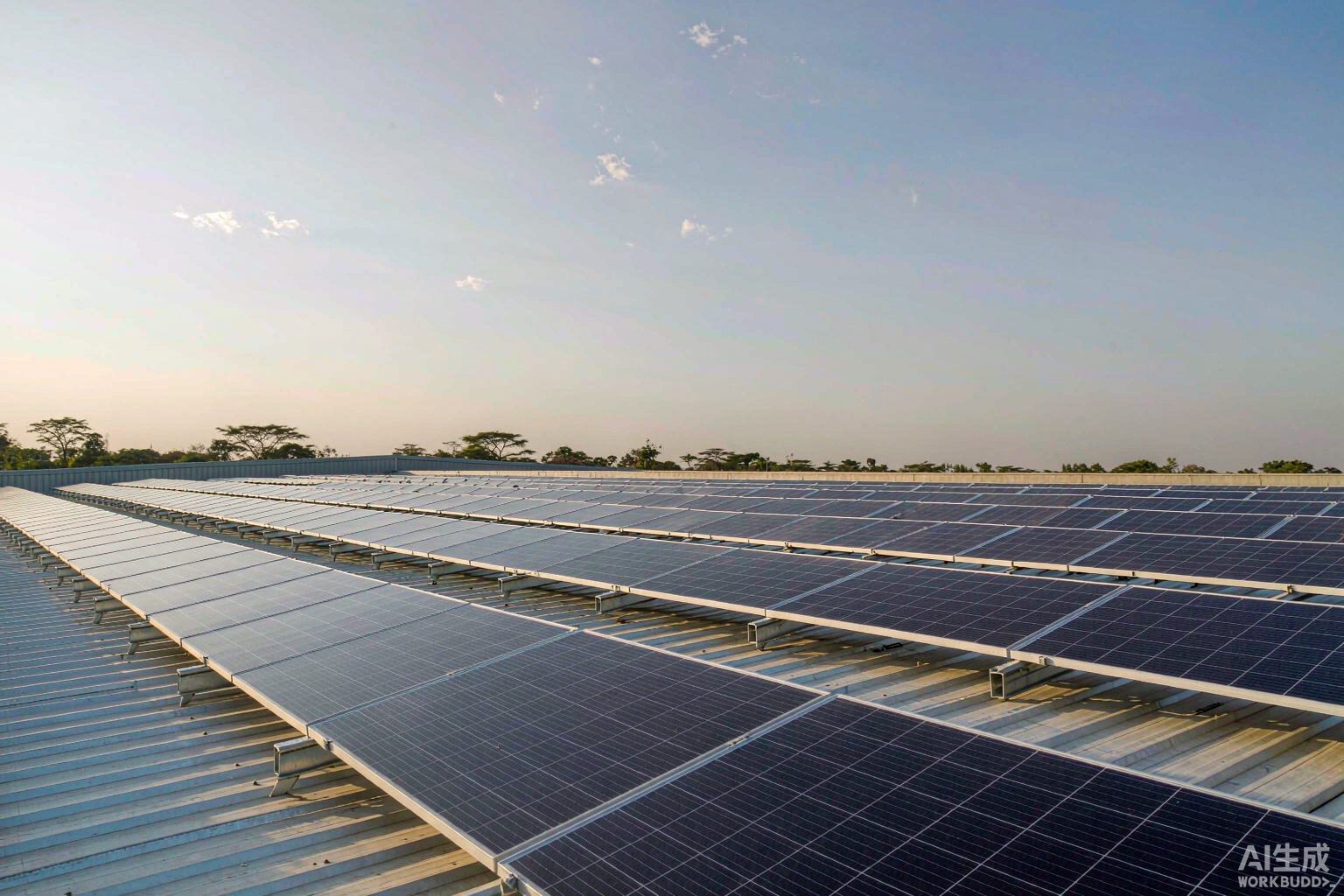
Roof area decides it. If your roof can carry the array, a captive on-site solar PPA Kenya avoids wheeling charges entirely and delivers the power behind your own meter. If you need more than 5 MW, or your site has no usable roof, the off-site solar PPA Kenya route uses a solar farm elsewhere with KPLC and KETRACO wheeling the energy for a regulated access fee.
A fixed KSh per kWh for 10–20 years, usually with a capped annual escalation rather than an open one. The relevant benchmark is that commercial solar generates at an LCOE of roughly KSh 8–14 per kWh over 25 years against KSh 18–28 per kWh all-in grid power. A well-structured solar PPA Kenya sits between the two, sharing that gap between the developer's return and your saving.
This is the clause that decides whether the deal is safe. Most solar PPA Kenya contracts are take-or-pay on a minimum energy volume, so a shutdown or a demand slump still obliges payment. Before signing a solar PPA Kenya, model your worst realistic production year and check that the minimum offtake sits below it. Where it does not, negotiate a lower commitment rather than a lower tariff.
Your generator injects into the grid and you draw from the grid somewhere else; KPLC and KETRACO move the energy and charge a regulated access fee for the use of the network. You pay the developer the contracted price plus that fee. The 2026 regulations made this path explicit for the first time at commercial scale, which is what opened a solar PPA Kenya beyond the utility counterparty model.
Partly, and only if the developer passes them through. Bare solar cells and modules are exempt from import duty and VAT under the VAT Act 2013, and the Business Laws Amendment Bill 2026 proposes wider green-energy relief. Because a solar PPA Kenya developer buys that equipment, the exemption reduces their capital cost — ask directly how much of it is reflected in the tariff you are being offered.
Ownership and balance sheet. In a solar PPA Kenya the developer funds, owns and operates the asset and you buy kWh, so there is no capital outlay but also no asset on your books. In an EPC purchase you own the system and keep the full saving, but you carry the capital cost and the performance risk. For a site that can fund the capital, ownership usually beats a solar PPA Kenya over 25 years.
Through a fixed escalation cap written into the contract. A common structure is a flat KSh rate with a low annual step, which protects the buyer from fuel and forex surcharges because those do not pass through to a solar PPA Kenya price at all. That immunity is the quiet advantage: grid tariffs move monthly with fuel and forex adjustments, while a solar PPA Kenya price does not.
Twelve months of electricity bills, interval or half-hourly consumption data if your utility provides it, roof or land drawings, and a single-line diagram of the existing connection. Without interval data a solar PPA Kenya proposal is built on an average that hides your peak, and the size will be wrong. Our solar panel price Kenya 2026 guide shows the component-level costs behind that quotation.
The developer, because they own it. That is written into a solar PPA Kenya as an operating obligation covering cleaning, inverter servicing, module inspection and performance reporting against a guaranteed yield. The trade-off for you is that you neither control nor benefit from the maintenance decisions — so the availability and yield guarantees in the solar PPA Kenya contract are the numbers worth negotiating hardest.
Sources: EPRA Energy (Electricity Market, Bulk Supply and Open Access) Regulations 2026; Kenya Power/EPRA tariff schedule 2025/2026; SurgePV Kenya C&I Solar Guide (April 2026); KI Energy-Tech Commercial Solar ROI Guide 2026.
Want a free feasibility study for your site? Contact us for a WhatsApp quote or email info@marssolargroup.com.

 English English
  Arabic
 Spanish
 French
 Dutch
Dutch
 Portuguese