
Taal
Vroeg geïnstalleerde PV-systemen voldoen over het algemeen niet aan de groeiende energiebehoefte van moderne huishoudens en bedrijven. Vergeleken met het vervangen van het gehele systeem is uitbreiding een economischer optie, maar de kernvraag blijft: kunnen nieuwe en oude PV-technologieën synergetisch samenwerken? Deze gids, waarin de nieuwste technische oplossingen zijn geïntegreerd, beschrijft een vereenvoudigde route voor systeemuitbreiding, methoden om de compatibiliteit te verbeteren en de economische voordelen.
De wereldwijde vraag naar uitbreiding van PV-systemen groeit snel, voornamelijk gedreven door vier kernfactoren:
Volgens gegevens van de Global Solar Council (2024) is de wereldwijde nieuw geïnstalleerde PV-capaciteit in 2024 met 331 TP3T gestegen ten opzichte van het voorgaande jaar tot 197 GWdc, waarvan 621 TP3T afkomstig was van de uitbreiding van bestaande systemen (in plaats van nieuwe projecten). Gebruikers streven er doorgaans naar om het rendement op hun initiële investering te maximaliseren.
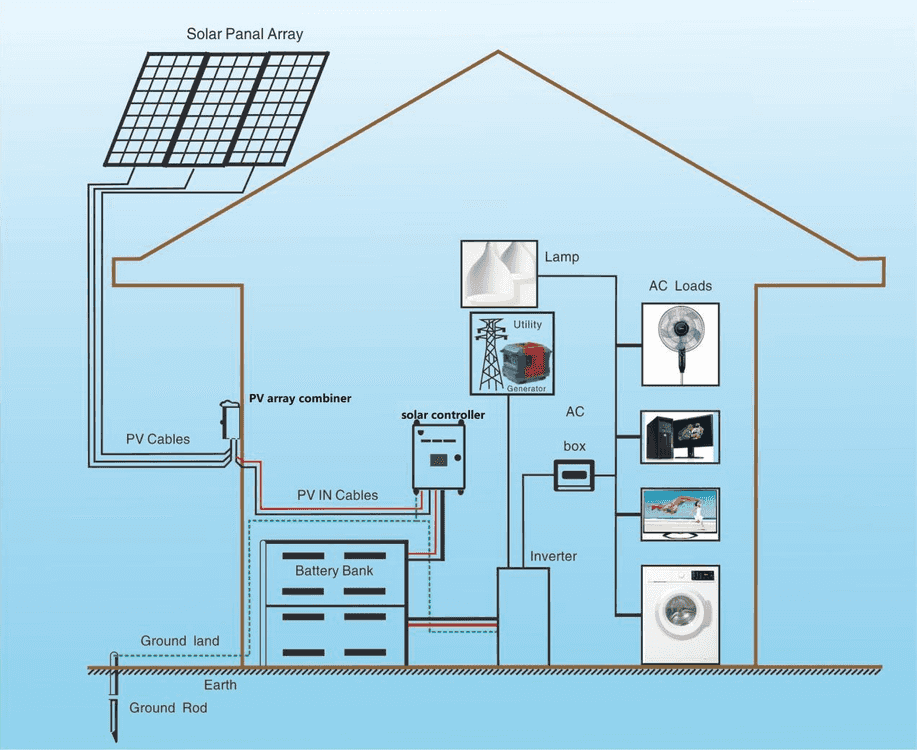
| Kernbarrières | Specifieke probleemomschrijving | Praktische oplossingen |
| PV-paneel mismatch | Efficiëntieverlies van het gehele systeem als gevolg van vermogens-/spanningsverschillen tussen nieuwe en oude panelen | Installeer stringoptimalisatoren (bijv. SolarEdge) of micro-omvormers om de spanning/stroom van elk paneel dynamisch in balans te brengen, waardoor de verliezen worden teruggebracht tot minder dan 5%. |
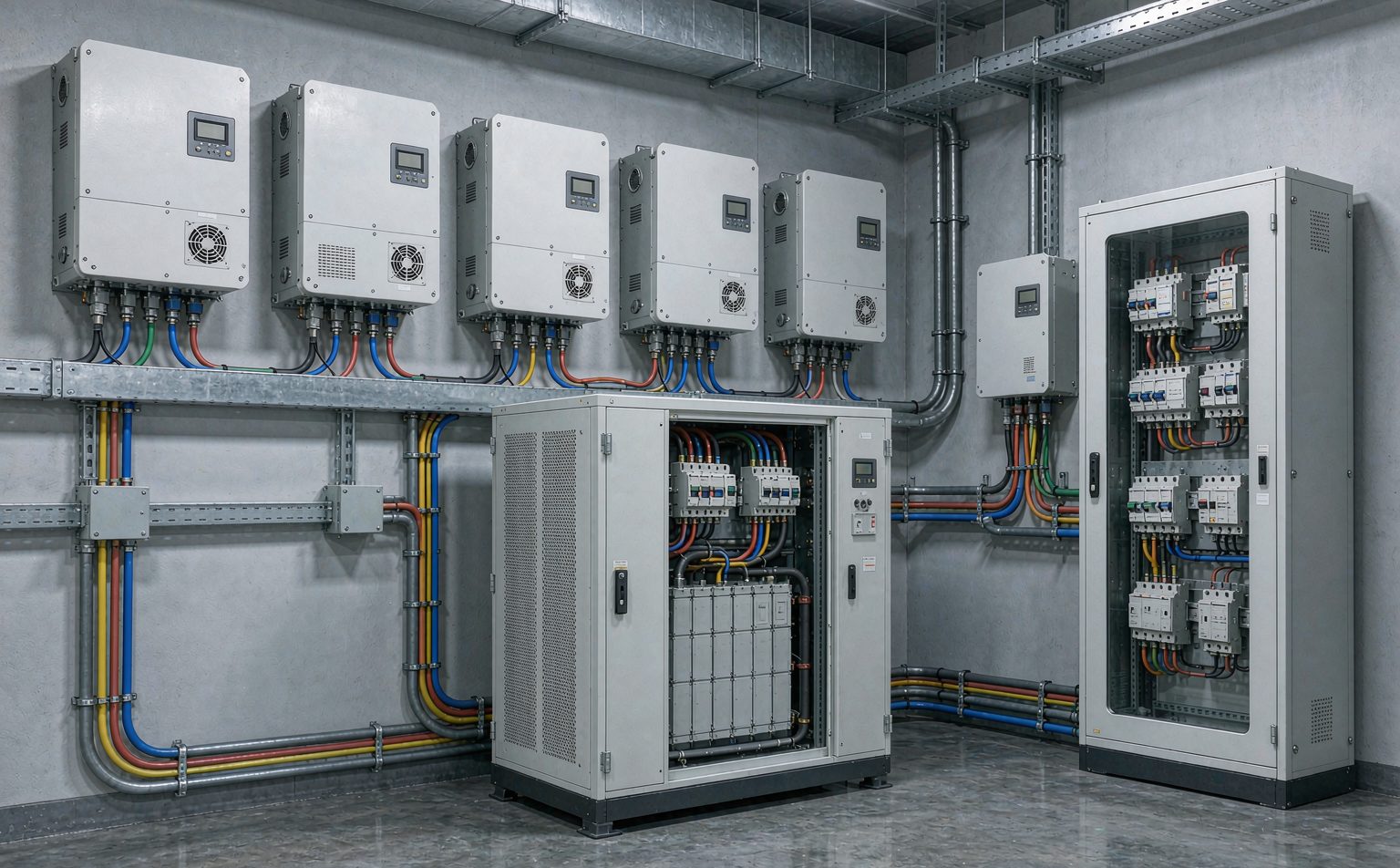
| Onvoldoende omvormercapaciteit | De originele omvormer kan het ingangsvermogen van de nieuw toegevoegde panelen niet aan. | Upgrade naar hybride of multi-MPPT (Maximum Power Point Tracking) omvormers, die de aansluiting van 3-4 strings panelen met verschillende specificaties ondersteunen. |
| Verouderde communicatieprotocollen | Het oude systeemmonitoringsplatform is niet compatibel met gegevens van nieuwe apparatuur. | Implementeer een uniforme monitoringgateway (bijvoorbeeld Mars Smart Gateway) die multiprotocolconversie ondersteunt, zoals Modbus en WiFi. |
| Incompatibele bedrading/connectoren | Het oude systeem maakt gebruik van niet-standaard interfaces (bijv. T4). | Vervang alle connectoren uniform door MC4-standaardconnectoren, of laat een professioneel team de bedrading aanpassen om een IP67-waterdichtheid te garanderen. |
| Jaar | Nieuw geïnstalleerde capaciteit (GWdc) | Cumulatief geïnstalleerd vermogen (GWdc) | Uitbreidingsaandeel (van nieuwe installaties) | Gegevensbron |
| 2021 | ~400 | 1840 (geschat) | 45% (geschat) | Wereldraad voor Zonne-energie |
| 2022 | +228 | ~630 (regionale statistieken) | 51% | IEA-rapport over hernieuwbare energie |
| 2023 | +446 | 2350 (geschat) | 58% | BloombergNEF |
| 2024 | ~197 (33% groei op jaarbasis) | ~597 (regionale statistieken) | 62% | Jaarverslag 2024 van de Global Solar Council |
Prognose 2025-2027: De vraag naar uitbreiding zal een jaarlijkse groei van 281 TP3T handhaven. De belangrijkste drijfveer zal de geïntegreerde uitbreiding van "PV + energieopslag" zijn (goed voor meer dan 701 TP3T). Het vermijden van volledige systeemvervanging kan de kosten met 401 TP3T tot 601 TP3T verlagen.
| Parameter | Voor de uitbreiding (5 kW-systeem) | Na uitbreiding (5 kW + 3 kW toegevoegd) | Veranderingsanalyse |
| Totale systeemcapaciteit | 5 kW (polykristallijne panelen) | 8 kW (oud polykristallijn + nieuw TOPCon) | 60% capaciteitsverhoging |
| Omvormertype | Traditionele single-MPPT-omvormer | Hybride multi-MPPT-omvormer | Ondersteunt toegang tot strings op twee panelen |
| Energieopslagconfiguratie | Geen | 15 kWh lithium-ijzerfosfaatbatterij | Maakt 3-4 uur stroomvoorziening buiten het elektriciteitsnet 's nachts mogelijk |
| Jaarlijkse energieopwekking | 7.200 kWh | 11.520 kWh | 60%-verhoging (inclusief optimalisatie van het laden en ontladen van de energieopslag) |
| Zelfverbruikspercentage | ~35% | ~65% | Energieopslag vermindert de vraag naar elektriciteit van het net. |
| Jaarlijkse besparing op elektriciteitskosten | $864 | $2,160 | 150% stijging (elektriciteitsprijs in Californië: $0,30/kWh) |
| Initiële uitbreidingskosten | - | $3,840 (inclusief apparatuur + installatie) | Werkelijke kosten na aftrek van de Californische subsidie: $2,688 |
| Terugverdienperiode | 10 jaar (origineel systeem) | 7 jaar (het gehele systeem na uitbreiding) | 3-jarige reductie |
Belangrijkste conclusie: De prijs van zonnepanelen is momenteel gedaald tot 0,08-0,10 USD/Wdc. In combinatie met regionale subsidies is de gemiddelde terugverdientijd van uitbreidingsprojecten teruggebracht tot 3-5 jaar, wat beter is dan die van nieuwe systemen (5-8 jaar).
Uitbreiding van PV-systemen is de optimale oplossing geworden om te voldoen aan de groeiende energievraag en de kosten te verlagen. Compatibiliteitsproblemen zijn volledig opgelost dankzij technologieën zoals stringoptimalisatoren en multi-MPPT-omvormers, en het rendement op investering (ROI) van uitbreidingsprojecten is hoger dan dat van nieuwe systemen.
Aanbevelingen voor actie:

Whether a PV system expansion is worthwhile comes down to three checks: inverter headroom, string voltage compatibility,
and whether the roof or ground area still has usable space. A PV system expansion that ignores any one of those three
usually underperforms its modelled output, because the new array is throttled by a constraint elsewhere in the system.
The first check is inverter capacity. Most modern inverters tolerate 20 to 30 percent DC oversizing, which means a
PV system expansion can often add panels without replacing the inverter at all. Where the existing inverter has no
headroom, a second unit or a like-for-like replacement is cheaper than it sounds once you account for the panels being retained.
The second check is string voltage and current matching. Mixing panel generations on one string drags the whole string toward the
weakest module, which is why a PV system expansion normally puts new panels on their own strings feeding a separate
MPPT input. Multi-MPPT inverters make this straightforward; single-MPPT units may need an optimiser per panel.
The third check is physical space and structural capacity. Panels have grown substantially, so a
PV system expansion often fits more capacity into the same footprint than the original array occupied, but the added
dead load and wind uplift still need verifying.
Where the site also wants outage protection or evening self-consumption, pairing a PV system expansion with battery
storage is usually the better single project rather than a second visit later. See our
in een rek gemonteerde energieopslagaccu En
15kWh battery options, or the
100kW hybrid system for commercial sites.
The U.S. Department of Energy's Solar Energy Technologies Office
publishes the equipment and interconnection standards that a compliant PV system expansion should meet, and our
engineers size every PV system expansion against the site's logged consumption rather than a nameplate estimate.
Is PV system expansion cheaper than installing a second system?
Yes, in almost every case. A PV system expansion reuses the existing mounting, cabling, protection and often the inverter enclosure, so the money goes into generation capacity instead of into a second set of fixed costs. Published comparisons put the saving from a PV system expansion at 40-60% against a full replacement, and the payback period of a PV system expansion is shorter than that of a new system because the original capital is already sunk.
Can new panels be added to an older array without losing efficiency?
Only if the mismatch is managed. Adding a 450W N-type module to a string of 270W polycrystalline panels drags the whole string toward the weaker panel. The fix is not to avoid the PV system expansion but to split it: string optimisers or microinverters isolate each panel, and a multi-MPPT hybrid inverter lets the new array run on its own channel. Handled that way, a hybrid PV system expansion typically recovers 12-18% of array efficiency compared with naive series connection.
What is the first step of any PV system expansion?
A system audit, not a purchase order. Before quoting a PV system expansion we record the peak power, open-circuit voltage, short-circuit current and measured degradation of the existing panels, the inverter's MPPT count and voltage window, the cable cross-section and the age of the protection. A PV system expansion specified from the nameplate alone is the most common cause of underperformance we see.
How much can a PV system expansion increase self-consumption?
Substantially, once storage is included. In the California case above, the PV system expansion took annual generation from 7,200 kWh to 11,520 kWh, but the bigger change was the self-consumption rate — from roughly 35% to 65% — because the added battery moved generation into the evening. A PV system expansion that adds panels without storage mostly adds export, not savings.
Does a PV system expansion affect the grid connection or warranty?
It can affect both, which is why a PV system expansion should be documented. A larger array may need a revised interconnection approval, and adding third-party equipment to an existing string can void the original inverter warranty unless the PV system expansion is designed within its permitted input window. Ask the installer for the revised single-line diagram and the updated warranty position in writing.
How long does a PV system expansion take to install?
A residential PV system expansion in the 3-5 kW range is typically a one to two day job once the audit is complete and the equipment has arrived. A commercial PV system expansion is staged around production hours, with the new strings energised on a separate MPPT channel first so the existing array keeps generating throughout.
Mars Solar sizes every PV system expansion against the site's logged consumption rather than a nameplate estimate, and matches the added PV system expansion to the inverter's spare MPPT capacity before any hardware is quoted.

 English English
  Arabic
 Spanish
 French
 Dutch
Dutch
 Portuguese