
Langue
Choosing among reliable solar system suppliers is a due diligence exercise, not a price comparison. A solar array is a 25-year asset, and the company that designs, supplies and commissions it decides whether that asset delivers its modelled yield or becomes a maintenance liability. The failure modes repeat across every market we sell into: mismatched components, mounting that does not survive the local wind zone, warranties nobody honours, and after-sales support that disappears once the invoice is paid.
Reliability, however, is verifiable. This guide sets out seven checks that separate genuinely reliable solar system suppliers from companies that simply resell boxes, and it explains what evidence to ask for at each step. It is written for commercial and industrial buyers, and the questions work just as well for a residential customer — only the scale changes.
Work through the checks in order. The first three are pass or fail: if a supplier cannot document its certifications, name the components in its bill of materials, or explain its warranty structure in writing, stop there. The remaining four assess engineering capability, delivery quality and staying power, which is where the real difference between reliable solar system suppliers and merely cheap ones shows up.

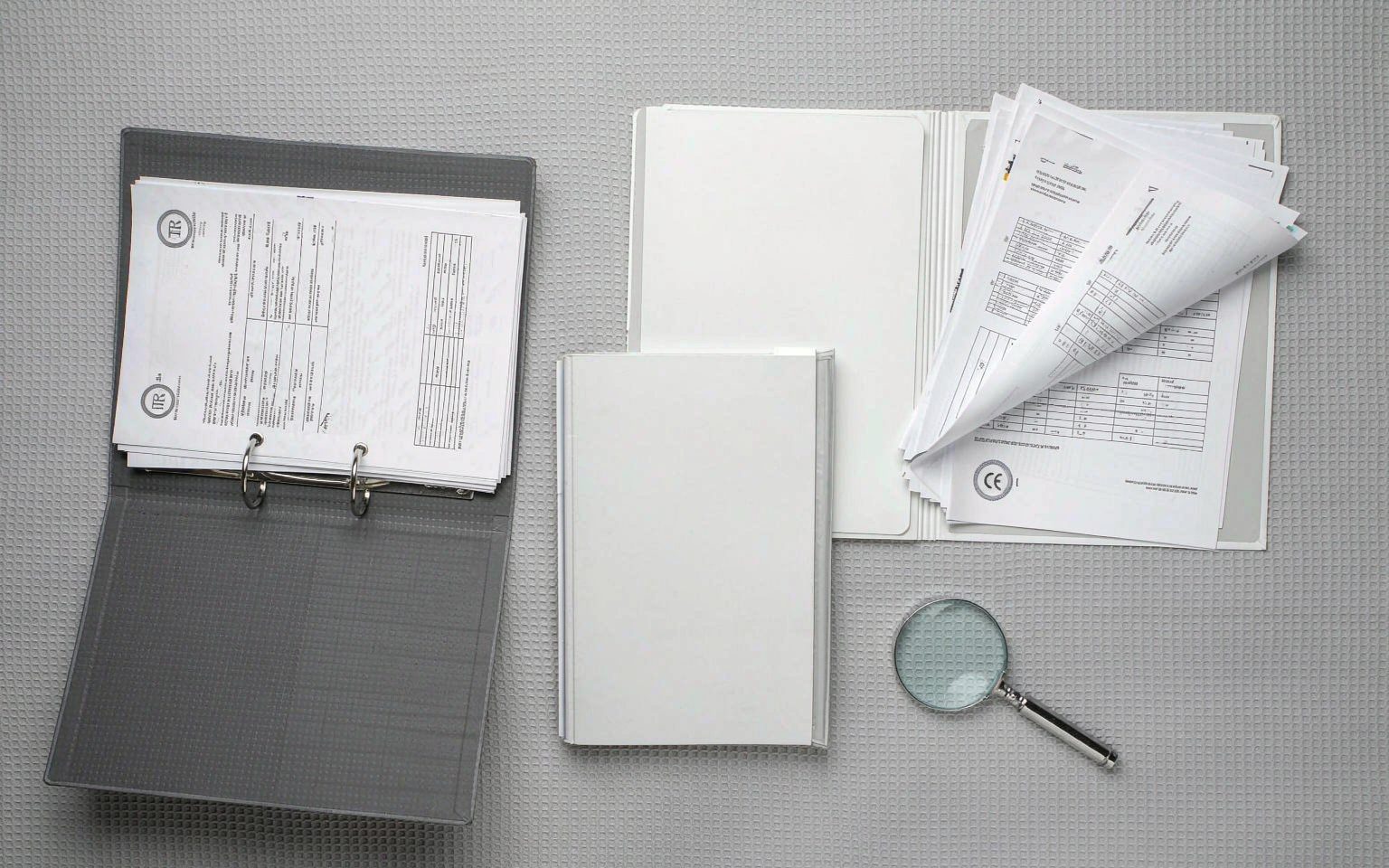
Certifications are the entry ticket, not a differentiator. Ask for them by name, and check that the certificate holder is the company you are buying from rather than a parent entity or a trading name that happens to share a logo. Screening reliable solar system suppliers starts here: either the certificates exist and match the seller, or the conversation ends.
| Composant | Certifications to request | What it proves |
|---|---|---|
| PV modules | IEC 61215 (design qualification), IEC 61730 (safety), plus TÜV or UL listing for the destination market | The module design has been type-tested for durability and electrical safety |
| Onduleurs | IEC 62109, grid-code certificates for the destination country | Electrical safety, and compatibility with local grid protection requirements |
| Batteries | IEC 62619, UN 38.3 transport test, UL 9540A where required | Cell-level safety and tested thermal runaway behaviour |
| Mounting | Structural calculations to the site design wind speed, corrosion class for coastal exposure | Survivability in typhoon or cyclone zones |
Two checks go beyond paperwork. First, request a factory audit report or a third-party inspection record, and verify certificate numbers with the issuing body such as UL Solutions rather than accepting a scanned PDF at face value; a supplier that has never been audited has no verified production quality to point to, and our seven-step solar factory audit guide sets out what a competent audit covers.
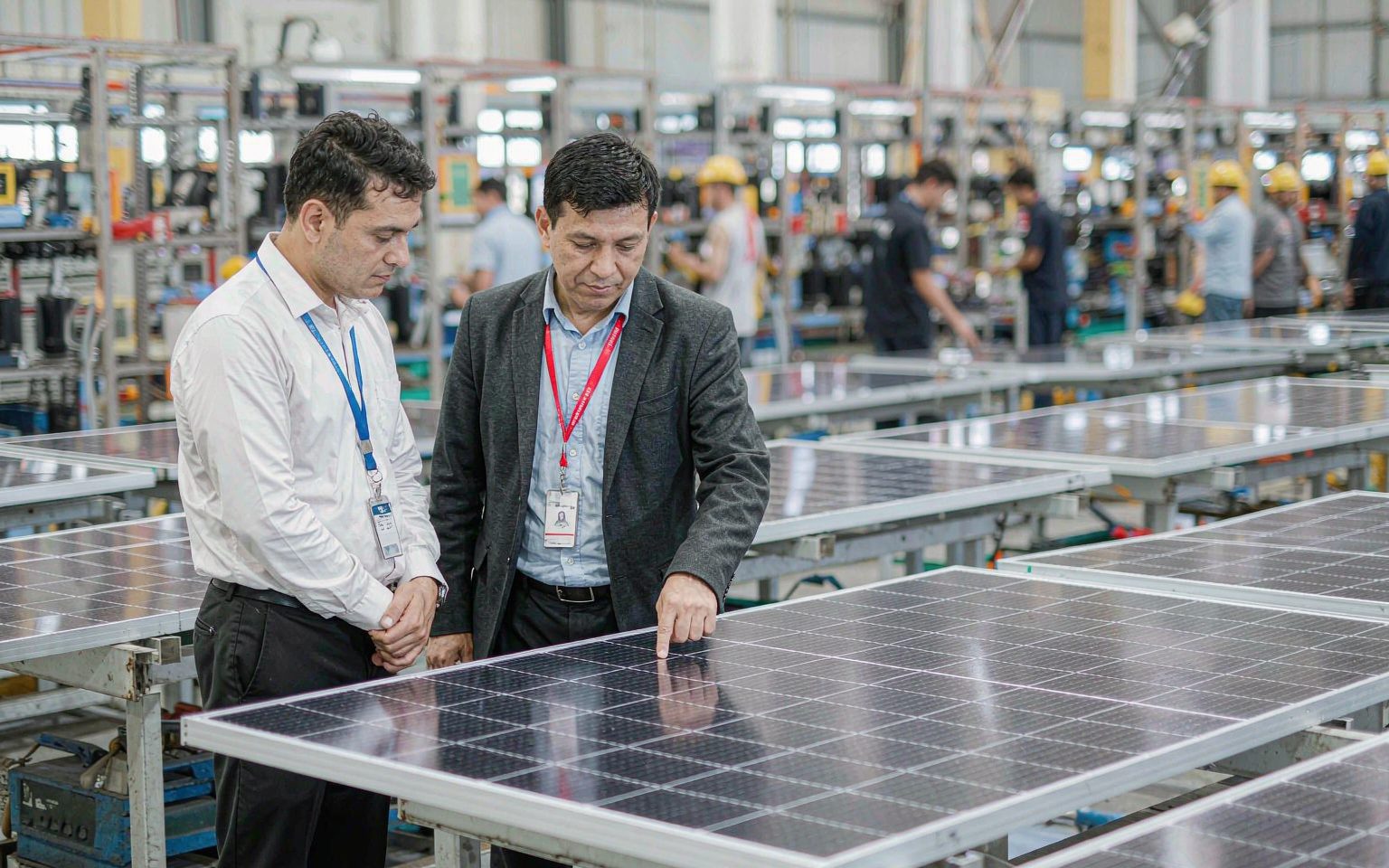
Second, verify the factory itself — a trading company presenting itself as a manufacturer will not be able to show a production line, an in-house test laboratory or a capacity figure that matches its claimed volume. Our guide to solar certification systems lists certificate types by market and explains what each one actually guarantees. Reliable solar system suppliers expect these requests and answer them quickly; evasiveness is itself the answer. This one check eliminates the largest group of unreliable solar system suppliers before price is even discussed.
The most common way a solar project is quietly devalued is through substitution on the bill of materials. The quote names a Tier-1 module; the container arrives with an unbranded equivalent of the same nominal wattage. The inverter is described as a 10 kW hybrid; what is delivered is an 8 kW unit that has been derated to fit the price. Of all the checks in this guide, this is the one that produces the most disputes between reliable solar system suppliers and their customers. It is also the fastest way to separate reliable solar system suppliers from brokers who never take ownership of what they ship.
Demand a bill of materials that lists, for every item, the brand, the model number and the two or three parameters that actually matter.
Reject any document containing “or equivalent”, “Tier-1 brand” or “standard configuration”. Those phrases transfer substitution risk to you. Buying from established Chinese panel manufacturers is not the issue — the issue is whether the model you were quoted is the model you receive, and that is only enforceable if it is written down with a model number attached.
A 25-year warranty is a marketing statement until you know who issues it, where the replacement comes from and who pays the labour. Ask four questions of every supplier.
| Article | Typical term | What to verify |
|---|---|---|
| PV modules | 10–15 yr product, 25–30 yr performance | The degradation curve, not just the headline year count |
| Onduleur | 5–10 yr, often extendable | Local service presence and spare parts availability |
| Battery | 5–10 yr or a throughput figure | Whether cover is stated in years or in megawatt-hours cycled |
| Workmanship | 1–5 yr | Scope: roof penetrations, cable terminations, structural fixings |
Ask for the warranty document itself rather than a summary of it, before you sign. Our guide to Quantité minimale de commande, délai de livraison et conditions de paiement shows how warranty and payment structure interact when you buy direct from a manufacturer.
Reliable solar system suppliers design before they quote. If the first document you receive is a price rather than a question about your consumption, the design is a template with your name at the top of it. This is the clearest behavioural difference between reliable solar system suppliers and companies that simply take orders.
A credible design process produces five things.
Ask who signs off the design, and whether that person is on the supplier's own payroll. The strongest reliability signal is an in-house engineering team that also supports the project after handover — and one that can plan future capacity additions, which our guide to développement des installations photovoltaïques solaires covers in detail.

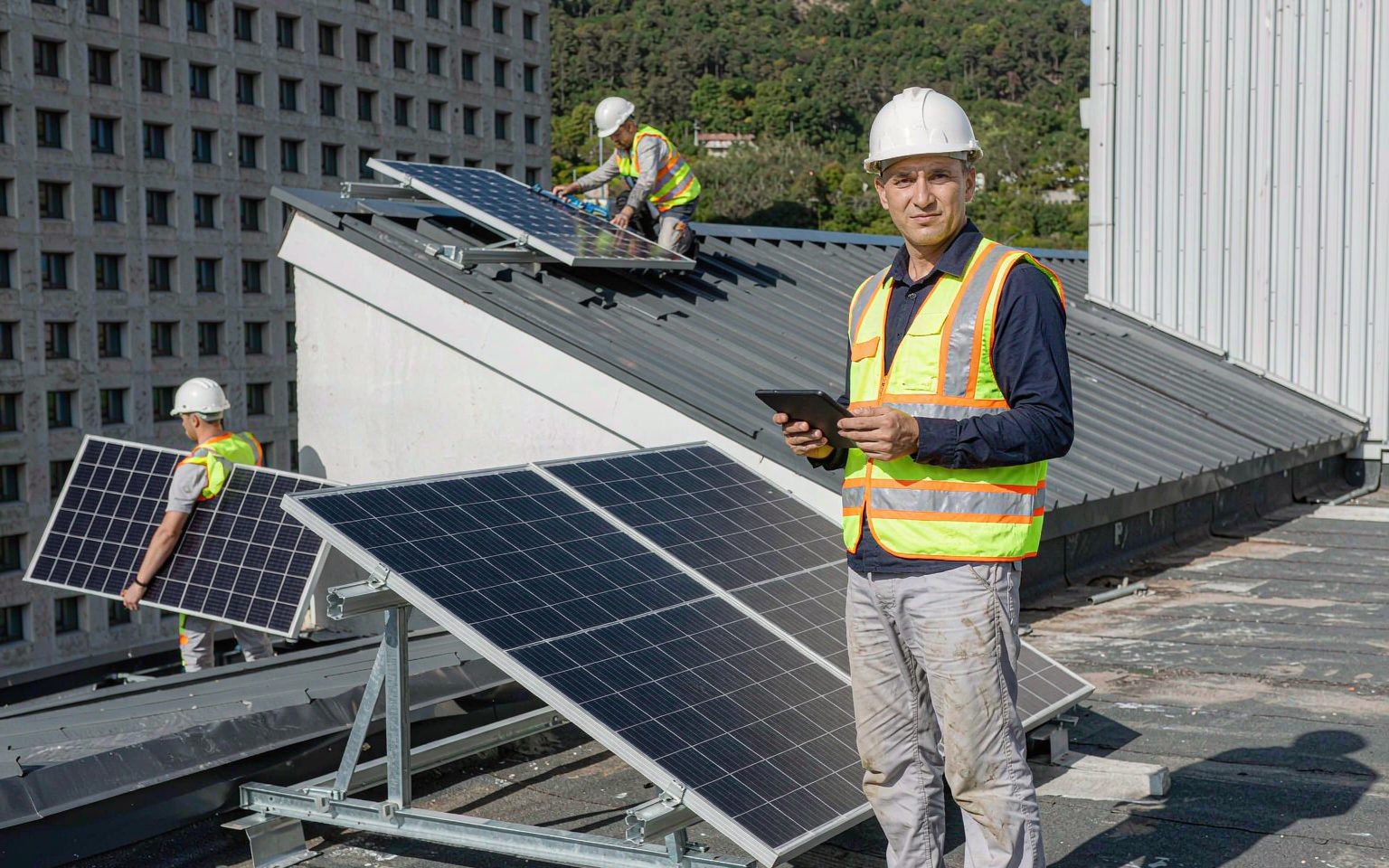
Most early failures are installation failures. A module damaged during handling, a poorly torqued termination, a roof penetration without correct flashing, or a string wired to the wrong MPPT will not show up on day one. They surface in the first wet season or the first hot month, by which time the installer has been paid. Reliable solar system suppliers describe their crews and their commissioning checklist without hesitation.
Verify five things about the delivery phase.
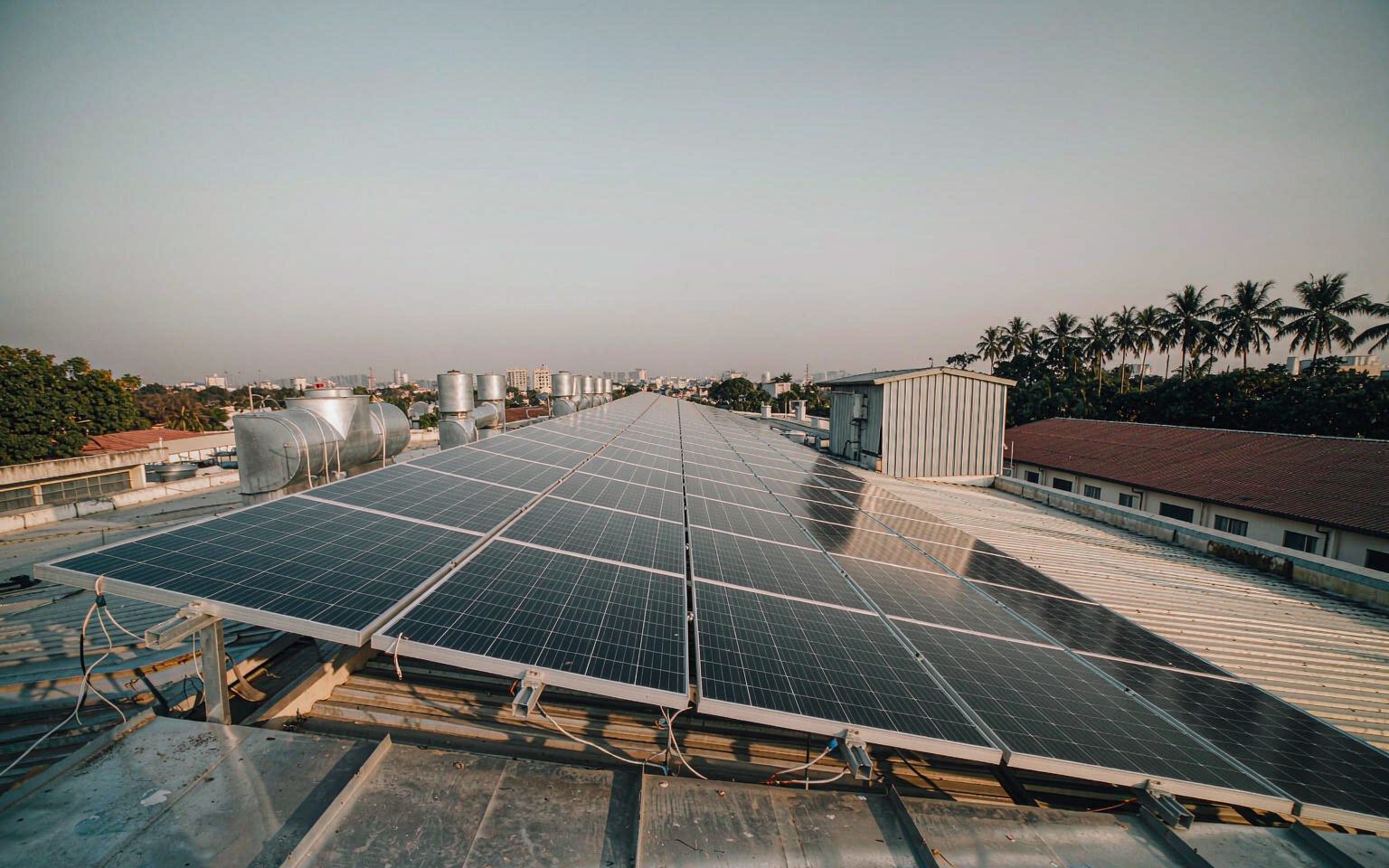
A completed reference project is the best proxy for all five. The 2 MW factory installation in Malaysia shows the level of documentation a full commercial handover should produce.
The value of a supplier is measured after commissioning, not before. This is where reliable solar system suppliers are easiest to tell apart from companies that only sell equipment. Ask for the service terms in writing, and test them before you need them.
Spare parts availability is also why factory-direct buyers should plan their logistics up front. If you import equipment yourself, understand what it will cost to ship a replacement inverter or a stack of modules later, and consider consolidating spare capacity into the original shipment instead of paying for a second container in year three. Our Guide de chargement des conteneurs explains how to plan that space.
Past performance is the only verifiable evidence of reliability, and only two forms of it count: delivered projects you can inspect, and customers you can speak to without the supplier in the room.
Ask for three references that match your project type. If you are building a 200 kW rooftop for a factory, a portfolio of residential installations is not a substitute. Then look at three attributes of each reference.
Financial staying power matters because a warranty is a long-dated promise. A company that has traded through several market cycles can reasonably be expected to be there in year ten. Look at years in business, project count, and whether the company owns production or assembly capability rather than arbitraging someone else's inventory. The 250 kW solar and storage project in Curaçao et le 30 kW Philippines café installation are examples of the reference evidence to ask for, complete with measured savings rather than modelled ones.
Reliability problems announce themselves early, if you know what to look for. Each of the following is a reason to slow down rather than sign.
Buyers who have worked with reliable solar system suppliers before recognise most of these instantly, which is why the second purchase is usually easier than the first.
None of these is proof of bad faith on its own. Two or three together, however, describe a supplier whose incentives are aligned with winning the order rather than with the asset performing for 25 years — which is the whole of what buyers mean when they say they want reliable solar system suppliers.
Comparing reliable solar system suppliers on a like-for-like basis is largely a formatting exercise, but it is the formatting that decides the outcome. Quotations are only comparable when they are normalised. Build one comparison table and force every supplier into it.
| Row | Why it matters |
|---|---|
| Module brand, model, wattage, quantity | Exposes silent derating of the array |
| DC capacity (kWp) and AC capacity (kW) | The DC/AC ratio drives clipping losses and cost |
| Inverter brand, model, quantity, MPPT count | Determines resilience to shading and string mismatch |
| Battery usable kWh and chemistry | Nominal capacity figures are not comparable |
| Mounting material, rail gauge, design wind speed | Separates a survivable structure from a token one |
| Production estimate and stated assumptions | Specific yield and performance ratio must be explicit |
| Permits, utility processing, and who files them | Frequently excluded, then billed as an extra |
| Freight, delivery, crane and mobilisation | The most common source of post-signature cost increases |
| Commissioning scope and handover documents | Determines whether the warranty is enforceable |
| Warranty terms by component and who pays labour | The real measure of long-term risk transfer |
| After-sales response and resolution commitments | Separates service from sales talk |
Then score each supplier against the seven checks in this guide rather than against price alone, because the gap between the best and the worst reliable solar system suppliers rarely shows up in the headline number. The cheapest compliant offer and the cheapest offer are rarely the same document. For buyers purchasing directly, how factory-direct solar supply works explains which responsibilities shift to you when there is no local EPC in the chain.
The reliability criteria are universal, but the specific documents and bottlenecks differ by market. In each market, the reliable solar system suppliers are the ones who can produce those documents before production starts. These are the four we handle most often.
Across all four markets the same rule applies: confirm certification and customs documentation before production starts. A supplier that only discovers a certification gap when the container reaches port is not managing your project, it is managing its own cash flow. The Africa solar market comparison puts the duty and payback differences side by side. If your shortlist of reliable solar system suppliers cannot answer the certification question for your country, that is itself the answer.
What is the single most important check? The bill of materials. Most disappointment traces back to components that were never what the quote implied. A supplier that names models in writing and accepts a substitution clause in your favour has removed most of the risk.
Should I choose the lowest quote? No. Compare against the seven checks and the normalised table above. A quote 25% below the field with no explanation has usually reduced mounting quality, protection devices or permit scope — the three items you cannot inspect from the ground.
How do I verify that reliable solar system suppliers really manufacture? Ask for a factory audit report, a production capacity figure and photographs of the line and the test laboratory, then commission a third-party inspection before shipment. A trading company can still be a good partner, but the disclosure should be accurate.
Is a longer warranty always better? Only if the issuer will still exist and the claim procedure is documented. A 12-year warranty from a company that answers the phone in year eight beats a 25-year warranty from one that does not.
How much should I pay up front? Structure payments against milestones: a deposit on order, the balance against pre-shipment inspection, and a retention against commissioning. Full payment before production removes your leverage entirely.
Local EPC or factory-direct? A local EPC brings accountability and local warranty labour at a markup. Factory-direct brings lower hardware cost and more project management to you. For a single residential system, local usually wins; for multi-site commercial buyers, factory-direct with a competent local installer is often better value.
Ask for four documents and check that the certificate holder is the company invoicing you: IEC 61215 and IEC 61730 for the modules, IEC 62109 for the inverter, and IEC 62619 with the UN 38.3 report for lithium storage. Reliable solar system suppliers are the ones whose certificates name the seller, not a parent entity or a trading name that happens to share an address. If the paperwork arrives as a brochure instead of a certificate number, you already have your answer.
Model numbers, not brand adjectives. A quotation that says “Tier-1 module” or “or equivalent” transfers substitution risk to you, because the container can then arrive with an unbranded panel of the same nominal wattage. Reliable solar system suppliers name the exact module, inverter, battery, mounting system and every protection device. Compare on that basis, and reject any quote where a line item can be swapped without your written approval.
Split the question three ways: who issues the warranty, where the replacement ships from, and who pays the labour. Modules normally carry 10–15 years against defects and 25–30 years against output falling below a stated curve. Reliable solar system suppliers should put the claim procedure into the contract, because the company named on the certificate is the one you will be chasing in year eight — long after the salesperson who quoted you has changed jobs.
Not local, but accountable. What matters is who signs the single-line diagram, who sets the string sizing against the inverter MPPT window, and who answers when the monitoring portal reports an underperforming string. Reliable solar system suppliers can name the engineer responsible for your design and show a comparable project already commissioned at the same scale. A local address proves nothing if the design work happened elsewhere.
Three, matched to your project type and scale. A portfolio of residential rooftops is not evidence that reliable solar system suppliers can deliver a 200 kW commercial installation. For each reference, ask for measured generation against the modelled yield, the elapsed time from contract to commissioning, and how a fault was handled after handover. Suppliers who have never been asked these questions usually cannot answer them quickly.
Separate response time from resolution time. A 24-hour response commitment means someone replies to you; it does not mean your system is repaired. Reliable solar system suppliers state a resolution target, name the spare parts they hold in your region, and explain how their monitoring escalates a fault without you having to notice it first. Ask what the longest outstanding ticket on their book currently is.
Four patterns, and any two together are enough to walk away: a price more than 25% below every competing quote with no explanation of what was removed; a yield promise above what local irradiance can physically support; warranty wording that does not name the issuer; and refusal to disclose component models before payment. Reliable solar system suppliers welcome these questions because the answers are their strongest selling point.
Not automatically — the seven checks decide, not the channel. A factory-direct manufacturer can control the bill of materials and show the production line standing behind the warranty, which is why many buyers start there. A local reseller adds installation capacity and faster physical response. For most commercial projects the strongest structure is a factory-direct supplier paired with a competent local installer under one contract with one warranty owner.
As-built drawings, the revised single-line diagram, inverter and battery commissioning reports, string-level test results, monitoring portal credentials and the warranty certificates issued in your name. Reliable solar system suppliers treat that folder as part of the delivery rather than as an optional extra. If the handover is thin on the day of commissioning, ask for the missing items in writing before final payment — reconstructing them two years later is far harder.
Allow two to four weeks for technical clarification and contract, six to ten weeks for production, and four to eight weeks for shipping and clearance depending on destination. Reliable solar system suppliers publish those stages as named milestones instead of one vague lead time, and they name the certificate of conformity or import permit that must be issued along the way. The document stage slips far more often than the factory stage does, so hold your reliable solar system suppliers to it.
Go deeper on the checks that matter most.
Go deeper on the checks that matter most when you shortlist reliable solar system suppliers.
Supplier reliability also shows up in how a manufacturer handles cost volatility — our review of raw material costs and policy shifts in the solar industry covers that side of the question. Two deliveries that passed every check above are the 100 kW school system in Zimbabwe et le 50kW / 150 kWh bank system in Liberia.
Mars Solar is a China-based OEM/ODM manufacturer of solar PV and battery storage systems, with installations in 130+ countries including the Philippines, Nigeria, Ghana, Kenya, Curaçao and Malaysia. We supply factory-direct, and we provide the certification pack, bill of materials and commissioning documentation that reliable solar system suppliers are expected to hand over.
Send us your site details and we will return a named-component quotation with a production estimate and a payback model, so you can compare it line by line against every other quote on your table: roof or ground area, twelve months of consumption or your monthly bill, target capacity, and whether you need storage or backup.
If you would rather inspect before you commit, we will arrange a factory visit or a third-party pre-shipment inspection. Contact our engineering team on WhatsApp or by email — most commercial quotations are returned within one working day.

 English English
  Arabic
 Spanish
 French
 Dutch
Dutch
 Portuguese