
لغة
هل تختار بين الألواح الشمسية ثنائية الوجه مقابل الألواح الشمسية أحادية الوجه؟
يقارن هذا الدليل لعام 2026 بين الكفاءة والتكلفة والعائد على الاستثمار في الواقع العملي. استنادًا إلى أكثر من 3000 مشروع للطاقة الشمسية في أفريقيا وجنوب شرق آسيا والشرق الأوسط، نقدم لك البيانات اللازمة لاتخاذ القرار الصحيح. تبدو الألواح الشمسية ثنائية الوجه وأحادية الوجه متطابقة تقريبًا من الأمام.
لكن تحت السطح، تعمل بشكل مختلف - واختيار النوع الخاطئ يمكن أن يكلف مشروعك ما بين 15 و25% من إنتاج الطاقة السنوي، أو يضيف 20% إلى التكلفة الأولية دون داع.
تُقدّم هذه المقالة مقارنة موضوعية بين الألواح الشمسية ثنائية الوجه وأحادية الوجه، مستندةً إلى بيانات أداء حقيقية من مشاريع شركة مارس سولار في أفريقيا وجنوب شرق آسيا والشرق الأوسط.
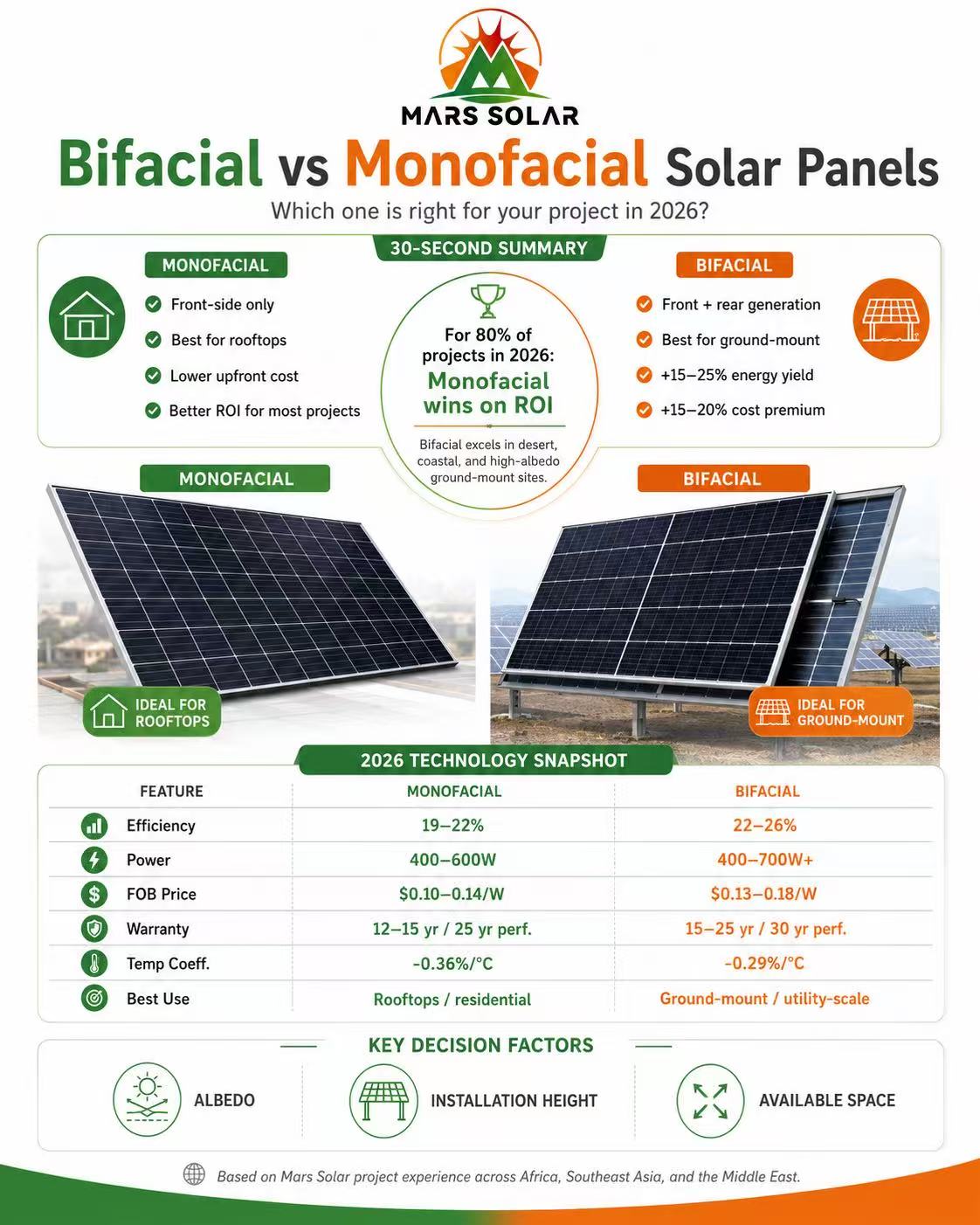
| مواصفة | مادة بيرك أحادية الوجه | ثنائي الوجه من النوع N TOPCon |
|---|---|---|
| نطاق الكفاءة | 19-22% | 22-26% |
| نطاق الطاقة | 400-600 واط | 400-700 واط+ |
| سعر نموذجي على ظهر السفينة | $0.10-0.14/W | $0.13-0.18/W |
| ضمان | أداء 12-15 سنة / 25 سنة | الأداء خلال 15-25 عامًا / 30 عامًا |
| معامل درجة الحرارة | -0.36%/°C | -0.29%/°C (أفضل في الحرارة) |
| أفضل حالة استخدام | أسطح المنازل، السكنية | تركيب أرضي، على نطاق المرافق |
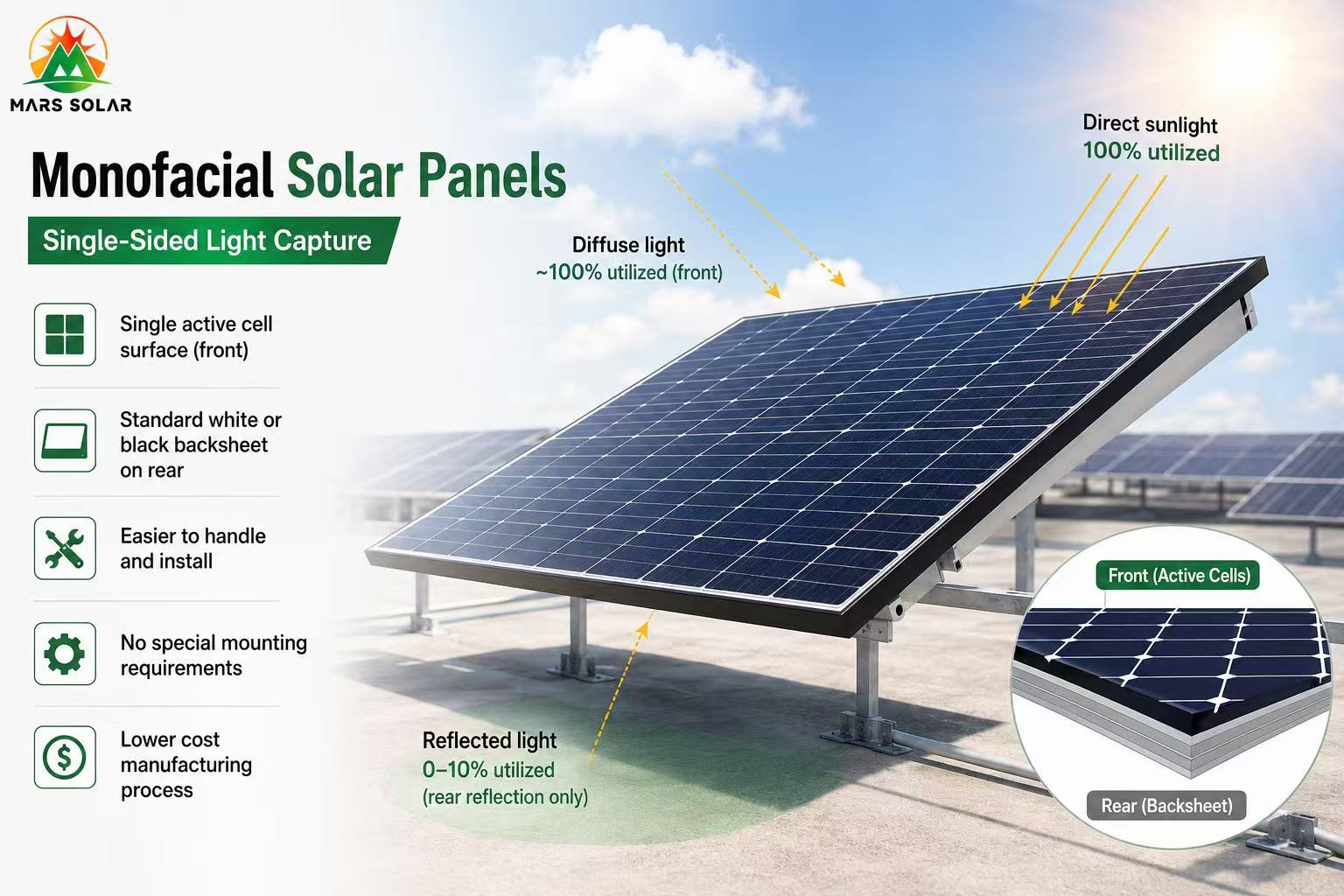
تحتوي الألواح أحادية الوجه القياسية على خلايا شمسية على السطح الأمامي فقط. أما السطح الخلفي فهو إما معتم تمامًا (غطاء خلفي أبيض) أو عاكس بشكل طفيف.
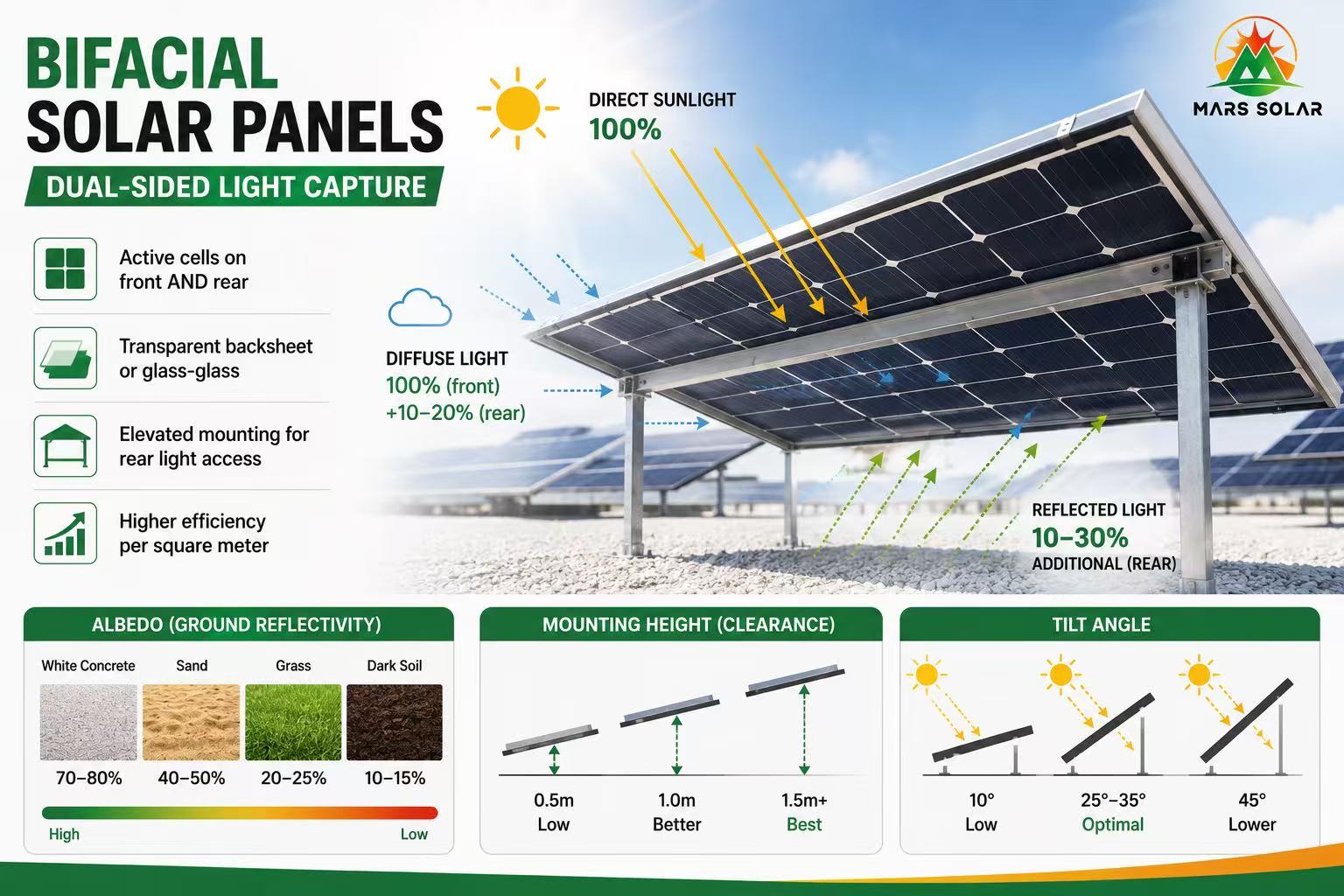
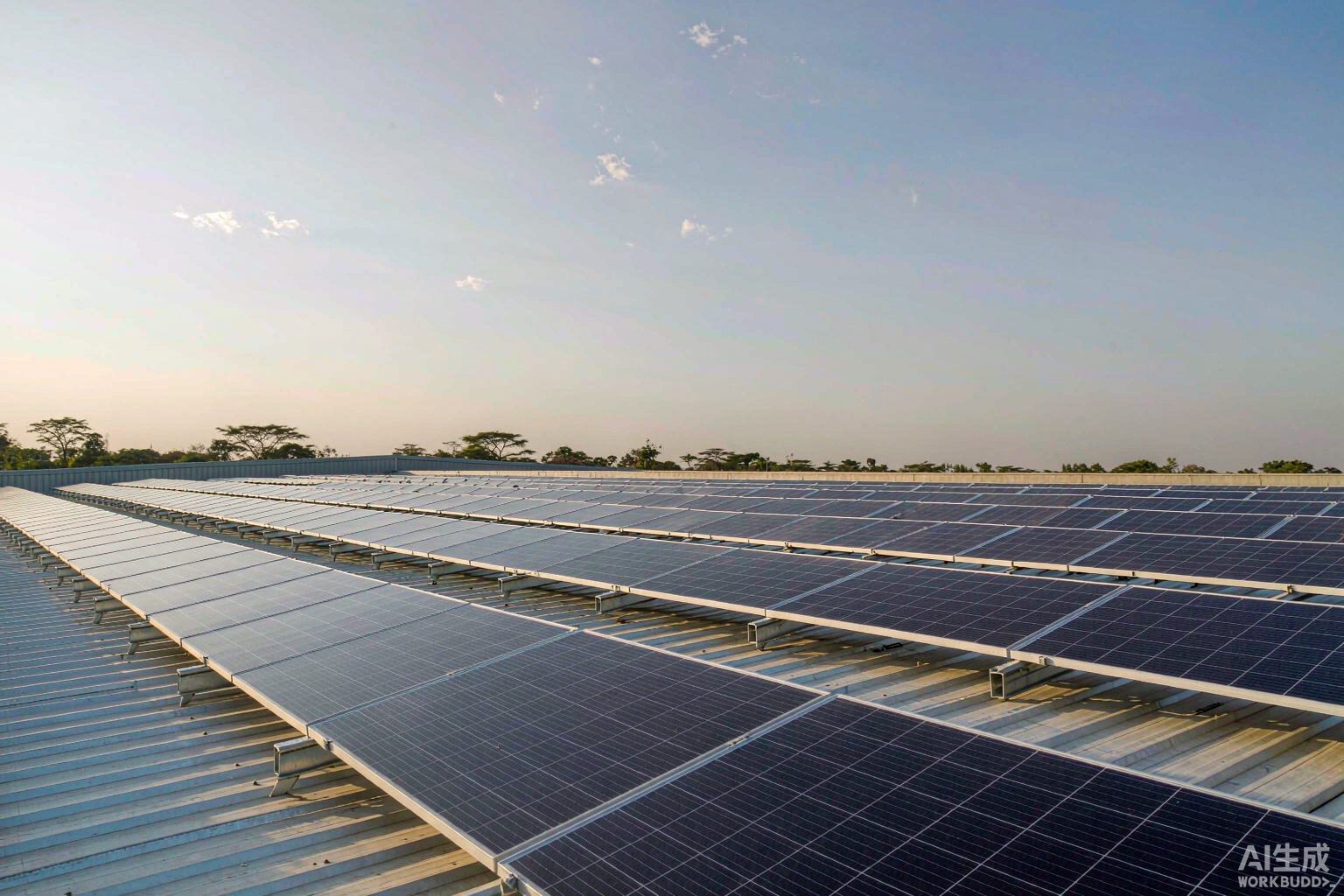
تلتقط الألواح ثنائية الوجه الضوء المنعكس والمتناثر الذي يرتد عن الأرض (يسمى "ضوء البياض").
يعتمد التحسن الناتج عن استخدام الوجهين كلياً على:
| معايير | مادة بيرك أحادية الوجه | ثنائي الوجه من النوع N TOPCon | الفائز |
|---|---|---|---|
| كفاءة | 19-22% | 22-26% | وجهان |
| القدرة الناتجة (النموذجية) | 400-600 واط لكل لوحة | 400-700 واط لكل لوحة | وجهان |
| سعر تسليم ظهر السفينة (FOB) من الصين | $0.10-0.14/W | $0.13-0.18/W | أحادي الوجه |
| التكلفة لكل واط | خط الأساس | +15-25% ممتاز | أحادي الوجه |
| تحسن في الوجهين | 0% (من جانب واحد) | +10-25% (يعتمد على البياض) | وجهان |
| متطلبات ارتفاع التركيب | أي (سطح/أرض) | مساحة خالية لا تقل عن 0.5-1 متر | أحادي الوجه |
| معامل درجة الحرارة | -0.36%/°C | -0.29%/°C | وجهان |
| أداء ممتاز في المناخ الحار | جيد | أحسن | وجهان |
| عمر | 25-30 سنة | 25-35 سنة (زجاج-زجاج) | وجهان |
| وزن | حوالي 23 كجم (60 خلية) | حوالي 26-32 كجم | أحادي الوجه |
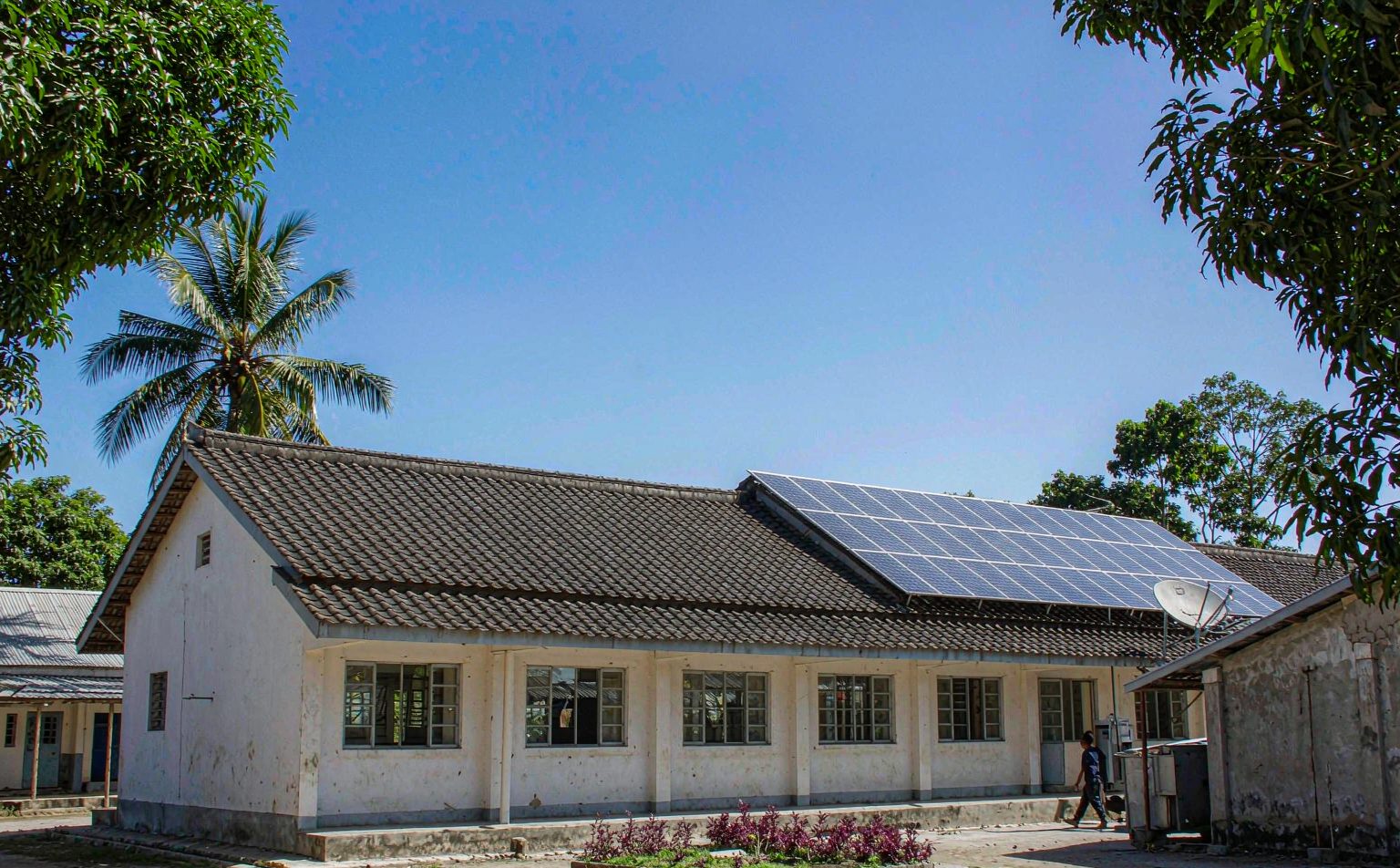
| الأفضل للأسطح | ✅ مثالي | ⚠️ يتطلب مساحة كافية للارتفاع | أحادي الوجه |
| الأفضل للتركيب الأرضي | ✅ جيد | ✅ ممتاز | وجهان |
| الأفضل لأفريقيا (الصحراء) | ✅ جيد | ✅ ممتاز (لون رملي) | وجهان |
| نوع المشروع | نوع اللوحة الموصى به | لماذا |
|---|---|---|
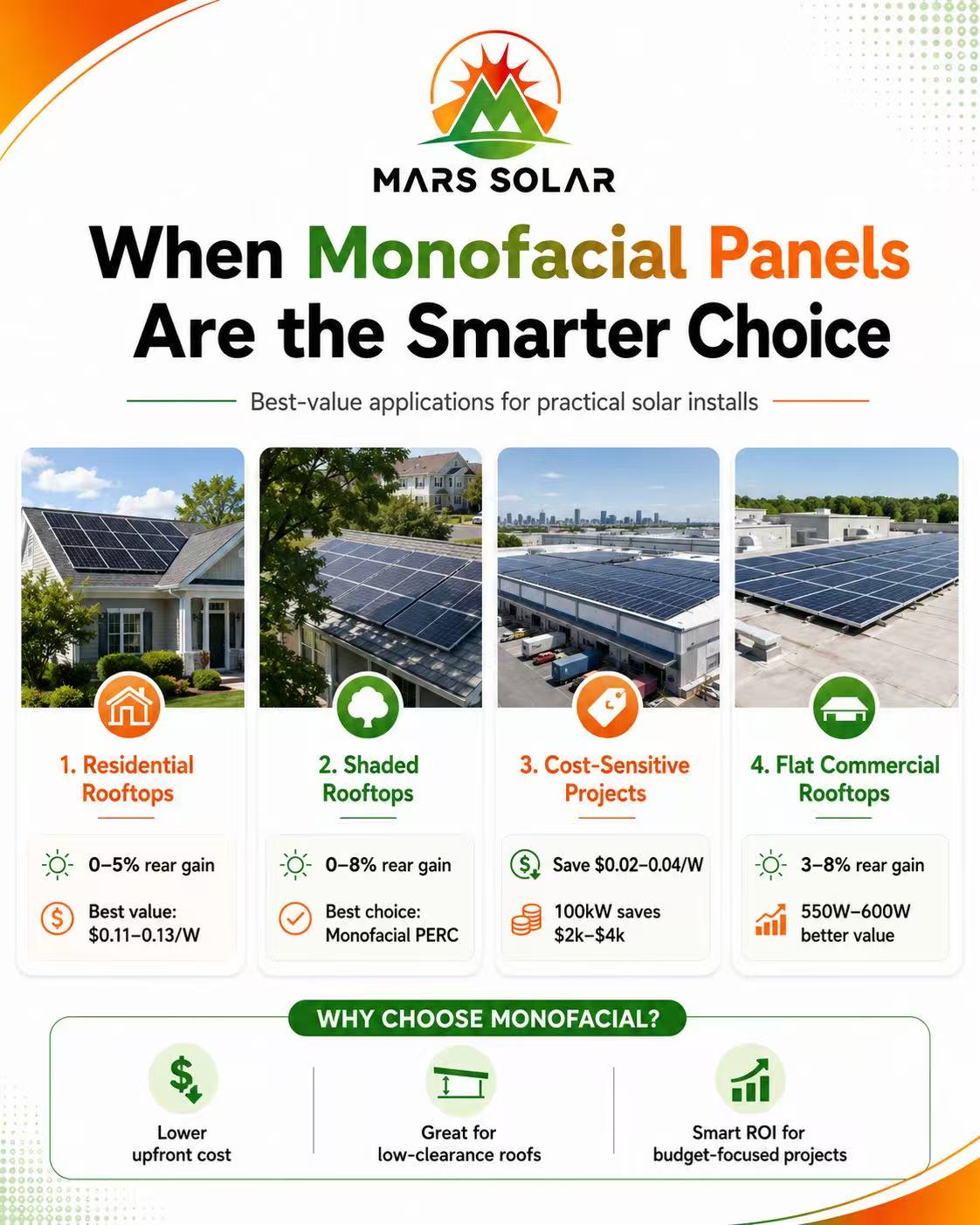
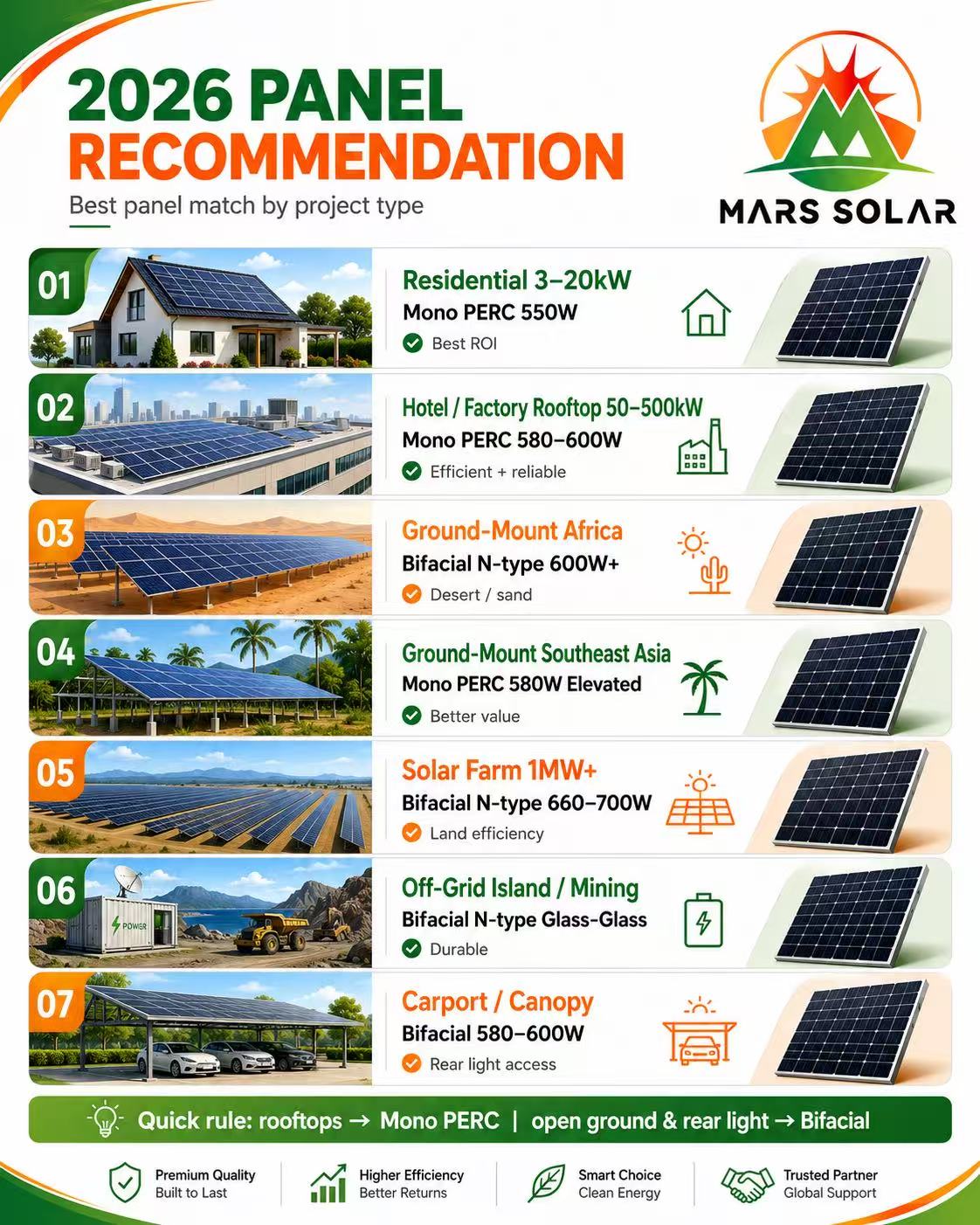
| سكني (3-20 كيلوواط) | أحادي PERC 550 واط | أفضل عائد على الاستثمار، سهولة التركيب |
| أسطح الفنادق/المصانع (50-500 كيلوواط) | أحادي PERC 580-600 واط | كفاءة عالية + موثوقية |
| أرض - جبل أفريقيا (صحراء/رمال) | مصباح ثنائي الوجه من النوع N بقوة 600 واط فأكثر | زيادة اكتساب البياض إلى أقصى حد |
| جنوب شرق آسيا المثبتة على الأرض | وحدة تبريد أحادية PERC بقدرة 580 واط | انخفاض البياض، قيمة أفضل |
| محطة طاقة شمسية (1 ميغاواط فأكثر) | مصباح ثنائي الوجه من النوع N بقوة 660-700 واط | كفاءة استخدام الأراضي + مكاسب ثنائية الوجه |
| جزيرة خارج الشبكة / التعدين | زجاج ثنائي الوجه من النوع N (زجاج-زجاج) | المتانة + مقاومة الرطوبة |
| موقف سيارات/مظلة | جهاز ثنائي الوجه 580-600 واط | دخول الضوء الخلفي الطبيعي |
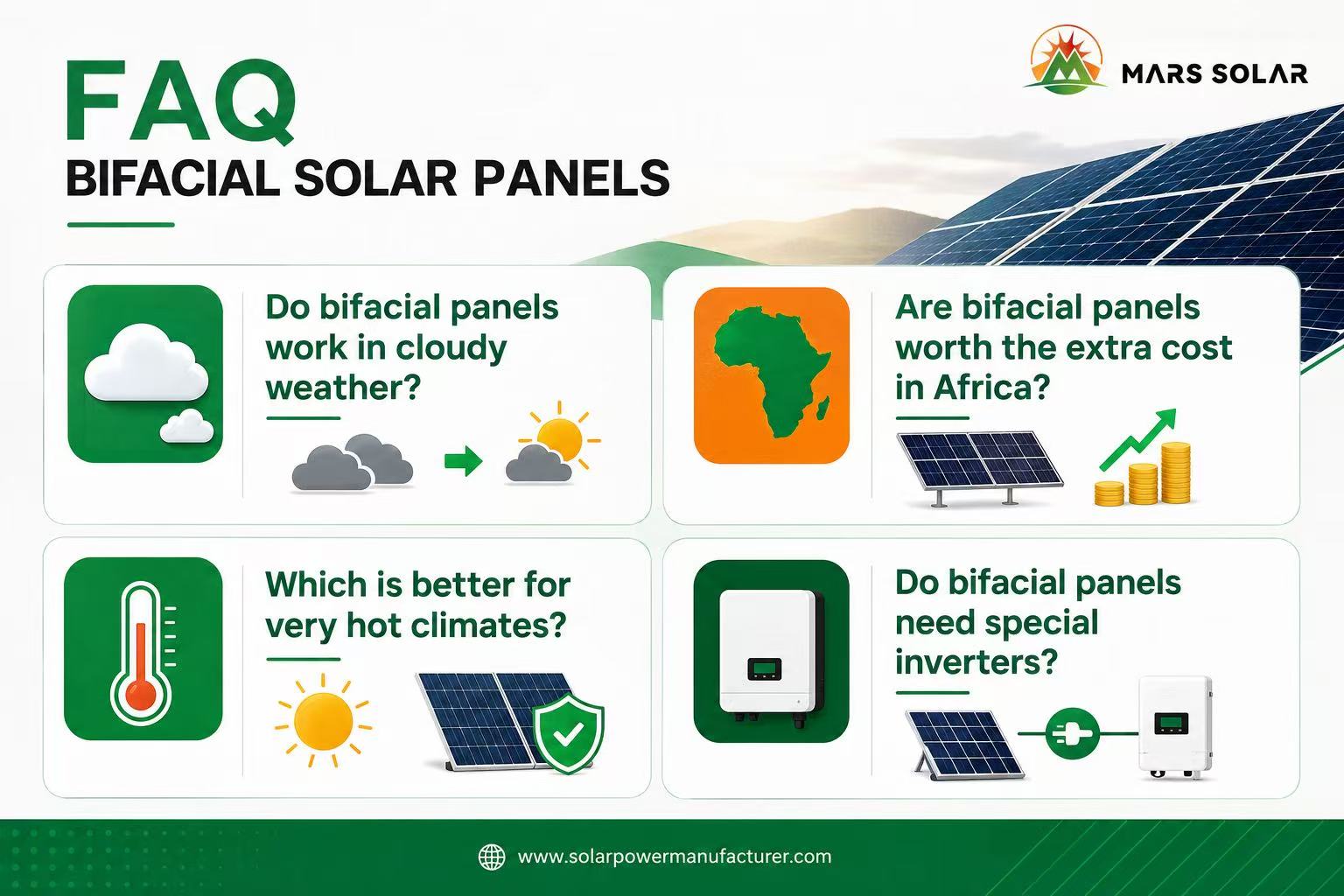
نعم، ولكن الفائدة تقل. في الأيام الغائمة، يسود الضوء المنتشر. تنخفض فائدة العدسات ثنائية الوجه من 15-25% إلى 5-10%. في المناطق الغائمة باستمرار (شمال أوروبا، المملكة المتحدة)، يصعب تبرير تكلفة العدسات ثنائية الوجه المرتفعة.
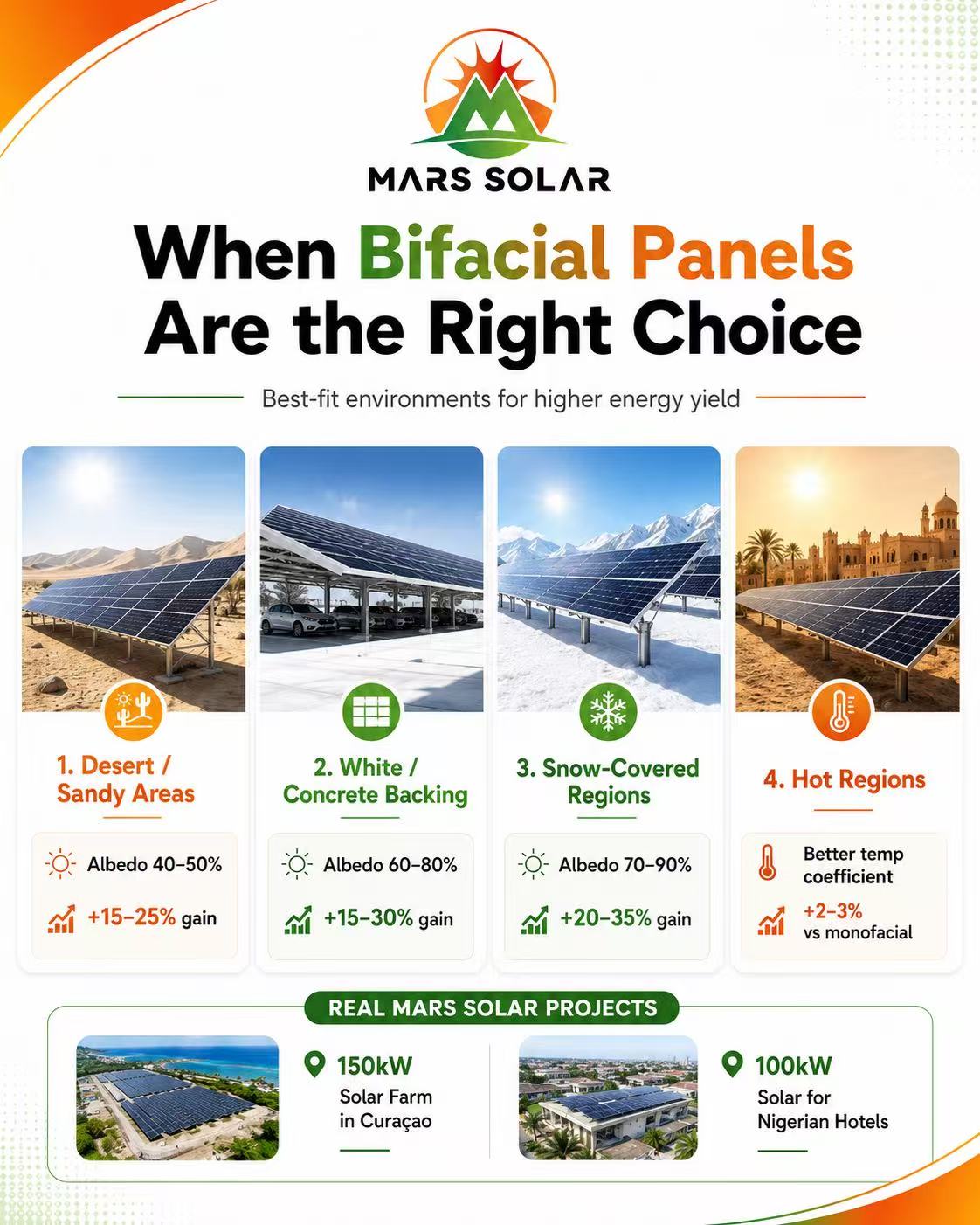
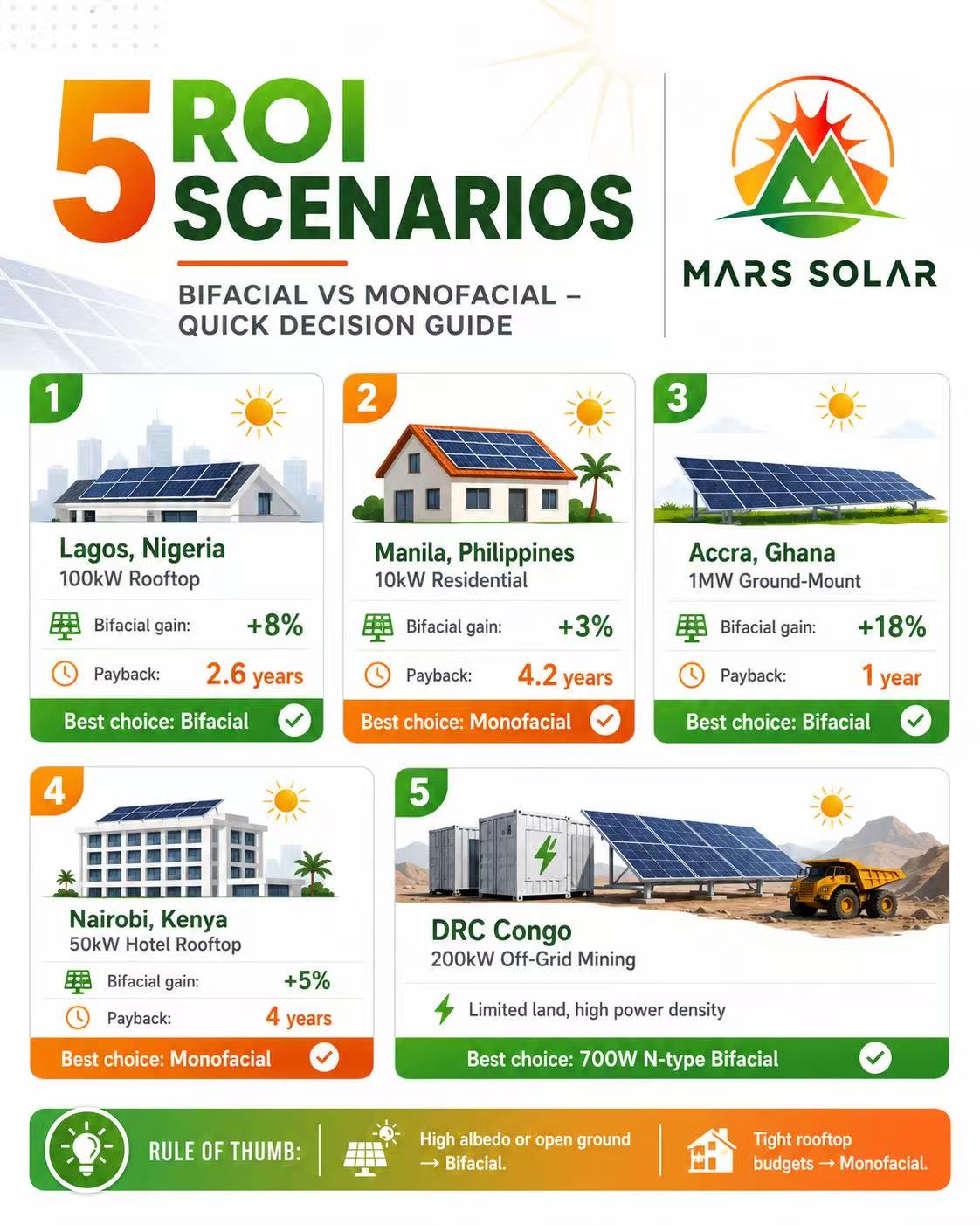
للتركيب الأرضي: نعم. تتميز مناطق الصحراء الكبرى وجنوب الصحراء الكبرى بانعكاس ضوئي يتراوح بين 40 و50% ناتج عن الرمال. كما أن اكتساب الضوء من الوجهين بمقدار 15 إلى 25% موثق جيدًا. للتركيب على أسطح المنازل في أفريقيا: عادةً لا (ارتفاع التركيب منخفض، والأسطح داكنة).
يتميز نظام TOPCon ثنائي الوجه من النوع N بمعامل حراري أفضل (-0.29%/°C مقابل -0.36%/°C). عند درجات حرارة أعلى من 35 درجة مئوية، يعني هذا فقدًا أقل للطاقة بمقدار 2-3% لكل درجة. يُعدّ النظام ثنائي الوجه الخيار الأمثل لدولة الإمارات العربية المتحدة والمملكة العربية السعودية ونيجيريا والمناطق ذات المناخ المماثل.
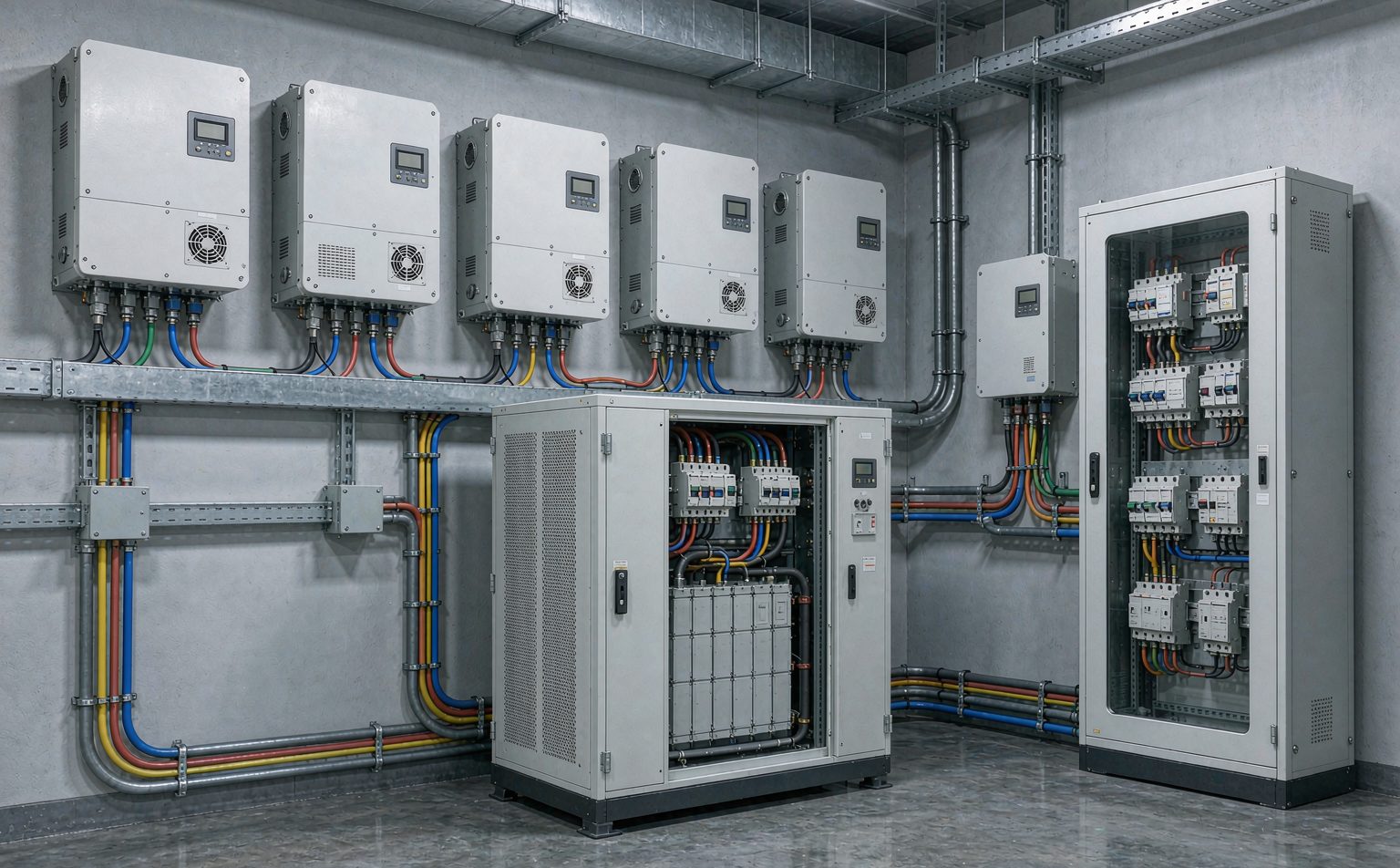
لا. تعمل الألواح ثنائية الوجه مع أي عاكس قياسي. مدخل التيار المستمر من الألواح ثنائية الوجه مطابق لمدخل التيار المستمر من الألواح أحادية الوجه.
Monofacial, in almost every rooftop case. Bifacial cells need rear-side light and at least a metre of clearance behind the array to capture it, and a flush rooftop gives neither. The choice between bifacial vs monofacial solar panels therefore usually resolves to monofacial on a roof and bifacial on open ground. Where the roof is tilted over a white membrane or a light concrete deck, the gap narrows but rarely closes.
Between 5% and 15% on a well-designed ground-mount, and 20% or more only where the surface albedo is very high — fresh snow, white gravel or a light concrete apron. The gap widens with mounting height, row spacing and reflectance, and collapses to almost nothing over dark soil or dense grass. Any comparison of bifacial vs monofacial solar panels that assumes a flat 20% gain is marketing rather than modelling.
Roughly 0.5 or above. Fresh snow reaches about 0.8, white gravel 0.5–0.6, light concrete 0.3–0.4, dry grass about 0.2 and dark soil about 0.1. On the lower half of that range the rear-side gain does not repay the module premium, and the bifacial vs monofacial solar panels decision should land on monofacial. Ask for the albedo assumption in writing before you sign.
Yes — bifacial modules typically carry a 5–15% premium per watt and are usually glass-on-glass. Because the premium is paid on day one while the extra output arrives over 25 years, a proper bifacial vs monofacial solar panels comparison has to be run on cost per kWh delivered, not cost per watt. The photovoltaic module specification sheet is where the bifaciality factor and the temperature coefficient are declared.
A bifacial array wants about a metre behind the lowest row and a structure that does not shade the rear face; a monofacial table can sit far closer to the ground. That structural requirement is the second cost inside the bifacial vs monofacial solar panels question, and it is why 1 MW ground-mount comparisons come out closer than the module premium alone would suggest.
Yes, but on separate strings and ideally separate MPPT channels. Bread on one string, the weaker operating point wins and the bifacial modules are pulled down to the monofacial voltage. If you are phasing an upgrade, keep the two technologies on their own inputs. Mixing them carelessly is the most common way a bifacial vs monofacial solar panels plan loses the gain it was built to capture.
Less than the marketing suggests. Rear-side exposure helps a little, but the temperature coefficient of the module decides output in Accra, Nairobi or Dubai conditions far more than bifaciality does. When you compare bifacial vs monofacial solar panels for a hot site, compare the temperature coefficient and the degradation curve first, and treat the rear-side gain as the smaller term.
Three inputs decide the answer: the module's bifaciality factor, usually 0.7–0.8; the surface albedo of the site; and the geometry — mounting height, tilt and row spacing. A bifacial vs monofacial solar panels model that omits any one of the three is guessing. Ask your supplier to hand over those assumptions alongside the modelled yield.
Comparable, and often better for bifacial: glass-on-glass bifacial modules are frequently warranted for 30 years against performance, against 25–30 years for a typical monofacial module. That does not settle the bifacial vs monofacial solar panels question by itself, because a longer warranty on a module that generates less over its life is not a saving. Model the energy first.
On a high-albedo ground-mount the bifacial array usually pays back one to two years sooner across a 25-year life. On a dark-surfaced site, a rooftop or a shaded yard, monofacial wins outright and the bifacial premium is money spent on a feature the site cannot use. That is the honest answer to the bifacial vs monofacial solar panels question: it is a site-specific advantage, not a generational improvement.
Usually bifacial, and this is the scale where the choice pays. At 1 MW the structure is engineered anyway, so mounting height is nearly free, and row spacing is set by the layout rather than the roof. On light ground, a bifacial vs monofacial solar panels comparison at this scale typically returns the module premium inside three to four years. On dark laterite or dense grass, monofacial remains the correct answer.
بإمكان أكثر من 30 مهندساً لدى شركة مارس سولار التوصية بنوع الألواح الأمثل لمشروعك المحدد. نحن نوفر ألواح PERC أحادية الوجه وألواح TOPCon ثنائية الوجه من النوع N - وسنوصي دائمًا بالنوع الذي يمنح مشروعك أفضل عائد على الاستثمار.
تقوم شركة مارس سولار (شركة فوشان مارس سولار للتكنولوجيا المحدودة) بتصنيع وتصميم أنظمة الطاقة الشمسية منذ عام 2008. خبرة تزيد عن 17 عامًا, أكثر من 30 مهندسًا, ، و أكثر من 3000 مشروع ناجح في أكثر من 130 دولة, نحن نساعد الموزعين ومقاولي الهندسة والمشتريات والإنشاءات على اختيار معدات الطاقة الشمسية المناسبة لظروفهم الخاصة.
احصل على توصية مجانية للجنة | معلومات عنا | اطلع على قضايا عملائنا
آخر تحديث: يوليو 2026
الكلمات المفتاحية: الألواح الشمسية ثنائية الوجه مقابل أحادية الوجه، أفضل أنواع الألواح الشمسية لعام 2026، الألواح أحادية الوجه PERC مقابل TOPCon، مقارنة الألواح الشمسية، توصيات شركة مارس سولار للألواح الشمسية

 English English
  Arabic
 Spanish
 French
 Dutch
Dutch
 Portuguese