
Linguagem
Nigeria · On-site engineering · November 2026
Mars Solar will open an office in Abuja in November 2026 and station engineers permanently in Nigeria. On-site survey, system design and commissioning support move from remote coordination to a team standing on your roof.
If you are evaluating a solar company in Abuja, the questions change once a local engineering team exists: who surveys the site, who signs off the design, who answers at 7am on the day commissioning slips. This page answers those.
Below: what the hub does, what to prepare before a survey, and how to tell a solar company in Abuja with real engineering capacity from one that resells.
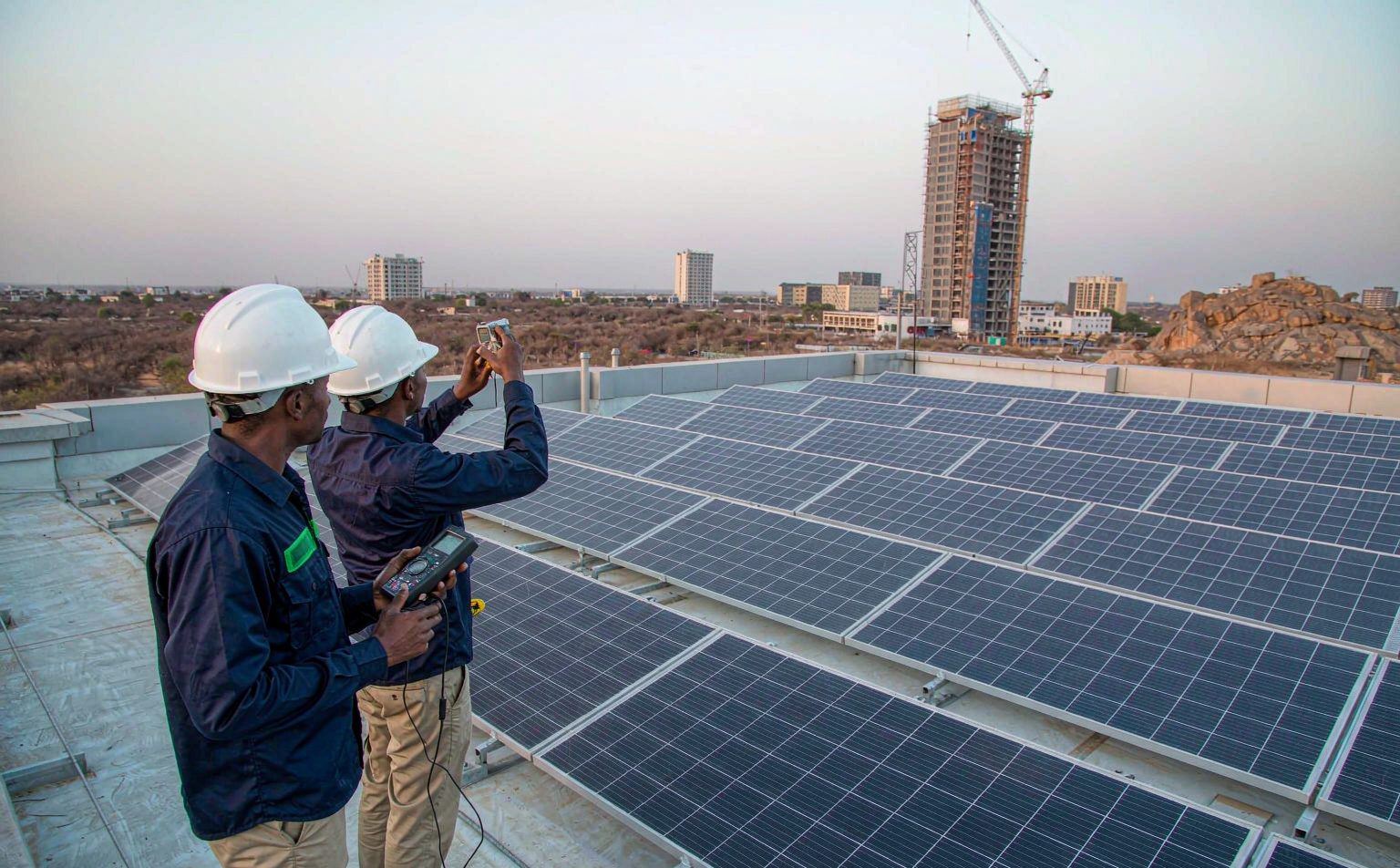
A solar company in Abuja that can reach your site the same week is the difference between a project that gets commissioned and one that stalls. Concretely, from November 2026 the Nigeria team covers four things that used to be handled remotely.
Mars Solar already supplies solar and battery storage systems into Nigeria, Ghana and Kenya. The Abuja hub is the first physical African base, and it is deliberately a service hub rather than a sales office.
That distinction matters because the failure modes in Nigerian commercial solar are almost never equipment failures. They are coordination failures — a survey that missed a shading object, a design that assumed a grid connection still pending, a commissioning witness who could not get to site. A solar company in Abuja with engineers living in the city removes most of them by removing the distance.
Nigeria's commercial solar market has matured faster than its support infrastructure. Panels, inverters and lithium batteries are widely available, and importers compete hard on price. What remains scarce is engineering capacity close to the site.
That gap shows up at predictable moments. A survey written from photographs misses the shading from a neighbouring mast. A design sized on nameplate load ignores the starting current of a chiller. A commissioning schedule assumes a grid connection that the distribution company has not yet energised.
Each of those is a small problem remotely and an expensive one on site. Stationing engineers in Abuja is our answer: put the people who design the system within driving distance of the system.
The choice of Abuja is deliberate. The Federal Capital Territory concentrates federal institutions, hospitality, healthcare, light manufacturing and large commercial property, and it sits inside the AEDC franchise alongside Nasarawa, Kogi and Niger. It is also where the country's technical and procurement decisions increasingly get made.
For a solar company in Abuja, that combination is also the reason the engineering bench matters more than the warehouse. Equipment is a commodity in this market; the design, the commissioning and the after-sales response are not. Any solar company in Abuja can move boxes. Far fewer can defend the numbers in a load calculation.
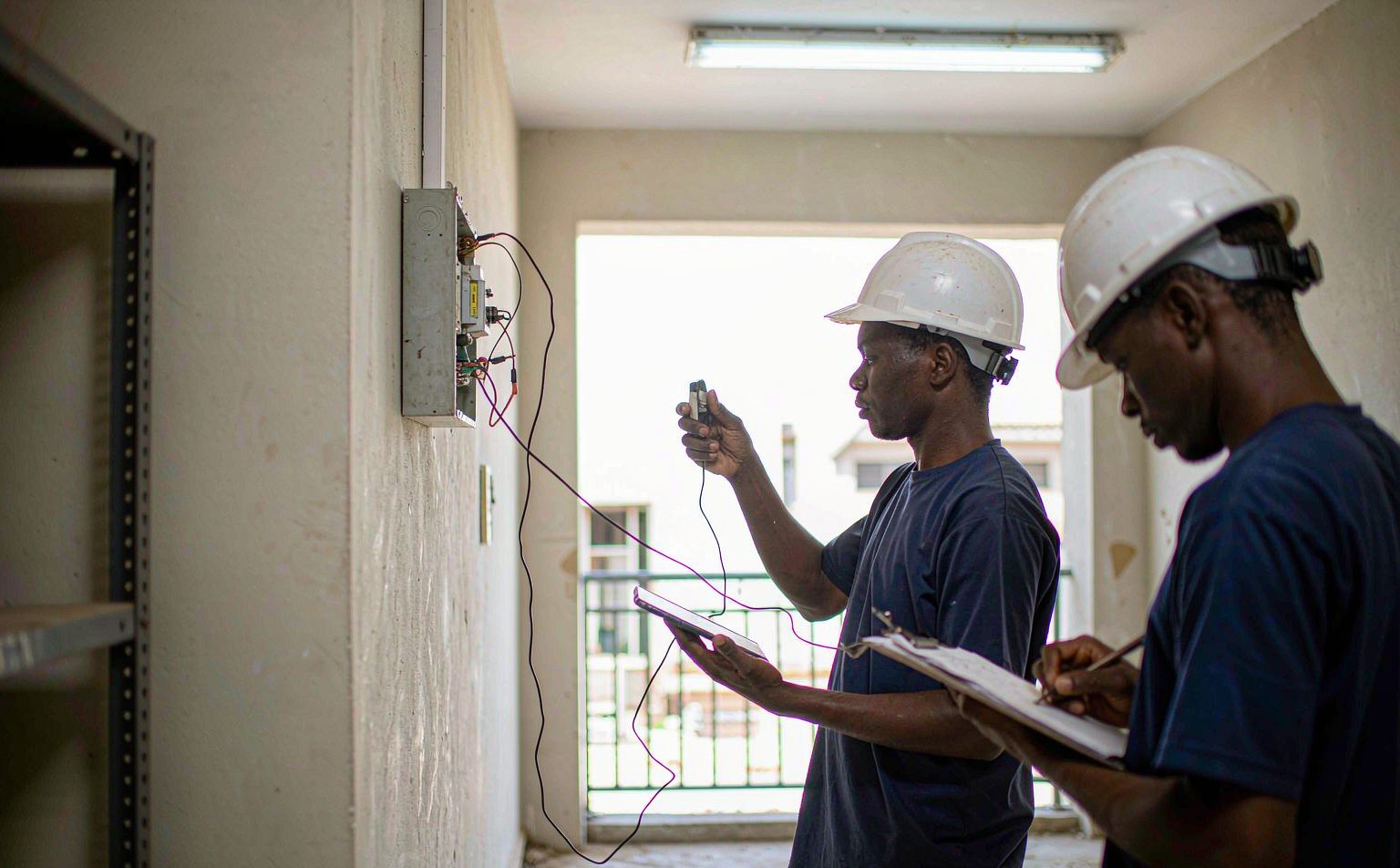
Four workstreams, in the order a project meets a solar company in Abuja for the first time. Each is handled by the same engineer who will answer for the result.
We log real consumption rather than trusting a utility bill. That means clamp meters on the main and on the largest motors, a week of interval data where the site allows it, and a walk of the roof or ground mount area to check structural capacity, shading and cable routes.
From those measurements the team produces the array layout, string design, inverter and battery sizing, a single-line diagram, the protection and earthing scheme, and a bill of materials you can take to any contractor for comparison.
Our engineer stays with the installation crew through the electrical works, witnesses the tests, and signs the handover checklist. Operators get trained on the monitoring platform and on the isolation procedure before we leave site.
Faults get diagnosed locally. Warranty claims get verified with photographs and logged data instead of a description over email, which shortens the loop considerably. It is also the part of the service that separates a solar company in Abuja from an importer with a local phone number.
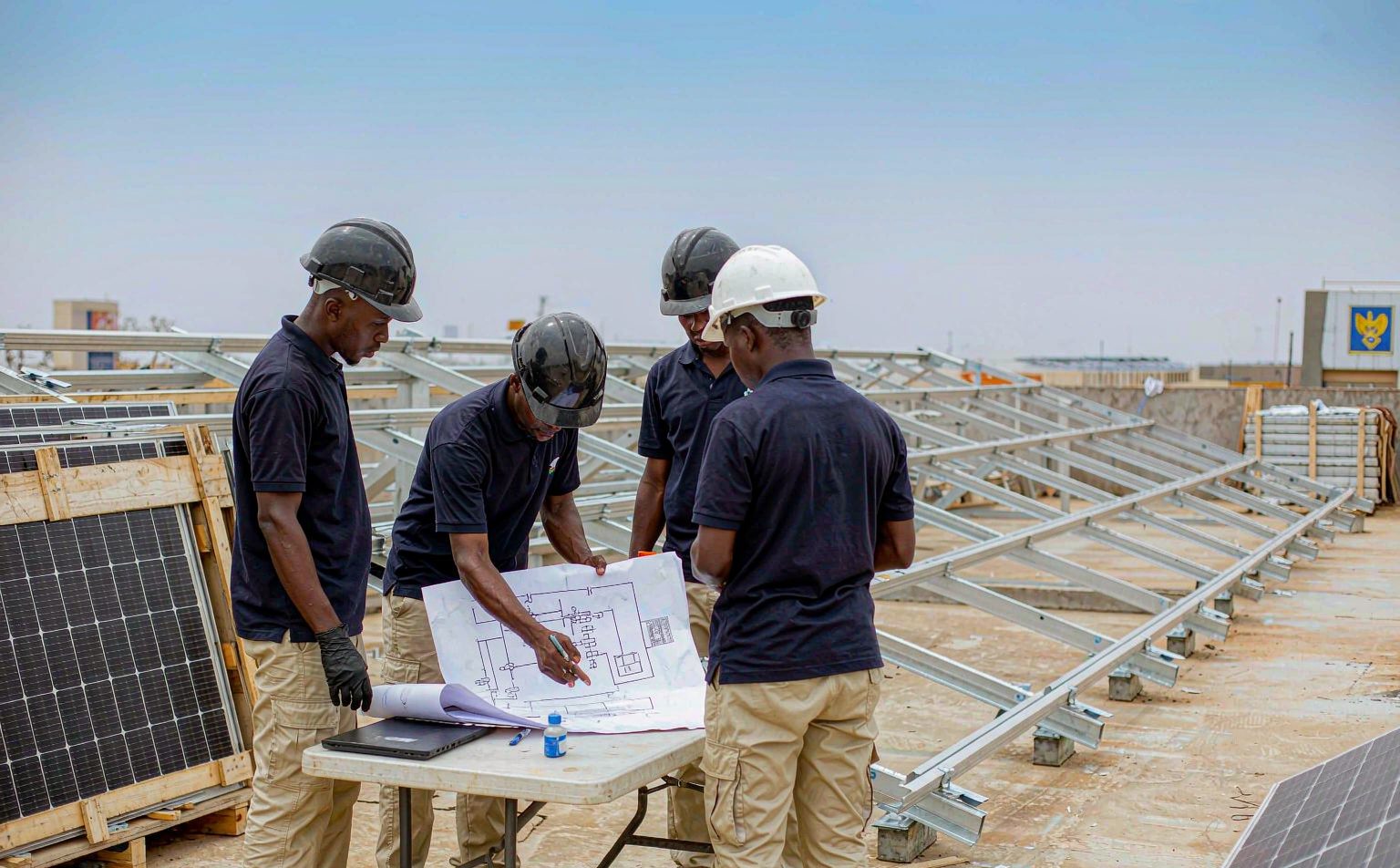
Any serious plan from a solar company in Abuja starts from what you currently pay for electricity. In Abuja that is usually a blend: grid supply from AEDC, diesel or gas generation for the gaps, and in many buildings an ageing inverter and battery set that is failing quietly.
Grid availability and tariff bands vary by feeder, and both change. Rather than quote a figure that may be stale, check your own bill against the current AEDC band for your feeder, and treat any published rate as indicative until AEDC confirms it. What does not change is the shape of the economics.
That is why the sizing conversation in Abuja almost always ends in a hybrid system: solar to cut the daytime bill, a battery to cover the short outages, and the generator demoted to a backup role it performs rarely and cheaply.
The arithmetic also explains why a solar company in Abuja should ask for your diesel log before quoting at all. Fuel consumption is a direct measurement of the load you were unable to serve, and it is the number that sets battery capacity far more reliably than a nameplate total.
Nigeria has capable installers and it has resellers who subcontract the engineering. The difference is visible before you sign anything, if you know what to look for — and it is the most useful filter when you shortlist a solar company in Abuja.
| Check | A capable partner | Warning sign |
|---|---|---|
| Site visit | Attends, measures, photographs the roof and switchroom | Quotes from a form alone |
| Design | Issues a single-line diagram and string layout | Only a list of equipment |
| Sizing basis | Explains the load it designed for, in kW and kWh | “Whatever your bill was” |
| Certificates | Shows IEC test certificates and SONCAP documentation | “Tier 1” with no paperwork |
| After sales | Names a local contact and a response time | Overseas number only |
Ask for two commissioned references of a comparable size and call them. In this market a solar company in Abuja with a real engineering bench will hand over those contacts without hesitation.
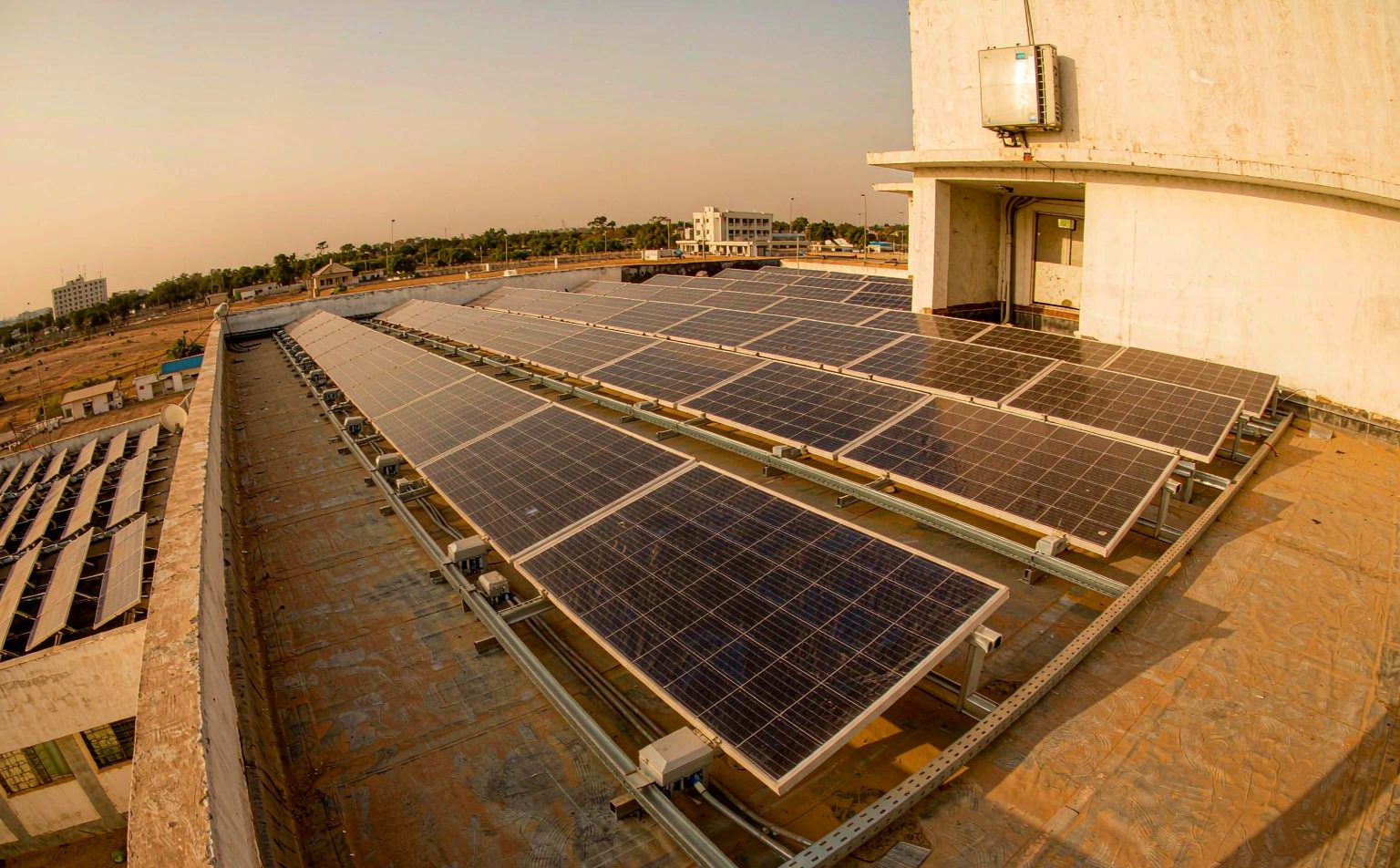
Most enquiries a solar company in Abuja receives land in a handful of bands. The right size comes from the load profile, but the bands are a useful sanity check on any quotation you receive.
| System | Typical site | What it usually covers |
|---|---|---|
| 10–30 kW | Residence, small clinic, retail unit | Daytime load plus essentials during outages |
| 50–150 kW | Hotel, school, office block, cold room | Most daytime demand, generator only as backup |
| 200–500 kW | Manufacturing, large hospitality, hospital | High daytime consumption with demand management |
| 1 MW and above | Industrial estate, agro-processing, water utility | Grid-tied generation with storage for peak shaving |
A 250 kW solar and storage installation serving an Abuja hotel is one of the projects we completed locally before opening this hub — a useful reference point for what a hospitality load actually needs. Read that project record alongside this page. When a solar company in Abuja quotes a hotel, the cold room and the laundry usually dominate the load, not the guest rooms.
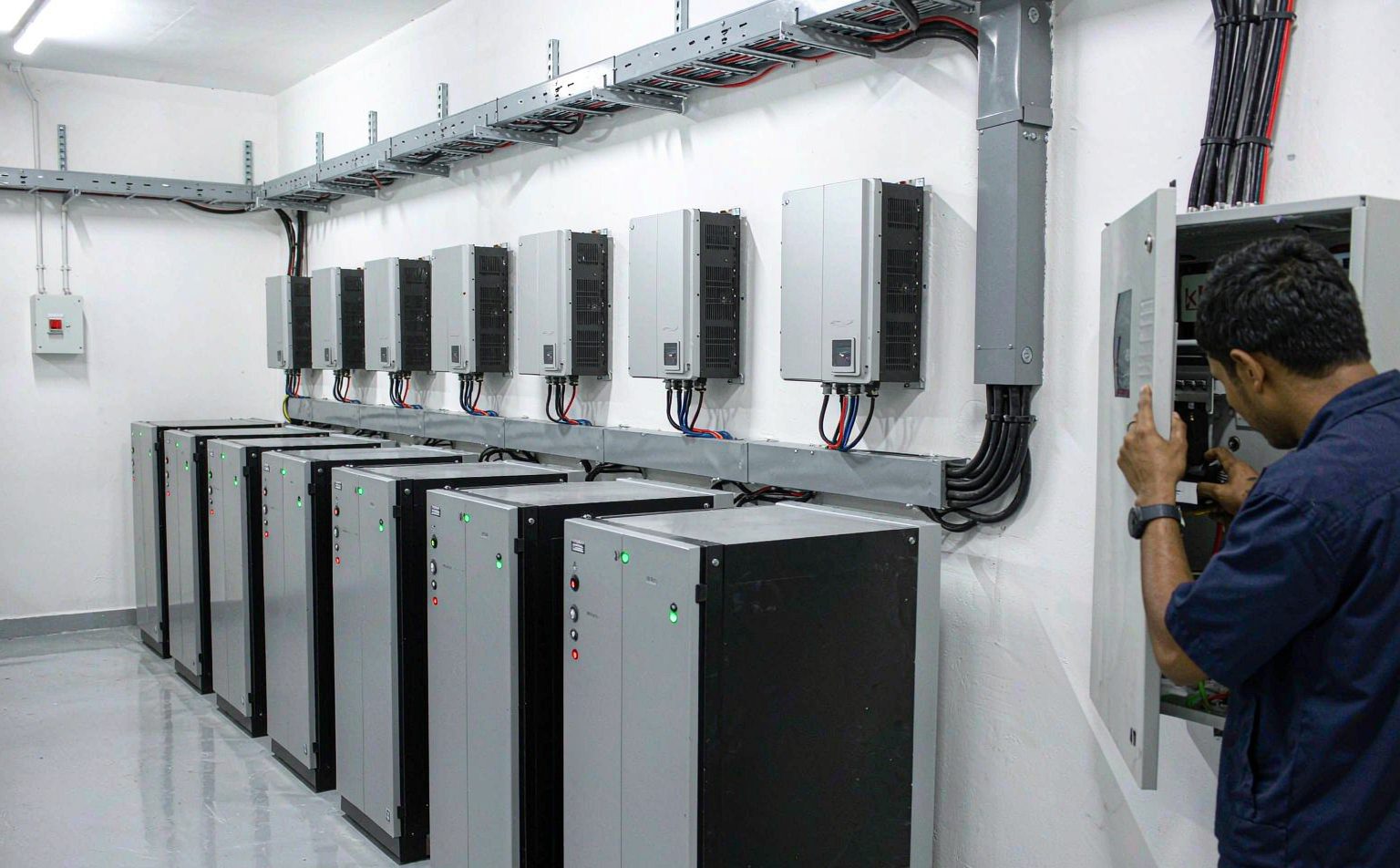
Sites that prepare well get a usable design on the first pass. Nothing here is complicated, and no solar company in Abuja should ask for more than this; it is simply what shortens the gap between enquiry and quotation.
If you have none of it, the survey still goes ahead. It simply takes longer and costs more site visits, which is a scheduling question rather than a technical one. The list is short on purpose: it is what a solar company in Abuja needs in order to design against measured consumption instead of an assumption.
Everything larger than a household system is a sizing problem before it is an equipment problem. The engineering work has three stages — and they are stages a solar company in Abuja should be able to show you in writing.
Interval data where it exists, spot measurements where it does not, and a conversation about which loads may run at the same time. Nameplate totals are almost always wrong in both directions: motor starting currents overstate, diversity understates.
The array is sized to the daytime consumption you actually want to offset. Battery capacity is sized to the job you are asking it to do — outage ride-through, evening load, or peak shaving — because those three answers give very different numbers and very different costs.
Protection, earthing, isolation and metering, plus the connection arrangement with the utility. For grid-tied projects this is where the paperwork and the engineering meet, and where an on-the-ground solar company in Abuja earns its place: we can walk the design through the utility rather than post it.
For larger systems we also model the cash flow against your current diesel and grid spend, so the decision rests on a payback figure you can check rather than on a saving claimed in a brochure.
Sites between 100 kW and 500 kW are usually where the design effort pays back fastest, because the load is large enough to justify proper measurement and small enough that oversizing shows up plainly in the quotation. Above 1 MW the modelling has to include a protection study and a staged energisation plan. That range is well within what we take on, and it is the reason a solar company in Abuja needs a design office rather than a sales desk.
Timelines depend on site readiness, utility approvals and delivery schedules, so treat the sequence as the reliable part and the durations as indicative. The sequence itself is what any solar company in Abuja ought to be able to recite before you ask.
| Estágio | What happens | Indicative |
|---|---|---|
| Survey | Site visit, load measurement, roof assessment | Within days of enquiry |
| Design | Layout, single-line diagram, bill of materials | One to two weeks |
| Supply | Equipment release and shipping to site | Depends on stock and clearance |
| Instalação | Civil, mounting, DC and AC works, supervised | Two to eight weeks by size |
| Commissioning | Testing, handover, operator training | Days |
The visible difference a local base makes is at the two ends: the survey happens in the week you ask for it, and the commissioning witness is available when the installation crew is ready rather than when a flight can be booked. Ask any solar company in Abuja to put those five stages in writing before you start comparing prices.
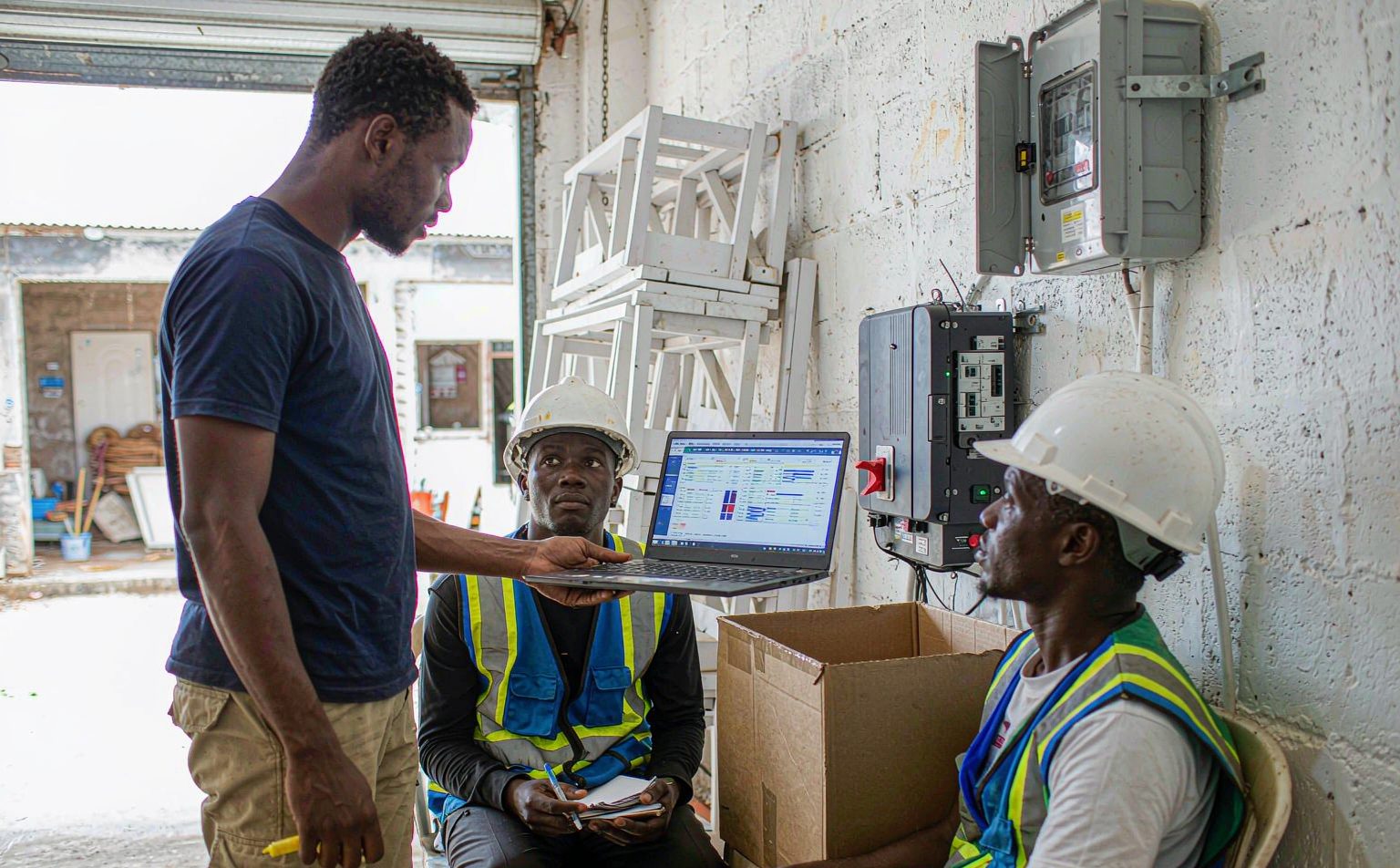
Equipment entering Nigeria is regulated, and buyers should expect documentation rather than assurances. A solar company in Abuja that cannot produce certificates for the exact models quoted is not a partner you can audit later.
Electrical products are subject to the Standards Organisation of Nigeria's conformity regime, generally handled as SONCAP before shipment. Modules, inverters and batteries should arrive with IEC test certificates from a recognised laboratory, and the certificate should name the exact model in your bill of materials rather than a family name.
For batteries, ask for the cell chemistry, cycle life at a stated depth of discharge, and the thermal management method. A lithium battery quote without a stated depth of discharge is not comparable with one that has it.
Mars Solar supplies systems that carry TUV, ETL, ISO, CE and RoHS certification. Where a project needs certificates to be re-issued or endorsed locally, the Abuja team handles that as part of commissioning rather than leaving it to you. Whoever imports the goods, the paperwork travels with the shipment — confirming that early spares everyone the awkward conversation at handover that every solar company in Abuja would rather avoid.
Yes. With engineers stationed in Nigeria from November 2026, survey requests are scheduled locally rather than around international travel. Send your site address, twelve months of bills and a diesel log, and the survey is booked into the next available slot in the Abuja area.
Published ranges for Nigeria are indicative only and drift with exchange rates, module prices and duty treatment. What we can say is that cost per kilowatt falls as system size rises, because design, permits and commissioning are largely fixed. Send a bill-and-diesel history and we will quote against your actual load instead of a per-kilowatt rule of thumb.
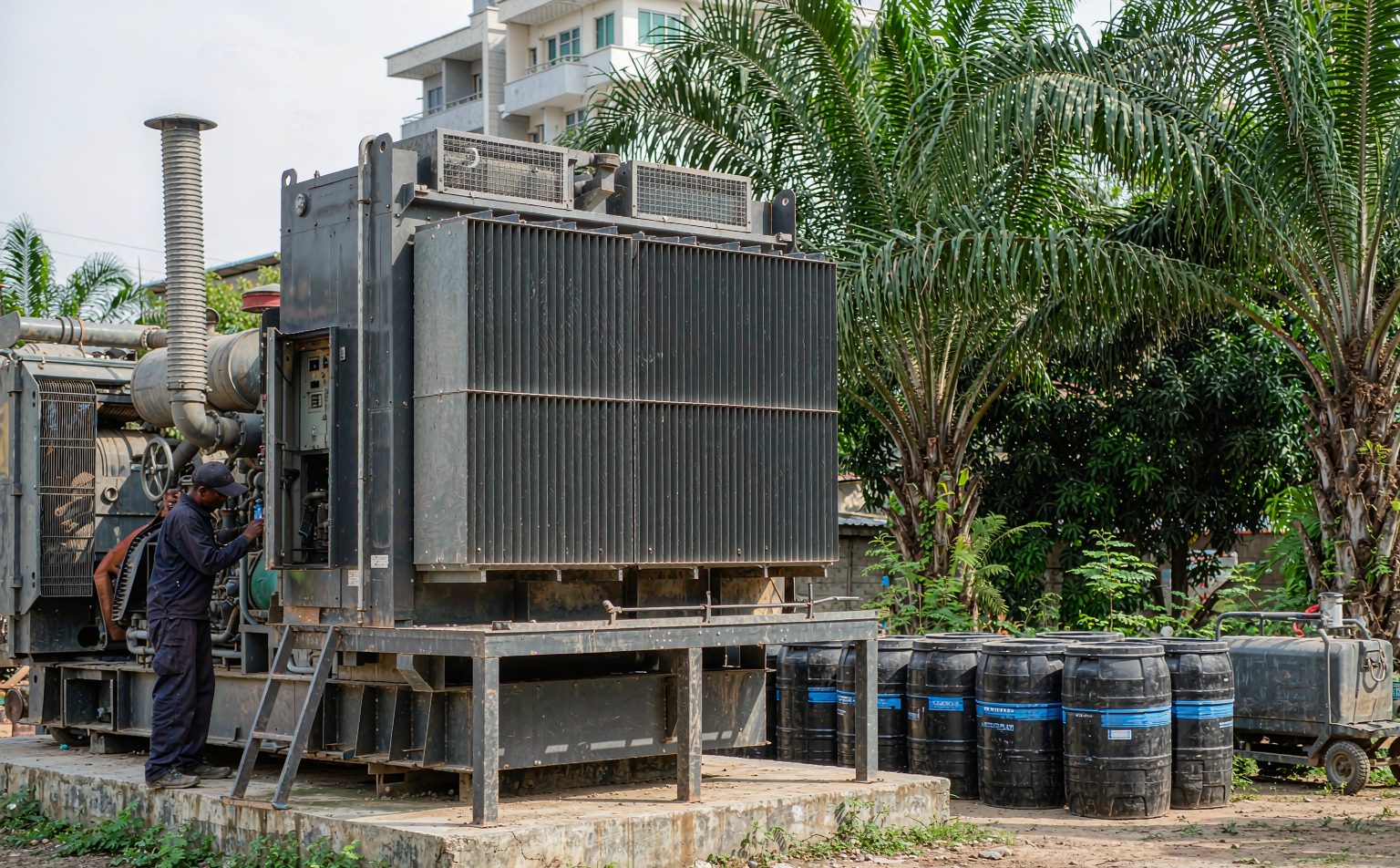
Most Abuja sites keep one, but its role changes. Solar carries the daytime load, the battery covers short outages, and the generator becomes a rarely used backup for extended grid failure or for a load the system was not designed to serve. That arrangement usually cuts fuel consumption far more than it cuts capital cost.
Yes — our design range runs from 100 kW to 10 MW. Above roughly 1 MW the work becomes an engineering project with its own protection study, grid-connection arrangement and staged commissioning, and it is exactly the kind of job a local engineering base is needed for.
Faults are diagnosed on site by the Nigeria team, with monitoring data and photographs attached to the warranty claim so the manufacturer has what it needs on the first submission. Spares are held locally where volumes justify it. A solar company in Abuja with no local presence cannot do either of those things.
The hub is based in the FCT and covers the wider AEDC franchise, with project-based mobilisation to Lagos, Port Harcourt, Kano and other states. Larger installations get a dedicated engineer for the duration of the build regardless of location.
Every installation is connected to a monitoring platform that reports generation, consumption and battery state. Operators are trained on it at handover, and the Abuja team can review the same data remotely when a question arises — which is how most issues get resolved before anyone needs to travel.
Because the expensive part of a solar project is rarely the hardware. It is the survey that missed something, the design that assumed the wrong load, and the week lost between a fault appearing and an engineer arriving. A solar company in Abuja with engineers already in the city compresses all three — and it is the only arrangement in which a warranty claim gets verified with local measurements on the first attempt rather than the third.
For operators with sites in several states, the practical answer is one design standard applied everywhere. A solar company in Abuja that also mobilises to Lagos, Port Harcourt and Kano can hold a single drafting and protection standard across every site you own, which matters more than distance once you run three or more locations.
Start with the site that has the most complete consumption data and the highest diesel spend. That is usually a 50 kW to 250 kW installation, and it produces a measurable saving within a few months. A solar company in Abuja should be willing to model that first project properly rather than sell the largest system the site can carry.
If you are weighing options before the survey, these pages cover the ground most Abuja buyers ask about first — and they are the ones a solar company in Abuja should be willing to discuss line by line.
Official references worth reading directly: the Nigerian Electricity Regulatory Commission publishes the tariff framework, the Standards Organisation of Nigeria sets the conformity regime for imported electrical goods, and the World Bank tracks electrification and access data for the country.
Every link below was checked before publishing, and each one is a question a solar company in Abuja should be ready to answer without looking it up.
Send your site address, electricity bills and diesel log. We will arrange a survey and come back with a design you can compare against any other quotation — sized on your measured load, not on a rule of thumb. Working with a solar company in Abuja should be measurable; this is how we make it so.
Systems from 100 kW to 10 MW. On-site survey, design, commissioning support and after-sales service.
Request a site survey See project records →
Mars Solar — solar company in Abuja from November 2026. Systems 100 kW to 10 MW.

 English English
  Arabic
 Spanish
 French
 Dutch
Dutch
 Portuguese