
Idioma

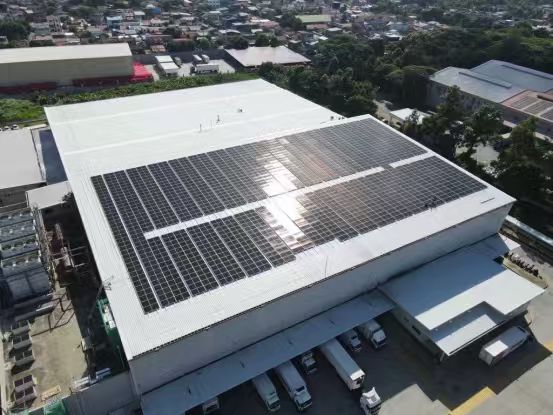
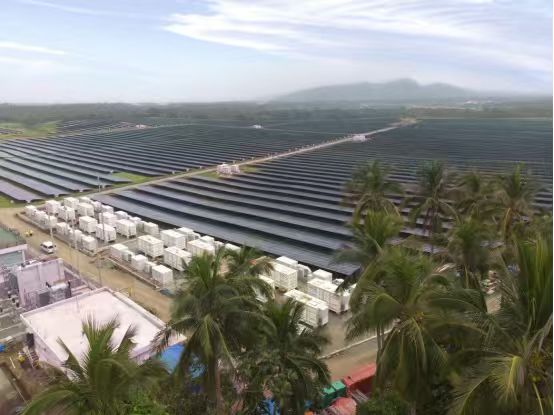
Solar power for factories in the Philippines is no longer an environmental decision — it is a cost decision, and the arithmetic has turned.
Si usted es propietario de una fábrica en el Filipinas, instalando un sistema de energía solar No solo es responsable con el medio ambiente, sino que además es una decisión empresarial altamente rentable.
La mayoría de las fábricas tienen un patrón claro de consumo de electricidad:
Este perfil de carga se alinea perfectamente con generación solar fotovoltaica (FV)que produce electricidad durante las horas de luz. Esto significa que su fábrica puede consumir directamente la energía solar que genera, reduciendo significativamente la dependencia de la red eléctrica.
Para usuarios industriales, un sistema solar conectado a la red (sistema conectado a la red) suele ser la mejor opción porque:
Al instalar un Sistema solar comercial en FilipinasSu fábrica puede utilizar energía solar para compensar el consumo de electricidad durante el día, que es cuando se produce la mayor parte de sus costes energéticos.
Los precios de la electricidad en Filipinas se encuentran entre los más altos del sudeste asiático:
Esta elevada tarifa es precisamente la razón Inversión en energía solar en Filipinas Es muy atractivo. Cada kWh generado por tu sistema solar reemplaza directamente la costosa electricidad de la red.
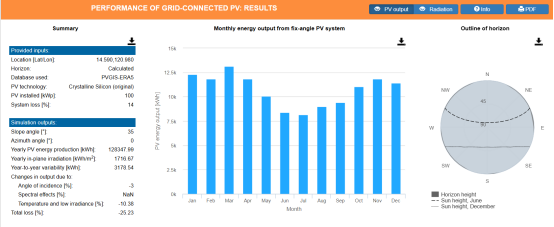
Analicemos un ejemplo típico. Sistema solar de 100 kW para una fábrica en Filipinas.:
Con estos ahorros:
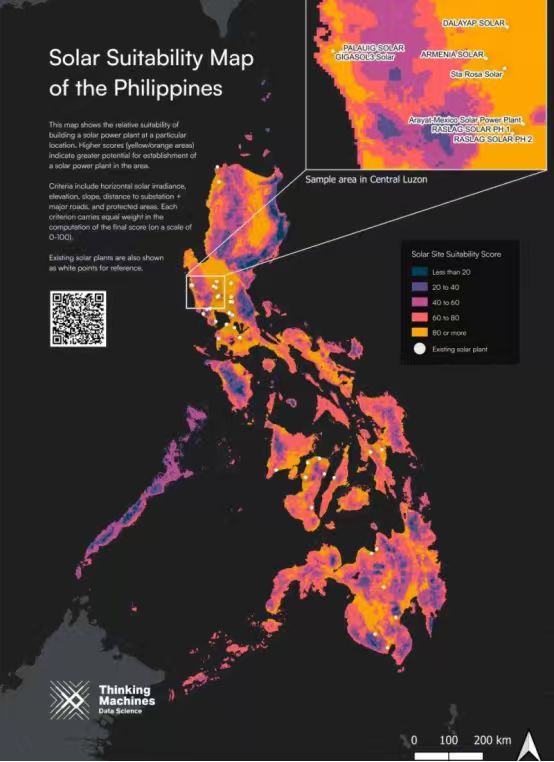
La energía solar es especialmente adecuada si su fábrica:
Incluso las fábricas con Operaciones las 24 horas del día, los 7 días de la semana pueden beneficiarse al reducir el consumo de la red eléctrica durante el día.
Precio de la planta de energía solar aislada de la red de 100 kW de Mars Solar
La planta de energía solar de 100 kW de Mars Solar con 241kWh / 261Almacenamiento de energía en baterías de litio de kWh Ofrecemos presupuestos competitivos y personalizados para clientes internacionales. Para obtener el presupuesto oficial más reciente y un desglose detallado de precios (que incluye transporte, instalación y servicio posventa), póngase en contacto con nuestro equipo de ventas a través del correo electrónico oficial:info@marssolargroup.com.
Nota: El presupuesto tiene una validez de 30 días y se ofrecen descuentos exclusivos para pedidos al por mayor y proyectos de cooperación a largo plazo.

Philippine industrial tariffs are among the highest in South-East Asia, so every kilowatt-hour a factory generates during its production window is a kilowatt-hour it does not buy at the commercial rate. That is the whole calculation for a single-shift factory running on daytime load, and it is why solar power for factories in the Philippines has moved from pilot projects to standard practice.
The second saving is the one most quotes miss: demand charges. A system that shaves the monthly peak reduces the demand component of the bill, not just the energy component. We size against the logged peak, which is why two factories with the same monthly consumption can need very different arrays when you plan solar power for factories in the Philippines.
Payback on the worked example below — a 100kW system — lands inside four years at current commercial tariffs, and faster if the factory runs a second shift. Adding storage extends the saving into the evening peak but roughly doubles the capital cost, so the honest answer is that storage pays when the factory runs at night or when outages cost more than the battery.
On the policy side, DOE-registered renewable developers can import photovoltaic equipment at zero duty and zero VAT, which is a material difference to the capital cost of solar power for factories in the Philippines. The mechanics are covered in our Philippines solar import guide. For the engineering and tariff background, the World Bank energy programme publishes comparable data across the region.
Is it worth it? For a single-shift factory with a stable roof and a daytime load profile, solar power for factories in the Philippines is one of the few capital projects that pays for itself on the bill rather than on a projection. Every factory we quote starts with a load log and a roof survey, because the answer depends on your peak, not on a national average.
Where the answer changes. Solar power for factories in the Philippines stops being straightforward when the roof cannot carry the array, when the load sits mostly at night, or when the factory rents rather than owns. In those three cases we quote ground-mount, storage-first or a lease structure instead of solar power for factories in the Philippines on the existing roof, and we say so before you spend money on a survey. If the problem is an evening peak or a demand charge rather than total consumption, a commercial BESS Philippines project is usually the better first step.
What to send us. A load log, your latest bill and a roof plan are enough to size solar power for factories in the Philippines accurately; without the log we can only give a range. Every quote we issue for solar power for factories in the Philippines lists the assumptions it was built on, so you can check them against your own meter before you sign.

 English English
  Arabic
 Spanish
 French
 Dutch
Dutch
 Portuguese