
Idioma
Hybrid inverter sizing decides whether a building rides through an outage or trips on the first compressor start - and it is the step most buyers get wrong in one direction. The usual failure is oversizing. Someone totals every nameplate on site, adds a safety margin on top, and ends up paying for inverter and battery capacity the building never actually uses.
The fix is to stop treating it as a single number. Hybrid inverter sizing has three separate constraints, and the unit you buy should be the smallest one that satisfies all three at once. Get them in the right order and the quotation gets smaller, not bigger.
This matters more now than it did a few years ago. Commercial tariffs have climbed, outages have become routine in most of the markets we ship to, and a battery that was once a nice-to-have is now the part of the system that keeps the cold room and the servers alive. Sizing it badly is no longer just a cost problem.
One clarification before the numbers. A hybrid inverter is not a string inverter with a battery terminal bolted on. It decides when to charge, when to discharge and what to shed, and how well those functions are matched to the site is what separates a system that lasts from one that is replaced in year three. For public reference material on the technology, the US Department of Energy solar programme is a reasonable starting point, and the background on how solar inverters are classified covers the vocabulary.
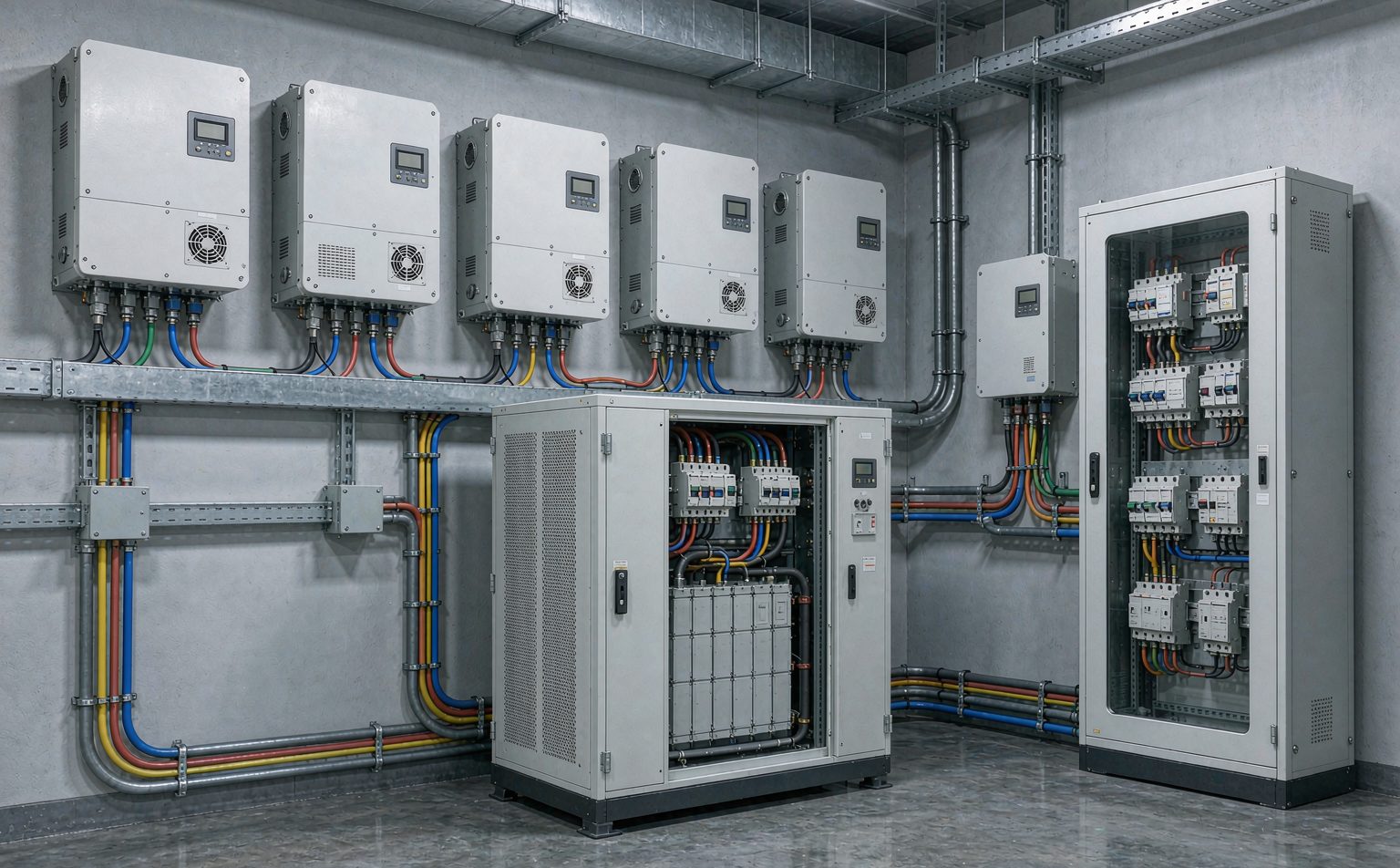
A grid-tied string inverter has one job: convert what the array produces. Hybrid inverter sizing has three jobs at the same time, because the same unit also carries the battery and the backed-up load.
Miss any one of the three and the system looks fine on a sunny afternoon, then fails at 7 pm. That asymmetry is why hybrid inverter sizing starts from the load curve rather than from the roof area.
There is a second difference that catches people out. A string inverter can be swapped for a larger model later without touching anything else. The inverter in a hybrid system is the hub: battery voltage, backup circuits, transfer switching and monitoring all land on it. Changing it later usually means changing the battery and the switchgear too. Spend the extra hour on hybrid inverter sizing now, because the decision is expensive to reverse.
It is worth separating two questions that sound alike: how much inverter capacity is needed, and how much already exists. Hybrid inverter sizing answers the first, a survey of the existing plant answers the second, and only the difference gets bought. Skipping the inventory step is one common reason hybrid inverter sizing leads to a larger purchase than the building warranted.
The number that matters is what the site draws between 6 pm and 10 pm, when PV output is zero and occupancy is still high. That window sets battery energy, and it very often sets the inverter rating as well.
Two buildings with identical monthly consumption can need completely different hybrid inverter sizing. A cold store draws a flat load around the clock; a hotel spikes in the evening and again at breakfast. Same bill, different inverter, different battery.
The same logic runs deeper on institutional sites. A theatre plan and a boarding-school dormitory answer "what must never go off" very differently, and so do the holidays — we set out that method separately under solar for schools and hospitals, because those projects live or die on the essential load list rather than on the array size.
If all you have is utility bills, ask for the interval data. Most commercial meters log demand every 15 or 30 minutes, and the utility will usually release it on request. A single monthly kWh figure hides exactly the peak that drives the decision.
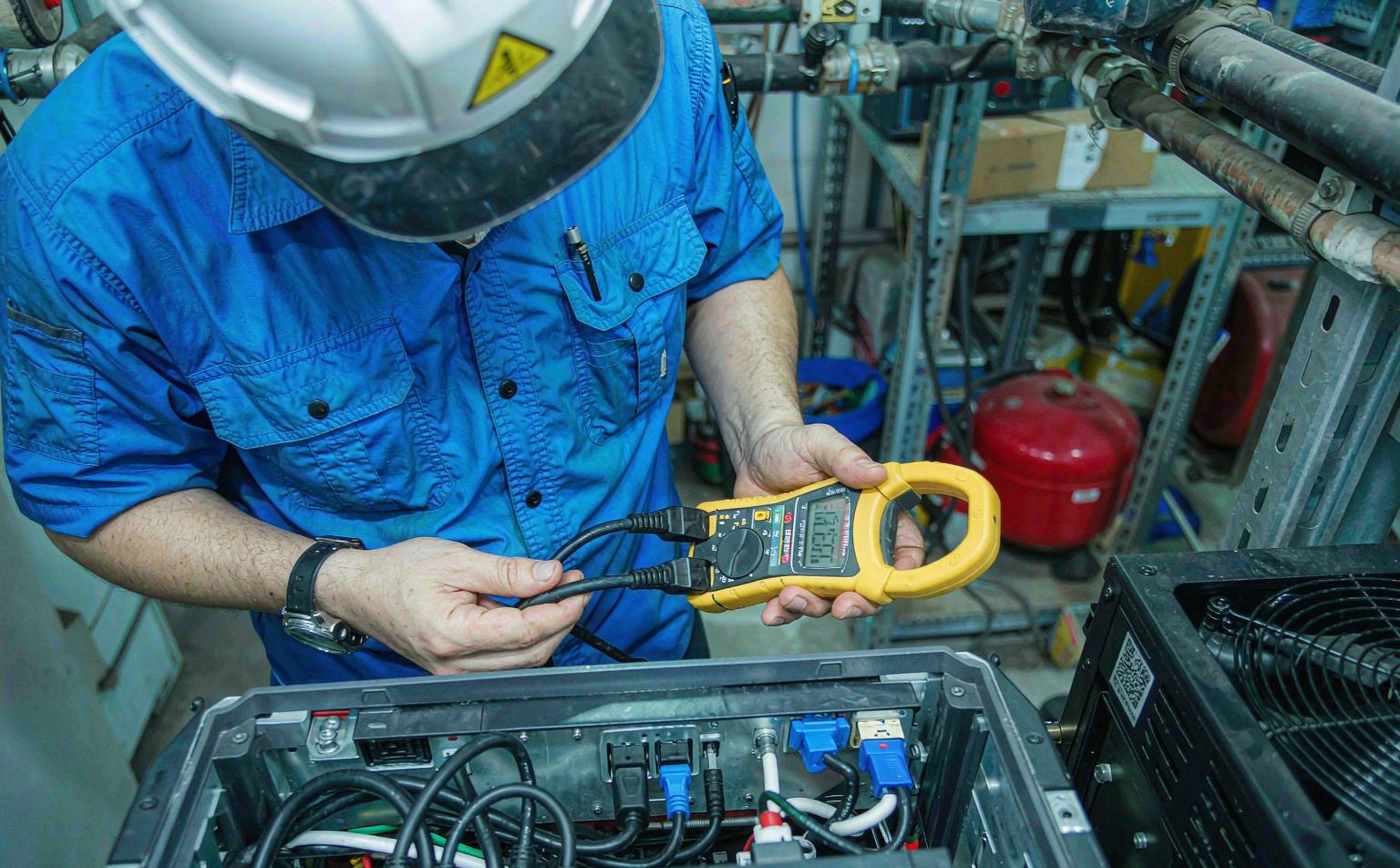
Where interval data is unavailable, a week of logging with a clamp meter on the main incoming feeder is enough to see the shape. Do it on ordinary days, not on the day of a site visit when everything is switched on for the guests.
There is a shortcut that gets you close on the first pass. Take the highest half-hour demand interval from the last twelve months, multiply by the fraction of load you intend to back up, and you have a working figure. Refine it later with a real measurement, but do not start hybrid inverter sizing from a blank sheet - an approximate answer you can check beats a precise answer you cannot.
Before any equipment list is quoted, ask for these three. Each one maps to a different part of the inverter specification, and none of them can be read off the other two.
| Input | What it fixes |
|---|---|
| Peak backup load (kW) | Continuous AC rating |
| Largest motor starting load (kW) | Surge rating, plus start sequencing |
| Night energy demand (kWh) | Capacidad de la batería, then battery DC current |
A supplier who jumps straight to a price is guessing. These three figures are also what make a proposal auditable: you can check each one against the site, and you can see which assumption drove the result.
Put them in writing. In our experience the disagreements that surface three months into a project almost always trace back to one of these three numbers having been assumed rather than measured, and nobody being able to say who assumed it.
One input that regularly gets forgotten is the utility's own limit on export or on installed capacity. Some networks cap what may be connected, and a few require the inverter to be curtailed remotely. Where the cap sits below the load, hybrid inverter sizing has to respect the cap rather than the load, and the shortfall has to be covered by storage or by shifting consumption into the middle of the day.
Write the three inputs into the specification itself, not into a covering email. Hybrid inverter sizing arguments later in a project almost always come back to a number that was agreed verbally and then remembered differently. One table, dated and attached to the design basis, removes the ambiguity for good.
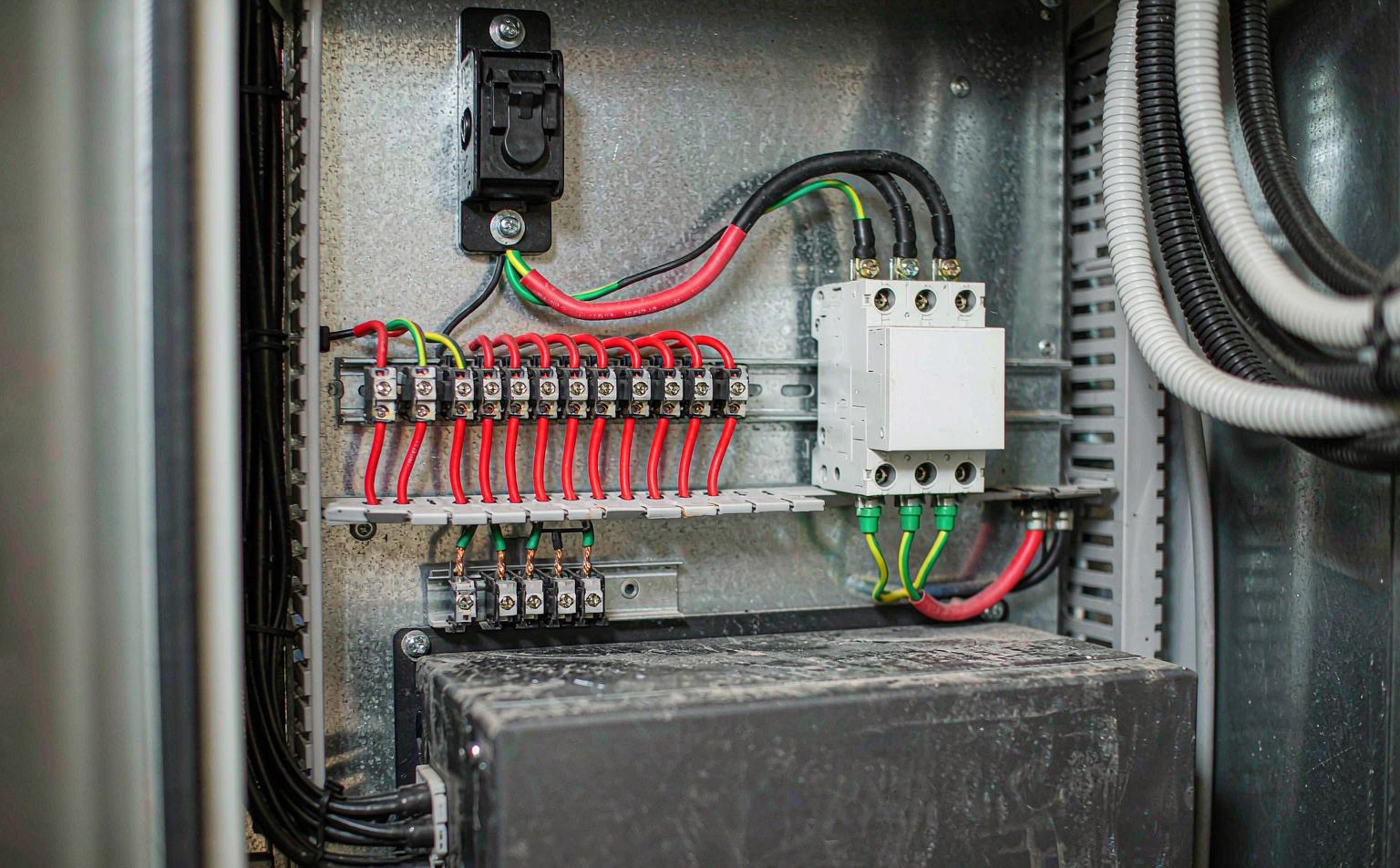
Battery capacity is not the figure printed on the cabinet. Usable energy is nameplate capacity multiplied by depth of discharge, and LFP packs are normally run to 80-90% DoD to protect cycle life.
A 100 kWh cabinet at 85% DoD delivers 85 kWh. If the night load is 70 kWh, that clears - but only if the pack can also deliver the power. A 100 kWh pack limited to 0.5C gives 50 kW, which may be less than the evening peak your hybrid inverter sizing assumed. This is the single most common mismatch we see between an inverter specification and the battery sitting next to it.
Two more factors move the answer. High ambient temperature accelerates calendar ageing, so a battery room without ventilation will not deliver its rated cycle count. And the capacity you need at the end of the warranty period is larger than the capacity you need on day one, which is why manufacturers quote a retention figure rather than a flat number.
For a fuller treatment of cabinet formats and cell chemistry, see our specification page for the 100 kW / 215 kWh BESS cabinet, which lists the DC interface data a hybrid inverter sizing exercise has to match.
Hybrid inverter sizing and battery sizing are often merged into one exercise, and that is where the confusion begins. The inverter is matched to power, the battery to energy. A site with a small but very peaky evening load needs a modest battery and a substantial inverter; a site with a long flat night load needs the opposite. Writing those two requirements down separately keeps the hybrid inverter sizing defensible when someone asks why the numbers are what they are.
Keep the storage assumption visible. If the design assumes 85% depth of discharge and the site later runs the pack harder to squeeze out more runtime, cycle life shortens and the hybrid inverter sizing that looked correct starts to look optimistic. That assumption is part of the design and belongs in the handover pack.
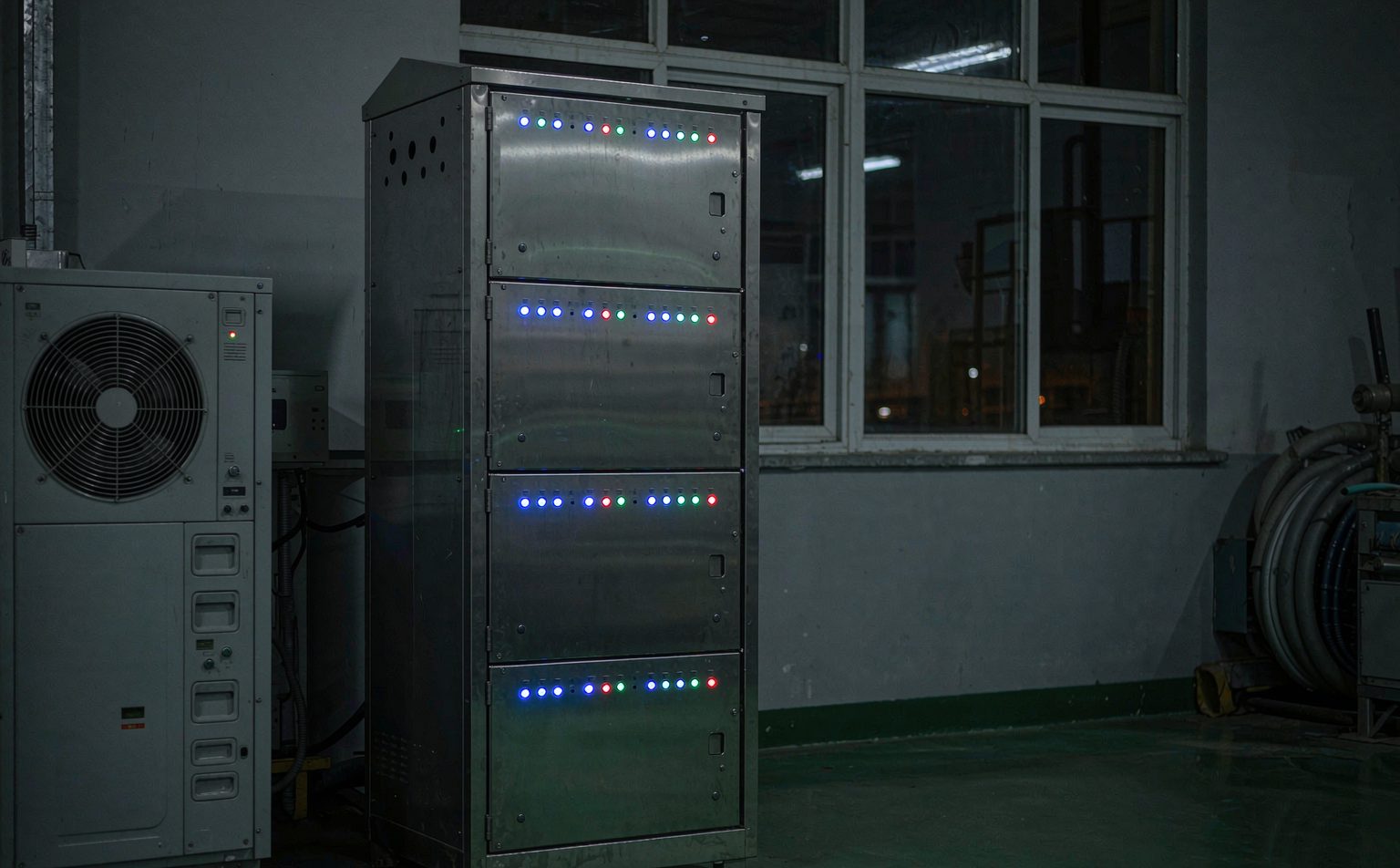
Motor starting current is not a small correction. A pump or compressor can pull several times its running current for a second or two, and if two of them start together the inverter sees a step it cannot hold.
There are three honest ways to deal with it. Buy a larger surge rating. Stagger the starts with a control sequence so only one motor accelerates at a time. Or keep the largest motor off the backup circuit entirely. The third option costs nothing, and for many sites it is the right answer: lighting, IT, refrigeration and security cameras rarely need the chiller to come back at the same instant.
What you should not accept is a proposal that ignores surge. Hybrid inverter sizing that skips it produces a system which nuisance-trips under load, and the fault usually gets blamed on the battery, which had nothing to do with it.
Sequencing deserves more attention than it usually gets. A start delay between the largest loads, or a contactor that holds the chiller off for two minutes after restoration, costs very little and can remove the need for a bigger unit. When hybrid inverter sizing proposals come out expensive, the cause is often that a surge problem was solved with hardware instead of control logic.
A hybrid inverter is usually paired with slightly more DC than its AC rating - commonly somewhere around 1.1 to 1.3 times. That is deliberate. Modules rarely reach nameplate output in real conditions, and the extra array lifts production in the morning, in the evening and on overcast days.
The trade-off is clipping at midday. Some clipping is not a fault; it is often the cheapest energy in the project, because the alternative is a larger inverter that sits idle for most of the year. The question to settle is how much, and the answer depends on whether midday surplus can go into the battery or has to be exported or curtailed.
Where storage is sized generously, a higher ratio is usually fine, because the surplus charges the pack instead of being thrown away. Where there is no battery on the DC side, the ratio should be conservative. Any hybrid inverter sizing exercise worth reading states the assumed ratio openly rather than burying it in a datasheet.
Hybrid inverter sizing also has to consider what happens when the grid returns. Reconnection with a large load still connected can trip the supply again, so most good designs sequence the recovery. It is a small detail, and it is usually the difference between a site that comes back cleanly and one that cycles for an hour.
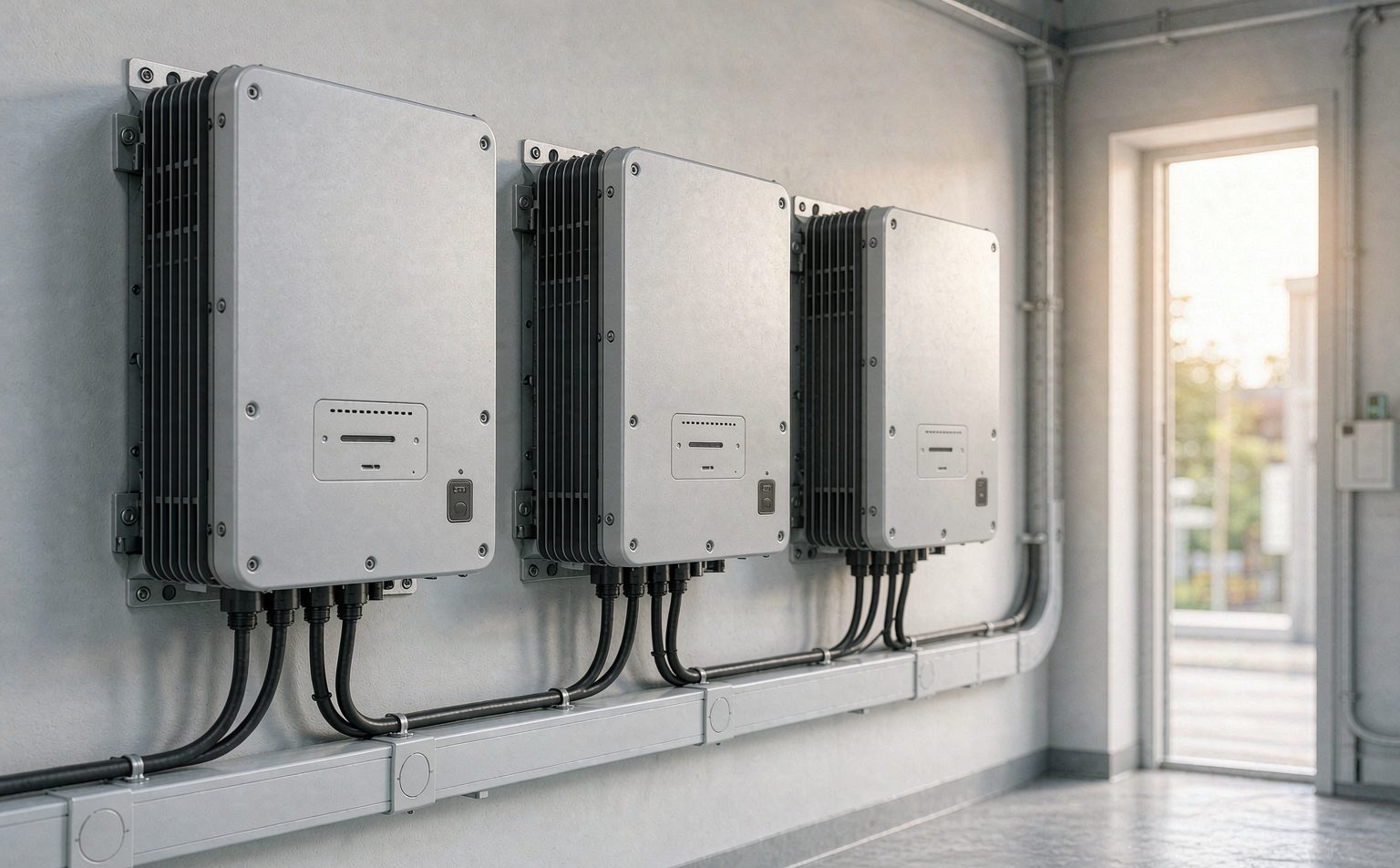
None of these is exotic. They are ordinary mistakes in hybrid inverter sizing, and all four are caught by one thing: asking for the load curve before discussing hardware.
A fifth mistake sits outside the list because it is procedural rather than technical: approving hybrid inverter sizing before the load list is frozen. Buildings change during construction, circuits get added, and a design that was right at tender can be wrong at handover. Build in one review after the electrical installation is finished and before the equipment is ordered.
Take the hotel project in our own case file - 44 rooms, a pool, two restaurants, a conference hall and a cold kitchen. The design landed near 250 kW of PV with storage, and the published result is a cut of roughly 60% on the electricity bill.
What drove the numbers was not the room count. It was the evening block: pool pumps, kitchen cold rooms, corridor and exterior lighting, and air conditioning pulling down rooms that have been warmed all day. That block runs for four to five hours after dark, and it is the reason there is a battery at all. You can read the project detail in our 250 kW hotel solar case study.
Run the same exercise for a school and the answer changes shape. Classrooms peak at midday, which the array covers directly, so the battery shrinks and hybrid inverter sizing is dominated by daytime air conditioning and fans. Same discipline, different output - which is the whole point of doing the analysis rather than copying a template.
Note what that example does not do. It does not size the array from the roof, and it does not size the battery from the daily kWh total. Both shortcuts are common, and both produce a system that looks reasonable on paper and disappoints in the first long outage. Good hybrid inverter sizing is a short list of measured numbers plus a clearly stated set of assumptions.
With those five items, a supplier can produce hybrid inverter sizing you are able to check, instead of a number you have to trust. It is also the fastest way to compare two quotations fairly, because both will have been built on the same inputs.
Notice that none of the five items is a piece of equipment. Hybrid inverter sizing is settled before a make or model is chosen, and a supplier who wants to quote hardware first has usually skipped the analysis.
Can I size the inverter from the battery capacity? No. Battery capacity is energy in kWh, the inverter is rated in kW. A large battery does not rescue an undersized inverter, and a large inverter does not make a small battery last longer.
Is a bigger inverter always safer? It is safer for surge and worse for cost and part-load efficiency. Above a certain point you are paying for capacity that never gets used, and the unit runs further from its efficient band during ordinary hours.
Do I need spare capacity for future expansion? Leave spare AC and DC ways, and design cable and switchgear for the later stage. Buying extra inverter capacity on day one is usually the expensive way to keep that option open.
What if the supplier's number is far from mine? Ask which of the three inputs differs. Hybrid inverter sizing disagreements almost always reduce to a different assumed peak, a different surge rule or a different night energy figure - all of which are checkable rather than matters of opinion.
Single-phase or three-phase hybrid inverter? Follow the supply. Above roughly 10 to 15 kW of backed-up load, three-phase is the normal commercial choice, mainly for phase balance and for cable size.
How much battery should I install? Enough for the loads you actually want after dark, with a margin for degradation across the warranty period. Doubling the pack to feel safe is rarely justified, and it lengthens the payback for no operational gain.
Does heat or altitude change the answer? Yes. Inverter output is derated above certain ambient temperatures, and plant rooms without ventilation are the usual cause. Hybrid inverter sizing that assumes a 25 C datasheet figure can be optimistic in a hot climate, so check the derating curve rather than the headline rating.
Can hybrid inverter sizing be done from the datasheet alone? No. The datasheet tells you what the unit can do; hybrid inverter sizing tells you whether that is enough here. The two questions are different, and only the second one depends on your load curve. Most of the value in hybrid inverter sizing comes from the inputs, not from the model you eventually pick.
If you are still deciding on architecture rather than hardware, start with our comparison of off-grid, hybrid and on-grid solar. For what storage actually costs in a high-tariff market, see commercial BESS in the Philippines and the wider Philippines solar and BESS cost guide. Buyers in West Africa should read BESS pricing and import in Nigeria y what solar costs in Nigeria.
On the commercial side, solar panel prices in Ghana y solar panel prices in the Philippines give current cost bands, while diesel versus solar covers the comparison most factory owners ask about first. Before you commit to a supplier, read Cómo elegir proveedores fiables de sistemas solares y what an on-site survey should cover.
Everything above assumes you have a load curve. If you do not have one yet, the hybrid inverter sizing process described on this page is the right place to begin.
Send the load curve and the five items above, and we will come back with a hybrid inverter sizing sheet that shows the assumptions next to the numbers - inverter rating, surge, array ratio, battery energy and C-rate - along with an indicative payback for your tariff. If a smaller system is the right answer for your site, the sheet will say so.
For background on how the hardware is specified and shipped, see our guide to certification systems y Cantidad mínima de pedido, plazo de entrega y condiciones de pago.
If you would rather start from a worked example, our 100 kW off-grid plant specification shows the level of detail a sizing sheet should contain, and a 6 MW / 20 MWh storage project shows how the same logic scales when the essential load is an entire industrial site.
Sizing does not stop at the inverter enclosure. Each of the six switching points inside a solar inverter needs its own protection and changeover hardware, and how those points are rated is set out in CNCJ's guide to relays for solar inverter systems.


 English English
  Arabic
 Spanish
 French
 Dutch
Dutch
 Portuguese