
Language
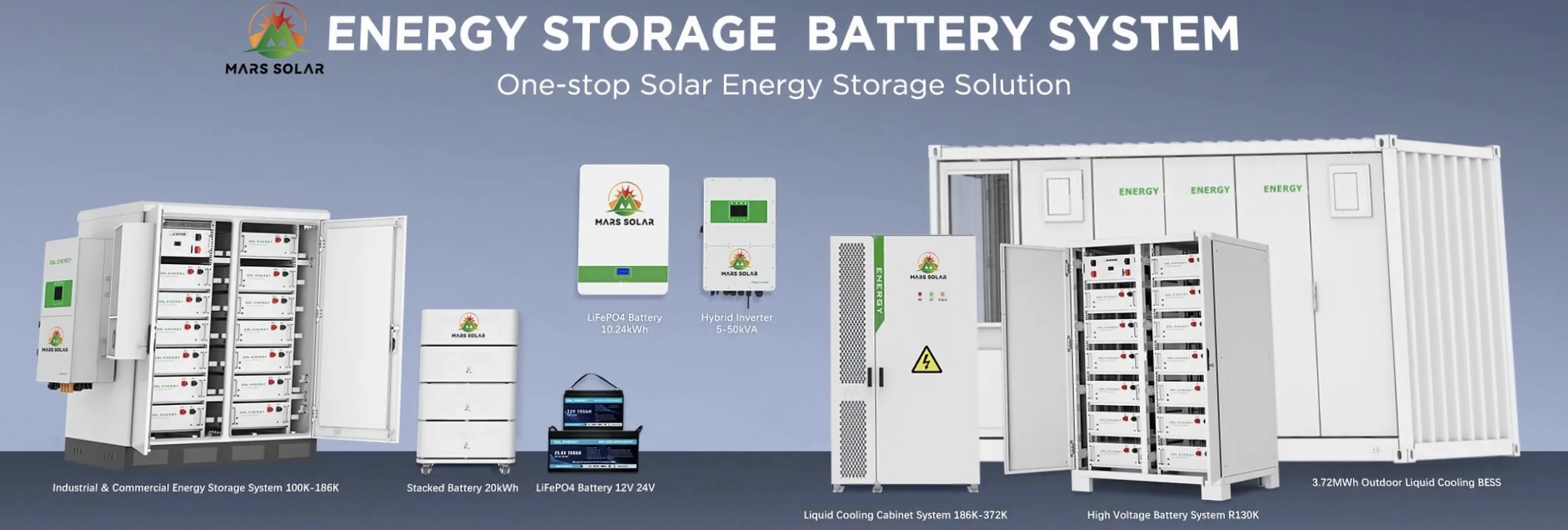
Configuring a solar energy system correctly comes down to four checks: matching DC voltage across every component, sizing the inverter to the surge, sizing the array to the daily load, and sizing the battery to the overnight hours.
Leveraging Mars Solar’s years of on-site installation expertise and insights into real customer demands, we’re here to guide you through mastering solar system configuration in no time — whether it’s for residential off-grid setups or large-scale commercial energy storage projects.
System Power Range Overview
System Type | Power Range |
Residential Solar Systems | 1KW – 20KW |
Commercial Solar Systems (Farms, Hospitals, Schools, Communities, Factories, Office Buildings) | 30KW – 300KW |
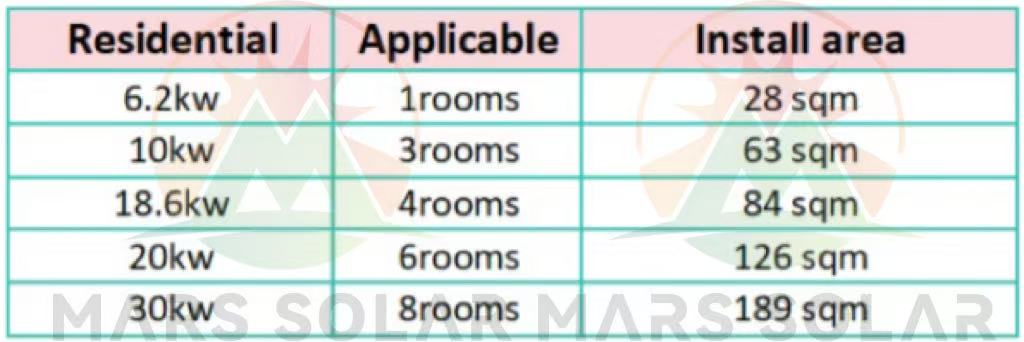
Residential System Breakdown by Household Size
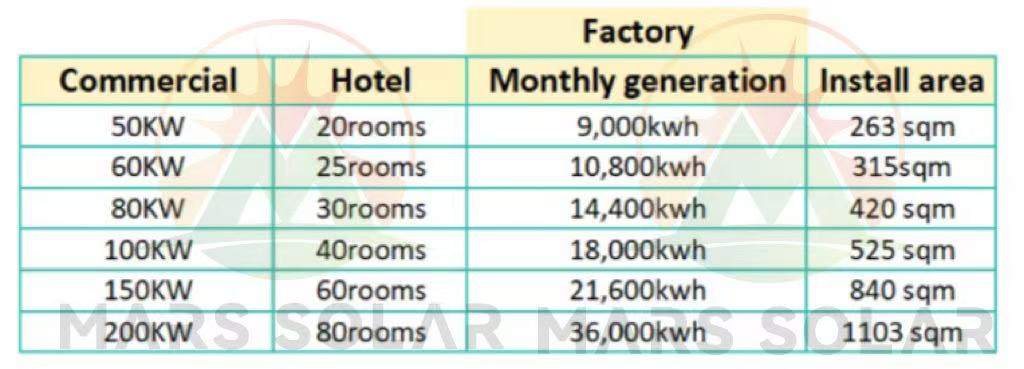
Commercial System Breakdown by Scenario
Solar Power System Parameter Table
Solar System Power | 1kw | 2kw | 3kw | 5kw | 10kw |
Solar Inverter's Power & DC Voltage | 1KW 24V | 2KW 24V | 3KW 48V | 5KW 48V | 10KW 96V |
MPPT Controller Input PV Voltage Range | DC15V--DC130V | DC15V--DC130V | DC45V--DC150V | DC45V--DC150V | DC120V--DC280V |
solar panel capacity | Power: 600W/pcs, VOC: 51V | Power: 600W/pcs, VOC: 51V | Power: 600W/pcs, VOC: 51V | Power: 600W/pcs, VOC: 51V | Power: 600W/pcs, VOC: 51V |
Number of solar panels in series (pcs/series) | 2pcs | 3pcs | 3pcs | 3pcs | 5pcs |
DC voltage of Lithium Battery | 24V | 24V | 48V | 48V | 96V |
| Solar System Power | 15kw | 20kw | 30kw | 50kw | 80kw | 100kw |
| Solar Inverter's Power & DC Voltage | 15KW 192V | 20KW 192V | 30KW 384V | 50KW 384V | 80KW 384V | 100KW 384V |
| MPPT Controller Input PV Voltage Range | 225V--760V | 225V--760V | 450V-800V | 450V--800V | 450V--800V | 450V--800V |
| solar panel capacity | Power: 600W/pcs, VOC: 51V | Power: 600W/pcs, VOC: 51V | Power: 600W/pcs, VOC: 51V | Power: 600W/pcs, VOC: 51V | Power: 600W/pcs, VOC: 51V | Power: 600W/pcs, VOC: 51V |
| Number of solar panels in series (pcs/series) | 10-13pcs | 10-13pcs | 13-16pcs | 13-16pcs | 13-16pcs | 13-16pcs |
| DC voltage of Lithium Battery | 192V | 192V | 384V | 384V | 384V | 384V |
| Solar System Power | 80kw | 100kw |
| Solar Inverter's Power & DC Voltage | 80KW 384V | 100KW 384V |
| MPPT Controller Input PV Voltage Range | 450V--800V | 450V--800V |
| solar panel capacity | Power: 600W/pcs, VOC: 51V | Power: 600W/pcs, VOC: 51V |
| Number of solar panels in series (pcs/series) | 13-16pcs | 13-16pcs |
| DC voltage of Lithium Battery | 384V | 384V |
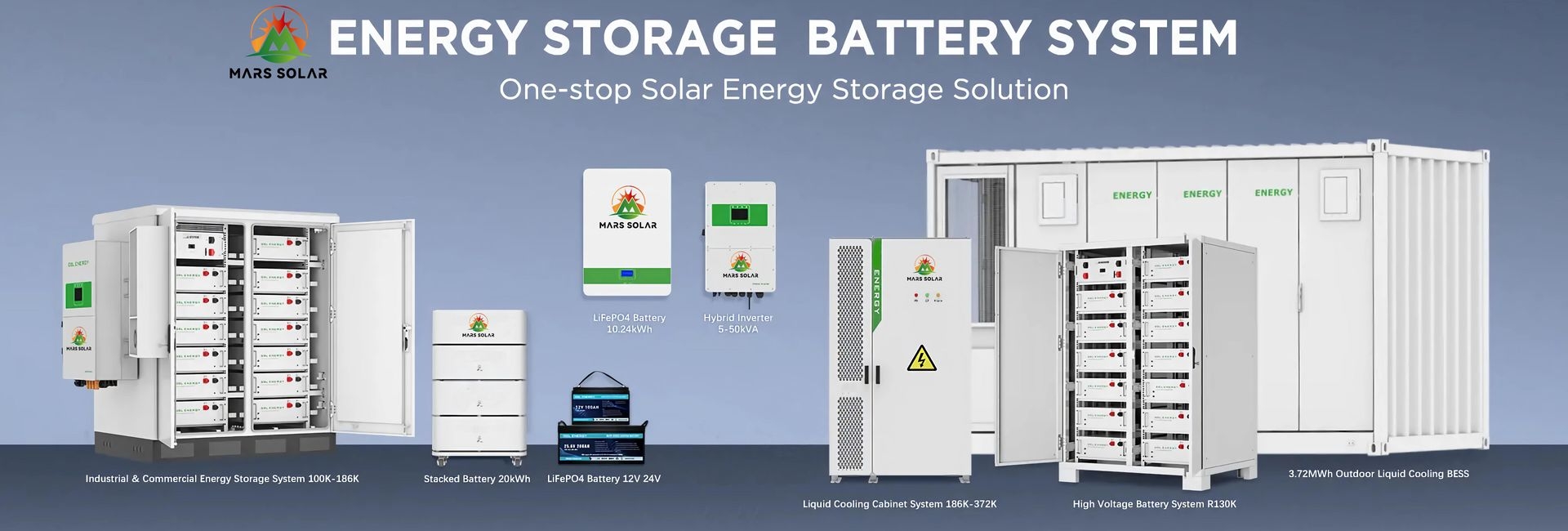
How to configure a correct system?
First, the DC voltage of all components in the system must be the same.
(FV combiner, MPPT controller, Solar Inverter, Lithium battery/Gel battery)
Common DC Voltage of solar inverters and lithium batteries
12V/24V/48V/96V/192V/240V/384V
| How to recommend a system for family type customers? |
|
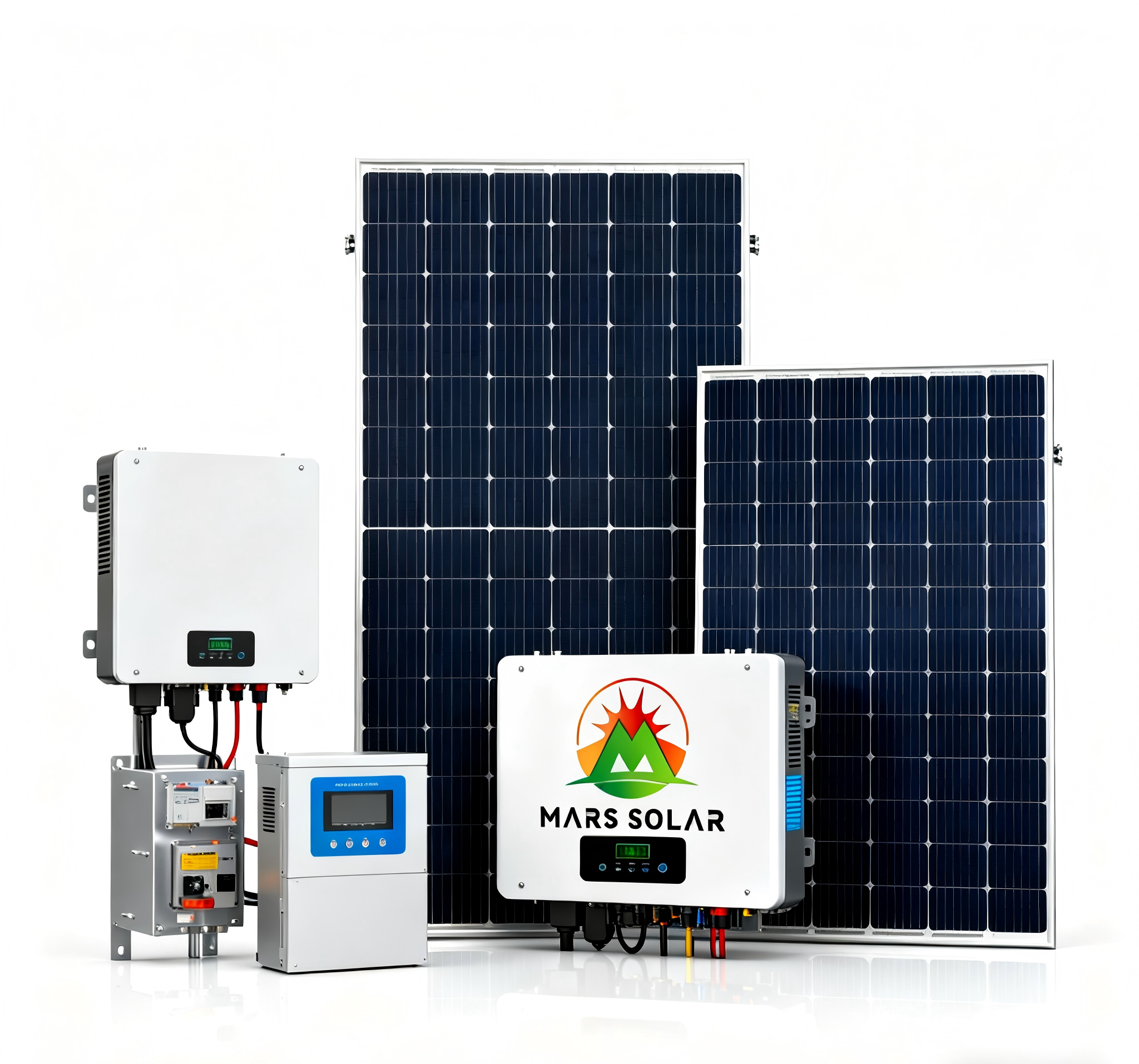
Before configuring a solar system solution, customers are required to provide the following information:
(1) How much eletricity consumption kwh do they need consume monthly/daily? ---in order to calculate out the solar panel quantity.
(2) How much peak working power of all loads? -- in order to configure the rated power for the solar inverter.
(3) How many hours do the load need work after sunset? -- in order to configure the capacity for Lithium battery.
Based on experience and the budgets of many customers, Generally, the minimum capacity of lithium batteries is configured according to the discharge rate of 0.5C.
Start with voltage. Every component in a solar energy system — panels, controller, inverter, battery — must share the same DC voltage rating, or you will spend the commissioning day troubleshooting instead of generating. Write the system voltage down first and select everything else against it. Getting this one wrong is the most common reason a solar energy system fails on day one.
Then size the inverter to the surge, not the running load. Motors, pumps and compressors draw several times their running current for a second or two at start-up, and an inverter sized to the nameplate will trip on the first start. This is where most people misconfigure a solar energy system for motor loads: they read the nameplate, add twenty percent, and still trip.
Next, size the array to the daily energy you want to displace, and the battery to the hours you need it to cover. Daily kilowatt-hours decide panel count; overnight hours decide battery capacity. Sizing the battery off the daily total is the most expensive mistake we see in competing quotes for a solar energy system of any size.
Depending on where you are, grid-tied, hybrid and off-grid configurations carry very different paybacks. The US DOE guide to how solar works is a good neutral primer on the difference, and our 10kW hybrid system page shows a worked configuration end to end for a solar energy system in the mid-size range.
Finally, price the whole solar energy system as one bill of materials. Panels are the line item everyone negotiates and the one that matters least once storage and balance of system are included. Ask for the component list, not the price per watt, and you will know what you are actually buying.
Two checks that save the most money: do not oversize the array on a solar energy system that already covers your daytime load, and do not undersize the battery on a solar energy system that has to carry the evening. Both errors are invisible in a price-per-watt solar energy system quote and obvious in the first month bill.
 English English
  Arabic
 Spanish
 French
 Dutch
Dutch
 Portuguese