
Idioma
Configuring a solar energy system correctly comes down to four checks: matching DC voltage across every component, sizing the inverter to the surge, sizing the array to the daily load, and sizing the battery to the overnight hours.
Aprovechando los años de experiencia de Mars Solar en instalaciones in situ y su conocimiento de las necesidades reales de los clientes, estamos aquí para guiarle en el dominio de la configuración de sistemas solares en poco tiempo, ya sea para instalaciones residenciales aisladas de la red o para proyectos comerciales de almacenamiento de energía a gran escala.
Descripción general del rango de potencia del sistema
Tipo de sistema | Rango de potencia |
Sistemas solares residenciales | 1 kW – 20 kW |
Sistemas solares comerciales (Granjas, hospitales, escuelas, comunidades, fábricas, edificios de oficinas) | 30 kW – 300 kW |
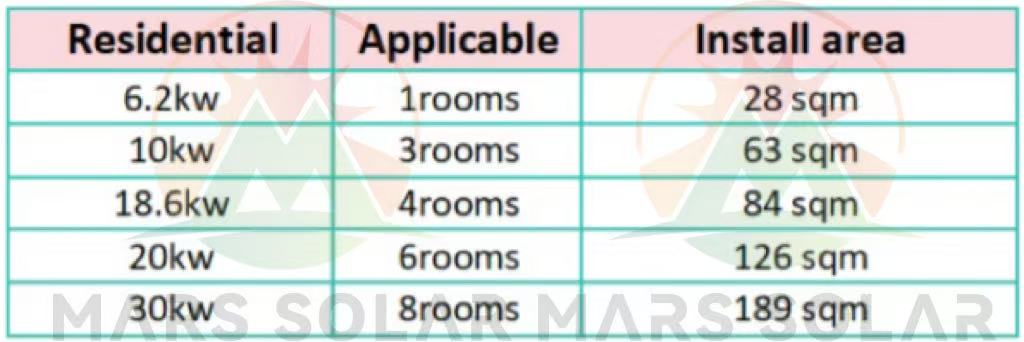
Sistema residencialDesglose por tamaño del hogar
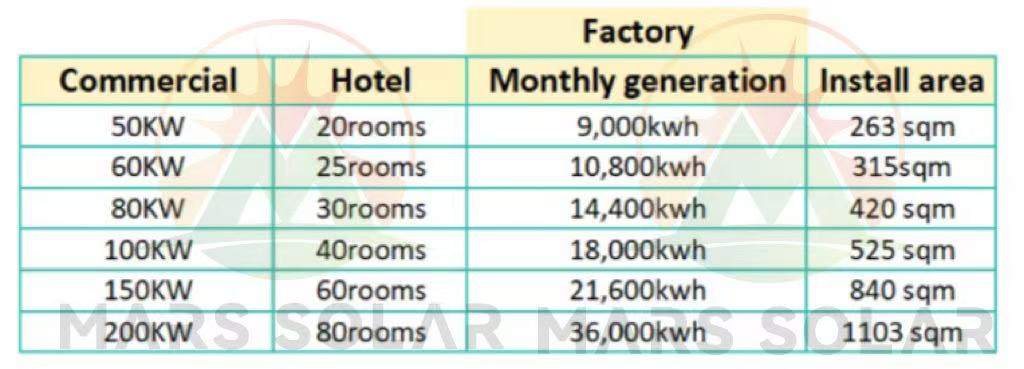
Desglose del sistema comercial por escenario
Tabla de parámetros del sistema de energía solar
Energía del sistema solar | 1 kW | 2 kW | 3 kW | 5 kW | 10 kW |
Potencia y voltaje CC del inversor solar | 1KW 24V | 2KW 24V | 3KW 48V | 5KW 48V | 10KW 96V |
Rango de voltaje fotovoltaico de entrada del controlador MPPT | 15 V CC - 130 V CC | 15 V CC - 130 V CC | 45 V CC - 150 V CC | 45 V CC - 150 V CC | 120 V CC - 280 V CC |
capacidad del panel solar | Potencia: 600 W/piezas, VOC: 51V | Potencia: 600 W/piezas, VOC: 51V | Potencia: 600 W/piezas, VOC: 51V | Potencia: 600 W/piezas, VOC: 51V | Potencia: 600 W/piezas, VOC: 51V |
Número de paneles solares en serie (unidades/serie) | 2 piezas | 3 piezas | 3 piezas | 3 piezas | 5 piezas |
Voltaje CC de la batería de litio | 24 V | 24 V | 48V | 48V | 96V |
| Energía del sistema solar | 15 kW | 20 kW | 30 kW | 50 kW | 80 kW | 100 kW |
| Potencia y voltaje CC del inversor solar | 15 kW 192 V | 20KW 192V | 30 kW 384 V | 50 kW 384 V | 80 kW 384 V | 100 kW 384 V |
| Rango de voltaje fotovoltaico de entrada del controlador MPPT | 225V--760V | 225V--760V | 450V-800V | 450V--800V | 450V--800V | 450V--800V |
| capacidad del panel solar | Potencia: 600 W/piezas, VOC: 51V | Potencia: 600 W/piezas, VOC: 51V | Potencia: 600 W/piezas, VOC: 51V | Potencia: 600 W/piezas, VOC: 51V | Potencia: 600 W/piezas, VOC: 51V | Potencia: 600 W/piezas, VOC: 51V |
| Número de paneles solares en serie (unidades/serie) | 10-13 piezas | 10-13 piezas | 13-16 piezas | 13-16 piezas | 13-16 piezas | 13-16 piezas |
| Voltaje CC de la batería de litio | 192 V | 192 V | 384 V | 384 V | 384 V | 384 V |
| Energía del sistema solar | 80 kW | 100 kW |
| Potencia y voltaje CC del inversor solar | 80 kW 384 V | 100 kW 384 V |
| Rango de voltaje fotovoltaico de entrada del controlador MPPT | 450V--800V | 450V--800V |
| capacidad del panel solar | Potencia: 600 W/piezas, VOC: 51V | Potencia: 600 W/piezas, VOC: 51V |
| Número de paneles solares en serie (unidades/serie) | 13-16 piezas | 13-16 piezas |
| Voltaje CC de la batería de litio | 384 V | 384 V |
¿Cómo configurar un sistema correctamente?
En primer lugar, la tensión continua de todos los componentes del sistema debe ser la misma.
(Combinador FV, controlador MPPT, inversor solar, batería de litio/batería de gel)
Voltaje CC común de inversores solares y baterías de litio
12V/24V/48V/96V/192V/240V/384V
| ¿Cómo recomendar un sistema para clientes de tipo familiar? |
|
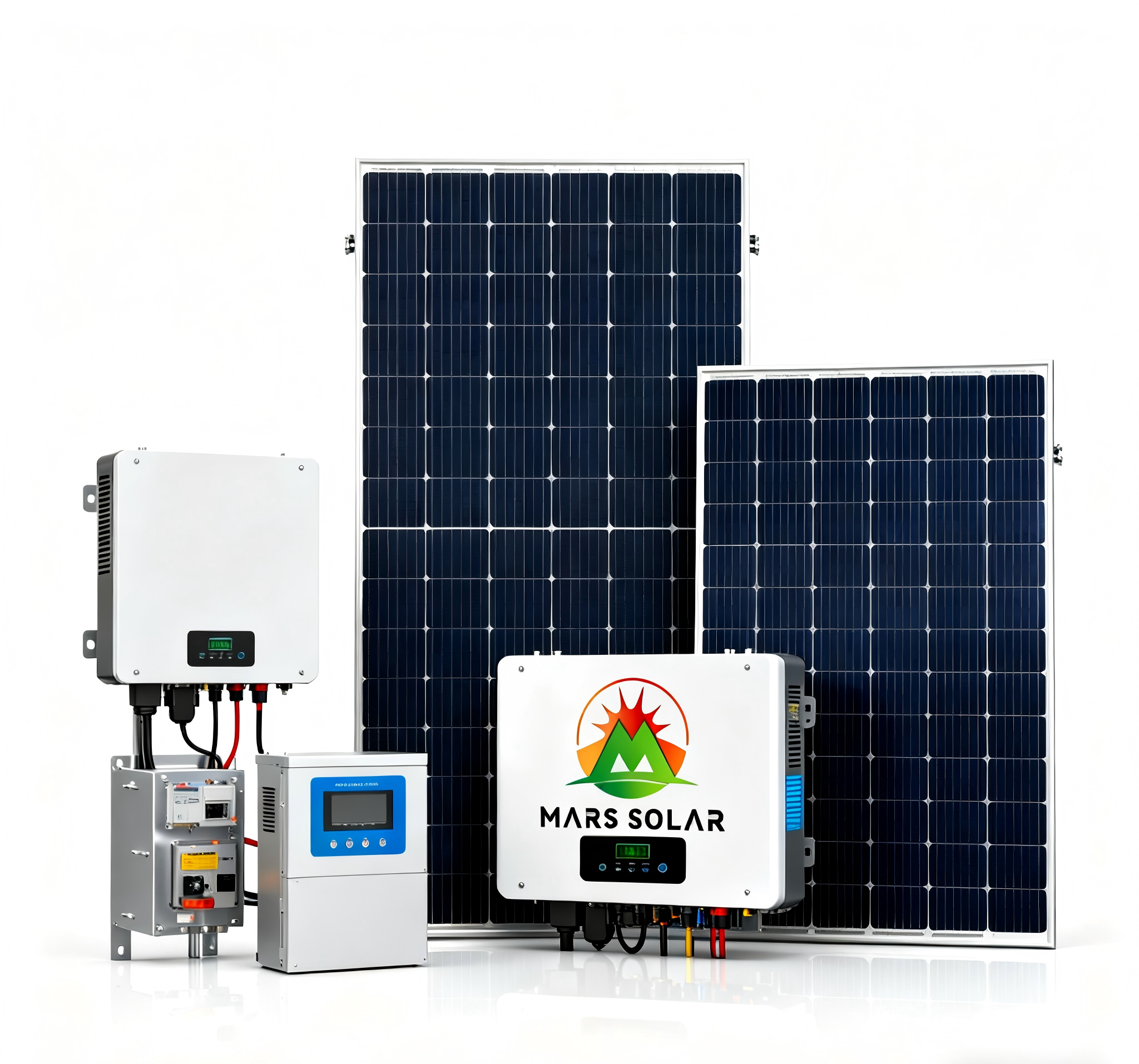
Antes de configurar una solución de sistema solar, los clientes deben proporcionar la siguiente información:
(1) ¿Cuánto consumo de electricidad en kWh necesitan consumir mensualmente/diariamente? ---para calcular la cantidad de paneles solares.
(2) ¿Cuál es la potencia máxima de trabajo de todas las cargas? -- para configurar la potencia nominal del inversor solar.
(3) ¿Cuántas horas necesita funcionar la carga después de la puesta del sol? -- para configurar la capacidad de la batería de litio.
Según la experiencia y los presupuestos de muchos clientes, generalmente la capacidad mínima de las baterías de litio se configura de acuerdo con una tasa de descarga de 0,5C.
Start with voltage. Every component in a solar energy system — panels, controller, inverter, battery — must share the same DC voltage rating, or you will spend the commissioning day troubleshooting instead of generating. Write the system voltage down first and select everything else against it. Getting this one wrong is the most common reason a solar energy system fails on day one.
Then size the inverter to the surge, not the running load. Motors, pumps and compressors draw several times their running current for a second or two at start-up, and an inverter sized to the nameplate will trip on the first start. This is where most people misconfigure a solar energy system for motor loads: they read the nameplate, add twenty percent, and still trip.
Next, size the array to the daily energy you want to displace, and the battery to the hours you need it to cover. Daily kilowatt-hours decide panel count; overnight hours decide battery capacity. Sizing the battery off the daily total is the most expensive mistake we see in competing quotes for a solar energy system of any size.
Depending on where you are, grid-tied, hybrid and off-grid configurations carry very different paybacks. The US DOE guide to how solar works is a good neutral primer on the difference, and our 10kW hybrid system page shows a worked configuration end to end for a solar energy system in the mid-size range.
Finally, price the whole solar energy system as one bill of materials. Panels are the line item everyone negotiates and the one that matters least once storage and balance of system are included. Ask for the component list, not the price per watt, and you will know what you are actually buying.
Two checks that save the most money: do not oversize the array on a solar energy system that already covers your daytime load, and do not undersize the battery on a solar energy system that has to carry the evening. Both errors are invisible in a price-per-watt solar energy system quote and obvious in the first month bill.

 English English
  Arabic
 Spanish
 French
 Dutch
Dutch
 Portuguese