
Preço dos painéis solares nas Filipinas em 2026: Guia completo dos custos
Solar Panel Price Philippines 2026: What You Actually Pay Per kW
The solar panel price Philippines buyers are quoted in 2026 sits between ₱33,500 and ₱38,000 per kW installed for a grid-tied system in Metro Manila, down from the ₱80–₱90 per watt that was normal only three years ago. In practice that means a 5 kW home system lands between ₱190,000 and ₱375,000, while a 100 kW commercial rooftop runs ₱4.5M–₱6.5M and repays itself in two to four years at today's electricity rates.
The reason the numbers moved so fast is a collision of two trends. Module prices fell to historic lows as global manufacturing capacity outran demand, while Philippine electricity went the other way: Meralco's typical household rate climbed roughly 14% across eight months in 2026 and peaked near ₱14.83 per kWh. Cheap hardware meeting expensive electricity is what makes the solar panel price Philippines look attractive today — not subsidies, and not any single government programme.
This guide is written for buyers who are about to request quotes and want to know what a fair number looks like before they sit across the table from a supplier. It covers cost by system size, the five cost blocks inside every quotation, the 2026 net metering rules, import duty and landed cost, battery pricing, city-by-city variation, how to read a quotation, and where the markup goes in each supply route. All figures are indicative 2026 market ranges — confirm current pricing, duty rates and utility rules with your chosen supplier and the relevant Philippine authority before you sign anything.
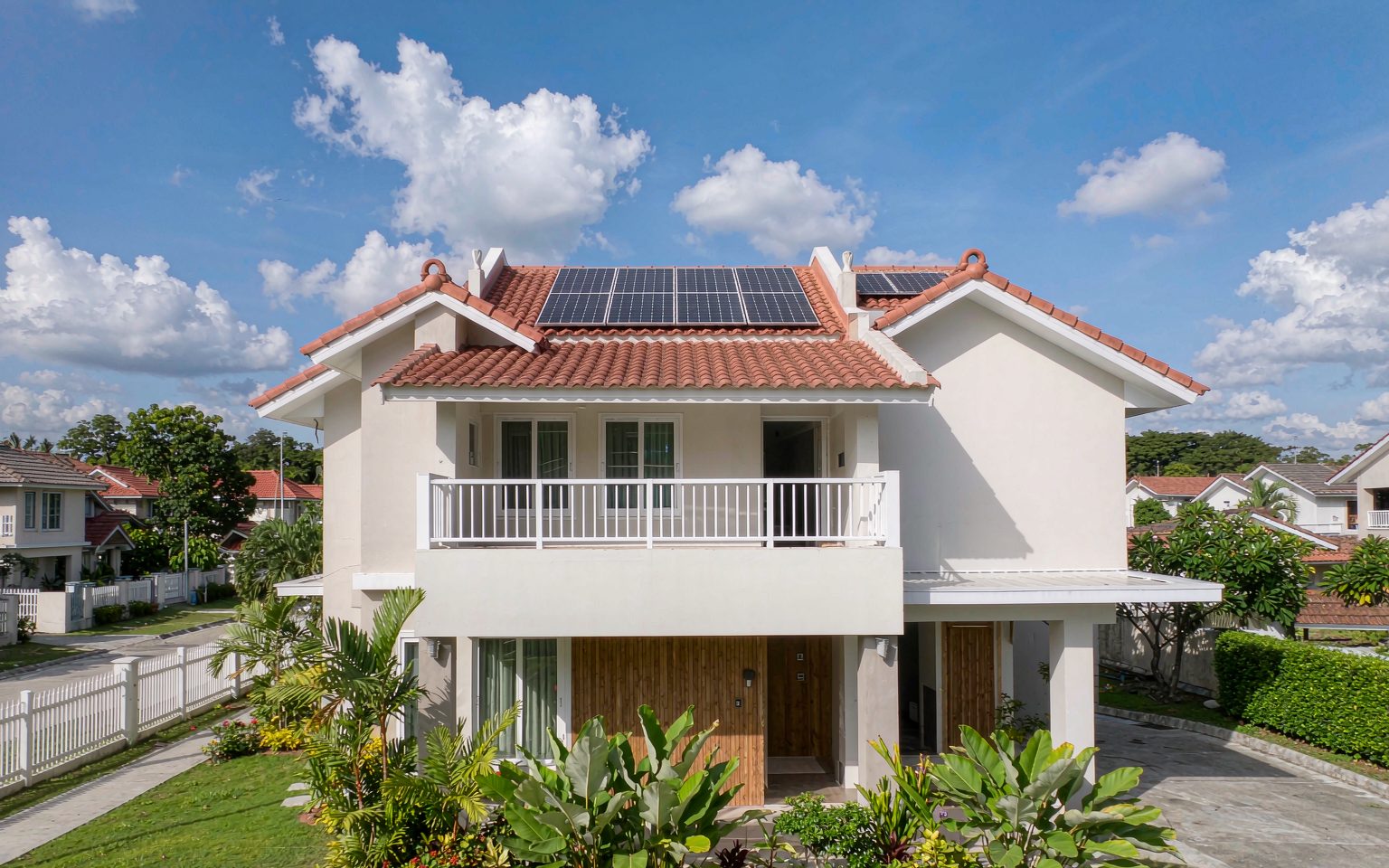
Solar Panel Price Philippines by System Size (2026 Table)
Installed cost per kilowatt falls as the system grows, because design, permits, mobilisation and commissioning are largely fixed. The solar panel price Philippines table below is built from installer quotations rather than list prices, so every row reflects what a buyer actually pays. That is why a commercial rooftop is cheaper per unit than a home system even though the total is far larger.
| System size | Typical installed cost | Best suited to |
|---|---|---|
| 3 kW home | ₱165,000 – ₱225,000 | Small household, ₱4,000–₱6,000 monthly bill |
| 5 kW home | ₱190,000 – ₱375,000 | Average home, ₱7,000–₱10,000 monthly bill |
| 10 kW home or shop | ₱450,000 – ₱700,000 | Large house, retail store, small office |
| 15 – 30 kW SME | ₱750,000 – ₱1.5M | Clinics, schools, restaurants, light industry |
| 50 – 100 kW commercial | ₱2M – ₱4.5M | Warehouses, mid-size factories, hotels |
| 100 kW – 1 MW industrial | ₱4.5M – ₱6.5M per 100 kW | Large factories, malls, condominiums |
These are turnkey numbers: modules, inverter, mounting structure, DC and AC cabling, protection devices, permit assistance and commissioning. Metro Manila installations typically run 10–15% above provincial rates because of labour cost, but that premium is recovered faster because NCR also carries the country's highest tariff. Provincial electric cooperatives in diesel-dependent areas can charge ₱14–₱16 per kWh, which shortens payback further still.
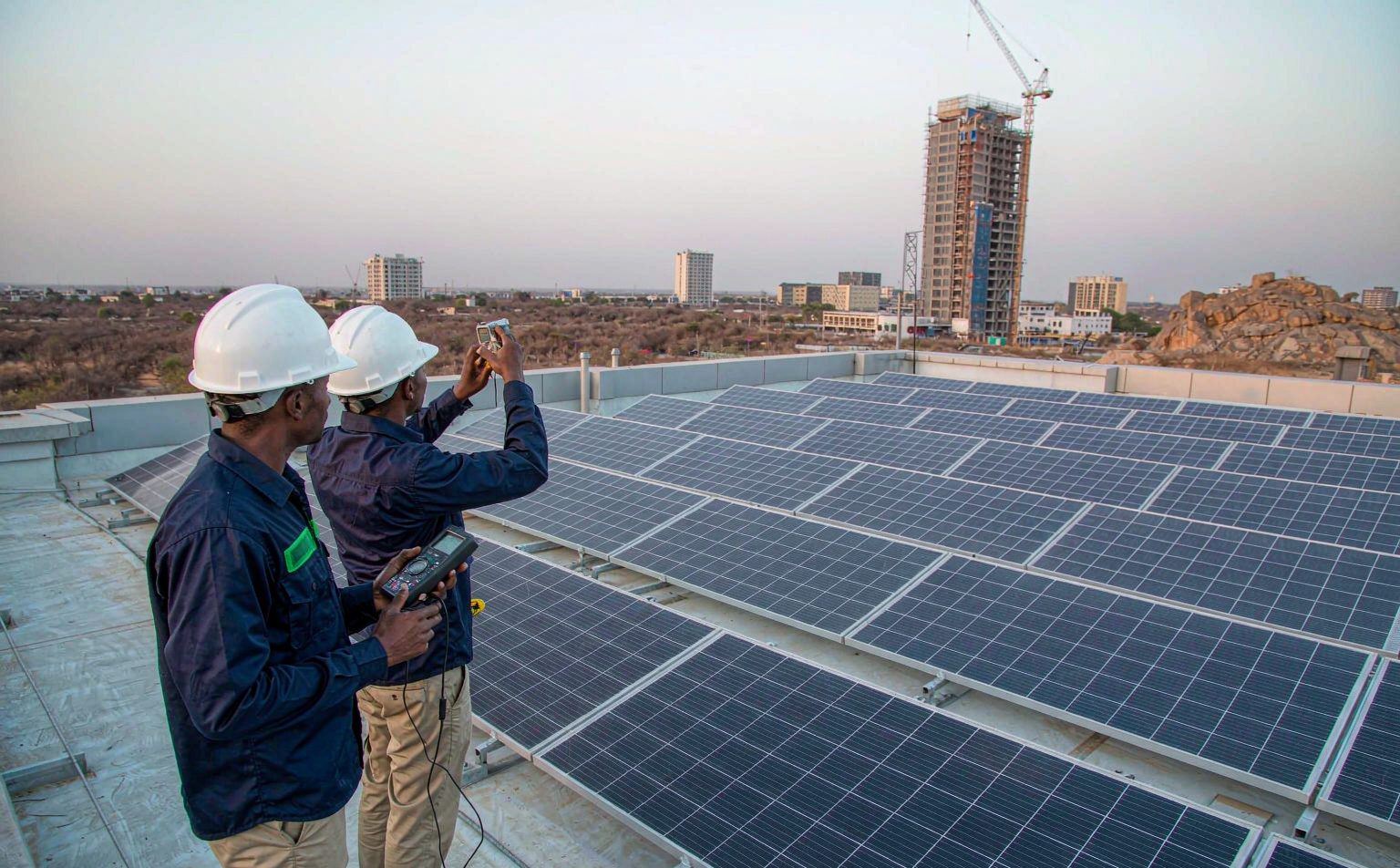
One real example helps calibrate the table. A 30 kW rooftop array with 60 kWh of storage installed for a café in the Philippines cut its monthly electricity spend by roughly ₱60,000. The 30 kW solar and storage café case study sets out the load profile and sizing logic behind that figure.
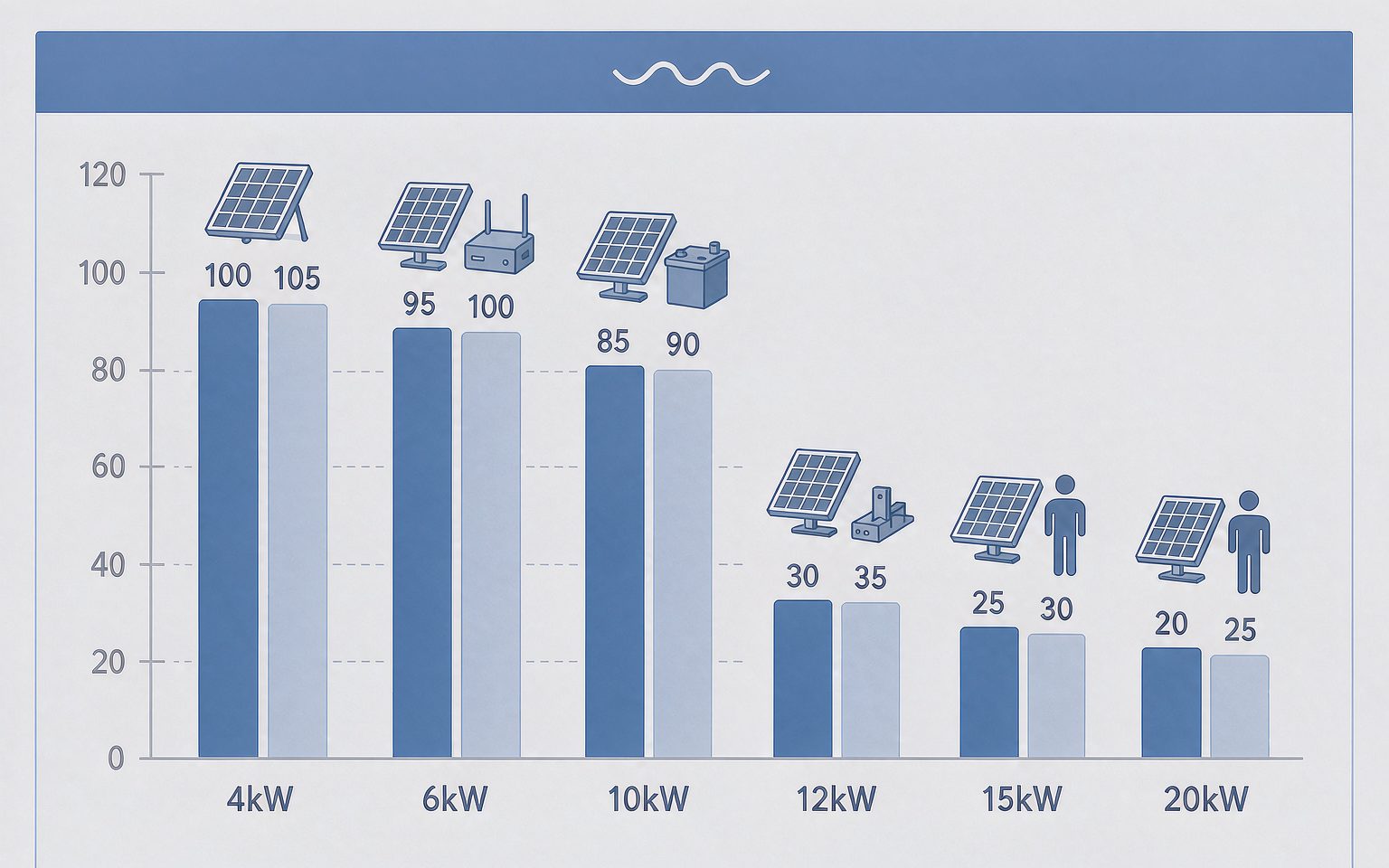
What Drives the Solar Panel Price Philippines Buyers See: The Five Cost Blocks
Every quotation, however it is dressed up, is the sum of five blocks. Knowing their share tells you immediately whether a price is high because the hardware is genuinely better or because a margin has been buried in the labour line.
- Modules, 30–40% of the price. Tier-1 mono PERC and TOPCon panels from LONGi, JinkoSolar, JA Solar or Trina, usually with a 25–30 year performance warranty. Choosing bifacial instead of monofacial adds a few percent to this line and lifts yield on light-coloured roofs; the trade-off is set out in our comparison of bifacial versus monofacial solar panels.
- Inverter, 10–15%. String, hybrid or central. Growatt, Deye, Solis, Huawei and SMA dominate the Philippine market. This is the component most likely to need service first, so warranty term and local service presence matter more than a few pesos of sticker price.
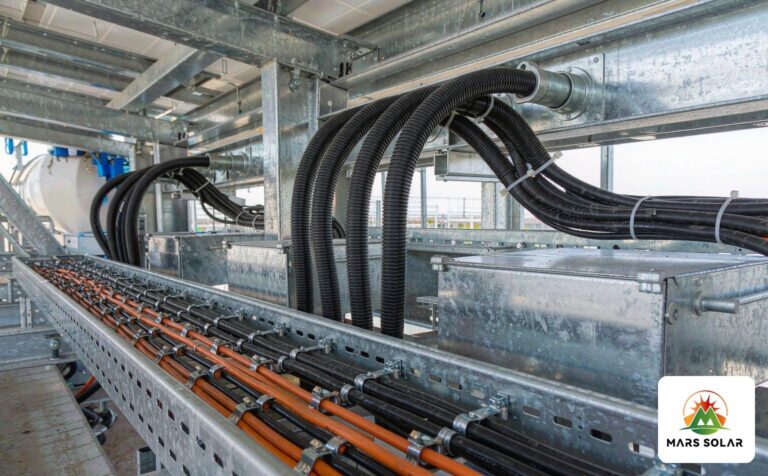
- Mounting and wiring, 15–20%. Anodised aluminium rails, roof penetrations and flashing, DC and AC cabling, combiner boxes, breakers and surge protection. An unusually cheap quotation almost always thins this block — thinner cable gauges, lighter rails, fewer protection devices.
- Permits and utility processing, 5–10%. LGU electrical permit, Certificate of Final Electrical Inspection, and the net metering application with your distribution utility.
- Labour, transport and commissioning, 15–25%. Mobilisation, hoist or crane where required, testing, and handover documentation.
When a quotation comes in materially below the ranges in the table above, ask which block was reduced. The answer is nearly always mounting, protection or permits — the three items a buyer cannot easily inspect from the ground. That is also why the cheapest solar panel price Philippines figure is rarely the best value per kilowatt-hour generated.
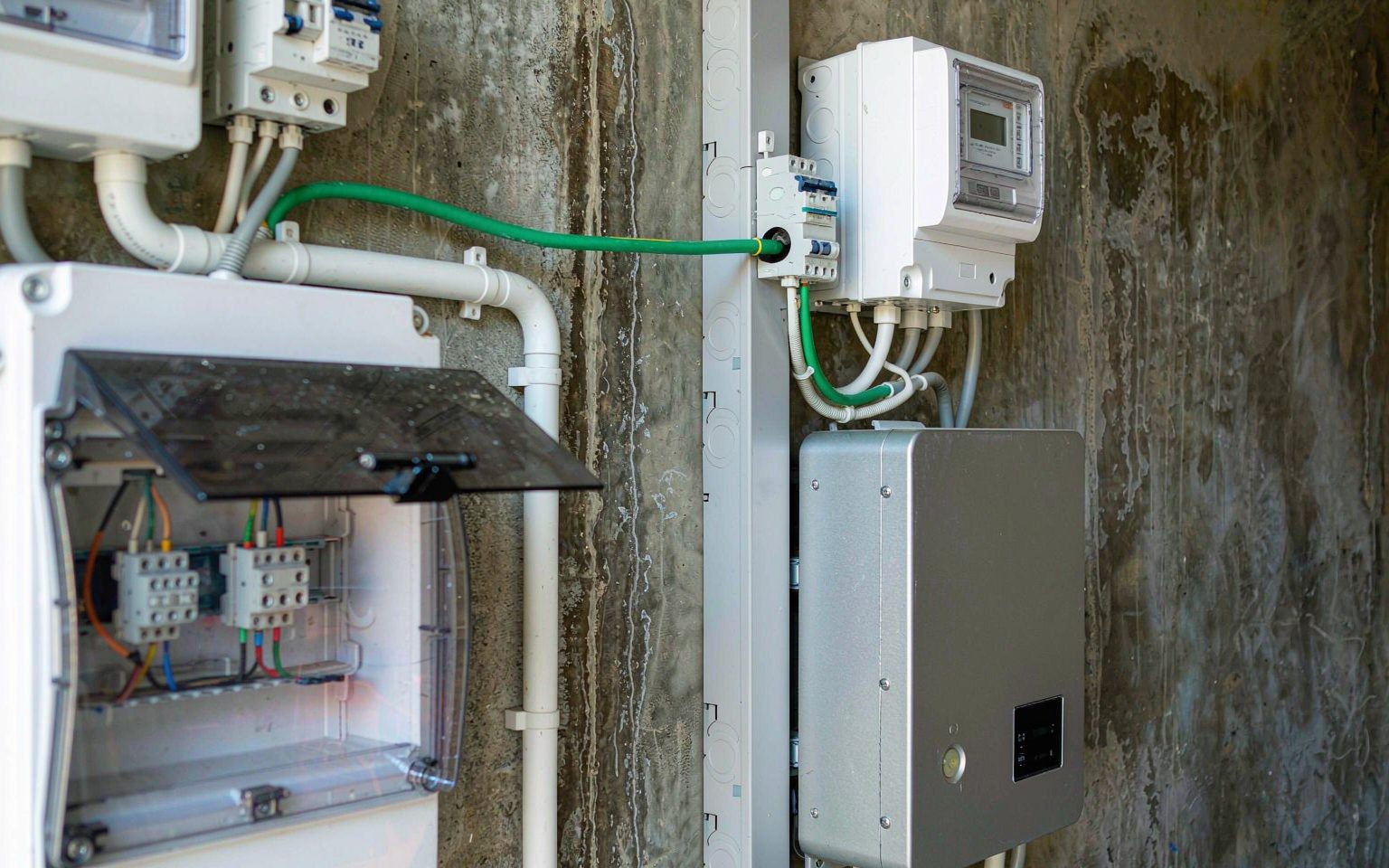
Why Philippine Electricity Rates Keep Shortening Your Payback
The Philippines generates a large share of its power from imported coal and LNG, which means the retail rate tracks global fuel prices and the peso–dollar exchange rate. Both moved against consumers through 2026. Both moved in the same direction, and together they explain why the solar panel price Philippines picture changed so quickly.
| Month (2026) | Typical Meralco rate | Mudar |
|---|---|---|
| January | ₱12.9508 / kWh | — |
| March | ₱13.8161 / kWh | +₱0.64 |
| April | ₱14.3496 / kWh | +₱0.53 |
| July | ₱14.8261 / kWh | peak |
| August | ₱14.7833 / kWh | −₱0.04 |
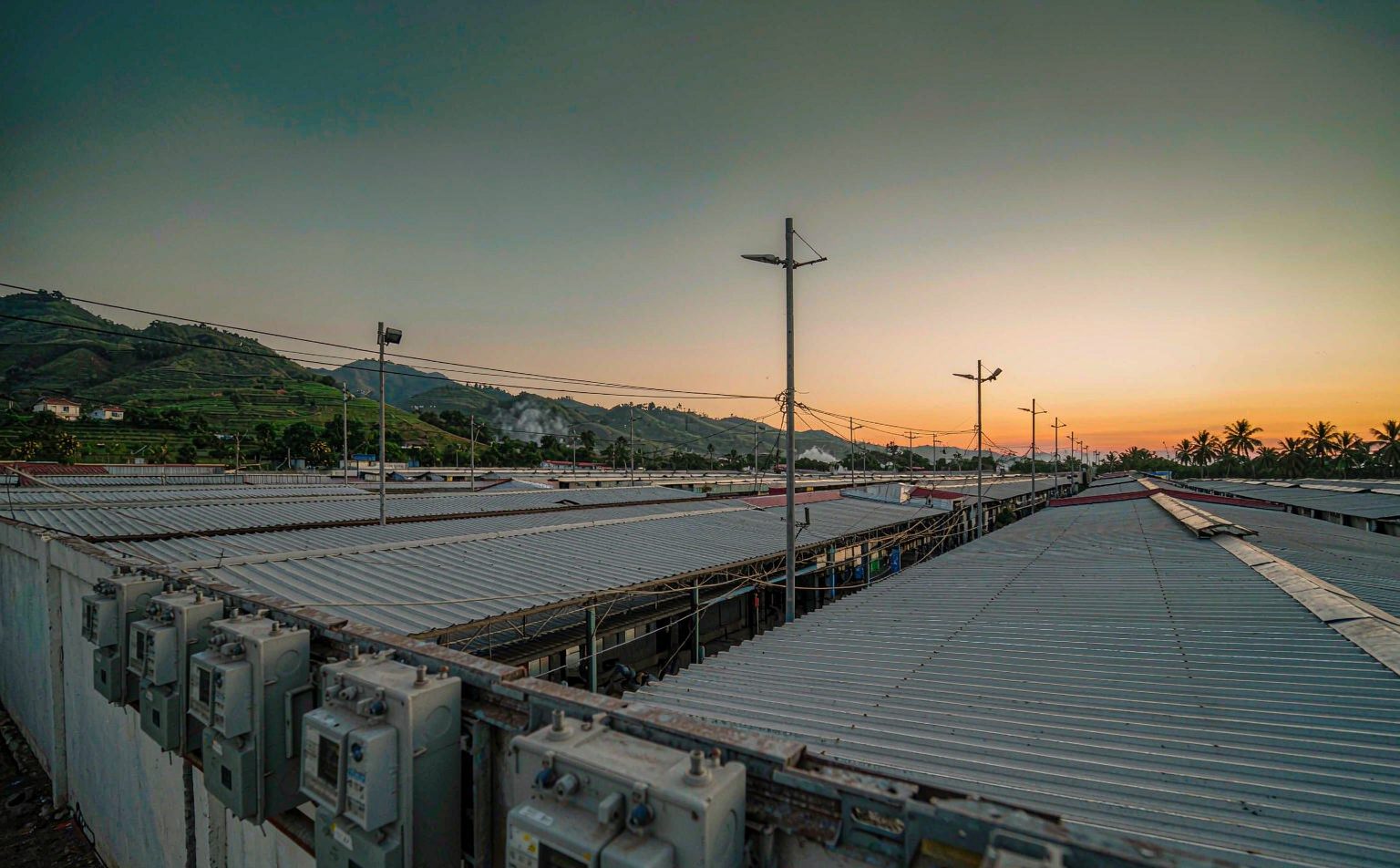
That is roughly a 14% increase in eight months, and almost all of it sits in the generation charge. Brent crude touching $119.50 per barrel in March 2026 and the peso weakening past ₱60 to the dollar both fed straight into household bills. The country now carries the highest residential electricity prices in Southeast Asia, and provincial cooperatives in diesel-dependent areas sit well above the Meralco figures in the table. On islands and in diesel-dependent areas where the feeder is weak or absent altogether, an off-grid solar Philippines system is sized against diesel rather than the grid.
This is the part of the calculation that buyers underweight. The cost of the system is fixed the day you sign; the cost of the electricity you avoid is not. Every peso the grid rate climbs shortens the payback on an array that is already installed, which is why a system purchased in 2024 looks better today than its original model predicted. Any solar panel price Philippines comparison that holds the tariff constant for 25 years is understating the return.
The 2026 Net Metering Rules That Cut Approval to 10 Days
In April 2026 the Philippine Department of Energy issued Circular DC2026-01-00012, the most significant procedural change to Philippine rooftop solar since the Renewable Energy Act of 2008. Three changes affect the economics of every project. All three also change the effective solar panel price Philippines buyers end up paying per kilowatt-hour generated.
| Item | Antes | 2026 rule |
|---|---|---|
| Utility approval | 30–90 days, no legal deadline | 10 working days, deemed approved if missed |
| LGU permit and CFEI | 2–4 weeks, no standard | 3 working days |
| Commercial capacity cap | 100 kW | 1 MW |
The capacity cap lift is the headline for business. A factory or mall with 1,000–3,000 sqm of roof can now register a 300–500 kW system under net metering, where only 100 kW qualified before. A February 2026 reform also allows a single business to share energy credits across several accounts held under the same distribution utility, which matters for owners running multiple sites on one meter.
Know your export rate before you size the system
Net metering credits exports at the blended generation rate, not the retail rate — roughly ₱9.25 per kWh against a ₱14.83 retail rate in July 2026. A self-consumed kilowatt-hour is therefore worth close to double an exported one. Size the array to your daytime load rather than oversizing for export, because an oversized system dilutes the effective solar panel price Philippines buyers are paying per unit of value delivered, and it lengthens the payback on the whole solar panel price Philippines investment. Remember too that an incomplete application does not start the 10-day clock, so documentation quality decides whether the new deadline actually helps you.
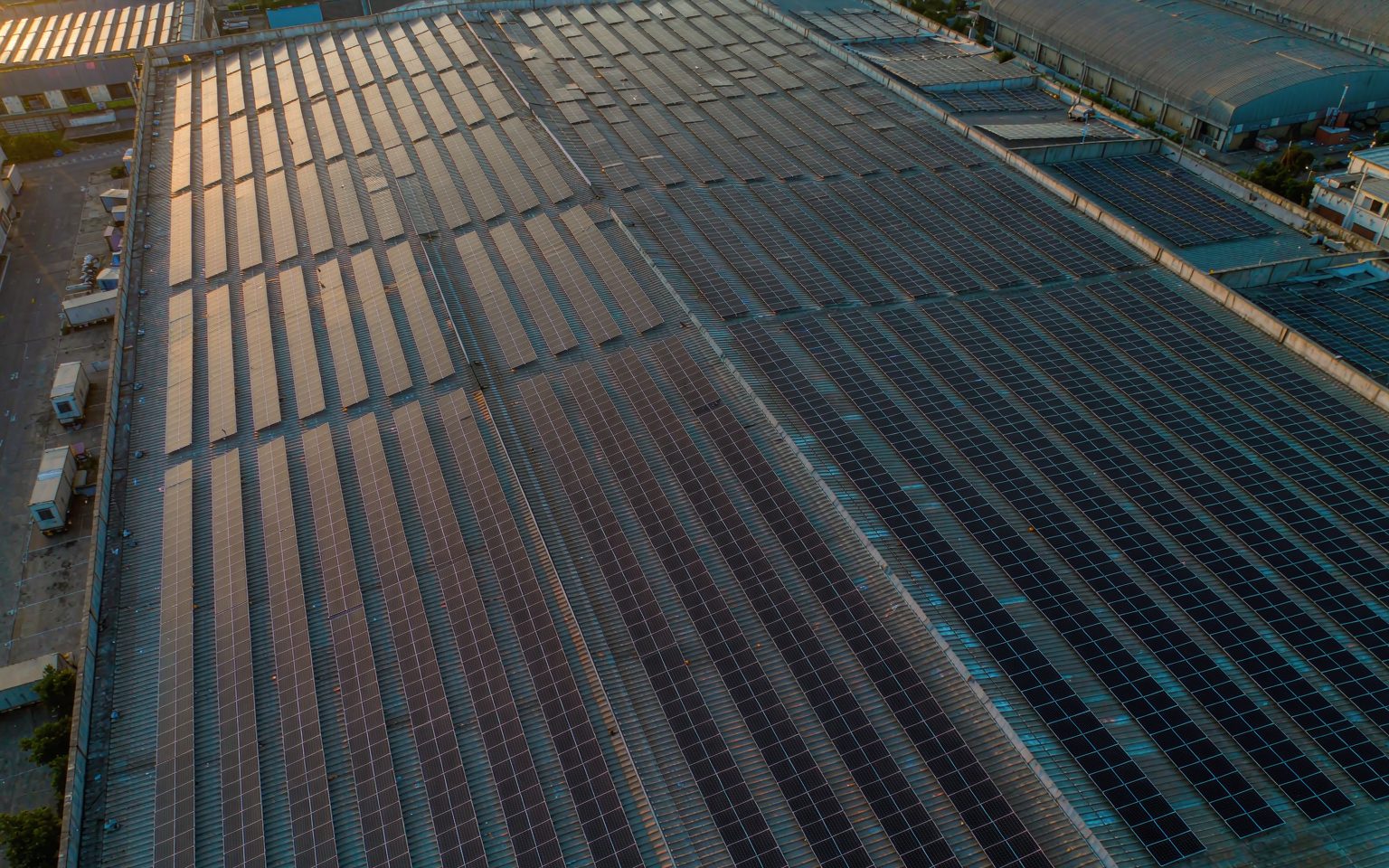
Import Duty, VAT and Freight: The Landed Cost Behind the Price
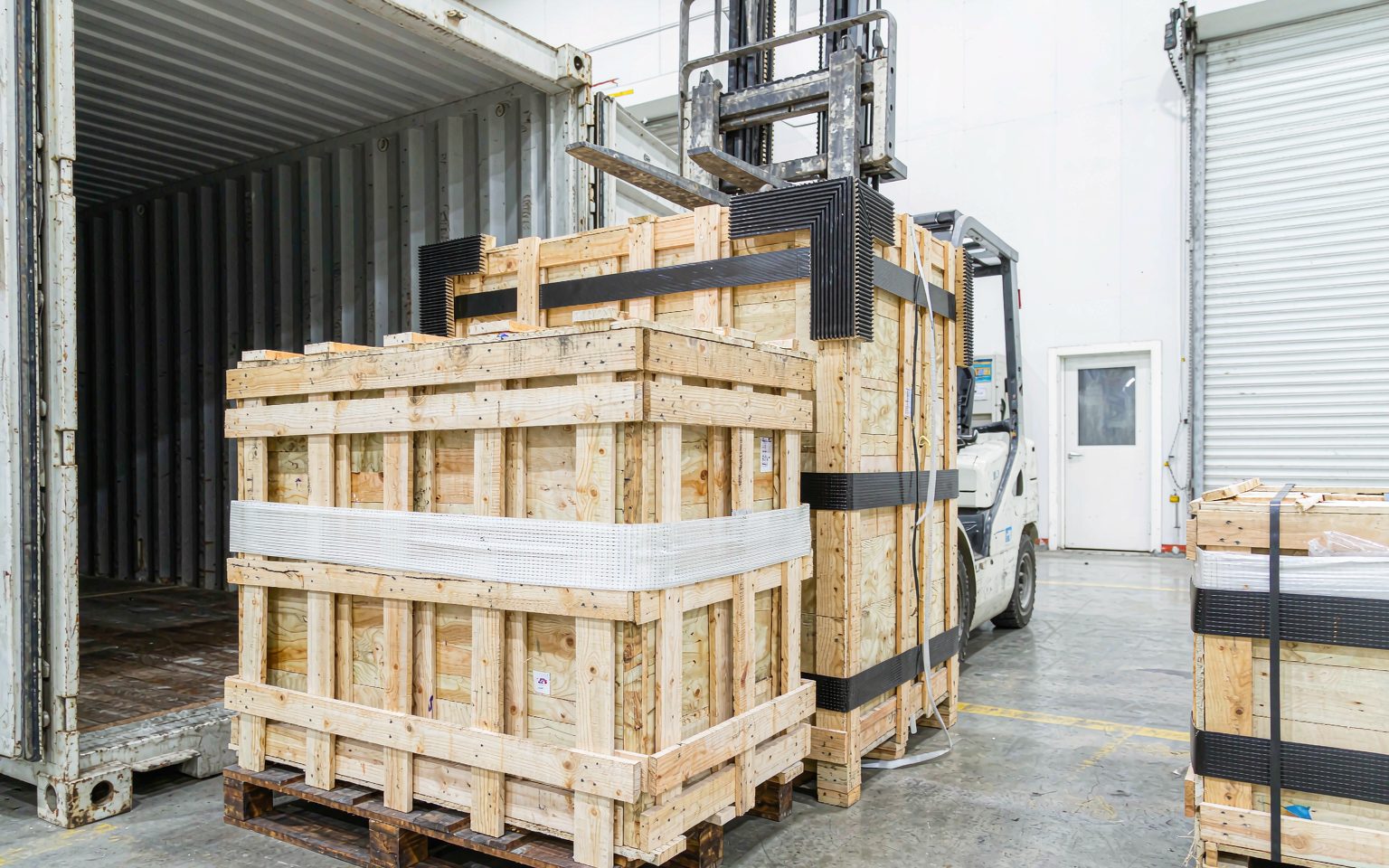
A large share of what you pay for a solar system in the Philippines is the cost of getting equipment into the country and onto your roof. Before a single panel is mounted, a container passes through several charges. This is also the least transparent part of the solar panel price Philippines breakdown, because the charges are paid by the importer rather than listed by the installer.
- Freight from a Chinese port to Manila or Cebu, quoted per container and strongly seasonal.
- Import duty on the declared customs value. Renewable energy equipment has benefited from reduced or zero duty treatment under Philippine tariff schedules, but the HS classification of each item decides what applies.
- 12% VAT on the landed value, plus customs processing, arrastre and brokerage.
- Inland transport and storage from port to site, including crane hire for larger commercial deliveries.
- Bureau of Product Standards compliance for covered products, checked before release.
This is where quotations diverge most, because two suppliers can quote the same module at very different landed prices depending on how they ship, what they declare and whether they consolidate loads. Our Guia de importação de energia solar nas Filipinas walks through duty treatment, BPS requirements and HS codes in detail. The practical takeaway is simple: ask any supplier for the duty and VAT treatment in writing, and confirm the current rate with the Bureau of Customs before you commit. Duty and VAT treatment is often the entire difference between two quotations for an identical solar panel price Philippines package.
Battery Storage: How Much It Adds to the Solar Panel Price Philippines
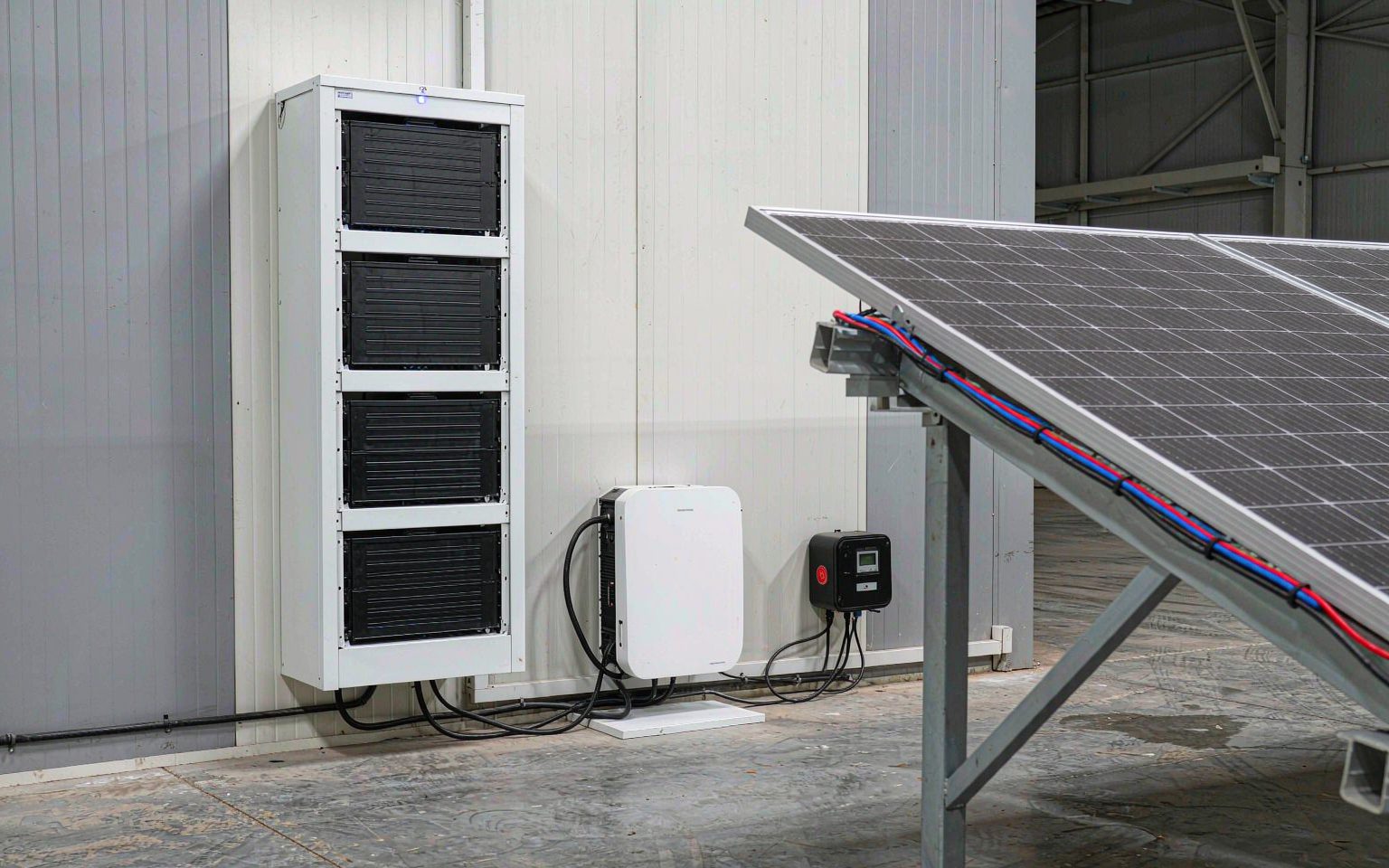
Batteries are the single largest optional line item. LFP (lithium iron phosphate) is the default chemistry for commercial storage in tropical markets because it tolerates high ambient temperatures and delivers 4,000–6,000 cycles. Indicative 2026 pricing runs roughly as follows. Because storage is priced per kilowatt-hour rather than per panel, it is the line most likely to swing the solar panel price Philippines total.
| Capacidade da bateria | Indicative added cost | Typical use |
|---|---|---|
| 5 – 10 kWh | ₱90,000 – ₱180,000 | Home backup, evening self-consumption |
| 15 – 30 kWh | ₱230,000 – ₱450,000 | Small commercial, load shifting |
| 50 – 120 kWh | ₱750,000 – ₱1.7M | Hotel, clinic or retail peak shaving |
| 200 kWh and above | Quoted per project | Industrial peak shaving, demand charge control |
Adding storage changes the payback arithmetic. Without a battery, savings come only from avoided daytime consumption. With one, you also shift cheap solar generation into the evening peak and, on commercial tariffs, cut the demand charge — the component of a Philippine business bill that solar alone cannot touch. Our Philippines solar BESS cost guide models those three savings streams separately.
Buyers who only divide the battery price by its kilowatt-hours usually conclude storage is not worth it; buyers who model demand charge reduction normally reach the opposite conclusion. If you are sizing a single unit, the 15 kWh battery module is a common building block for small commercial systems.
On-Grid, Hybrid or Off-Grid: Price and Payback Compared
Configuration choice moves the solar panel price Philippines buyers pay more than any negotiation over module brand, so decide the architecture before you compare quotations. That is why configuration, not brand, is the first decision in any solar panel price Philippines comparison.
| Configuration | Relative cost | When it fits |
|---|---|---|
| Grid-tied, no battery | Linha de base | Stable grid, daytime-heavy load, fastest payback |
| Hybrid with storage | +40% to +80% | Frequent outages, evening load, demand charges |
| Off-grid | +100% to +200% | No grid connection, islands, remote sites |
A grid-tied system remains the cheapest way to generate your own power, and for most Philippine homes it is the right answer. Hybrid earns its premium where outages are frequent or where there is a genuine evening load — hotels, clinics, cold storage, resorts. Off-grid only becomes economically rational where a connection is unavailable or prohibitively expensive, and there the correct comparison is against diesel at ₱14–₱16 per kWh, not against the grid.
One structural point matters more in the Philippines than in most markets: typhoon-zone wind loading. Structural calculations and heavier rails are a requirement, not an upgrade, and this is precisely the line item a low quotation tends to understate. Ask for the mounting design and the design wind speed it was calculated against, in writing. A packaged 15 kW solar system with 50 kWh of storage is a typical starting point for a small commercial site that needs both grid interaction and backup.
City by City: How Location Changes Your Price
The same 10 kW array costs different amounts in different parts of the country, for four reasons: labour rates, freight distance from the port of entry, typhoon-zone structural requirements, and the local tariff it offsets. Location is the most under-modelled variable in the solar panel price Philippines equation, because two identical arrays can differ by 15% in cost and by more than a year in payback.
- Metro Manila and nearby provinces. Highest labour cost, lowest freight, highest tariff. Turnkey prices sit at the top of the published ranges, but payback is the fastest in the country.
- Cebu, Iloilo, Davao. Slightly lower labour, additional inter-island freight, still strong tariffs. Expect a modest uplift on the hardware line.
- Tourism and resort locations. Structurally more demanding installations — exposed roofs, salt air, higher wind loading. Mounting and corrosion protection add cost, but these sites often have the worst grid reliability, which strengthens the case for hybrid.
- Diesel-dependent provinces. Cooperatives in weakly connected areas can charge ₱14–₱16 per kWh. Here the published solar panel price Philippines benchmark matters less than the diesel comparison, and solar wins decisively. The 400 kW solar and battery system for a Philippine factory is a documented example of that arithmetic.
Two cost items are easy to miss when budgeting from a distance: coastal corrosion protection, which changes the mounting and fastener specification, and cable runs from the array to the main switchboard on sites where the roof is not directly above the electrical room. Both are legitimate line items and both should appear in a detailed quotation rather than arrive later as a variation. A supplier who cannot explain these two items has probably not modelled the local solar panel price Philippines conditions for your site.
How to Read a Solar Quotation and Spot a Padded Price
A quotation is only comparable if it lists the same information. Ask every supplier for these nine items before you compare totals. Comparison only becomes meaningful once every supplier quotes the same line items, and the fastest way to reach that point is to issue a solar panel price Philippines template of your own.
- Module brand, model, wattage, efficiency, and whether they are mono PERC, TOPCon or bifacial.
- Inverter brand, model, rated output, MPPT count and warranty term.
- Mounting structure material, rail gauge and the design wind speed used.
- Battery chemistry, usable capacity and cycle warranty, where storage is included.
- DC and AC cable sizes and protection device ratings.
- Permit and utility processing — included, or charged separately.
- Monitoring hardware and any app subscription.
- Delivery, crane and mobilisation — included or excluded.
- Commissioning, test reports and handover documentation.
Then run three sanity checks. Divide the total by the kW and compare it with the table at the top of this guide. Check that the module count matches the stated system size — a 10 kW system built from 450 W panels needs 23 modules, not 18. And ask explicitly what is excluded: roof repair, tree trimming for shade, service upgrades and generator interlocks are the four most common omissions. A quotation that is cheap because it excludes two of them is not cheap.
Financing and the cost of money
Most Philippine commercial buyers finance solar rather than paying cash, and the financing structure can change the ranking of quotations. Compare offers on three numbers: the interest rate, the term, and whether repayment is linked to the savings the system produces. A slightly higher equipment price on a cheaper facility can beat a low price on expensive money. Residential buyers can also use the balance against their electricity bill as a reference — if the monthly repayment is below the avoided bill, the system is cash-flow positive from month one.
Finally, watch for vague phrasing such as “equivalent configuration” or “Tier-1 or equivalent”. Reliable suppliers name the model. If a supplier will not name the module in writing, assume the substitution risk is yours.
Factory-Direct or Local Reseller? Where the Markup Goes
Philippine buyers typically choose between three supply routes, and the solar panel price Philippines figure differs by 15–35% depending on which one you take.
| Rota | Typical markup over factory cost | Trade-off |
|---|---|---|
| Local EPC or installer | 25–45% | Single point of accountability, local warranty labour, higher price |
| Local trading company | 15–30% | Lower price, often no installation capability, warranty handled case by case |
| Factory-direct with a local installation partner | 5–15% | Lowest hardware cost, you manage the installation partner yourself |
The trade-off is real rather than rhetorical. A local EPC earns its margin by absorbing risk: permits, utility paperwork, roof integrity, commissioning and callbacks. A trading company that only moves boxes leaves all of that with you. Factory-direct procurement makes most sense for commercial and industrial buyers who already have a contractor, or who will buy several systems over a period of years.
Whichever route you take, three terms are worth negotiating before price: the module and inverter models in writing, the warranty claim procedure including who bears labour, and the delivery schedule with a defined remedy for delay. Our guide to Quantidade mínima de encomenda (MOQ), prazo de entrega e condições de pagamento covers what factory-direct buyers normally accept, and how factory-direct solar supply works explains the model from the manufacturer's side.
Frequently Asked Questions About Solar Panel Price Philippines in 2026
Quanto custa um sistema de painéis solares nas Filipinas em 2026? Um sistema ligado à rede custa entre ₱33 500 e ₱38 000 por kW instalado na área metropolitana de Manila. Um sistema doméstico de 5 kW custa entre 190 000 e 375 000 ₱ e um sistema comercial de 100 kW custa entre 4,5 milhões e 6,5 milhões de ₱. Acrescente 40–80% para um sistema híbrido com armazenamento em bateria.
A compensação de energia ainda compensa após a alteração da regulamentação em 2026? Sim, e o prazo de 10 dias úteis facilita o planeamento. Basta ajustar a capacidade à sua carga diurna: as exportações são creditadas a cerca de ₱9,25 por kWh, enquanto a energia autoconsumida permite poupar ₱14,83 por kWh, pelo que cada quilowatt-hora que consumir vale aproximadamente o dobro.
Quanto tempo demora agora a aprovação? Dez dias úteis para a empresa de distribuição e três dias para a autorização da LGU e da CFEI, nos termos da circular do DOE de abril de 2026. Um pedido incompleto não dá início ao prazo, pelo que deve ser apresentado um dossiê completo.
É preciso uma bateria para que a energia solar seja rentável? Não. No caso de uma habitação ligada à rede com um fornecimento estável, um sistema ligado à rede sem armazenamento é o que apresenta o prazo de recuperação mais curto. O armazenamento justifica a sua existência através do apoio em caso de falhas de energia, do autoconsumo durante a noite ou da redução das taxas de consumo comercial.
O preço dos painéis solares nas Filipinas irá baixar ainda mais se eu esperar? Não de forma significativa. Os preços dos módulos já se encontram próximos de mínimos históricos devido ao excesso de oferta global, e o resto do orçamento está a aumentar — mão-de-obra, licenças e inversores —, nenhum dos quais está a baixar. Esperar custa-lhe todas as contas mensais que teria evitado.
Que retorno devo esperar hoje? Residential averages roughly 3–4 years, commercial 2–4 years and industrial around 3 years, faster where the local rate exceeds ₱14 per kWh. These are indicative ranges based on 2026 tariffs — model them against your own twelve months of bills before deciding.
Do I need typhoon-rated mounting? Yes. Structural design for the local wind zone is a requirement rather than an upgrade, and it is one of the first items a low quotation quietly reduces.
What is the solar panel price Philippines buyers pay per kW in 2026? ₱33,500 to ₱38,000 per kW installed for a grid-tied system in Metro Manila, down from the ₱80 to ₱90 per watt normal only three years ago. The solar panel price Philippines figure fell because module prices hit historic lows while Meralco's household rate climbed about 14%. That is why the solar panel price Philippines table today starts near ₱33,500 per kW.
How does system size change the solar panel price Philippines buyers pay? Larger systems cost less per kilowatt, because design, permits and commissioning are largely fixed. A 3 kW home runs ₱165,000 to ₱225,000, while a 15 to 30 kW SME system runs ₱750,000 to ₱1.5M. A solar panel price Philippines comparison only works when both quotes cover the same size and architecture.
How much does battery storage add to the solar panel price Philippines? Storage is the largest optional line item. A 5 to 10 kWh LFP battery adds ₱90,000 to ₱180,000, and a 50 to 120 kWh commercial bank adds ₱750,000 to ₱1.7M. Because storage is priced per kilowatt-hour, it swings the solar panel price Philippines total more than any module choice.
How does architecture change the solar panel price Philippines quotes you receive? More than brand negotiation ever will. Hybrid with storage runs 40 to 80% above a grid-tied baseline, and off-grid runs 100 to 200% above it. Decide the architecture before comparing quotations, because the solar panel price Philippines range only makes sense within one configuration.
Do the 2026 net metering rules change the solar panel price Philippines economics? They change the timeline and the ceiling, not the invoice. Utility approval is now 10 working days, LGU permits 3 working days, and the commercial capacity cap rose from 100 kW to 1 MW. Those three changes lift the return on a solar panel price Philippines investment without touching equipment cost.
What landed costs sit behind the solar panel price Philippines quotation? Freight from a Chinese port to Manila or Cebu, import duty on the declared customs value, and the handling on either side. Renewable energy equipment has had reduced or zero duty treatment, but the HS classification of each item decides what applies. That is the least transparent part of any solar panel price Philippines breakdown.
Is a grid-tied system the best solar panel price Philippines option? For most homes, yes. Grid-tied is the cheapest architecture and gives the fastest payback where the grid is stable and the load is daytime-heavy. Hybrid earns its premium only where outages are frequent, which is where any solar panel price Philippines comparison should begin.
How do I tell a fair solar panel price Philippines quotation from a padded one? Ask for the component list, the battery chemistry and the warranty schedule behind the number. A padded solar panel price Philippines quote usually hides an oversized battery or an unbranded inverter. Comparing two solar panel price Philippines quotations line by line is the only way to see where the difference sits.
Related Articles: Build Your Philippines Solar Knowledge
Continue with the guides that go deeper on each part of the cost.
Continue with the guides that go deeper on each part of the solar panel price Philippines calculation.
- Philippines solar import 2026: duty-free guide and BPS rules — HS codes, duty treatment and release procedures.
- Philippines solar BESS cost guide — battery pricing, sizing and peak shaving savings.
- Solar power for factories in the Philippines — commercial load analysis and payback.
- Solar panel price Kenya 2026 — a neighbouring benchmark for import-driven pricing.
- Africa solar market 2026 — how duty, tariffs and payback compare across markets.
- Bifacial vs monofacial solar panels — choosing modules for a tropical roof.
Buyers who have finished sizing usually want a concrete configuration next. A 20KW 20KVA hybrid solar system suits a large house or a small shop, while a 40kW BESS with 96 kWh of storage is the usual step up for a light-commercial site. For storage sized around a 24-hour refrigeration load, see our 100 kW cold storage project in the Philippines.
Buyers planning to resell rather than install should pair this price guide with our Philippine solar import business guide, which covers channels, margins and first-order sizing.
Get a 2026 Factory-Direct Solar Panel Price for the Philippines
Mars Solar is a China-based OEM/ODM manufacturer of solar PV and energy storage systems, supplying factory-direct to buyers in the Philippines, Nigeria, Ghana, Kenya, the Caribbean and the Middle East. We design, supply and commission complete systems, and we prepare the documentation your net metering and BPS applications require.
Send us three things and we will return a per-kW price with a payback calculation for your site: your last twelve months of electricity bills or a recent bill plus an estimate of monthly usage, your available roof area or ground space, and whether you need backup power or full grid independence.
Ask for a written solar panel price Philippines quotation that names the module model, the inverter model, the mounting design wind speed and the permit scope. Contact us on WhatsApp or by email — most quotations are returned within one working day.
For a factory-direct quotation sized to your site, see our solar system Philippines page: configurations, 2026 reference pricing to Manila and Batangas, and the DOE and BPS documents we prepare before the vessel sails.

 English
  Arabic
  Spanish
  French
  Dutch
Dutch  Portuguese