Aumento dos custos das matérias-primas e mudanças nas políticas estão remodelando a indústria solar.
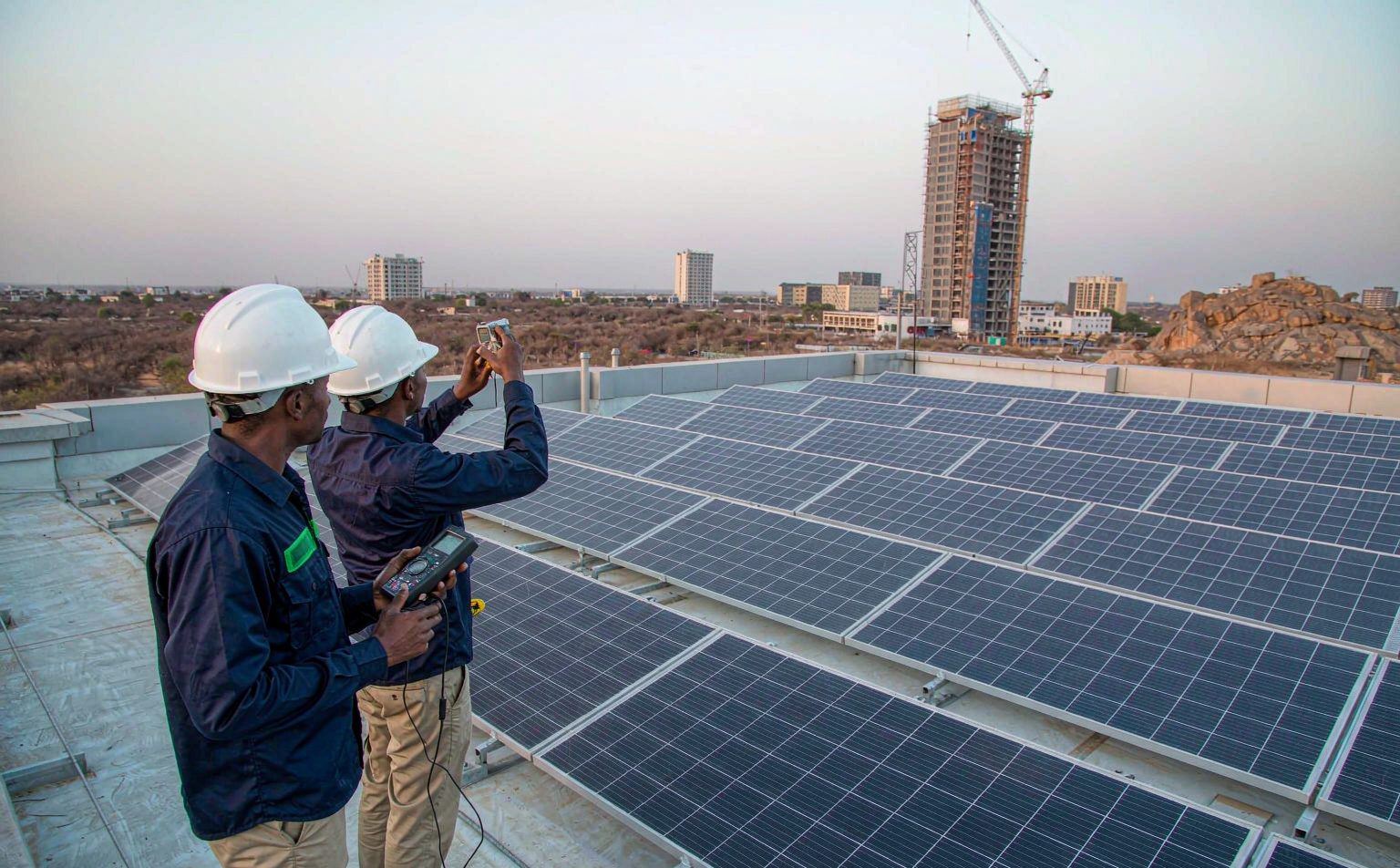
A indústria global de energia solar fotovoltaica (FV) está entrando em um ponto de inflexão crítico de custos. Uma combinação de preços de matérias-primas em rápida ascensão, aumentos acentuados nos custos do carbonato de lítio e o cancelamento iminente, pela China, dos descontos de IVA sobre exportações a partir de abril está remodelando fundamentalmente a dinâmica de preços em toda a cadeia de suprimentos.
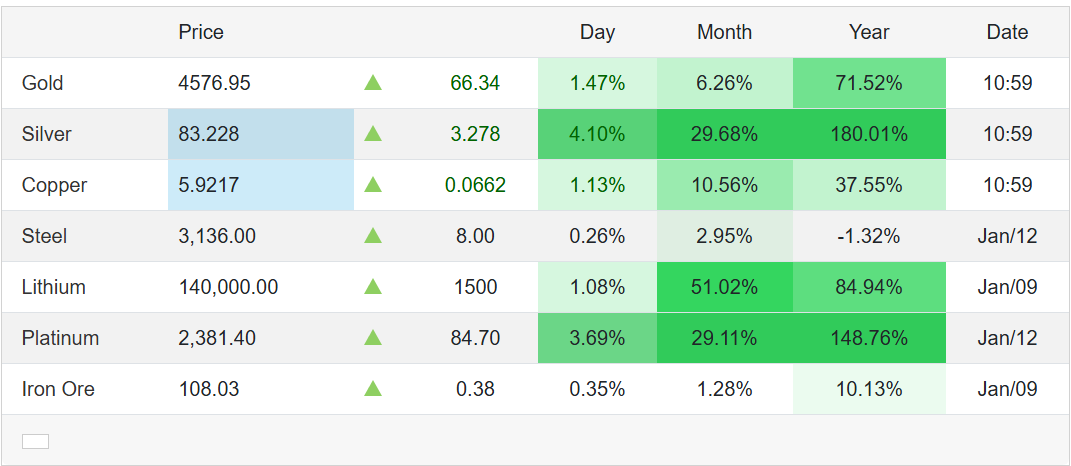
As principais matérias-primas para energia solar estão entrando em um forte ciclo de alta.
Nas últimas semanas, vários materiais essenciais para sistemas fotovoltaicos apresentaram aumentos acelerados de preço.
- *Os preços do polissilício recuperaram acentuadamente devido à oferta mais restrita e à disciplina na produção.
- *Os preços da prata dispararam globalmente, elevando os custos da pasta de prata.
- *As estruturas de alumínio, o vidro e os materiais auxiliares continuam em tendência de alta.
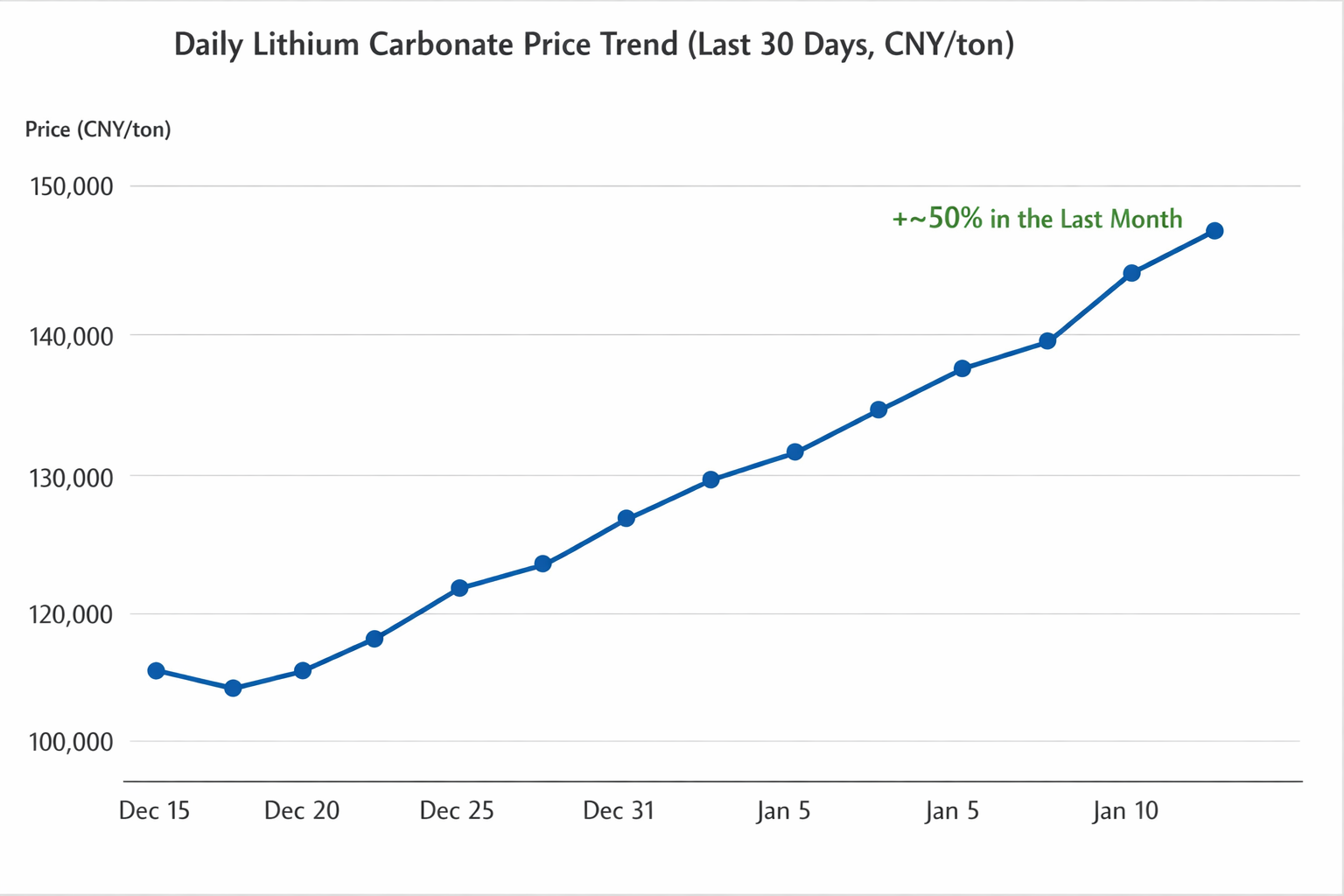
Os preços do carbonato de lítio disparam, elevando os custos de armazenamento de energia.
Os preços do carbonato de lítio se recuperaram fortemente devido aos baixos estoques, às expectativas de demanda impulsionadas por políticas governamentais e ao crescimento contínuo da demanda por baterias nos setores de armazenamento de energia e veículos elétricos. Isso aumenta diretamente os custos dos sistemas fotovoltaicos com armazenamento de energia.
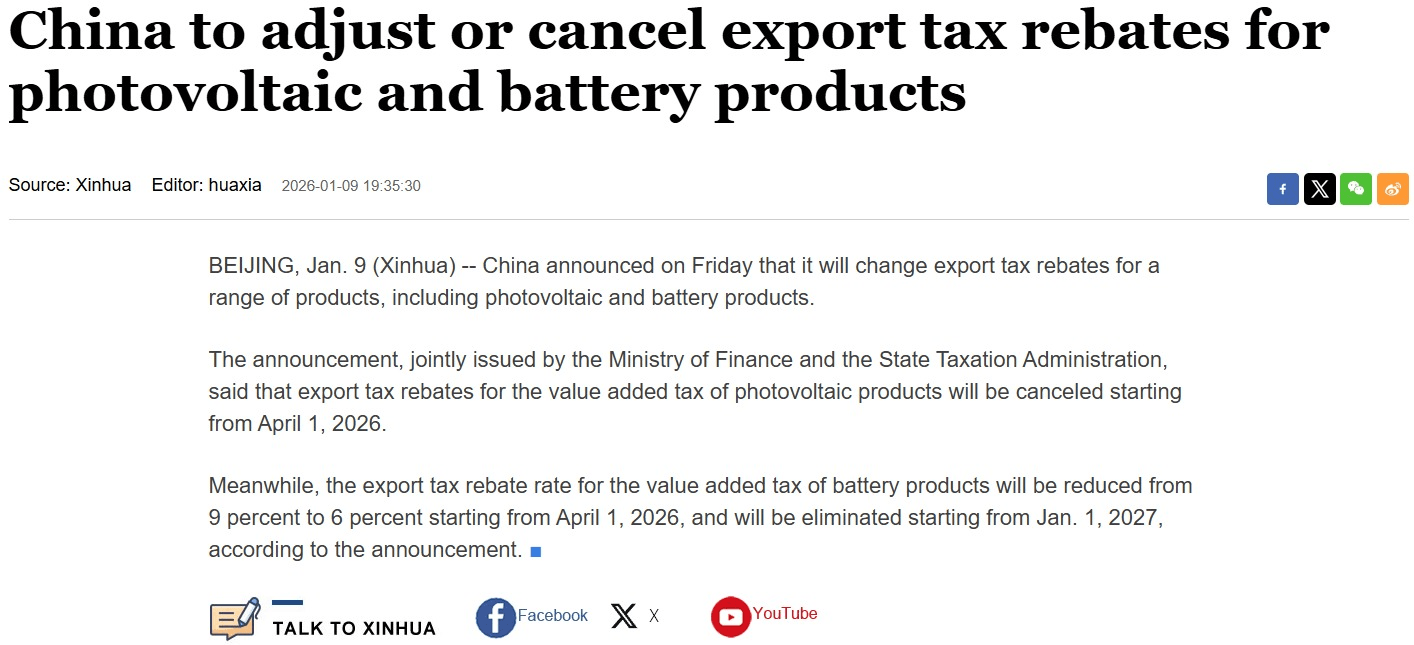
Cancelamento do reembolso do IVA de exportação da China em abril
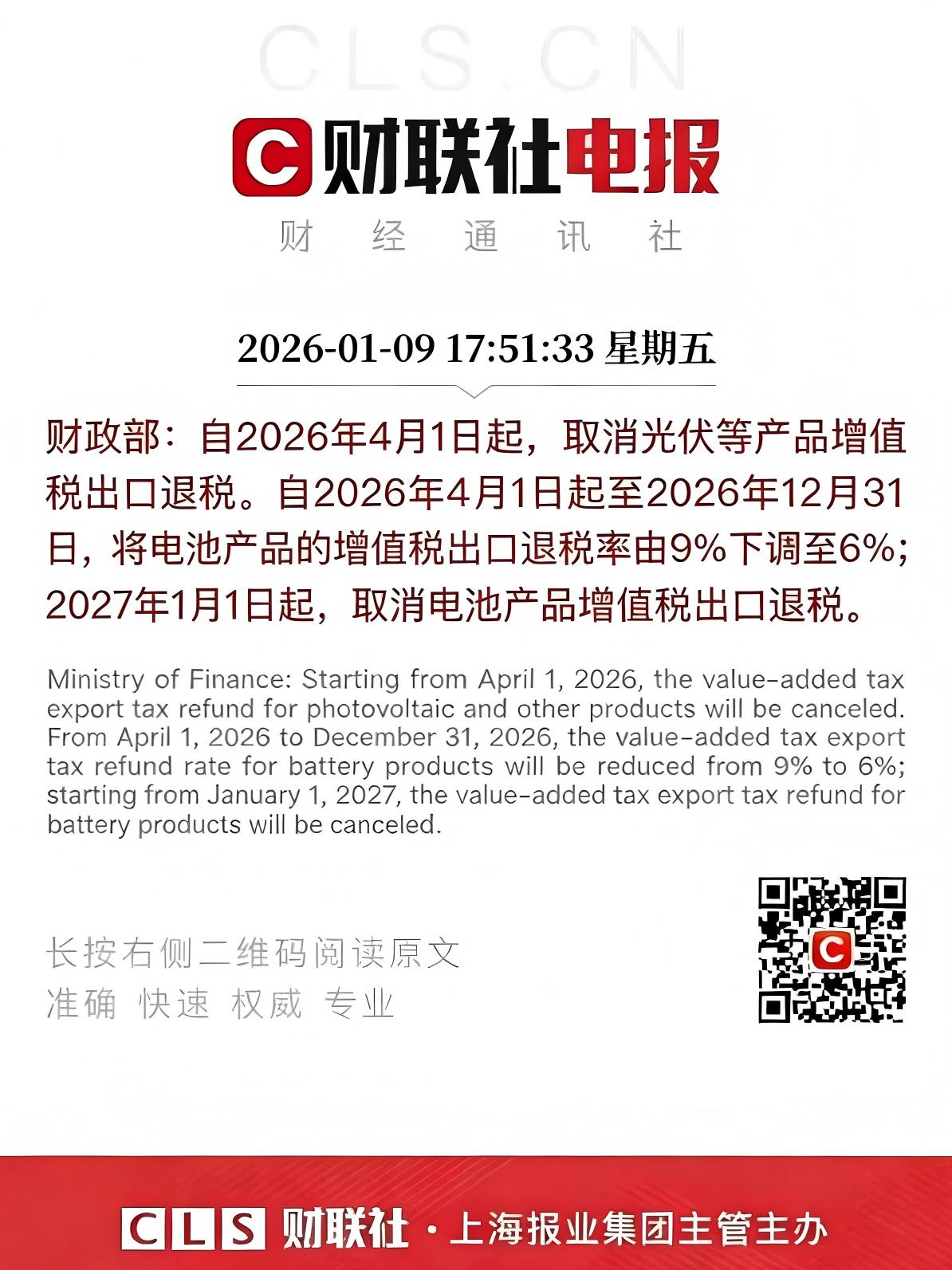
A China cancelará os descontos de IVA para exportação de produtos fotovoltaicos a partir de abril, com a eliminação gradual dos descontos para baterias de lítio.
Isso representa um aumento estrutural nos custos de exportação de produtos fotovoltaicos e de armazenamento de energia, forçando os fabricantes a aumentarem os preços e acelerarem os embarques antes da implementação.
Impacto combinado nas aquisições
A convergência da inflação das matérias-primas e das mudanças nas políticas está reduzindo as janelas de oportunidade para a aquisição de produtos.
*Atrasar as compras agora acarreta um risco de custo maior.
*Pedidos antecipados ajudam a garantir preços e o fornecimento.
O que isto significa para os compradores do setor solar
Da evolução dos custos acima referida decorrem três consequências. Em primeiro lugar, os preços dos painéis deixam de descer e passam a acompanhar a evolução dos preços do polissilício e do alumínio a montante. Em segundo lugar, o armazenamento fica mais caro antes de ficar mais barato, porque o carbonato de lítio lidera a cadeia de produção das baterias. Em terceiro lugar, a janela de oportunidade para fixar um preço estreita-se: a convergência da inflação das matérias-primas e a alteração do abatimento à exportação significam que as cotações que eram válidas por trinta dias passam agora a ser válidas por dez.
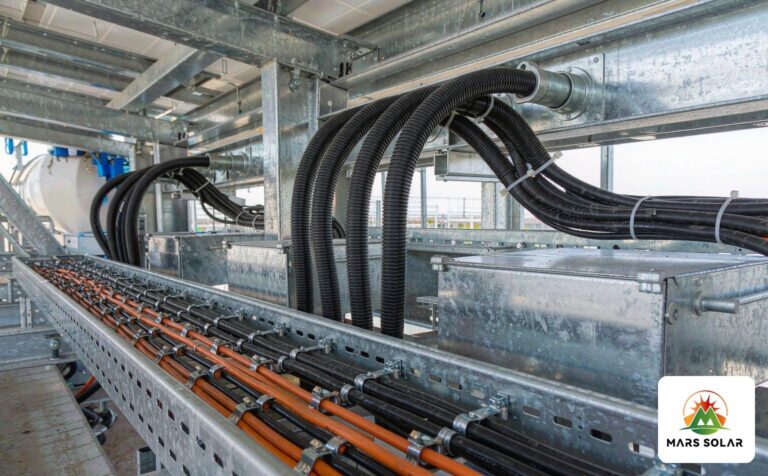
Para as equipas de compras, a solução prática consiste em definir as especificações numa fase inicial e calcular o preço de toda a lista de materiais de uma só vez, em vez de otimizar primeiro os painéis e descobrir o custo da bateria mais tarde. Um comprador do setor solar que fixe as células, a conversão de células em módulos e o «balance of system» num único contrato evita o pior da discrepância entre o orçamento dos painéis e o preço do sistema entregue.
Isso também altera a origem das poupanças. Quando os preços dos módulos aumentam, a margem de engenharia passa a incidir na configuração: ajustar o tamanho da matriz à carga real, reduzindo a capacidade excedentária do inversor e definindo a capacidade de armazenamento com base na carga noturna, em vez de se basear numa regra empírica. Esse é um trabalho que se reflete na lista de materiais, e não no preço nominal por watt.
As equipas de aquisições que acompanham estas mudanças podem comparar os aspetos relacionados com as políticas com o Gabinete de Tecnologias de Energia Solar do Departamento de Energia dos EUA, que publica dados sobre custos e implantação no setor solar com a mesma periodicidade. No que diz respeito à importação e aos direitos aduaneiros de uma compra, consulte o nosso Guia de importação de energia solar nas Filipinas.
Se estiver a planear o orçamento para uma instalação este ano, a resposta sincera é que o setor da energia solar passou de um mercado deflacionário para um mercado volátil. Planeie com base numa faixa de preços, em vez de um valor único, e pergunte ao seu fornecedor quais os componentes do orçamento que são fixos e quais os que acompanham a evolução do mercado à vista.
Publicamos os nossos próprios preços da lista de materiais do setor solar, com um período de validade e uma lista de componentes identificada, para que o comprador possa ver exatamente quais os itens que sofreram alterações e porquê, quando uma cotação é atualizada. Essa transparência é a única resposta viável para um mercado em que o mesmo sistema tem preços diferentes com apenas três semanas de diferença.
Mais uma observação prática para quem estiver a definir preços este ano: a diferença que existe no setor da energia solar entre o orçamento de um painel e o preço final do sistema instalado é o ponto em que a maioria dos orçamentos falha, porque os custos de transporte, os direitos aduaneiros e os componentes do sistema (balance of system) seguem ciclos diferentes dos próprios módulos. Peça que estes três elementos sejam incluídos num único valor.

 English
  Arabic
  Spanish
  French
  Dutch
Dutch  Portuguese