
Langue
A clear solar cable trunking plan is the difference between a PV plant that commissions in days and one that burns weeks in fault-finding. In our engineering language, solar cable trunking means the enclosed routes — trays, conduits and trunking runs — that carry every DC string, every AC circuit and every communication cable from the modules to the inverter room, plus the labeling system that tells a technician what each conductor is, where it goes and how it is energized.
The rest of this article walks through the two engineering upgrades we build into every project — segregated trunking zones and factory-standard wire labeling — from a 50kW solar system with BESS for a cold store to a multi-megawatt plant in Nigeria.
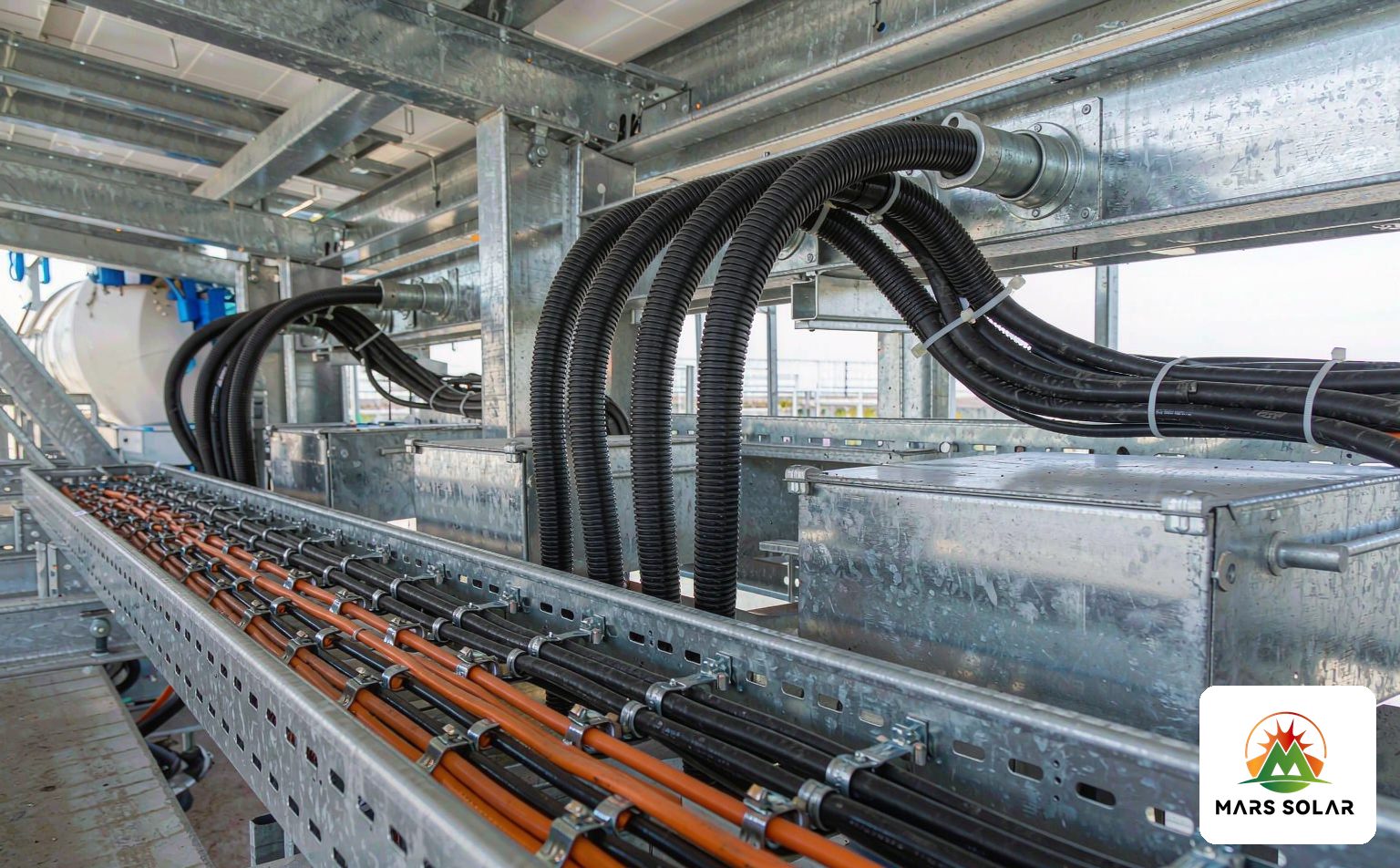
Most PV cable problems are not electrical — they are mechanical. Cables sit in full sun for twenty years, get walked on, chewed by rodents, or pulled tight around a corner until the insulation cracks. In hot, humid markets such as the Philippines, Ghana and Nigeria we also fight UV, salt air and termites, so the trunking is not cosmetic: it is the cable’s working environment.
Three failures we see on sites we are called to fix: cables run over roof edges without conduit, DC and AC bundles sharing one tray, and conductors with no identification at all. Each turns a five-minute fault into a two-day search, and each is fixed by a properly planned solar cable trunking job.
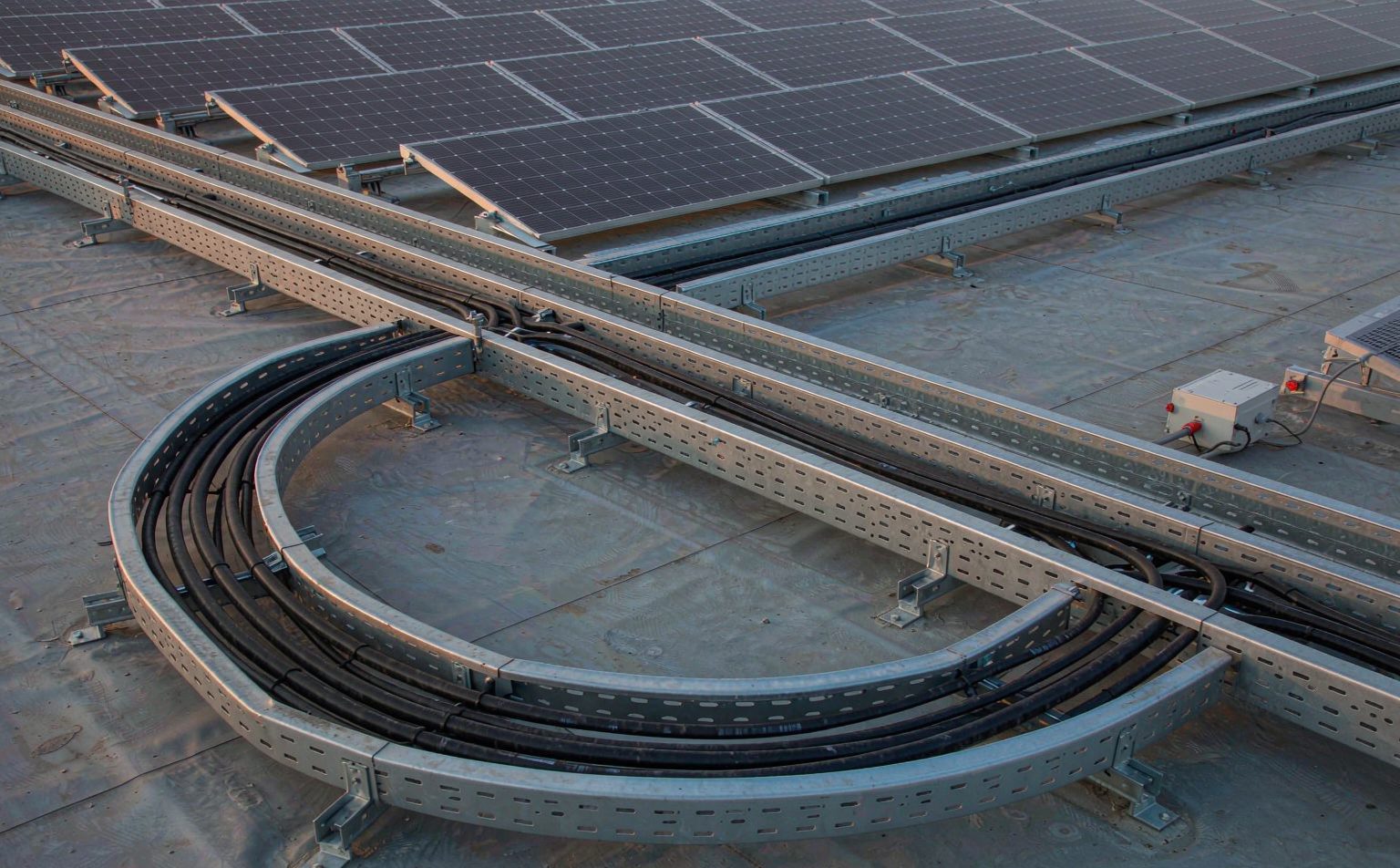
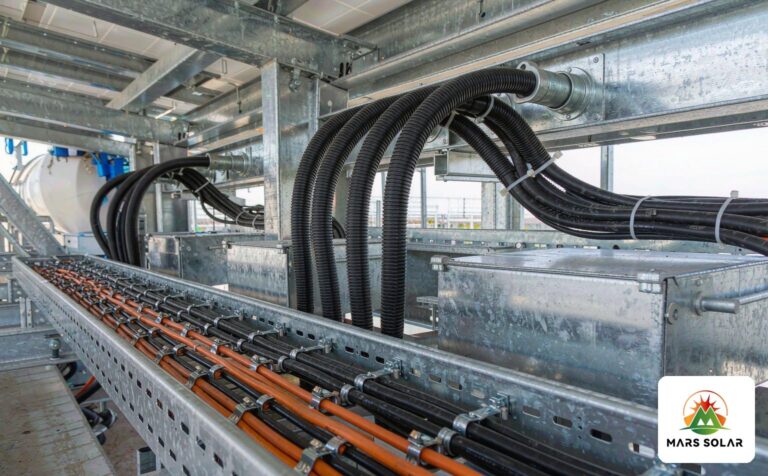
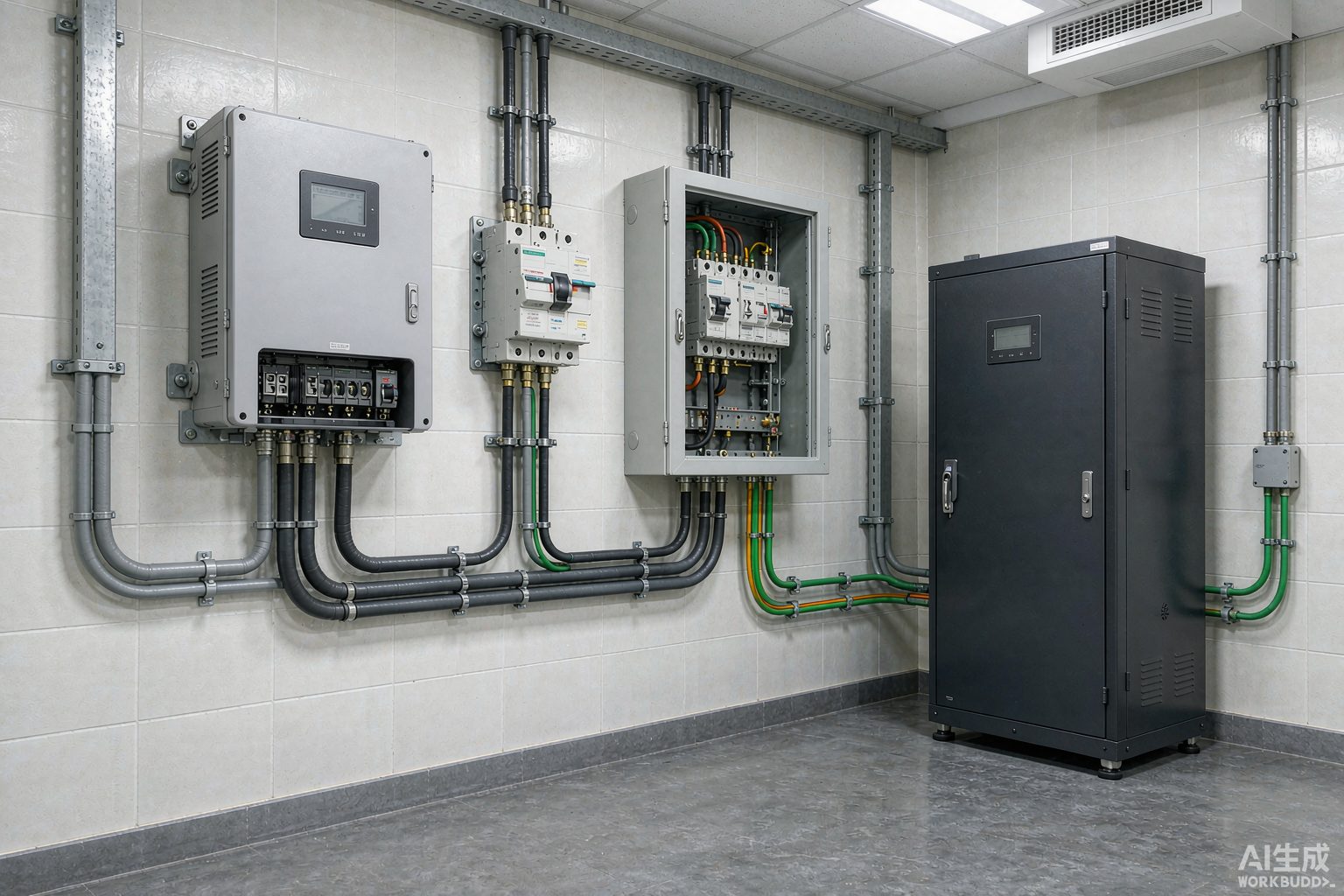
We do not mix circuits. In every solar cable trunking design we split the plant into three physical zones: DC string runs, AC output runs, and communication or auxiliary runs. The three zones never share a tray; where they must cross, they cross at right angles with a barrier between them.
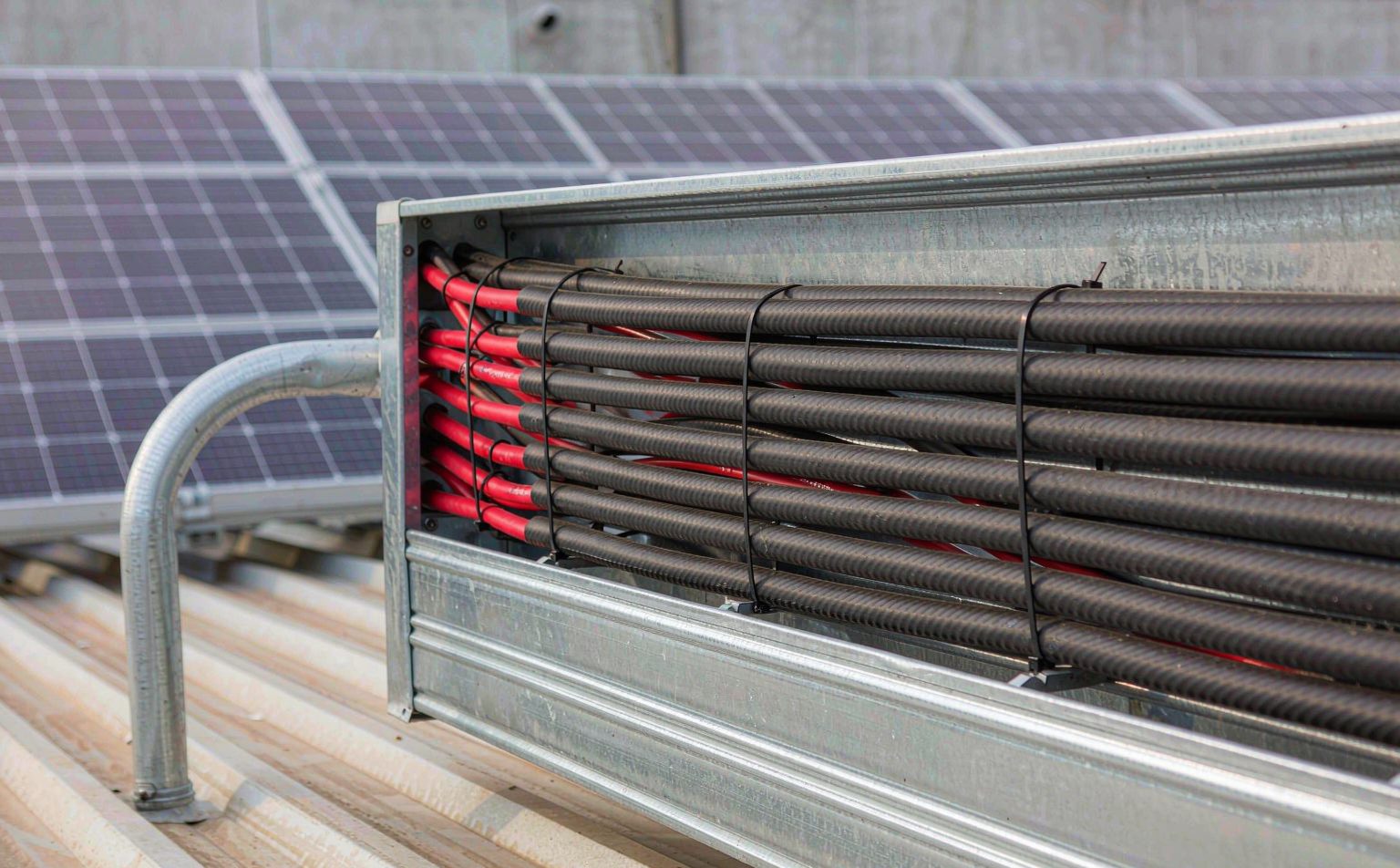
The DC zone uses UV-stabilized single-core cables inside perforated trays with covers. Bends keep at least the manufacturer’s minimum bend radius — usually 6 to 8 times the cable diameter — because a sharp corner is where insulation fails first. Trays are fixed at 1.2 m intervals, earthed at both ends, and sized so the fill ratio stays under 40%, which keeps cables cooler and leaves room for later expansion.
For the AC zone we use trunking or conduit separated from DC by at least 300 mm, and we never run communication cables parallel to AC for long distances. That one rule removes most induced-noise faults on current transformers, meters and monitoring gateways.
Where does this pay off? On a Système hybride de 100 kW, a technician can open the solar cable trunking covers and know instantly which zone he is in, without touching a live DC string by mistake.
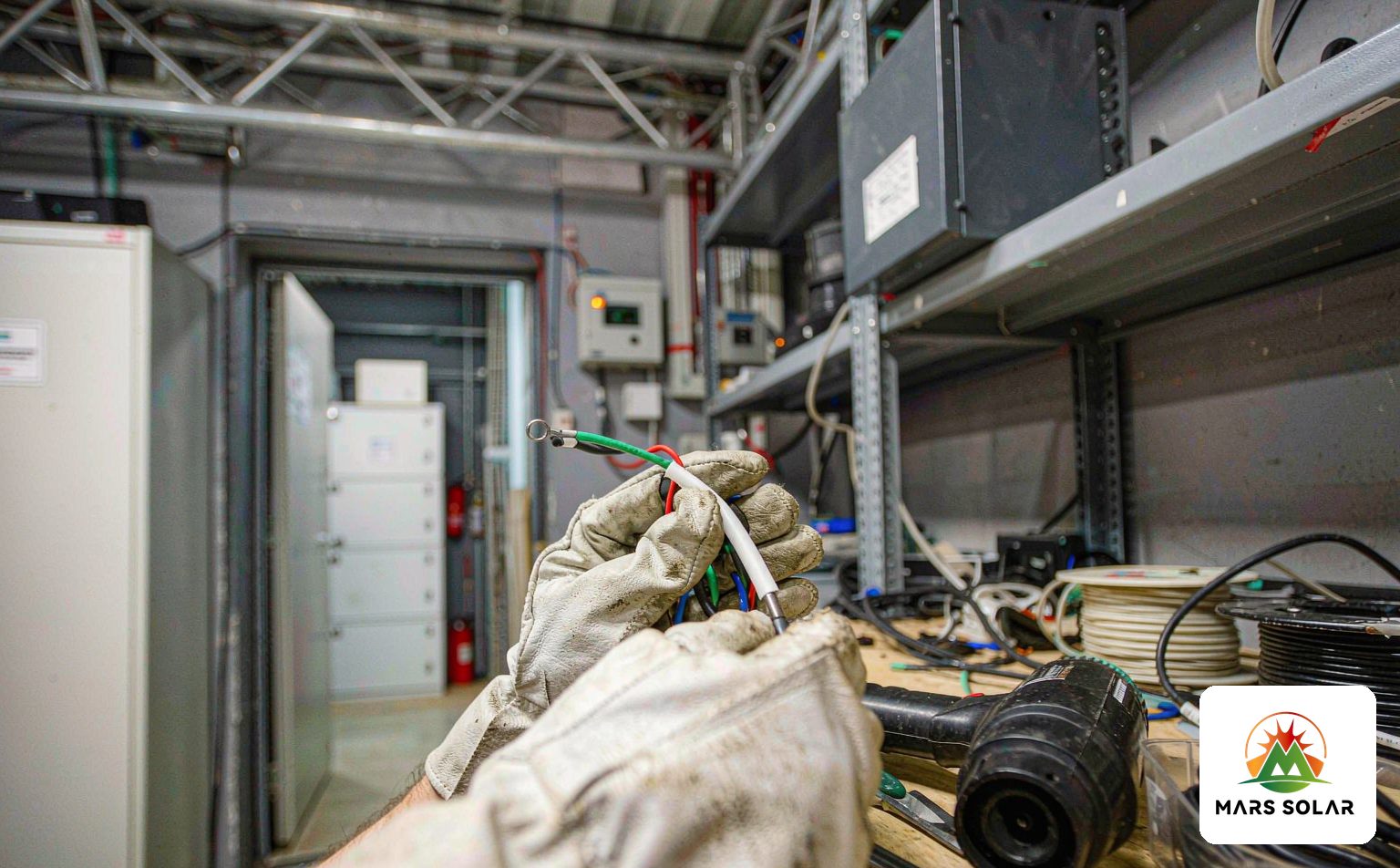
Solar cable trunking without labels is still a puzzle. So every conductor that leaves our workshop carries a printed heat-shrink sleeve at both ends, applied before the cable is coiled for shipment. The sleeve shows the circuit ID, the source and destination, the polarity or phase, and the voltage level — no handwriting, no tape that peels off in six months.
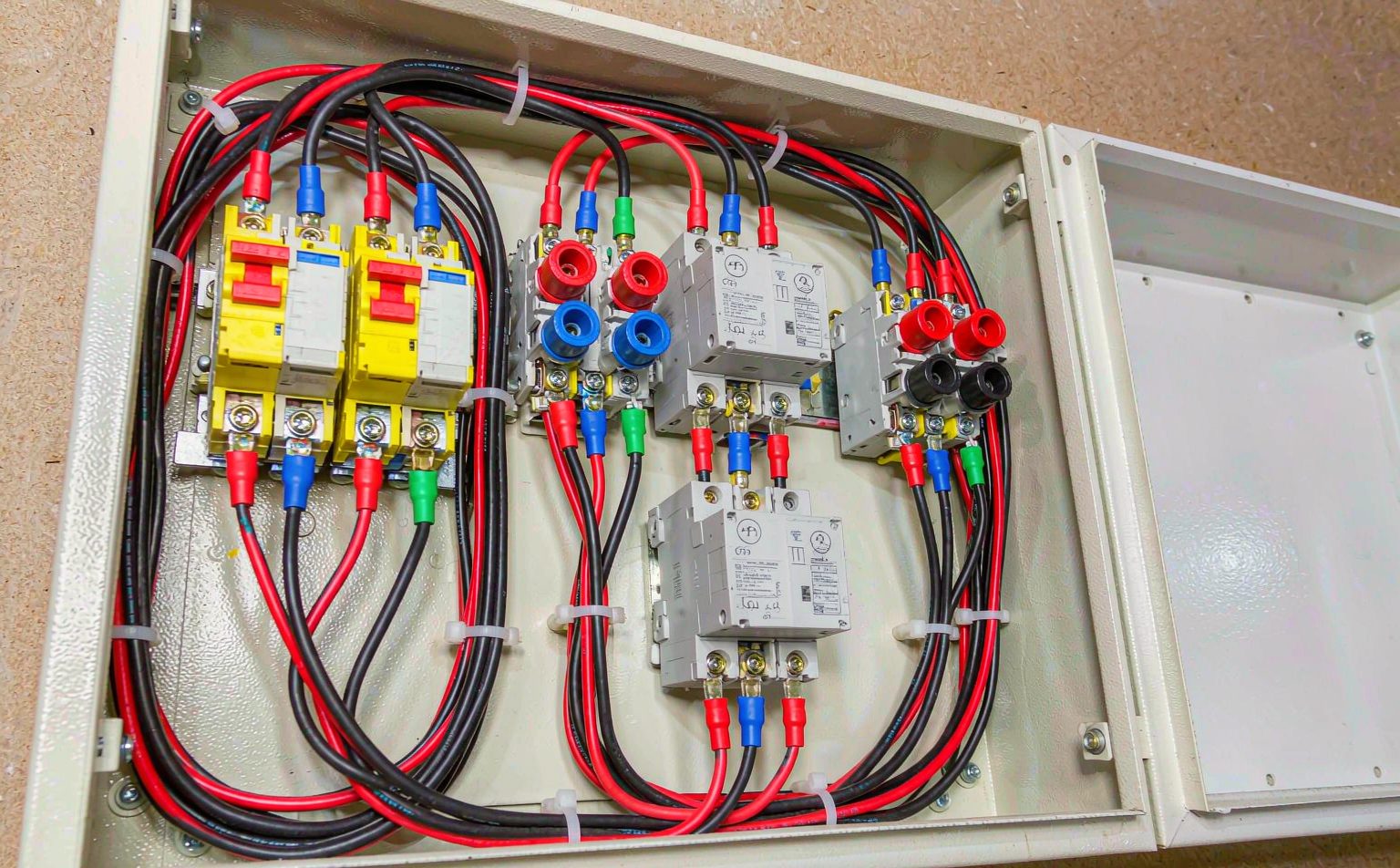
We keep the scheme identical across projects: the first characters of the circuit ID match the string or inverter number, and the same code appears in the single-line diagram and in the cable schedule we ship with the container. A technician on site can match a cable to the drawing in seconds.
This matters most on retrofit jobs. When we add a battery to an existing 100kW site, the new cables are labeled in the same scheme as the old ones, so the local team does not have to guess which breaker is which.
| Field | Example |
|---|---|
| Circuit ID | PV-S3-04 (string 3, circuit 04) |
| Source to destination | DC combiner CB-2 to Inverter 1 input A |
| Polarity or phase | DC+ / DC- or L1 / L2 / L3 / N |
| Voltage level | 1000 V DC or 400 V AC |
| Cable size | 6 mm2 PV1-F or 25 mm2 XLPE |
Each field has one job: the circuit ID links to the drawing, source and destination enable isolation, polarity makes DC work safe, voltage stops the wrong test gear being applied, and size speeds up replacement. Together they let a plant be recommissioned by a crew that has never seen the site.
If you inherit a site like this, the repair path is the same solar cable trunking discipline described above: separate, label, document. National rules such as the NEC in North America and IEC 60364 practice elsewhere (wiring methods overview) set the minimums; we treat them as the floor, not the target.
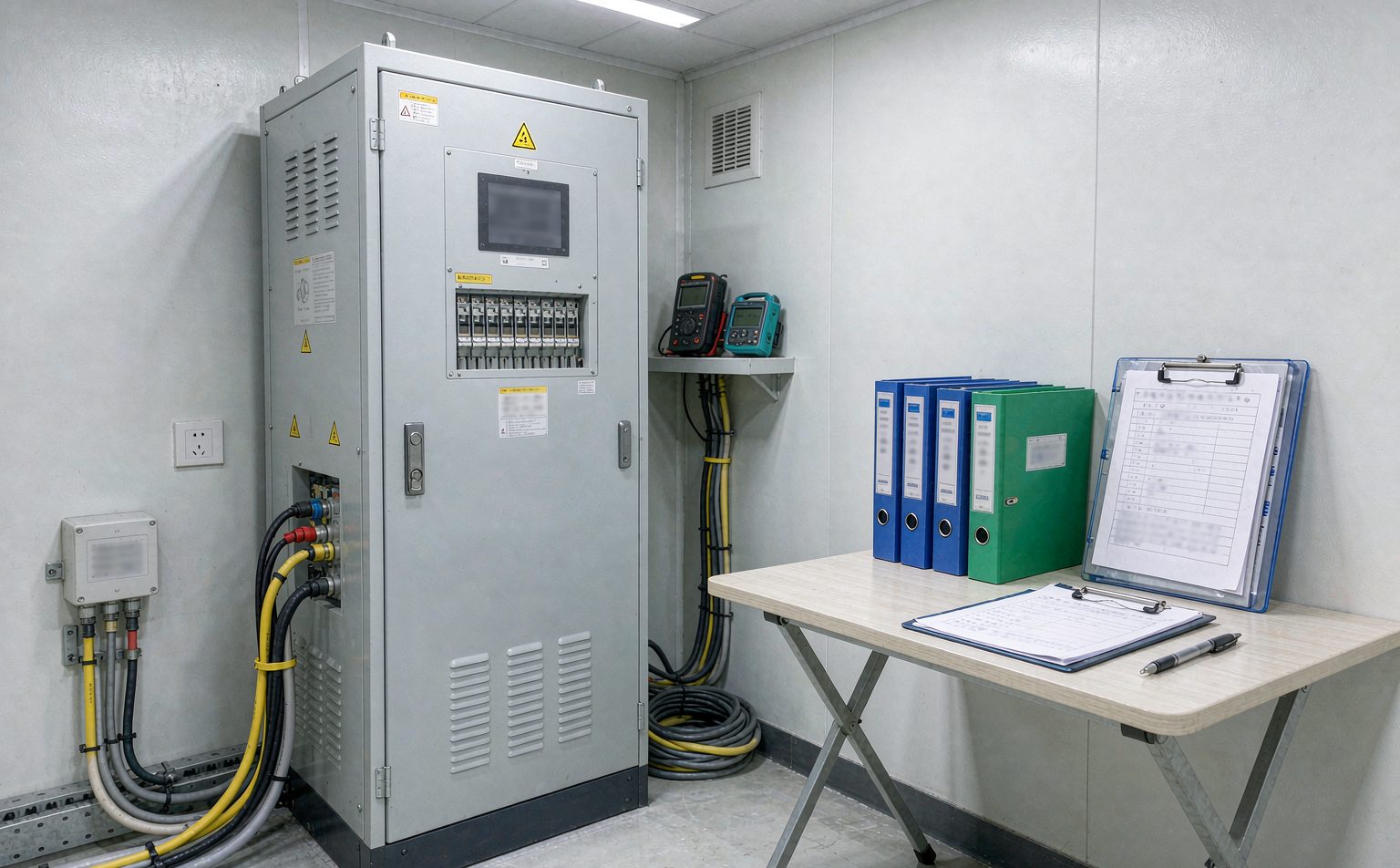
Commissioning a PV plant means verifying hundreds of terminations. Good solar cable trunking turns that into a checklist: open a zone, read the labels, compare them with the schedule, done. Fault-finding changes too — a ground-fault alarm on string 3 no longer means opening every box on the roof; the schedule tells you the exact route.
Maintenance teams benefit for the next twenty years. In markets where we run a local service presence — see how we staff our Abuja service hub — the labeling scheme lets a visiting technician work safely without the original installer’s memory.
Every cable assembly leaves our factory pre-cut, pre-terminated and pre-labeled, packed by zone and by destination. The crate includes the laminated cable schedule, terminal torque values and installation photos. On request we pre-wire combiner boxes and inverter disconnects, so the site team mostly clicks connectors and hangs trays.
Want the same standard on your project? Browse the full product catalog or send us your layout — we will return a cable schedule and a solar cable trunking bill of materials with your quotation, at no charge.
Solar cable trunking is the enclosed routing system — trays, conduits and trunking runs — that carries and protects every DC, AC and communication cable on a PV plant. It matters because exposed or mixed cables are the most common source of insulation failure, ground faults and slow commissioning.
A cable tray is an open ladder or perforated support that carries many cables and is easy to extend; a conduit is a closed tube protecting one or a few cables on a single run; trunking is a closed channel with a removable cover for main routes through plant rooms, walls and roof edges. A PV plant normally uses all three, with solar cable trunking carrying the trunk routes and conduit making the final drop to each string.
Separation keeps live DC strings away from AC circuits and prevents induced noise on meters and monitoring gateways. It also makes isolation safe: a technician knows what is in each zone before opening the trunking.
Circuit ID, source and destination, polarity or phase, voltage level and cable size — printed on heat-shrink sleeves at both ends of the cable, matching the single-line diagram and the cable schedule.
From the cable count, cable diameter and minimum bend radius. Trays keep the fill below 40 percent, conduits leave about 25 percent spare capacity, and every section is checked against the largest cable that will ever run through it.
Yes. We use galvanized or UV-stabilized trays and conduits with covers, and heat-shrink labels rated for outdoor use — the same combination we apply on sites in the Philippines, Ghana and Nigeria.
No, and that is the honest point. Proper routing and labeling protect performance by reducing damage and downtime, but they do not claim extra generation. Cables are sized for current and voltage drop, and the trunking keeps that performance intact for 20+ years.
Because every cable matches the schedule and the drawing before it arrives on site. The commissioning team opens a zone, reads the labels, and completes the verification checklist without tracing a single cable.
Yes, and it is planned zone by zone so the plant keeps generating. The sequence is a route survey, separation of DC from AC where the two share a tray, then re-labeling both ends of every conductor against a new cable schedule — the same repair path we use on inherited sites with mixed trays and unmarked cables.
Yes. Every shipment includes a laminated cable schedule, terminal torque values and installation photos. If you need the documents before purchase for permitting or tender, we can prepare them at the quotation stage.
Send us your roof plan or site layout and we will return a solar cable trunking design, a labeled cable schedule and a bill of materials together with your system quotation. Contactez notre équipe d'ingénierie or message us on WhatsApp at +86 15302966051.
Solar cable trunking is one part of a larger discipline: engineering documentation that survives the handover. The same standard applies to our inverter programming, battery commissioning and operation-and-maintenance handbooks, so the plant stays serviceable long after the installation team has left.

 English English
 Arabic
 Spanish
 French
 Dutch
 Portuguese