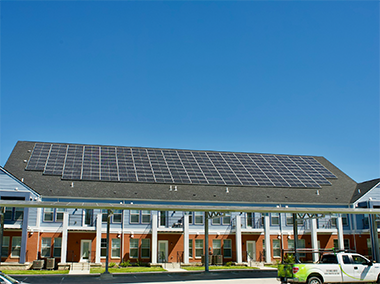
Will a Solar System Work at Night? - Mars Solar

  • 1、A solar power system at night runs entirely on stored battery power—solar panels cannot generate electricity without sunlight. Once the sun sets, your system switches seamlessly to battery mode without any manual intervention.

A Mars Solar power system at night draws from LiFePO4 batteries charged during daylight hours. These batteries deliver over 6,000 charge-discharge cycles at 95% depth of discharge, enough to cover typical household nighttime consumption for 8–12 hours on a full charge.

  • 2、How to Size Your Battery for Nighttime Use

Calculate your evening and overnight kWh consumption, then size the battery bank to cover 1.2× that amount as a buffer for cloudy days. A 10 kWh battery typically covers 6–8 hours of moderate household load including lighting, ceiling fans, refrigerator, Wi-Fi router, and entertainment systems. For AC loads, plan 2–3 kWh per ton-hour of cooling.

  • 3、How the System Switches to Night Mode

Hybrid inverters manage this transition automatically. The MPPT controller detects zero solar input, signals the BMS to discharge the battery, and your loads continue without interruption. Most users never notice the switchover—power delivery is seamless.

  • 4、What Happens on Extended Cloudy Days
    If the battery drains below 20%, hybrid systems automatically pull from the grid (if available) or activate generator backup. Off-grid systems rely on the oversize factor you built into the battery bank. This is why we recommend sizing for 2–3 days of autonomy in regions with extended rainy seasons.

Explore Mars Solar Battery Systems → https://sunenergyfactory.com/products/energy-storage-system/

Does the Mars Solar System Have a Warranty?

  • 1、A solar power system warranty from Mars Solar covers each component separately. Understanding what's included helps you plan for long-term ownership and avoid unexpected replacement costs.
  • Warranty Periods:
  • 2、Solar panels: 25-year linear power output warranty. After 25 years, panels still produce at least 80% of rated output. This is the industry standard for Tier-1 manufacturers.
  • 3、Hybrid inverter: 2-year manufacturer warranty covering defects in materials and workmanship under normal use conditions.
  • 4、Lithium battery (LiFePO4):10years warranty.20years design lifespan. The batteries themselves are rated for 6,000+ cycles, but the warranty term is 2 years for the BMS and supporting electronics.
  • 5、What's Not Covered
    Lightning strikes are excluded—we strongly recommend installing surge protection devices on all solar power system installations. Physical damage from impact, improper installation, unauthorized modifications, and Acts of God are not covered. Full terms are published in your order documentation and available in PDF format.
  • 6、How to File a Claim
    Filing a solar power system warranty claim is straightforward. Contact us via email (admin@solarpowermanufacturer.com) or WhatsApp (+86-15302966051) with your order number, photos or videos of the issue, and installation date. Most issues are diagnosed within 48 hours—many can be resolved remotely by adjusting settings or firmware.If a replacement is needed, we ship within 5 business days. You return the defective unit within 30 days; we cover one-way shipping for valid claims. Keep your order confirmation and installation photos—this significantly speeds up the claim process.

Solar Power System Upgrade Guide | Mars Solar

  • 1、A solar power system upgrade is straightforward with Mars Solar—our 10KVA hybrid inverter is engineered for incremental capacity growth. Battery expansion reaches 30 kWh and panel arrays grow without requiring an inverter swap or rewiring. Most customers take advantage of this design flexibility.
  • 2、Why Upgrade a Solar Power System Incrementally
    Many customers start with a modest 5 kW solar array plus 10 kWh battery covering basic lighting, fans, and essential appliances. As household needs grow—air conditioning, home offices, EV charging—a solar power system upgrade adds capacity without replacing existing components. This avoids the higher upfront cost of over-building from day one, especially valuable in regions where financing is limited or load patterns are still evolving.
  • 3、How Battery Expansion Works
    Adding capacity is plug-and-play with our LiFePO4 modules. Stacks connect in parallel up to 30 kWh. A qualified electrician completes the addition in 2–4 hours. No firmware updates or specialized tools required. The BMS auto-balances new modules with the existing battery bank.
  • 4、How Panel Array Growth Works
    Connect additional strings to existing MPPT inputs up to rated capacity, or add a second MPPT unit for arrays exceeding 15 kW. The inverter auto-detects new inputs and adjusts charge parameters automatically. Most solar power system upgrade projects for panel expansion complete in a single day.
  • 5、What to Plan at the Design Stage
    Share your 5-year plan with our engineers. We oversize the inverter, wire gauge, conduit capacity, and mounting hardware from day one. This means a future solar power system upgrade requires zero rework—just plug in new components and start generating more power. A common practice: oversize the inverter by 20–30% at initial install. Marginal cost is minimal compared to full replacement 3–5 years later.

Browse Mars Solar Hybrid Inverters →https://sunenergyfactory.com/products/hybrid-system/

Solar Power System Inverter: Grid vs Off-Grid | Mars Solar

  • 1、A solar power system inverter is the brain of your entire installation—converting DC electricity from panels into usable AC power for your home or business. Choosing the right inverter type directly impacts system cost, performance, and backup capability.
  • 2、Grid-Tied Inverters
    A grid-tied solar power system inverter is the cheapest option since no battery is required. Best for areas with stable utility power. Downside: no backup during blackouts. Typical ROI: 3-5 years in high-electricity-cost regions. Often illegal to operate during grid outages without anti-islanding protection.
  • 3、Off-Grid Inverters
    A fully off-grid solar power system inverter requires a battery bank sized for 2-3 days of autonomy. Higher upfront cost but zero ongoing electricity bills. Ideal for remote locations, areas with frequent outages, or buyers seeking energy independence. Often paired with generator backup for extended cloudy periods.
  • 4、Hybrid Inverters (Recommended)
    A hybrid solar power system inverter connects to the grid AND stores energy in batteries. You can sell excess power back to the utility, draw from batteries during peak tariff hours, and maintain backup during outages. Mars Solar 10KVA hybrid inverters support battery expansion to 30 kWh—our recommended choice for most international buyers.
  • 5、Key Specs to Evaluate
    IP65+ rating for dust and water resistance
    Multiple MPPT inputs for rooftop arrays with multiple orientations
    Wide voltage fluctuation tolerance (160V-500V typical)
    Operating temperature range of -25°C to +60°C
    Local certifications (CE, UL, IEC) for customs clearance
  • For most international solar power system installations, a hybrid inverter provides the best flexibility, future-proofing, and ROI. Start with a grid-tied setup only if budget is the primary constraint and grid stability is guaranteed.


Solar Power System Off Grid: Do You Need It? | Mars Solar

  • In most cases, yes—but far less than before. A typical 10 kW solar power system off grid setup still produces 50-60 kWh per day in summer and 35-50 kWh in winter. If your household consumes 25-30 kWh daily, the solar array covers nearly all daytime usage and charges batteries for evening and overnight load.
  • 1、When You Can Eliminate the Grid
    Fully off-grid solar power system installations work for households consuming 10-30 kWh per day with adequate roof space (30-60 m²) and reliable solar irradiance. These setups require battery banks sized for 2-3 days of autonomy. Common off-grid locations include remote Philippines, Nigeria, and Caribbean islands where grid extension is impractical or unreliable.
  • 2、Off-grid systems eliminate the monthly electricity bill entirely but require careful sizing. Battery cost represents 40-60% of total system cost—right-sizing matters more than over-building. A common mistake is installing too many panels without enough battery storage, leading to chronic undercharge in winter months.
  • 3、Hybrid: The Best of Both Worlds
    A Mars Solar hybrid solar power system off grid capable installation stays connected to the grid for backup but draws on solar first, batteries second, and grid last. This configuration covers 90% of solar production during peak sun hours and only falls back to the grid during extended cloudy periods.
    Hybrid systems are ideal for buyers who want energy independence without the risk of running out of power. Grid connection serves as insurance—you maintain power indefinitely, but monthly electricity bills drop by 60-90% depending on system size and consumption pattern. Net metering policies in some regions even allow you to sell excess power back to the utility for credit.
  • 4、Grid-Tied: Cheapest but No Backup
    A grid-tied solar power system off grid backup configuration is the lowest-cost option. No batteries are required, so upfront cost drops 30-50% versus hybrid. However, the system shuts down during grid outages for safety reasons. Buyers in regions with stable grids and rare blackouts often choose this configuration for maximum ROI.
  • Mars Solar kits support all three configurations—grid-tied, off-grid, and hybrid. Share your location, monthly bill, and outage frequency with our engineers, and we’ll recommend the right setup for your specific situation.


Solar Power System Battery Guide: LiFePO4 | Mars Solar

  • 1、A solar power system battery stores excess solar energy for use when the sun isn't shining. Choosing the right battery chemistry directly impacts system lifespan, safety, and total cost of ownership.
  • 2、For off-grid and hybrid solar power systems, LiFePO4 (Lithium Iron Phosphate) is the optimal battery chemistry in 2025. It outperforms both lead-acid and NMC lithium on every important metric.
  • 3、Why LiFePO4 Beats Lead-Acid and NMC
    A LiFePO4 solar power system battery delivers 6,000+ charge-discharge cycles at 95% depth of discharge, compared to 500–1,000 cycles for lead-acid and 3,000 cycles for NMC lithium. They are also safer—LiFePO4 is thermally stable up to 270°C, while NMC can catch fire under physical damage. Round-trip efficiency is 95–98% for LiFePO4 versus 70–80% for lead-acid, meaning you capture more usable energy per solar harvest.
  • 4、Battery Sizing Formula
    To size a solar power system battery: Daily kWh × Days of Autonomy × 1.1 = Required Capacity. Example: 10 kWh daily × 2 days × 1.1 = 22 kWh battery bank. Round up to the nearest standard size.
  • 5、Key Specs to Verify
    Voltage: 48V for residential efficiency (24V for small systems). Enclosure: IP65+ rated for outdoor or dusty environments. Built-in BMS with overcharge, over-discharge, and short-circuit protection. Certifications: IEC 62619 for stationary storage, UN38.3 for safe international shipping.
  • 6、Right-Size, Don't Oversize
    Oversizing leads to chronic undercharging, which degrades battery health faster than cycling. Match capacity to your actual load patterns, not theoretical maximums. Most residential systems are correctly sized at 1.5–2× daily kWh consumption.

Explore Mars Solar Battery Systems → https://sunenergyfactory.com/products/large-capacity-battery/

Solar Power System Panels: 4 Specs to Check | Mars Solar

  • 1、A solar power system panel’s real-world performance depends on four key specifications. Marketing claims and “premium” branding matter far less than these actual numbers when comparing panels for residential or commercial installation.
  • 2、Wattage (Power Output per Panel)
    For 2025, look for 590W+ monocrystalline solar power system panels. Higher wattage means more power per panel and fewer mounting points. Space-constrained rooftops benefit from higher-wattage modules that reduce total panel count by 20–30%. Open-field installations can use lower-wattage panels without penalty since space isn’t limited.
  • 3、Efficiency (Power per Square Meter)
    23%+ panel efficiency is the modern benchmark for solar power system panels. Higher efficiency matters most for limited roof space. If you have ample open land, lower-efficiency panels at lower cost may be better value per watt. The efficiency difference between 21% and 23% panels adds 8–10% more power on the same roof area.
  • 4、Temperature Coefficient (Heat Performance)
    This critical spec tells you how much power a solar power system panel loses per °C above 25°C. Look for −0.30%/°C or better—essential for tropical and desert climates where panels routinely operate at 60–70°C. A panel with −0.40%/°C loses significantly more power in summer heat, reducing annual yield by 3–5% in hot regions.
  • 5、Warranty (Long-Term Reliability)
    25-year linear output warranty is the industry standard. Verify linear vs. stepped coverage—linear warranties guarantee smoother degradation curves and protect output during the critical 10–25 year period when most panels are still in service.
  • 6、For most residential and commercial solar power system installations, monocrystalline PERC panels are the optimal choice—best efficiency, reasonable price, proven long-term reliability across millions of deployed units.

Browse Mars Solar Panel Kits → https://sunenergyfactory.com/products/on-and-off-grid-solar-system/

Solar Power System Size: How to Calculate | Mars Solar

  • 1、Most homeowners underestimate the right solar power system size by 20-30%. Here’s how to calculate the correct capacity for your home without expensive overbuilding or frustrating underperformance.
  • 2、The Quick Sizing Formula
    The basic rule: Daily Use (kWh) = Monthly Bill (kWh) ÷ 30. Then add 10-20% for winter generation drops and 5-10% for system buffer. Example: A household using 600 kWh per month has 20 kWh of daily use, requiring a 24-28 kWh daily production target for a correctly-sized solar power system.
  • 3、Match System Size to Your Load
    Small home (1-2 people, basic load): 3-5 kW solar + 5-10 kWh battery. Medium home (3-4 people, AC and appliances): 8-15 kW solar + 15-30 kWh battery. Large home or off-grid: 20-30 kW solar + 30-60 kWh battery. Off-grid reference (Philippines, Nigeria): 10-30 kW solar + 15-60 kWh battery.
  • 4、Don’t Forget These Factors
    Solar irradiance: 4-5 peak sun hours is typical for most regions—lower in northern Europe, higher in tropical zones. Roof orientation: South-facing (Northern Hemisphere) or north-facing (Southern Hemisphere) is optimal. Shading: Trees, chimneys, and adjacent buildings can reduce output by 10-40%—always audit before sizing. Future load growth: Plan for EV charging, AC upgrades, or home offices that may double consumption within 5 years.
  • 5、Why Oversizing Is Tempting but Risky
    An oversized solar power system size costs 30-50% more upfront but rarely delivers proportional value. The inverter runs below optimal efficiency at low loads, batteries sit at low state-of-charge which shortens lifespan, and you tie up capital in unused capacity. Right-sizing beats over-sizing for 90% of residential installs.
  • 6、For a precise system design tailored to your location and consumption pattern, share your monthly electricity bill with our engineers. We’ll model your specific conditions and recommend the right configuration.
    Get a Free System Design → https://sunenergyfactory.com/contact-us/
Mon-Fri: 7:00 am-18:00 pm
24/7 Service Available
Ask for a Question

Subscribe Our Newsletter

    Design and Manufacture of Domestic and Commercial Solar Energy Systems

    Contact Info

    7th Floor, Building 5, Phase II, Wanyang Innovation City, Xiaotang Industrial Avenue, Shishan Town, Nanhai District, Foshan City

    Follow Us

    Do You Want A Free Solar System Design for Your building?

    Leave your mobile number/whatsapp/email and we can respond within an hour!

      Get free consultations, catalogs, product specifications, quotes and more now.

      Language

      en_uszh_cnardeesfritjakonlpt

      Language