
الأسئلة الشائعة حول أنظمة الطاقة الشمسية

Which African Market Has the Fastest Solar Payback?

  • Where diesel is the benchmark the payback is shortest: generator-dependent sites in Nigeria and remote Kenyan sites commonly model 2–4 years.
  • Where solar displaces a commercial grid tariff instead, payback typically models at 3–6 years depending on the tariff band and the storage ratio.
  • Adding storage raises capital cost but usually shortens payback, because the battery captures savings in the hours when the alternative power is most expensive.

Is Solar Equipment Duty-Free in Nigeria, Ghana or Kenya in 2026?

  • All three markets have offered favourable duty or tax treatment for renewable energy equipment at various times, but which components qualify changes with each budget cycle.
  • Modules, inverters, batteries and mounting hardware normally carry different HS codes and different rates — never declare the whole container under one blanket code.
  • Ask your clearing agent for the classification for your exact items in writing before the goods ship, and confirm whether any exemption needs pre-approval.

هل يمكن لنظام تخزين الطاقة الشمسية (BESS) أن يقلل فاتورة «ميرالكو» دون الحاجة إلى الألواح الشمسية؟

  • نعم. يمكن للتخزين وحده أن يخفف من حدة ذروة الطلب ويحول الاستهلاك بعيدًا عن فترات التعرفة الأعلى، لأن فترة الذروة التي تحدد رسوم الطلب تتكرر على مدار الشهر بأكمله.
  • وتعزز إضافة الطاقة الشمسية من مزايا هذا الحل بشكل أكبر: حيث يتم توليد الطاقة المخزنة في الموقع بدلاً من شرائها بالأسعار التجارية.
  • Payback for commercial sites with high demand charges and evening peaks typically models at 4–7 years using the customer's own bills.

How Much Does a Battery Energy Storage System Cost in the Philippines in 2026?

  • Factory-direct CIF Manila, LFP storage typically runs US$180–260 per kWh for rack-mounted systems and US$210–300 per kWh for containerised units.
  • A complete solar plus storage system lands in the range of US$700–1,100 per kWp depending on how many kWh of battery you pair with each kWp of solar.
  • The storage-to-solar ratio is the biggest single driver of price — ask for the battery block priced separately so you can compare suppliers on a like-for-like basis.

Why Buy Solar Equipment Factory-Direct Instead of From a Local Distributor?

  • Price is the obvious one: removing distributor and multi-tier agent margin typically puts the same configuration 20–40% lower.
  • Configuration freedom is the underrated one. OEM/ODM supply lets you specify module power bin, mounting form, battery capacity and inverter topology for the actual project rather than choosing from a shelf.
  • Documentation is prepared once, at origin: certification packs and lithium battery dangerous-goods files are assembled before the vessel sails, which is what prevents a container being refused at destination.
  • Warranty terms are written directly with the manufacturer, so performance guarantees on modules and batteries are contractual rather than relayed through an intermediary.
  • The trade-off is that factory-direct buying requires in-house clearance capability or a reliable licensed customs agent — you take on the work the distributor used to absorb.

ما الفرق بين الأنظمة الشمسية المرتبطة بالشبكة، والأنظمة الشمسية غير المرتبطة بالشبكة، والأنظمة الشمسية الهجينة؟

  • On-grid systems have no battery. They are the cheapest and pay back fastest, but they shut down when the grid fails — a grid-tied inverter cannot energise a dead network.
  • لا تتصل الأنظمة غير المرتبطة بالشبكة بالشبكة على الإطلاق. ويجب تحديد سعة المصفوفة والبطارية بناءً على أسوأ السيناريوهات، مما يجعلها الخيار الأغلى ثمناً.
  • Hybrid systems combine a grid connection with battery storage. They shave peaks, provide backup, and switch automatically during an outage — the most common choice for commercial and industrial sites.
  • القاعدة الأساسية في تحديد السعة هي عدد ساعات التشغيل المستقل التي لا يمكنك تحمل فقدانها، وليس عدد ساعات سطوع الشمس التي تتوقعها: سعة البطارية تساوي الحمل الحرج مضروبًا في عدد ساعات الدعم.
  • في حالة وجود مولد ديزل بالفعل، تتيح وحدة التحكم الهجينة تشغيله عند نقطة الحمل المثلى بدلاً من التشغيل في وضع التباطؤ، مما يقلل من استهلاك الوقود حتى في الأيام التي يعمل فيها المولد.

How Long Does a Solar Power System Take to Pay Back?

  • For grid-connected sites measured against the utility tariff, commercial and industrial systems typically pay back in 3–5 years.
  • For off-grid or weak-grid sites measured against diesel generation, payback is often under 18 months, because the real cost of diesel is far higher than the pump price suggests.
  • A credible calculation must include fuel, fuel transport, genset servicing and replacement, and the production lost during outages — the last of these is usually the largest number.
  • Batteries specified at 6,000+ cycles and 90–95% depth of discharge typically cover 8–12 hours of overnight commercial load on a single charge.
  • The three variables that move payback most are the local tariff or delivered diesel cost, the daily load curve, and how many hours of backup you actually need.

How Much Does a Commercial Solar Power System Cost per kW in 2026?

  • At module level, factory-direct pricing for mainstream power classes in 2026 runs roughly US$0.28–0.48 per watt, depending on cell efficiency and power bin.
  • At system level, a 100 kW + 215 kWh solar-plus-storage system is about US$88,000–115,000 CIF including hybrid inverters, LFP batteries and mounting structures.
  • A 500 kW + 1 MWh industrial microgrid runs roughly US$390,000–480,000.
  • Battery capacity drives most of the difference between an on-grid and an off-grid quote: storage is typically 35–50% of total system cost.
  • The landed figure adds import duty, port handling and inland delivery — usually 20–35% on top of equipment cost, more for remote or island sites.

What Solar Equipment Specifications Matter Most in the Middle East?

  • Heat is the dominant variable. Specify modules with a low temperature coefficient — around -0.30%/°C or better — so summer cell temperatures do not erode the rated output.
  • Modules should carry IEC 61215 and IEC 61730 certification, with PID resistance testing and a backsheet rated for intense UV and sand abrasion.
  • Dust accumulation can cut output sharply, so design for a realistic cleaning cycle and use a tilt of roughly 20° or more to help the array self-clean.
  • Inverters and battery enclosures need IP66 rating and active cooling; LiFePO4 banks should be liquid-cooled or force-air cooled to keep cells within their operating window.
  • Grid-connected projects must also meet the local utility standard — SASO in Saudi Arabia, DEWA or ADDC requirements in the UAE — which affects inverter certification as well as panels.

How Do You Design a Hurricane-Resistant Solar System for the Caribbean?

  • Structure is the first priority: mounting must be engineered to local cyclone wind loads (ASCE 7 or the applicable national code), with pull-out testing to confirm the roof anchorage can carry the load.
  • Coastal salt exposure requires marine-grade aluminium or hot-dip galvanised mounting and 316 stainless fasteners — standard galvanised hardware corrodes far faster than most buyers expect.
  • Inverters, combiner boxes and battery enclosures should be rated IP65 or IP66, with active thermal management and dehumidification for the battery compartment.
  • Modules should carry IEC 61215 and IEC 61730 certification, plus salt-mist corrosion testing to IEC 61701 for coastal sites.
  • Retain grid or generator backup for the recovery period after a storm, and specify a lockable DC isolator so the array can be safely disconnected during repairs.

What Import Duty and Certification Apply to Solar Equipment in the Philippines?

  • Solar panels enter at 0% duty and 0% VAT for DOE-registered renewable energy developers under RA 9513 and the CREATE MORE Act.
  • A BPS mandatory certification regulation passed on 30 June 2026 now covers solar panels, inverters, charge controllers, PV cables and battery energy storage systems, with a 12-month transition window that closes in July 2027.
  • Shipments without PS or ICC certification are being pulled into the Red Lane for full physical inspection at Manila, Batangas and Cebu.
  • Lithium battery consignments additionally need a UN38.3 test summary, safety data sheet, dangerous goods declaration and Class 9 labelling.
  • Declared value is tested against reference pricing in the EVRIS valuation system — under-declaration triggers a review and is one of the most common causes of delay.

How Much Does a Solar Plus Storage System Cost in Nigeria in 2026?

  • Factory-direct CIF, a 30 kW + 60 kWh system runs US$28,000–36,000, a 100 kW + 215 kWh system runs US$88,000–115,000, and a 500 kW + 1 MWh industrial microgrid runs US$390,000–480,000.
  • Battery capacity is the main cost driver: storage typically accounts for 35–50% of total system cost, which is why sizing to autonomy hours matters more than sizing to roof area.
  • Nigeria's national grid collapsed 12 times in 2024, so most commercial and industrial sites run diesel by default — and delivered diesel generation costs N350–450 per kWh once fuel, transport, servicing and genset replacement are counted.
  • Solar plus storage delivers power at roughly N55–90 per kWh levelized over 20 years, putting the five-year crossover for a 100 kW site in year two.
  • Add import duty, port handling and inland delivery — typically 20–35% on top of the equipment price — to reach the landed figure.

Will a Solar System Work at Night? - Mars Solar

  • A solar power system at night runs entirely on stored battery power—solar panels cannot generate electricity without sunlight. Once the sun sets, your system switches seamlessly to battery mode without any manual intervention.

A Mars Solar power system at night draws from LiFePO4 batteries charged during daylight hours. These batteries deliver over 6,000 charge-discharge cycles at 95% depth of discharge, enough to cover typical household nighttime consumption for 8–12 hours on a full charge.

  • How to Size Your Battery for Nighttime Use

Calculate your evening and overnight kWh consumption, then size the battery bank to cover 1.2× that amount as a buffer for cloudy days. A 10 kWh battery typically covers 6–8 hours of moderate household load including lighting, ceiling fans, refrigerator, Wi-Fi router, and entertainment systems. For AC loads, plan 2–3 kWh per ton-hour of cooling.

  • 3、How the System Switches to Night Mode

Hybrid inverters manage this transition automatically. The MPPT controller detects zero solar input, signals the BMS to discharge the battery, and your loads continue without interruption. Most users never notice the switchover—power delivery is seamless.

  • 4、What Happens on Extended Cloudy Days
    If the battery drains below 20%, hybrid systems automatically pull from the grid (if available) or activate generator backup. Off-grid systems rely on the oversize factor you built into the battery bank. This is why we recommend sizing for 2–3 days of autonomy in regions with extended rainy seasons.

Explore Mars Solar Battery Systems → https://sunenergyfactory.com/products/energy-storage-system/

هل يشمل نظام المريخ الشمسي ضمانًا؟

  • يغطي ضمان نظام الطاقة الشمسية المقدم من شركة Mars Solar كل مكون على حدة. إن فهم ما يشمله الضمان يساعدك على التخطيط لملكية النظام على المدى الطويل وتجنب تكاليف الاستبدال غير المتوقعة.
  • فترات الضمان:
  • الألواح الشمسية: ضمان خطي لمدة 25 عامًا على إنتاج الطاقة. بعد مرور 25 عامًا، تظل الألواح تنتج ما لا يقل عن 80% من الطاقة المقدرة. وهذا هو المعيار المتبع في الصناعة بالنسبة للمصنعين من الفئة الأولى.
  • محول هجين: ضمان من الشركة المصنعة لمدة سنتين يغطي عيوب المواد والتصنيع في ظل ظروف الاستخدام العادية.
  • بطارية الليثيوم (LiFePO4): ضمان لمدة 10 سنوات. العمر الافتراضي للتصميم 20 سنة. تبلغ السعة التصنيفية للبطاريات نفسها أكثر من 6,000 دورة، لكن مدة الضمان تبلغ سنتين لنظام إدارة البطارية (BMS) والمكونات الإلكترونية الداعمة.
  • ما لا يشمله التأمين
    Lightning strikes are excluded—we strongly recommend installing surge protection devices on all solar power system installations. Physical damage from impact, improper installation, unauthorized modifications, and Acts of God are not covered. Full terms are published in your order documentation and available in PDF format.
  • كيفية تقديم مطالبة
    Filing a solar power system warranty claim is straightforward. Contact us via email (info@marssolargroup.com) or WhatsApp (+86-15302966051) with your order number, photos or videos of the issue, and installation date. Most issues are diagnosed within 48 hours—many can be resolved remotely by adjusting settings or firmware.If a replacement is needed, we ship within 5 business days. You return the defective unit within 30 days; we cover one-way shipping for valid claims. Keep your order confirmation and installation photos—this significantly speeds up the claim process.

دليل تحديث نظام الطاقة الشمسية | Mars Solar

  • A solar power system upgrade is straightforward with Mars Solar—our 10KVA hybrid inverter is engineered for incremental capacity growth. Battery expansion reaches 30 kWh and panel arrays grow without requiring an inverter swap or rewiring. Most customers take advantage of this design flexibility.
  • لماذا يجب تحديث نظام الطاقة الشمسية على مراحل؟
    Many customers start with a modest 5 kW solar array plus 10 kWh battery covering basic lighting, fans, and essential appliances. As household needs grow—air conditioning, home offices, EV charging—a solar power system upgrade adds capacity without replacing existing components. This avoids the higher upfront cost of over-building from day one, especially valuable in regions where financing is limited or load patterns are still evolving.
  • كيفية عمل توسيع سعة البطارية
    Adding capacity is plug-and-play with our LiFePO4 modules. Stacks connect in parallel up to 30 kWh. A qualified electrician completes the addition in 2–4 hours. No firmware updates or specialized tools required. The BMS auto-balances new modules with the existing battery bank.
  • كيفية عمل نمو مصفوفة الألواح
    يمكن توصيل سلاسل إضافية بمدخلات MPPT الحالية حتى السعة المقدرة، أو إضافة وحدة MPPT ثانية للمصفوفات التي تتجاوز قدرتها 15 كيلوواط. يقوم العاكس بالكشف التلقائي عن المدخلات الجديدة ويضبط معلمات الشحن تلقائيًا. وتُنجز معظم مشاريع ترقية أنظمة الطاقة الشمسية لتوسيع الألواح في يوم واحد.
  • ما الذي يجب التخطيط له في مرحلة التصميم
    Share your 5-year plan with our engineers. We oversize the inverter, wire gauge, conduit capacity, and mounting hardware from day one. This means a future solar power system upgrade requires zero rework—just plug in new components and start generating more power. A common practice: oversize the inverter by 20–30% at initial install. Marginal cost is minimal compared to full replacement 3–5 years later.

Browse Mars Solar Hybrid Inverters →https://sunenergyfactory.com/products/hybrid-system/

Solar Power System Inverter: Grid vs Off-Grid | Mars Solar

  • A solar power system inverter is the brain of your entire installation—converting DC electricity from panels into usable AC power for your home or business. Choosing the right inverter type directly impacts system cost, performance, and backup capability.
  • Grid-Tied Inverters
    A grid-tied solar power system inverter is the cheapest option since no battery is required. Best for areas with stable utility power. Downside: no backup during blackouts. Typical ROI: 3-5 years in high-electricity-cost regions. Often illegal to operate during grid outages without anti-islanding protection.
  • Off-Grid Inverters
    A fully off-grid solar power system inverter requires a battery bank sized for 2-3 days of autonomy. Higher upfront cost but zero ongoing electricity bills. Ideal for remote locations, areas with frequent outages, or buyers seeking energy independence. Often paired with generator backup for extended cloudy periods.
  • Hybrid Inverters (Recommended)
    A hybrid solar power system inverter connects to the grid AND stores energy in batteries. You can sell excess power back to the utility, draw from batteries during peak tariff hours, and maintain backup during outages. Mars Solar 10KVA hybrid inverters support battery expansion to 30 kWh—our recommended choice for most international buyers.
  • Key Specs to Evaluate
    IP65+ rating for dust and water resistance
    Multiple MPPT inputs for rooftop arrays with multiple orientations
    Wide voltage fluctuation tolerance (160V-500V typical)
    Operating temperature range of -25°C to +60°C
    Local certifications (CE, UL, IEC) for customs clearance
  • For most international solar power system installations, a hybrid inverter provides the best flexibility, future-proofing, and ROI. Start with a grid-tied setup only if budget is the primary constraint and grid stability is guaranteed.


Solar Power System Off Grid: Do You Need It? | Mars Solar

  • In most cases, yes—but far less than before. A typical 10 kW solar power system off grid setup still produces 50-60 kWh per day in summer and 35-50 kWh in winter. If your household consumes 25-30 kWh daily, the solar array covers nearly all daytime usage and charges batteries for evening and overnight load.
  • When You Can Eliminate the Grid
    Fully off-grid solar power system installations work for households consuming 10-30 kWh per day with adequate roof space (30-60 m²) and reliable solar irradiance. These setups require battery banks sized for 2-3 days of autonomy. Common off-grid locations include remote Philippines, Nigeria, and Caribbean islands where grid extension is impractical or unreliable.
  • Off-grid systems eliminate the monthly electricity bill entirely but require careful sizing. Battery cost represents 40-60% of total system cost—right-sizing matters more than over-building. A common mistake is installing too many panels without enough battery storage, leading to chronic undercharge in winter months.
  • Hybrid: The Best of Both Worlds
    A Mars Solar hybrid solar power system off grid capable installation stays connected to the grid for backup but draws on solar first, batteries second, and grid last. This configuration covers 90% of solar production during peak sun hours and only falls back to the grid during extended cloudy periods.
    Hybrid systems are ideal for buyers who want energy independence without the risk of running out of power. Grid connection serves as insurance—you maintain power indefinitely, but monthly electricity bills drop by 60-90% depending on system size and consumption pattern. Net metering policies in some regions even allow you to sell excess power back to the utility for credit.
  • Grid-Tied: Cheapest but No Backup
    A grid-tied solar power system off grid backup configuration is the lowest-cost option. No batteries are required, so upfront cost drops 30-50% versus hybrid. However, the system shuts down during grid outages for safety reasons. Buyers in regions with stable grids and rare blackouts often choose this configuration for maximum ROI.
  • Mars Solar kits support all three configurations—grid-tied, off-grid, and hybrid. Share your location, monthly bill, and outage frequency with our engineers, and we’ll recommend the right setup for your specific situation.


Solar Power System Battery Guide: LiFePO4 | Mars Solar

  • A solar power system battery stores excess solar energy for use when the sun isn't shining. Choosing the right battery chemistry directly impacts system lifespan, safety, and total cost of ownership.
  • For off-grid and hybrid solar power systems, LiFePO4 (Lithium Iron Phosphate) is the optimal battery chemistry in 2025. It outperforms both lead-acid and NMC lithium on every important metric.
  • Why LiFePO4 Beats Lead-Acid and NMC
    A LiFePO4 solar power system battery delivers 6,000+ charge-discharge cycles at 95% depth of discharge, compared to 500–1,000 cycles for lead-acid and 3,000 cycles for NMC lithium. They are also safer—LiFePO4 is thermally stable up to 270°C, while NMC can catch fire under physical damage. Round-trip efficiency is 95–98% for LiFePO4 versus 70–80% for lead-acid, meaning you capture more usable energy per solar harvest.
  • Battery Sizing Formula
    To size a solar power system battery: Daily kWh × Days of Autonomy × 1.1 = Required Capacity. Example: 10 kWh daily × 2 days × 1.1 = 22 kWh battery bank. Round up to the nearest standard size.
  • Key Specs to Verify
    Voltage: 48V for residential efficiency (24V for small systems). Enclosure: IP65+ rated for outdoor or dusty environments. Built-in BMS with overcharge, over-discharge, and short-circuit protection. Certifications: IEC 62619 for stationary storage, UN38.3 for safe international shipping.
  • Right-Size, Don't Oversize
    Oversizing leads to chronic undercharging, which degrades battery health faster than cycling. Match capacity to your actual load patterns, not theoretical maximums. Most residential systems are correctly sized at 1.5–2× daily kWh consumption.

Explore Mars Solar Battery Systems → https://sunenergyfactory.com/products/large-capacity-battery/

Solar Power System Panels: 4 Specs to Check | Mars Solar

  • A solar power system panel’s real-world performance depends on four key specifications. Marketing claims and “premium” branding matter far less than these actual numbers when comparing panels for residential or commercial installation.
  • Wattage (Power Output per Panel)
    For 2025, look for 590W+ monocrystalline solar power system panels. Higher wattage means more power per panel and fewer mounting points. Space-constrained rooftops benefit from higher-wattage modules that reduce total panel count by 20–30%. Open-field installations can use lower-wattage panels without penalty since space isn’t limited.
  • Efficiency (Power per Square Meter)
    23%+ panel efficiency is the modern benchmark for solar power system panels. Higher efficiency matters most for limited roof space. If you have ample open land, lower-efficiency panels at lower cost may be better value per watt. The efficiency difference between 21% and 23% panels adds 8–10% more power on the same roof area.
  • Temperature Coefficient (Heat Performance)
    This critical spec tells you how much power a solar power system panel loses per °C above 25°C. Look for −0.30%/°C or better—essential for tropical and desert climates where panels routinely operate at 60–70°C. A panel with −0.40%/°C loses significantly more power in summer heat, reducing annual yield by 3–5% in hot regions.
  • Warranty (Long-Term Reliability)
    25-year linear output warranty is the industry standard. Verify linear vs. stepped coverage—linear warranties guarantee smoother degradation curves and protect output during the critical 10–25 year period when most panels are still in service.
  • For most residential and commercial solar power system installations, monocrystalline PERC panels are the optimal choice—best efficiency, reasonable price, proven long-term reliability across millions of deployed units.

Browse Mars Solar Panel Kits → https://sunenergyfactory.com/products/on-and-off-grid-solar-system/
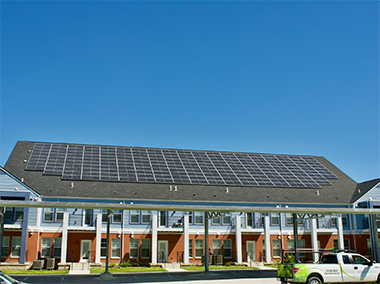
حجم نظام الطاقة الشمسية: كيفية الحساب | Mars Solar

  • Most homeowners underestimate the right solar power system size by 20-30%. Here’s how to calculate the correct capacity for your home without expensive overbuilding or frustrating underperformance.
  • صيغة تحديد الحجم السريع
    The basic rule: Daily Use (kWh) = Monthly Bill (kWh) ÷ 30. Then add 10-20% for winter generation drops and 5-10% for system buffer. Example: A household using 600 kWh per month has 20 kWh of daily use, requiring a 24-28 kWh daily production target for a correctly-sized solar power system.
  • اختر حجم النظام بما يتناسب مع الحمولة
    منزل صغير (1-2 شخص، الحمل الأساسي): 3-5 كيلوواط من الطاقة الشمسية + بطارية سعة 5-10 كيلوواط/ساعة. منزل متوسط (3-4 أشخاص، مكيف هواء وأجهزة منزلية): 8-15 كيلوواط من الطاقة الشمسية + بطارية سعة 15-30 كيلوواط/ساعة. منزل كبير أو خارج الشبكة: 20-30 كيلوواط من الطاقة الشمسية + بطارية بسعة 30-60 كيلوواط ساعة. مرجع للمنشآت خارج الشبكة (الفلبين، نيجيريا): 10-30 كيلوواط من الطاقة الشمسية + بطارية بسعة 15-60 كيلوواط ساعة.
  • Don’t Forget These Factors
    Solar irradiance: 4-5 peak sun hours is typical for most regions—lower in northern Europe, higher in tropical zones. Roof orientation: South-facing (Northern Hemisphere) or north-facing (Southern Hemisphere) is optimal. Shading: Trees, chimneys, and adjacent buildings can reduce output by 10-40%—always audit before sizing. Future load growth: Plan for EV charging, AC upgrades, or home offices that may double consumption within 5 years.
  • لماذا يُعد اختيار المقاس الأكبر أمرًا مغريًّا ولكنه محفوف بالمخاطر
    إن نظام الطاقة الشمسية ذو الحجم المفرط يكلف مبلغًا إضافيًّا يتراوح بين 30 و50% مقدمًا، لكنه نادرًا ما يقدم قيمة متناسبة. يعمل العاكس بكفاءة أقل من المثلى عند الأحمال المنخفضة، وتبقى البطاريات في حالة شحن منخفضة مما يقصر من عمرها الافتراضي، كما أنك تربط رأس المال في سعة غير مستخدمة. يُفضل اختيار الحجم المناسب على الحجم الزائد في 90% من التركيبات السكنية.
  • For a precise system design tailored to your location and consumption pattern, share your monthly electricity bill with our engineers. We’ll model your specific conditions and recommend the right configuration.
    Get a Free System Design → https://sunenergyfactory.com/contact-us/
Mars Solar website faqs list illustration
من الإثنين إلى الجمعة: من الساعة 7:00 صباحاً إلى الساعة 6:00 مساءً
خدمة متاحة على مدار الساعة طوال أيام الأسبوع
اطرح سؤالاً

اشترك في نشرتنا الإخبارية

    تصميم وتصنيع أنظمة الطاقة الشمسية المنزلية والتجارية

    تابعنا

    هل ترغب في الحصول على تصميم مجاني لنظام الطاقة الشمسية لمبناك؟

    اترك رقم هاتفك المحمول/واتساب/بريدك الإلكتروني وسنرد عليك في غضون ساعة!

      احصل على استشارات مجانية، وكتالوجات، ومواصفات المنتجات، وعروض أسعار، والمزيد الآن.

      لغة

      en_usaresفرنسيهولندانقطة

      لغة