
Language
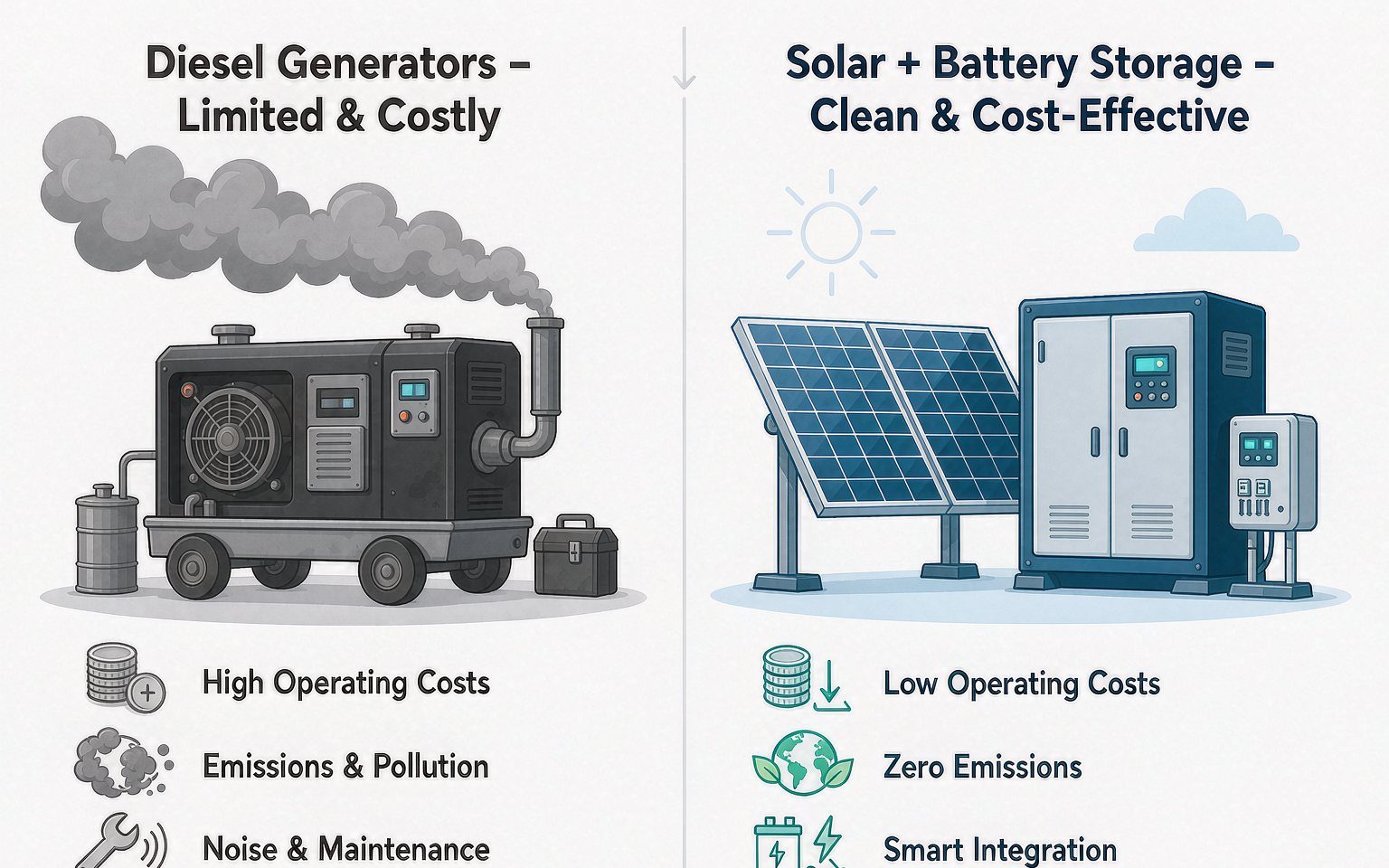
Off-grid solar in Papua New Guinea is not competing against a grid tariff — it is competing against a diesel bill, and against the production you lose when the generator or the grid fails. That distinction changes how a system should be sized and how fast it pays back.
The numbers that frame every PNG project:
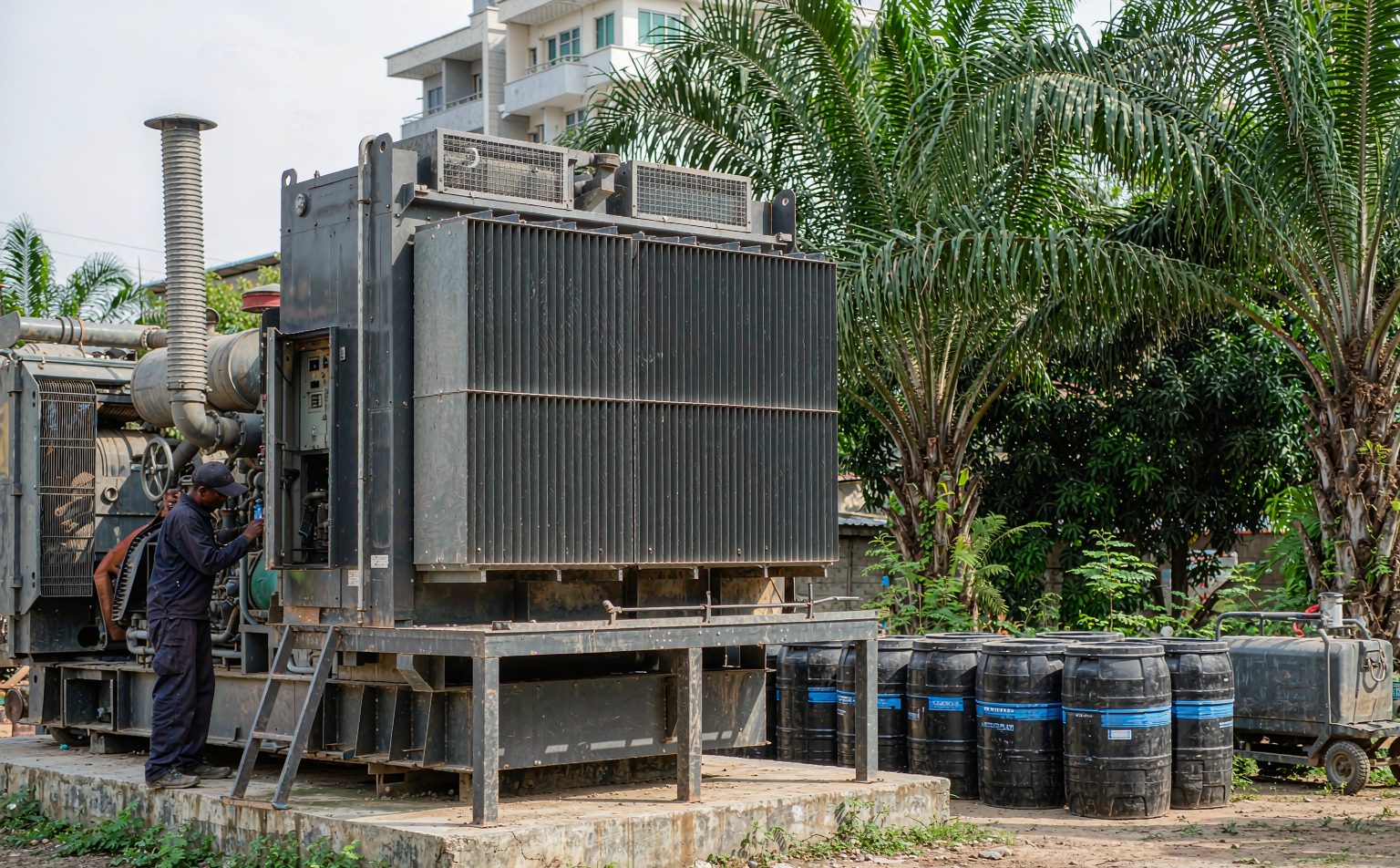
Where the grid is absent — mine sites, plantations, island lodges, remote health facilities — diesel generation typically lands between US$0.30 and US$0.50 per kWh once fuel, transport, servicing and genset replacement are counted. That is the number a solar-plus-storage system has to beat, and it is why PNG off-grid projects routinely pay back faster than grid-tied ones.
1. The 12-year tariff freeze is over. PNG Power's 5% CPI adjustment — the second half of a 10% increase approved by the National Energy Authority in 2024 — took effect from April 2026. With the utility selling at about 87 toea/kWh against a cost of supply near K1.15/kWh, further adjustments are more likely than reversals.
2. Diesel exposure is currency-denominated. Independent power producers supply just over half of PNG's electricity at roughly 71 toea/kWh in 2024 under US-dollar-denominated power purchase agreements. Every kina depreciation raises the cost of the power you buy, independent of your own consumption.
3. Peak demand is growing about 7% a year. Supply is not keeping pace, so the reliability gap widens even where tariff rises are modest.
4. Battery costs have fallen while LFP cycle life has risen. A modern LiFePO4 bank rated for 6,000+ cycles at 90–95% depth of discharge now covers 8–12 hours of typical nighttime commercial load on a single charge, which is what makes diesel-free operation economically defensible rather than aspirational.
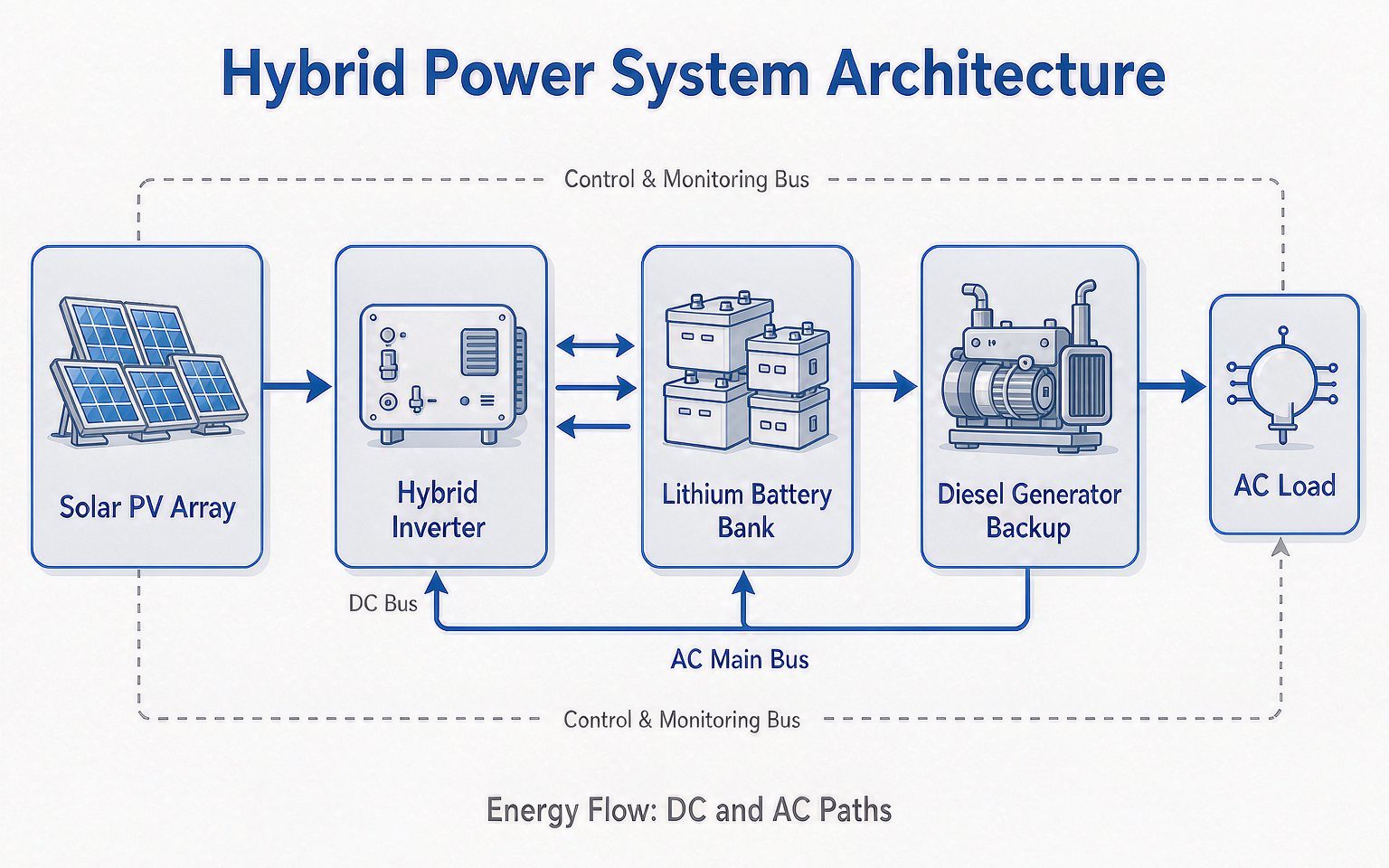
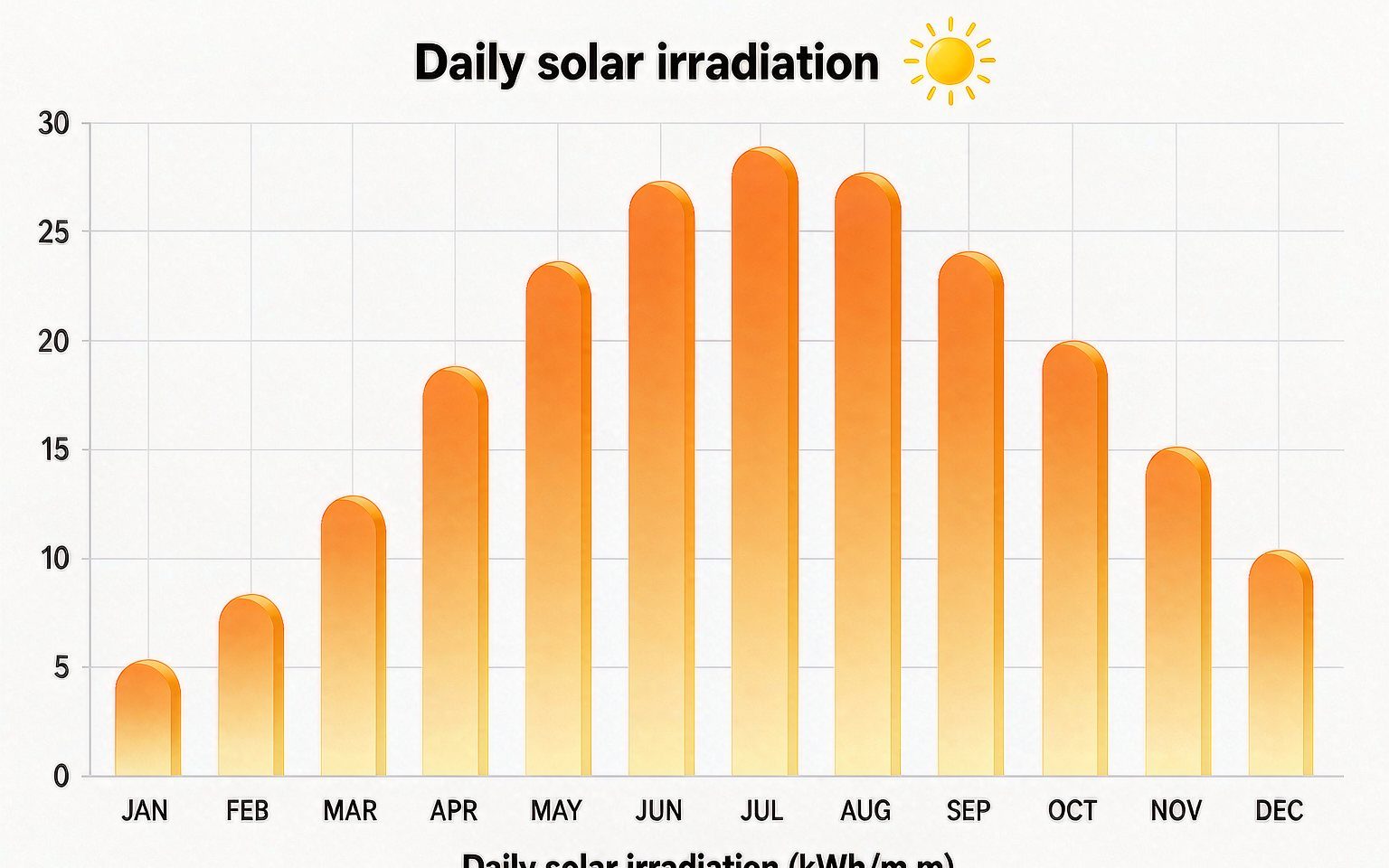
Solar PV generates only when the sun shines. In Papua New Guinea, with strong but weather-variable irradiation, a solar-only system covers daytime load well and leaves you exposed for exactly the hours that matter most.
| Site type | Typical load | Recommended architecture |
| Mine site or exploration camp | 100 kW – 2 MW, continuous | Solar + containerised BESS + existing genset as backup |
| Palm oil plantation or processing | 50–300 kW, daytime-heavy | Solar + rack BESS, daytime self-consumption priority |
| Island lodge or resort | 20–80 kW, evening peak | Solar + BESS sized for evening autonomy, genset retained |
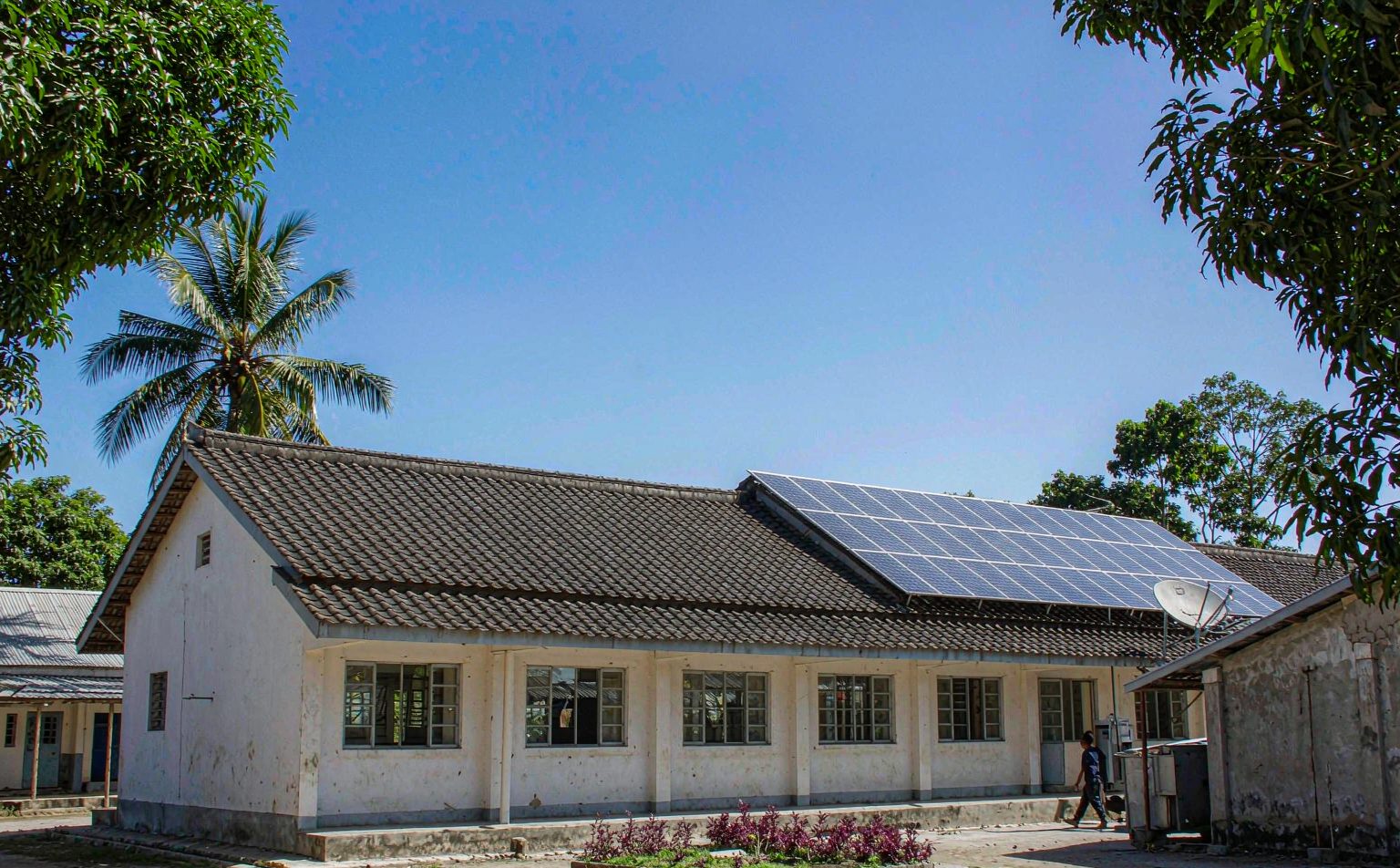
| Rural health facility or school | 5–20 kW, critical load | Solar + BESS, no genset dependency |
| Port Moresby commercial building | 50–500 kW, grid-connected | Hybrid solar + BESS for outage ride-through |
The rule of thumb: size the battery to the hours you cannot afford to lose, not to the hours of sunshine you expect. For most PNG commercial sites that means 4–8 hours of autonomy at the critical load.
All figures below are factory-direct CIF Port Moresby quotations for LFP battery systems with integrated BMS, hybrid inverters and mounting structures. They exclude PNG import duty and GST — see our PNG solar import guide for the duty calculation.
| System size | Equipment cost (CIF) | Approx. PGK | Typical application |
| 30 kW + 60 kWh | US$28,000 – 36,000 | K125,000 – 161,000 | Small lodge, rural facility |
| 50 kW + 100 kWh | US$45,000 – 58,000 | K201,000 – 259,000 | Plantation office, mid-size lodge |
| 100 kW + 215 kWh | US$88,000 – 115,000 | K393,000 – 513,000 | Mine camp, light industrial |
| 200 kW + 430 kWh | US$165,000 – 210,000 | K737,000 – 937,000 | Processing plant, large resort |
| 500 kW + 1 MWh | US$390,000 – 480,000 | K1.74M – 2.14M | Industrial microgrid |
Converted at 1 PGK ≈ US$0.224 (Bank of Papua New Guinea, September 2026). Add import duty, port handling and inland delivery for the landed figure — typically 20–35% on top for a Highlands or island site.
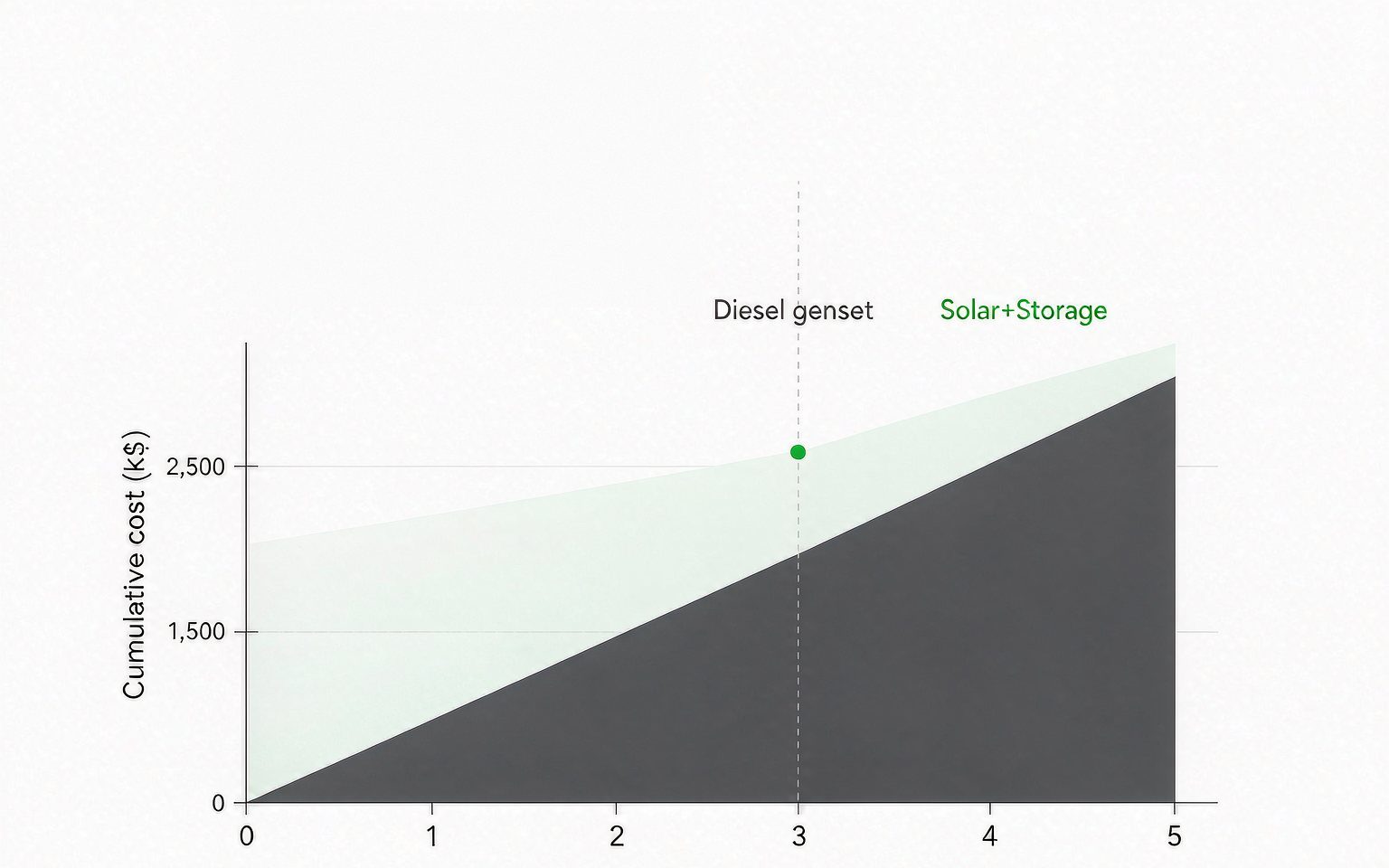
Most buyers compare the upfront cost of a solar-plus-storage system against the purchase price of a diesel genset. That is the wrong comparison. The right one is total cost of ownership over five years, including fuel, transport, servicing and genset replacement.
| Five-year cost line | Diesel only | Solar + BESS (100 kW + 215 kWh) |
| Capital equipment | US$45,000 | US$88,000 – 115,000 |
| Fuel over 5 years | US$520,000 – 780,000 | US$52,000 – 95,000 (backup only) |
| Fuel transport to remote site | US$60,000 – 110,000 | US$6,000 – 12,000 |
| Servicing and consumables | US$48,000 | US$9,000 |
| Genset replacement (yr 4) | US$40,000 | US$0 (existing unit retained) |
| Battery augmentation | US$0 | US$0 within 6,000-cycle design life |
| Five-year total | US$713,000 – 1,023,000 | US$155,000 – 231,000 |
Assumes a 100 kW continuous-equivalent load, diesel at US$0.30–0.45/kWh delivered, and a site with 4–6 peak sun hours. On those assumptions the crossover point lands in year two, and the five-year saving is roughly US$560,000–790,000.
The number that does not appear in the table is lost production. For a mine site or processing plant, each unplanned outage hour usually costs more than a day of diesel — which is why most PNG buyers size for autonomy first and optimise cost second.
Two systems with the same kW and kWh rating can differ by 30% in price. Here is what is inside the number:
1. Battery cell chemistry and grade. LiFePO4 (LFP) is the correct choice for PNG conditions: 6,000+ cycles, thermal stability in high ambient temperatures, and no cobalt supply risk. NMC is cheaper per kWh upfront and degrades faster in heat.
2. Cycle life versus depth of discharge. A bank rated 6,000 cycles at 90% DoD delivers meaningfully more usable energy over its life than one rated at 50% DoD for the same nameplate kWh.
3. Inverter topology. A true hybrid inverter with generator input and seamless transfer costs more than a basic off-grid unit and is the difference between a system that rides through an outage and one that drops the load.
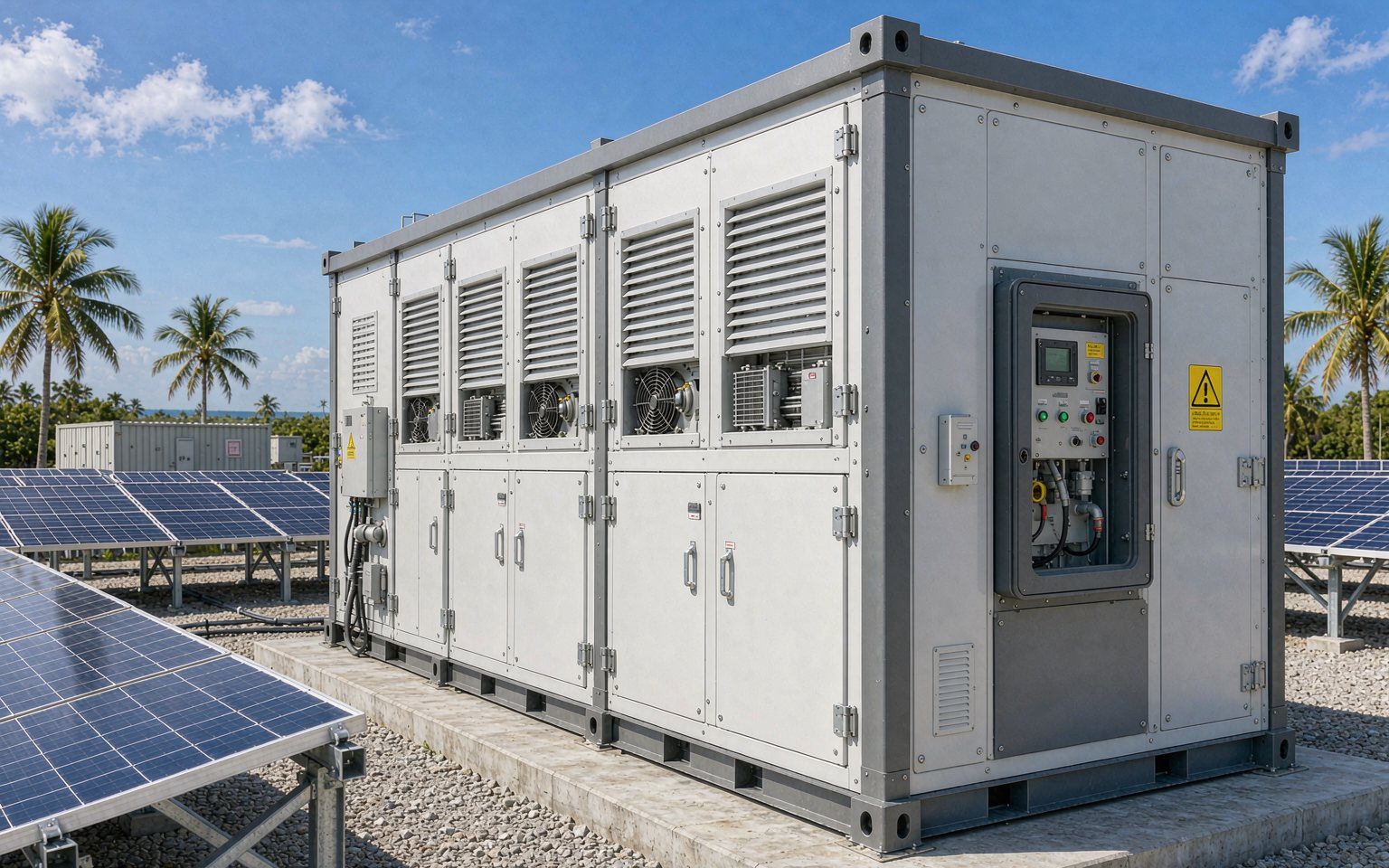
4. Thermal management. In PNG's humid tropics, active cooling and IP-rated enclosures are not optional extras. Battery banks sited in direct equatorial sun without thermal management lose years of service life.
5. Corrosion protection. Coastal and island sites need marine-grade coating on frames, cabinets and fasteners. Salt exposure is the leading cause of premature mounting failure in the Pacific.
6. Cyclone-rated mounting. Structures should be engineered to AS/NZS 1170 wind loading for the region.
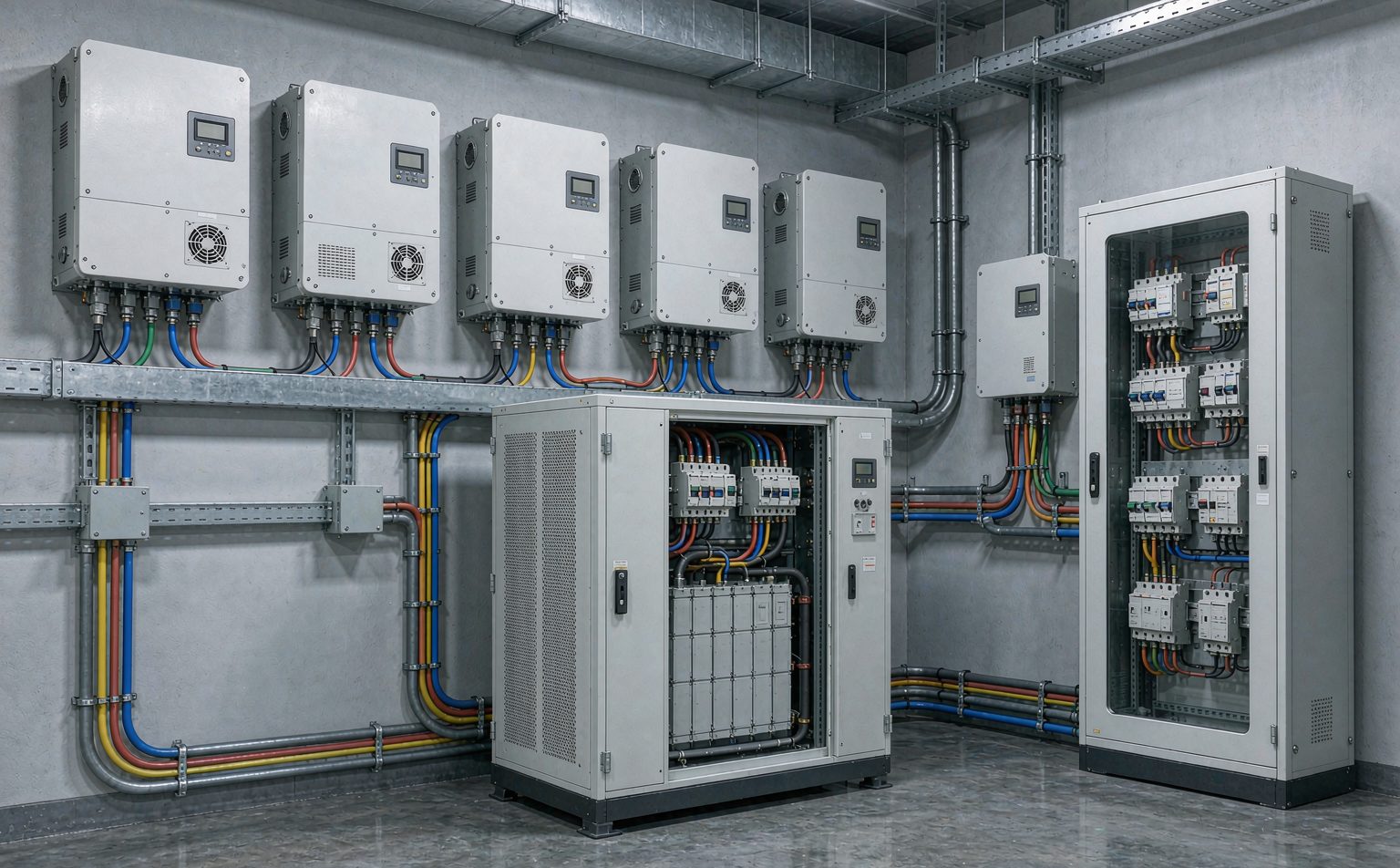
The answer depends on four variables: site access, capacity, deployment speed and budget profile. As a rule of thumb, most off-grid solar Papua New Guinea deployments favour containerised units for speed and rack-mounted units for tight budgets.
| Factor | Rack-mounted BESS | Containerised BESS |
| Capacity range | 30 kWh – 300 kWh | 300 kWh – 3 MWh+ |
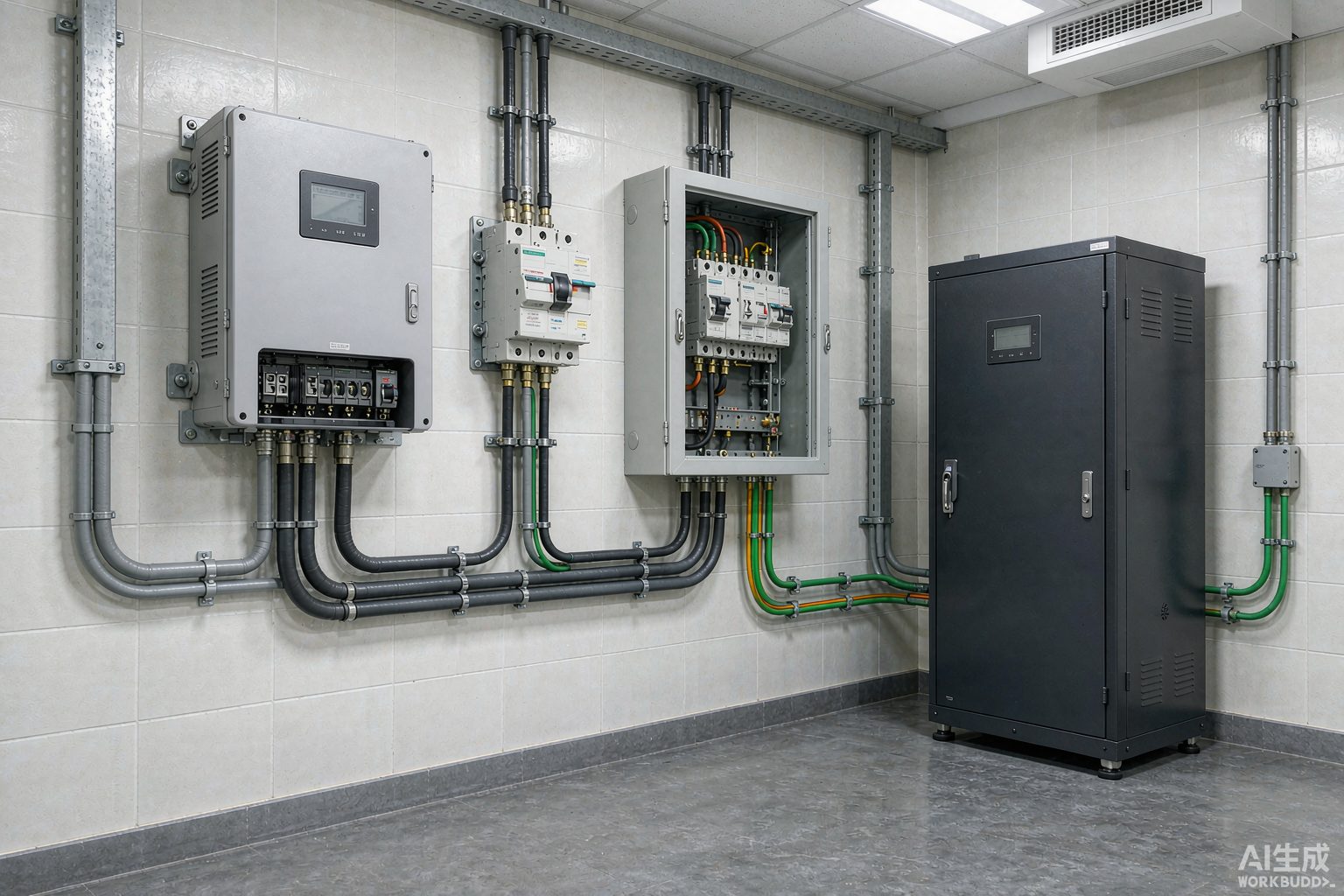
| Site requirement | Indoor, clean, ventilated room | Outdoor concrete pad, arrives pre-commissioned |
| Transport to remote site | Multiple crates, repacking risk on rough roads | Single unit, barge and rough-road ready |
| Deployment time on site | 1–2 weeks | 2–4 days |
| Thermal and IP protection | Depends on the room | Built in, with active cooling |
| Cost per kWh | Lower | Higher, offset by install savings |
Practical guidance for PNG: for a Highlands mine site or an island lodge where the last mile is barge plus unsealed road, the containerised option usually wins despite the higher equipment cost — because repacking a rack system at a remote site is where equipment gets damaged and schedules slip. For a Port Moresby commercial building with a suitable plant room, rack-mounted is the better value.
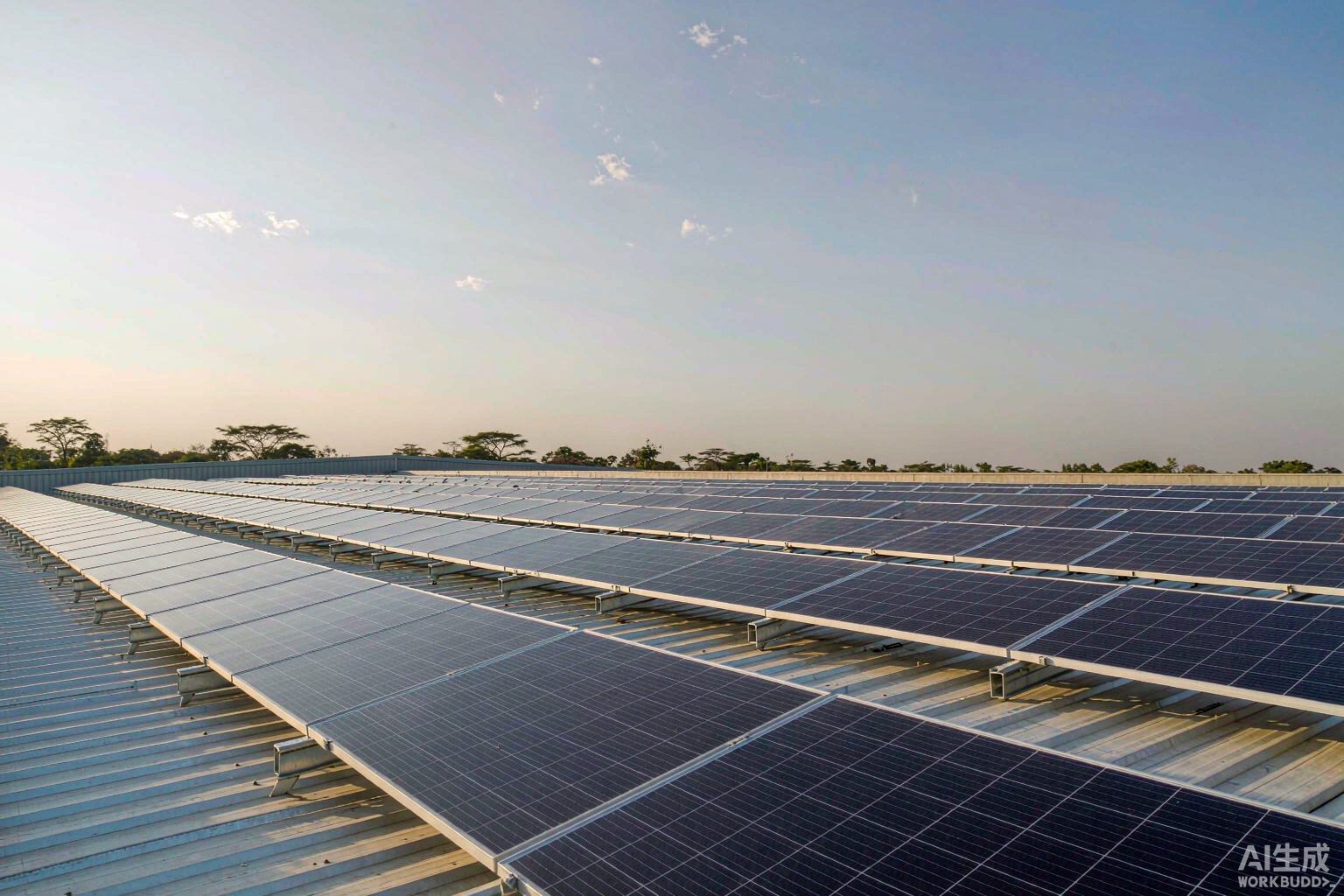
Field data is more useful than theory. Mars Solar has delivered comparable off-grid and weak-grid systems across emerging markets:
Each shipped with the certification pack (IEC 61215 / 61730 for modules, IEC 62619 and UN38.3 for batteries) and dangerous-goods documentation prepared at origin.
Consider an island lodge with a 40 kW peak load, running 14 hours of meaningful demand per day, currently served by a single diesel genset burning 9 litres per hour.
That is the pattern for most PNG off-grid projects: the array is sized to the daytime load plus battery charging, the battery is sized to the hours you cannot lose, and the genset stays — just as insurance rather than as the primary source.
Uncertified equipment is held at customs, rejected by insurers, or fails at commissioning. For a PNG solar-plus-storage project, the minimum pack is:
Ask for the test report number and the issuing laboratory, not just a certificate image. You can review how we build and support these systems on our about page.
How much does off-grid solar cost in Papua New Guinea? Factory-direct CIF Port Moresby, a 100 kW + 215 kWh system runs US$88,000–115,000 (roughly K393,000–513,000 at 1 PGK ≈ US$0.224). Add 20–35% for duty, port handling and inland delivery to reach the landed figure.
How long is the payback period against diesel? For a 100 kW commercial site with delivered diesel at US$0.30–0.45/kWh, the five-year crossover lands in year two, with total savings of roughly US$560,000–790,000. Sites running gensets more than 10 hours a day pay back faster.
Can solar completely replace a diesel generator? In most PNG designs, solar plus storage covers 80–90% of annual generation and the genset is retained for extended overcast periods and peak events. Full diesel elimination is achievable but requires oversizing the array and battery, which extends payback.
Do solar panels work in PNG's tropical climate? Yes, but specification matters. High humidity, salt exposure and intense UV require marine-grade mounting, IP-rated enclosures, active thermal management for batteries, and cyclone-rated structures to AS/NZS 1170.
What size battery do I need? Size to the hours you cannot afford to lose, not to sunshine hours. Most PNG commercial sites specify 4–8 hours of autonomy at critical load, at 90% depth of discharge on LFP.
How long does shipping and installation take? Sea freight to Port Moresby typically runs three to six weeks from China, clearance three to seven working days with a complete documentation pack, and installation one to two weeks depending on site access.
Factory-direct CIF Port Moresby, a 100 kW plus 215 kWh system runs USD 88,000–115,000, roughly K393,000–513,000 at 1 PGK ≈ USD 0.224. Add 20–35% for duty, port handling and inland delivery to a Highlands or island site. That landed figure, not the ex-works price, is what an off-grid solar Papua New Guinea budget should be built on.
A diesel bill. Where the grid is absent — mine sites, plantations, island lodges, remote clinics — diesel generation lands between USD 0.30 and USD 0.50 per kWh once fuel, transport, servicing and genset replacement are counted. That is the benchmark an off-grid solar Papua New Guinea project has to beat, and it is why PNG off-grid paybacks are faster than grid-tied ones elsewhere.
For a 100 kW site with delivered diesel at USD 0.30–0.45 per kWh, the five-year crossover lands in year two, with total savings of roughly USD 560,000–790,000 across the period. An island lodge running a genset more than ten hours a day recovers the off-grid solar Papua New Guinea capital in under thirty months on fuel and servicing alone.
Four to eight hours at the critical load for most commercial sites, at 90% depth of discharge on LFP. The rule is to size the battery to the hours you cannot afford to lose, not to the hours of sunshine you expect. An off-grid solar Papua New Guinea design sized on average daily consumption rather than on the night block will still be short on the fourth consecutive overcast day.
Yes, but specification matters more than the resource. PNG offers roughly 2,000–3,000 sunshine hours a year yielding 1,200–1,600 kWh per kWp, which is a good resource. What an off-grid solar Papua New Guinea system has to survive is humidity, salt and intense UV, so marine-grade mounting, IP-rated enclosures, active battery thermal management and cyclone-rated structures are not optional.
Modules to IEC 61215 and IEC 61730, LFP batteries to IEC 62619 plus UN 38.3 for transport, hybrid inverters to IEC 62109 and IEC 62477, and complete BESS integration to the IEC 62933 series. Mounting should be engineered to AS/NZS 1170 wind loading for the cyclone region. An off-grid solar Papua New Guinea shipment also needs a dangerous goods declaration, SDS and Class 9 labelling.
In most designs, solar plus storage covers 80–90% of annual generation and the genset is retained for extended overcast periods and peak events. A worked PNG lodge case saw diesel consumption fall by roughly 85% and genset run-hours drop from about 5,000 to under 800 a year. Full elimination of the generator is achievable in an off-grid solar Papua New Guinea design, but it requires deliberate oversizing.
A worked island lodge example: a 40 kW peak load over fourteen hours a day, served by a 90 kWp array producing about 125,000 kWh a year, a 165 kWh nameplate LFP bank for six hours of evening autonomy at 90% depth of discharge, and a 100 kW hybrid inverter, with the existing genset kept in reserve. That is the shape most off-grid solar Papua New Guinea commercial projects take.
No, and that is the point. Much of PNG has no usable distribution network — PNG Power generated 1,585 GWh in 2025 and lost 26.4% to network losses, theft and metering failures, while national installed solar capacity remains around 4 MW. Where a mine, lodge or clinic sits beyond that network, off-grid solar Papua New Guinea is not an alternative to the grid but the only reliable supply.
They improve them, but indirectly. PNG Power's 5% CPI adjustment took effect in April 2026, ending a twelve-year tariff freeze, with the industrial tariff at 69.83 toea per kWh excluding GST. That makes even a connected site more exposed to price, and it strengthens the off-grid solar Papua New Guinea case for any site currently paying diesel rates.
Six things: battery cell chemistry and grade, cycle life at the stated depth of discharge, inverter topology with generator input and seamless transfer, active thermal management, marine-grade corrosion protection, and cyclone-rated mounting. Two systems with the same kW and kWh rating can differ by 30% in price — and an off-grid solar Papua New Guinea quote that does not name those six items is not comparable.
Rack-mounted for indoor or shaded plant rooms up to roughly 500 kWh, containerised where the site is remote, hot or short of a secure building. A containerised unit arrives wired, cooled and fire-suppressed, which matters on a PNG Highlands site where skilled labour is scarce. The off-grid solar Papua New Guinea decision usually follows the logistics, not the price per kWh.
Six to ten weeks on site for a commercial build once equipment has landed, including civil works, mounting, battery room preparation and commissioning. Pre-assembly at the factory is what compresses the programme: the more of the off-grid solar Papua New Guinea system that is wired and tested before shipping, the shorter the unproductive site time in a remote location.
Demand is growing about 7% a year while supply is not keeping pace, so the reliability gap widens even where tariff rises are modest. Add falling battery costs and LFP cycle life above 6,000 cycles, and off-grid solar Papua New Guinea moves from a mining and island-niche technology toward the default answer for any site the network cannot reach.
Materially, over any horizon you would finance. Diesel on a PNG mine, plantation or lodge site lands at USD 0.30–0.50 per kWh delivered, against a five-year saving of USD 560,000–790,000 on a 100 kW off-grid solar Papua New Guinea build. The off-grid solar Papua New Guinea case rests on that levelised cost of electricity comparison, not on the equipment invoice.
From logged load, in two blocks. Generation is sized on daytime consumption and the off-grid solar Papua New Guinea battery is sized on the night block plus surge — four to eight hours at critical load for most PNG sites. Sizing an off-grid solar Papua New Guinea design on the array rating instead of the night load is the commonest error we see.
It survives on design, not luck. Mounting is engineered to AS/NZS 1170 wind loading for the cyclone region, battery rooms sit above flood level, and the off-grid solar Papua New Guinea array carries 15–20% generation headroom so consecutive overcast days do not pull the bank below the critical load. That headroom is what an off-grid solar Papua New Guinea budget must include.
Yes, if the AC architecture allows it. Rack-mounted LFP cabinets and a bidirectional solar inverter let you add storage to an off-grid solar Papua New Guinea site without replacing the conversion equipment, and spare MPPT capacity accepts extra strings. Decide that expansion path during the first off-grid solar Papua New Guinea design or pay for it later.
The difference between a useful quote and a misleading one is the information you provide before asking. Send us:
Three mistakes to avoid: quoting on total consumption rather than peak demand; sizing the battery to sunshine hours rather than autonomy; and comparing against genset purchase price instead of five-year total cost of ownership.
Mars Solar is a China-based OEM/ODM manufacturer of solar PV and LFP battery storage systems, shipping factory-direct to Papua New Guinea with certification and dangerous-goods documentation prepared at origin. We size to your autonomy requirement, not to a catalogue number.
Send your load profile, genset details and site location, and our engineering team will return a sized system, a duty-inclusive landed cost estimate and a payback calculation against your current diesel spend. Request a quote here.
Continue building your solar and storage knowledge:
 English English
  Arabic
 Spanish
 French
 Dutch
Dutch
 Portuguese