
Langue
An off-grid solar Philippines system is a power plant with no connection to the distribution utility at all: a PV array, a battery bank, a grid-forming inverter, and a diesel generator that runs only as insurance. In a country of more than 7,600 islands, that description fits a large slice of the addressable market — island resorts, cold storage, water pumping, mining camps and community microgrids where the feeder simply never arrives.
This guide covers what an off-grid solar Philippines installation costs in 2026, how to size PV and battery against a diesel baseline rather than a grid tariff, what to specify for typhoon and salt-air conditions, and how to land equipment on an island without losing a month to logistics. Every figure below is an indicative factory-direct range: confirm it with your supplier and your own load data before you commit capital.
Tell us the site, the daily energy you need and whether a generator can stay as backup — we will return a sizing sheet and an indicative price within 24 hours.
Get an off-grid quotation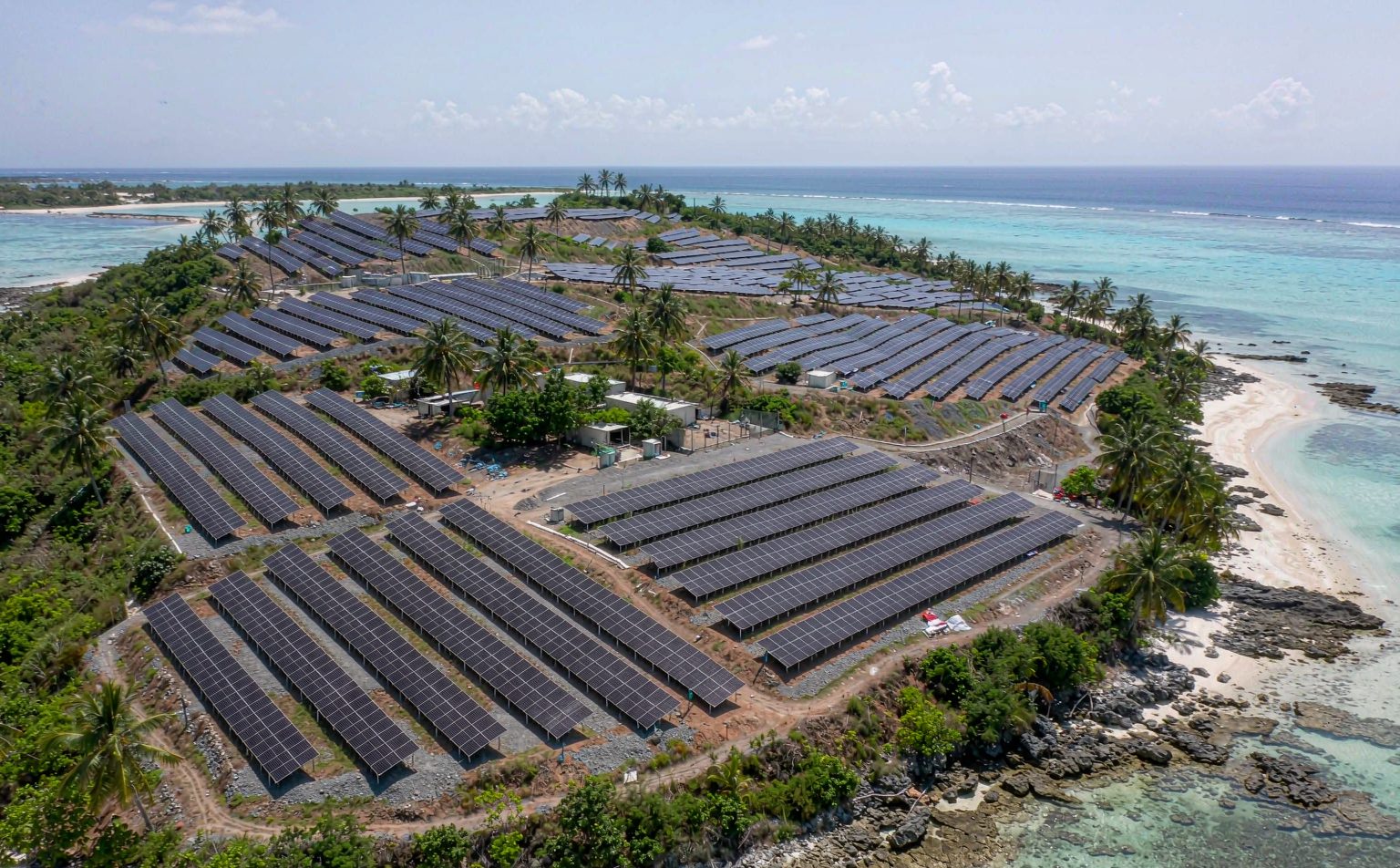
Three configurations get quoted in the Philippines and they are not interchangeable. An on-grid system exports nothing but saves daytime consumption; a hybrid system keeps the utility as the primary source and uses the battery for peak shaving and backup; an off-grid system has no utility at all and must cover every kWh itself, including the worst week of the rainy season.
| Configuration | Utility connection | When it fits | What it must handle |
|---|---|---|---|
| On-grid | Full export and import | Metro Manila and urban commercial sites | Daytime self-consumption only |
| Hybrid | Utility primary, battery backup | Cities with brownouts, hotels, cold storage | Peak demand and outage ride-through |
| Off-grid | Aucun | Islands, remote resorts, mine camps, feeder-end sites | Worst-case autonomy for an off-grid solar Philippines site |
In practice most buyers who ask for an off-grid solar Philippines quote are on a provincial electric cooperative feeder that is either absent, severely under-frequency, or billed at the top of the national range. Provincial cooperatives in diesel-dependent areas can charge ₱14 to ₱16 per kWh, and for those sites the comparison is not solar against the grid at all. It is solar against a genset burning diesel delivered by boat.
Not sure whether your site should be hybrid or fully off-grid? Send us one month of bills or a genset log and we will tell you which configuration the numbers support.
Ask about configuration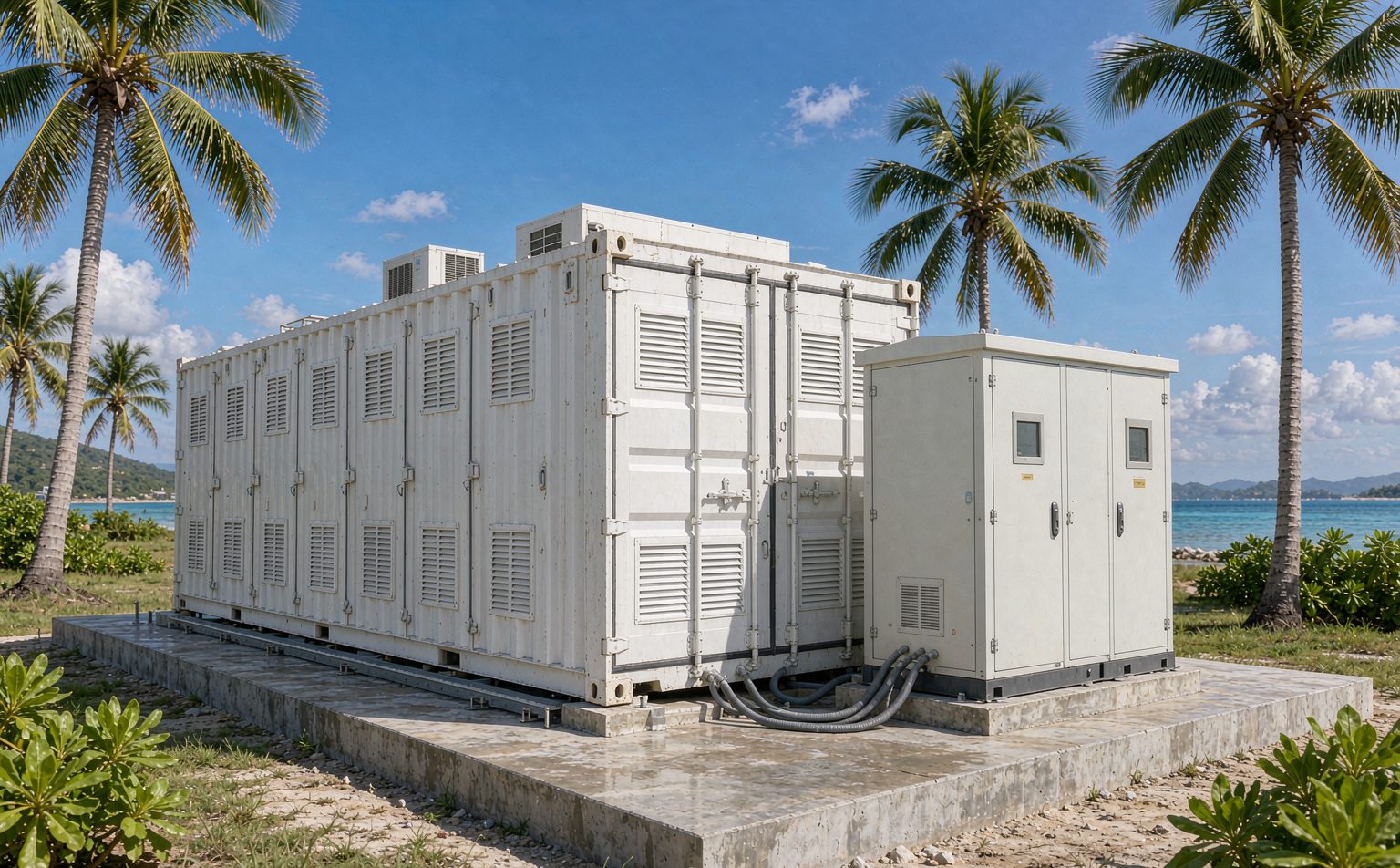
A diesel generator that looks cheap on the equipment list is expensive per kWh. Add fuel delivered to an island, lubricants, filters, a maintenance visit, and the fact that fuel consumption per kWh rises sharply when the genset runs lightly loaded at night, and the delivered cost of diesel power typically lands several times above the national grid tariff. That gap is the entire business case for an off-grid solar Philippines plant.
| Cost item | What it does to the comparison | Why it matters on an island |
|---|---|---|
| Fuel logistics | Adds a boat leg and a storage tank | A missed barge means a blackout, not a delay |
| Light-load running | Raises litres per kWh at night | Sizing battery to cover the night block cuts this |
| Maintenance | Oil, filters, belts, technician visit | Every visit is a boat ticket and a lost day |
| Runtime hours | Engine life is measured in hours | Solar plus storage cuts run hours, not just litres |
| Carbon and noise | Disqualifies some resort and eco-resort buyers | Guests book silence, not a genset at 02:00 |
The correct way to compare is annual cost of energy, not capital cost. Build a simple model for an off-grid solar Philippines site: daily energy demand in kWh, divided into a day block and a night block; the diesel price per litre at the site; the genset burn rate at the load it will actually see; plus a maintenance allowance per run hour. Then size the off-grid solar Philippines system to erase as much of the fuel line as the capital budget allows.
Sizing an off-grid solar Philippines system starts from metered load data, not from a rule of thumb. If the site already runs on a genset, the fuel log is your load profile. Work through four steps in order, because each one constrains the next.
1. Build the daily energy block. Total consumption per day in kWh, then split it into daylight hours and the evening-to-morning block. The night block is what the battery has to carry, and it is the single number that decides the project cost.
2. Size the battery for autonomy, then for cycles. Decide how many consecutive cloudy days the site must survive without the generator. One day of autonomy is the usual starting assumption for a hybrid off-grid solar Philippines installation; three days is common for a clinic, a telecom tower or a water utility. LFP is normally cycled to 80–90% depth of discharge with round-trip efficiency around 88–92%, so divide usable energy need by both figures.
3. Size the array to refill the battery, not just to run the load. A PV array that exactly matches daily consumption will never refill a battery on an off-grid solar Philippines site that was drawn down through a cloudy spell. Allow for the worst month, panel derating in heat, and soiling in a salt-air environment.
4. Check the inverter against the peak, not the average. Motor starts — chillers, pumps, compressors — set the inverter and battery power rating on an off-grid solar Philippines installation. A grid-forming inverter must hold voltage and frequency on its own and ride through the surge.
| Site type | Typical daily energy | Battery for 1 day autonomy | Array guideline |
|---|---|---|---|
| Island resort, 20 rooms | 180–260 kWh | 200–280 kWh LFP | 60–90 kWp |
| Cold storage, small | 400–600 kWh | 450–650 kWh LFP | 140–200 kWp |
| Water pumping station | 120–200 kWh | 150–250 kWh LFP | 45–80 kWp |
| Community microgrid, 120 homes | 500–800 kWh | 600–900 kWh LFP | 180–280 kWp |
Numbers in that table are planning placeholders for off-grid solar Philippines projects only. The right answer comes from your own meter or fuel log, and it usually differs from any template by 20% or more.
Send us your daily kWh, your night block and the longest cloudy spell you can accept without the generator, and we will return a sizing sheet with an indicative off-grid solar Philippines price.
Request a sizing sheet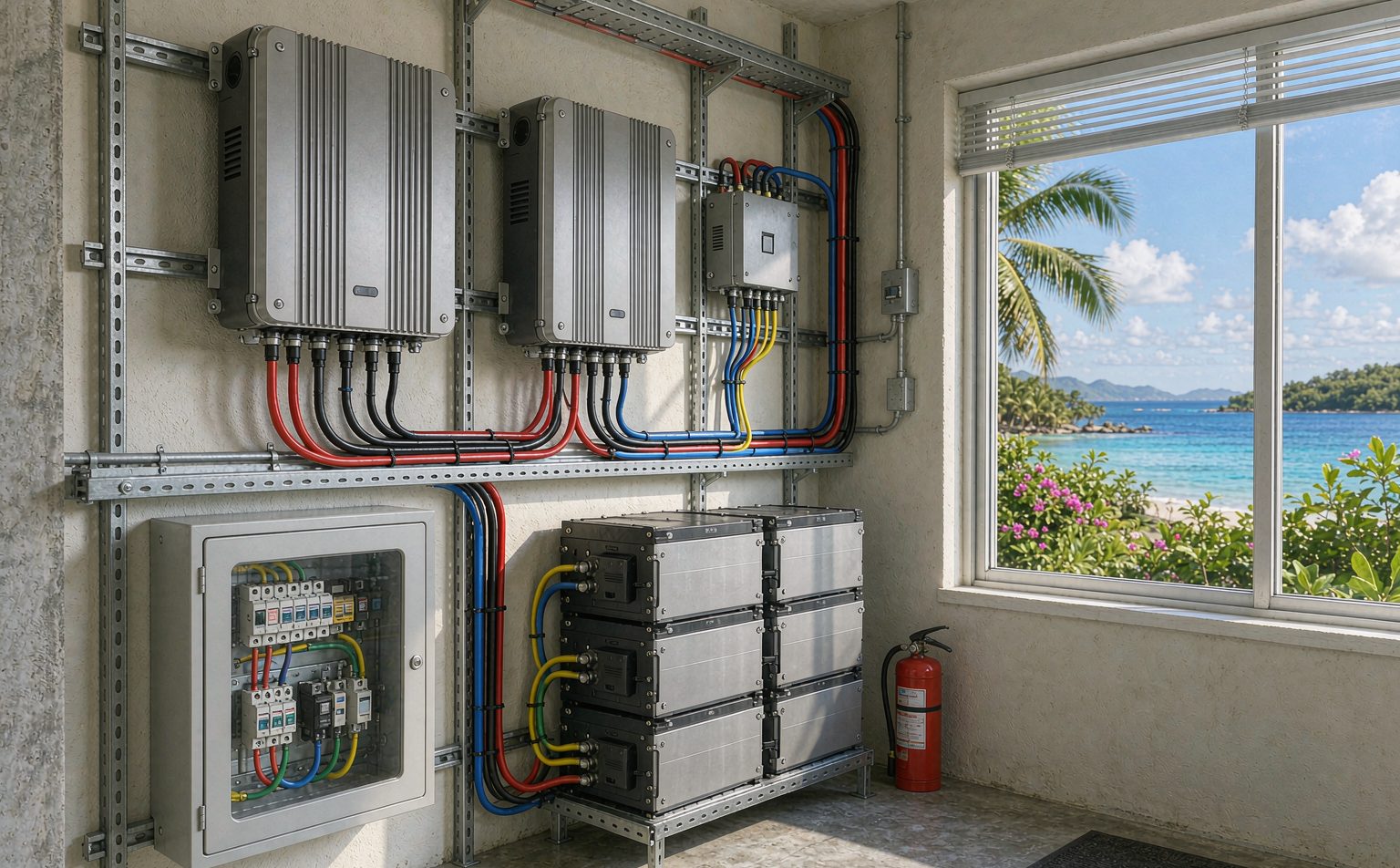
Factory-direct pricing for 2026 sits at the levels below. Storage dominates the total: an off-grid solar Philippines system carries a much larger battery-to-array ratio than a grid-tied one, which is why an off-grid solar Philippines quote looks expensive next to a rooftop price per kWp.
| Composant | Indicative 2026 price | Notes |
|---|---|---|
| LFP battery block, rack-mounted | US$180–260 / kWh | Includes BMS; excludes PCS |
| Containerised BESS, 500 kWh–2 MWh | US$210–300 / kWh | Includes thermal management and fire suppression |
| Grid-forming inverter / PCS | US$90–150 / kW | Must hold voltage and frequency islanded |
| Solar array, modules and mounting | US$280–420 / kWp | Ground mount, typhoon-rated structure |
| Complete off-grid system, ex-works | US$700–1,100 / kWp | Depends on storage-to-solar ratio |
| Turnkey installed in the Philippines | ₱33,500–₱38,000 / kW | Grid-tied reference from our 2026 price guide |
Storage-to-solar ratio is the lever. On an off-grid solar Philippines site that only wants to stop running the genset at night may need 2 kWh of battery per kWp of array. A site that wants the generator to become a genuine emergency unit — typical for a resort that cannot afford noise or a cold store that cannot afford a temperature excursion — usually lands at 4 kWh per kWp or more.
Already importing for an off-grid solar Philippines project? Equipment consigned under RA 9513 and the CREATE MORE Act enters at 0% duty and 0% VAT for DOE-registered renewable energy developers, but a BPS mandatory certification regulation that passed on 30 June 2026 now covers modules, inverters, charge controllers, PV cable and battery storage, with a transition window closing in July 2027. Importers without PS or ICC certification are already being pulled into the Red Lane at Manila, Batangas and Cebu. Our Philippines solar import guide walks through the paperwork.
Ask for a price broken down by block — modules, mounting, PCS, battery, fire suppression, freight — so you can compare suppliers line by line instead of on a lump sum.
Request block pricingThe Philippines is one of the hardest environments in the world for a solar plant, and an off-grid solar Philippines site has no grid to fall back on when a component fails. Specify for the environment first and the price second.
Wind. Mounting must be designed to the local wind zone with the correct terrain and height multipliers, not to a generic catalogue load. On exposed islands, uplift on the array edge governs the design, and the ballast or foundation detail matters more than the module clamp.
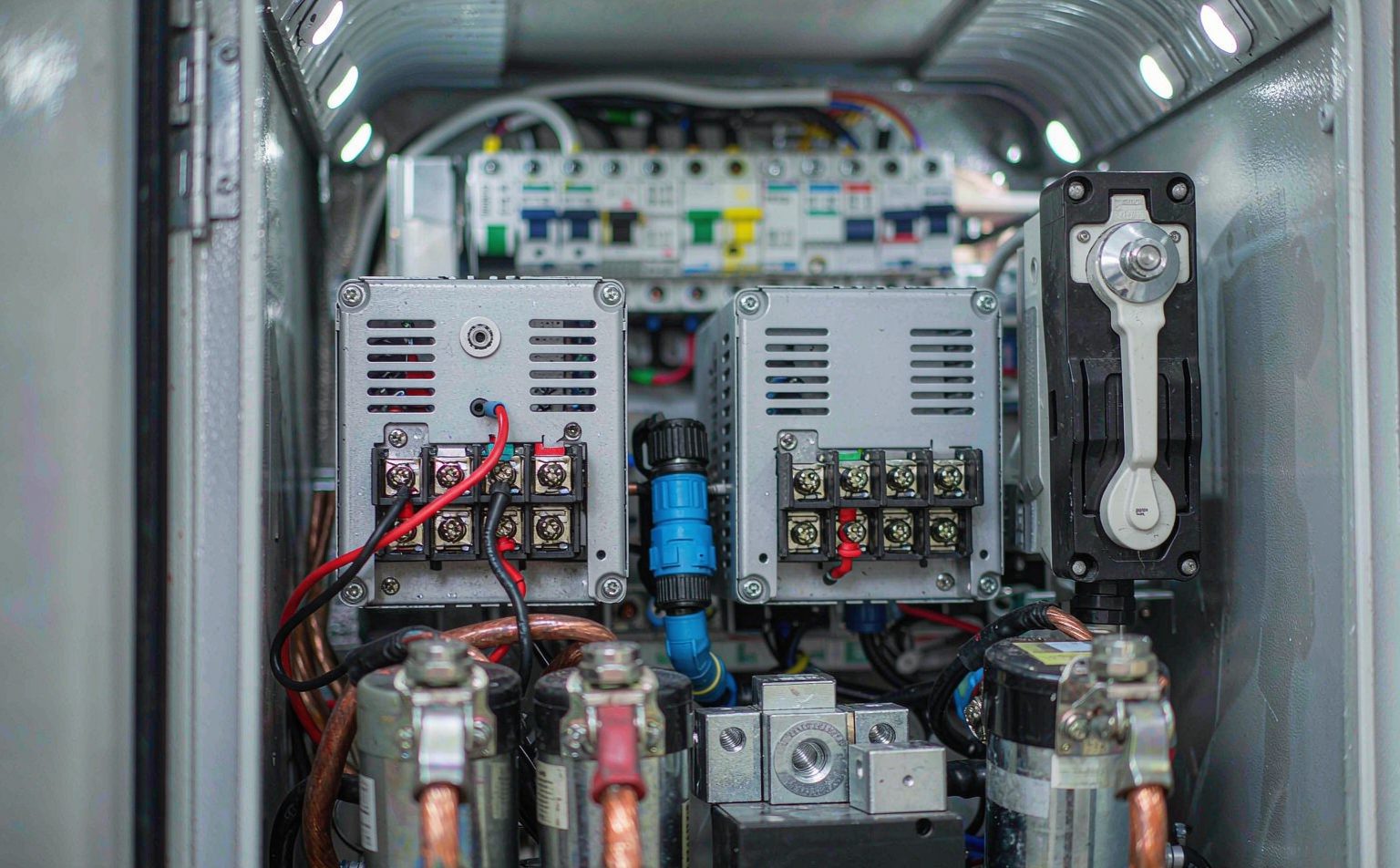
Salt and humidity. Coastal sites need corrosion class C5 or equivalent hardware, marine-grade fasteners, and enclosures rated IP65 or better with correct gasket materials. Cable entry from below, sealed glands, and stainless fixings are not optional extras.
Heat derating. Module output falls as cell temperature rises, and an off-grid array has no spare capacity to lose. Size with realistic temperature coefficients and keep clearance under the array for airflow rather than laying panels flat to the roof.
Lightning. Island sites need proper earthing, surge protection on the DC and AC sides and, where the array is far from the plant room, an equipotential bonding design that a surveyor will accept. An off-grid solar Philippines installation that loses an inverter to a strike has lost weeks, not hours.
Serviceability. On an off-grid solar Philippines installation, insist on component-level spares and published fault codes. On an island, a board that must be shipped back to Manila for diagnosis is a two-month outage.
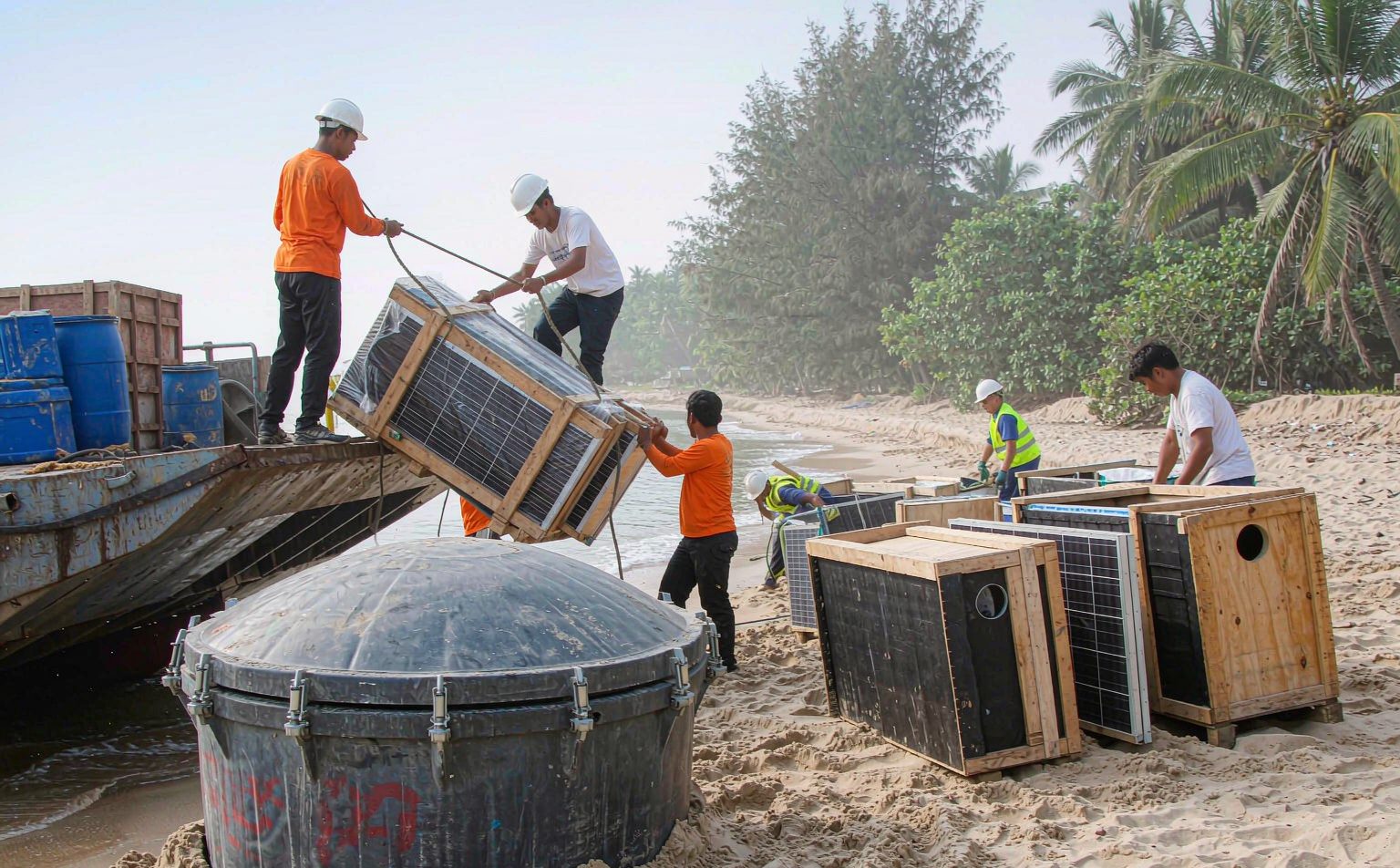
On an off-grid solar Philippines project, the freight plan is as important as the electrical design. Modules and battery cabinets travel by container to Manila, Batangas or Cebu, then by barge or ro-ro to the island, then often by truck or boat to the site itself. Every leg adds a handling event and a chance to crack a module or drop a battery rack.
Plan the following for an off-grid solar Philippines project before you sign the supply contract:
Pack the battery separately and label it. Lithium cells travel under dangerous-goods rules. A compliant packing declaration, UN 38.3 test summaries and correct marking prevent the shipment from sitting on a pier while paperwork is sorted.
Match crate sizes to the last leg. If the final move is a small banca or a narrow track, a 40-foot container cannot be broken down at the beach. Ask the supplier to pack to the real handling limit, not the standard pallet.
Do not ship in the middle of the rainy season if you can avoid it. Civil works, trenching and crane lifts all slow down, and the commissioning window is the one week when the site needs a stable sky.
Bring commissioning forward. Ship the inverter and control gear in the first container so the plant room and earthing can be built while the array structure goes up. Sequence the battery last, charge it on arrival, and hold the site acceptance test until the EMS has logged a full charge and discharge cycle.
Train a local operator. The best guarantee of uptime on an off-grid solar Philippines site is a person on the island who can read the EMS, reset a fault and tell you what happened. Budget for it in the contract, not as an afterthought.
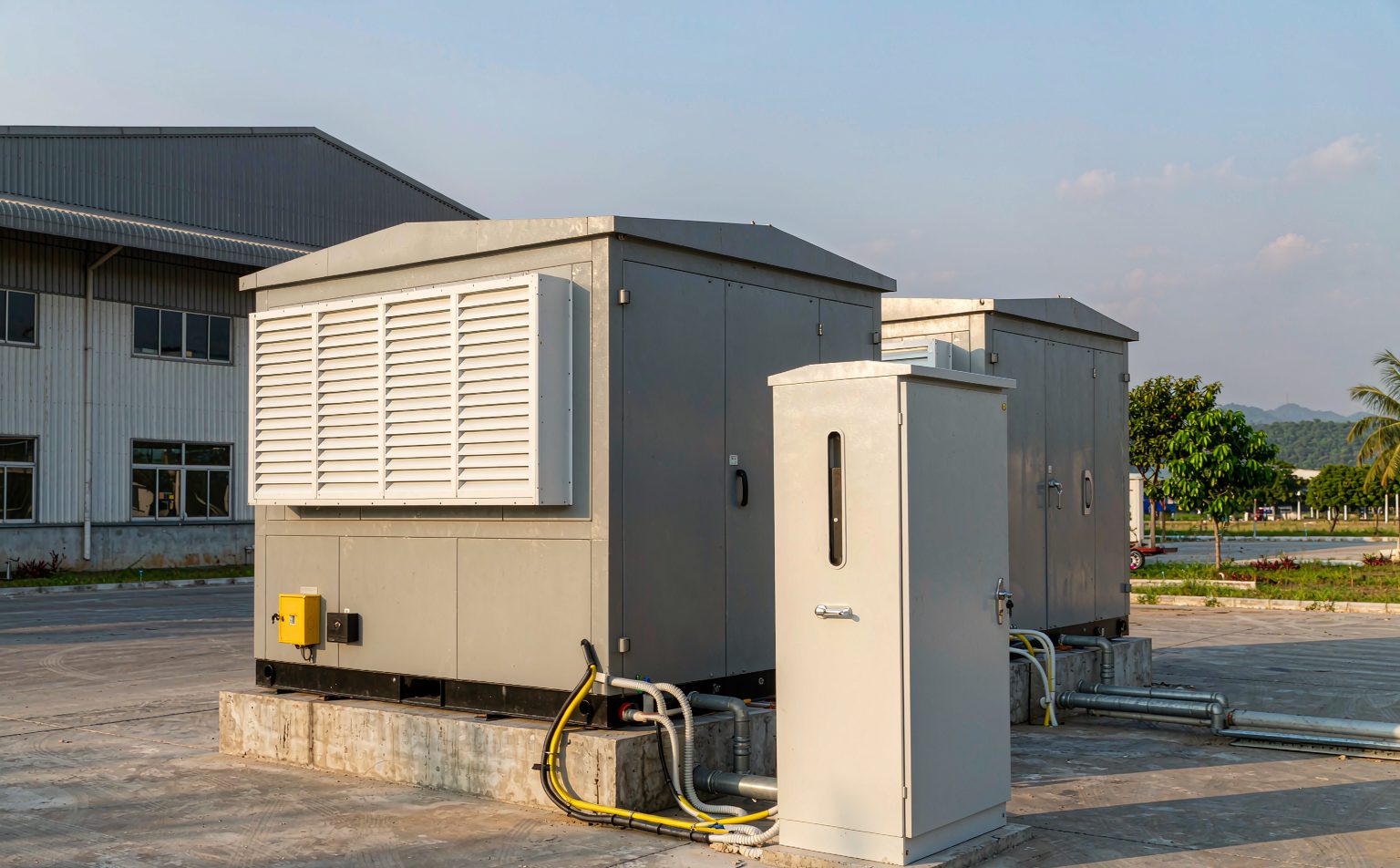
Off-grid duty is harsher than peak-shaving duty. The battery cycles nearly every day, sits at a high state of charge in tropical heat, and may be asked to hold the site up for a cloudy week. Chemistry and thermal design matter more here than in any hybrid application.
| Option | Fit for off-grid solar Philippines | Cautions |
|---|---|---|
| LFP, rack or container | The default for new island systems | Needs thermal management; verify run-hour guarantee in writing |
| Lead-acid, flooded | Legacy and lowest upfront cost | Short cycle life in tropical heat; heavier freight; venting required |
| LFP with generator support | Best cost outcome on most islands | Sizing must cover worst-case autonomy, not average |
| Flow or sodium chemistry | Watch-list, not mainstream in 2026 | Limited local service network; verify spares before committing |
Ask every supplier quoting an off-grid solar Philippines project for three numbers in writing: cycle life at the depth of discharge you will actually use, the capacity guarantee at end of warranty, and the round-trip efficiency at the ambient temperature of the plant room. A quote that gives only a nameplate kWh figure tells you nothing about an off-grid solar Philippines project that has to run for fifteen years.
Take a 20-room island resort in the Visayas. Rooms carry air conditioning, the kitchen runs on electricity, and the water pump is the largest single load. Daily consumption averages 220 kWh, of which 150 kWh falls between 18:00 and 07:00, when the resort previously ran a 100 kVA genset.
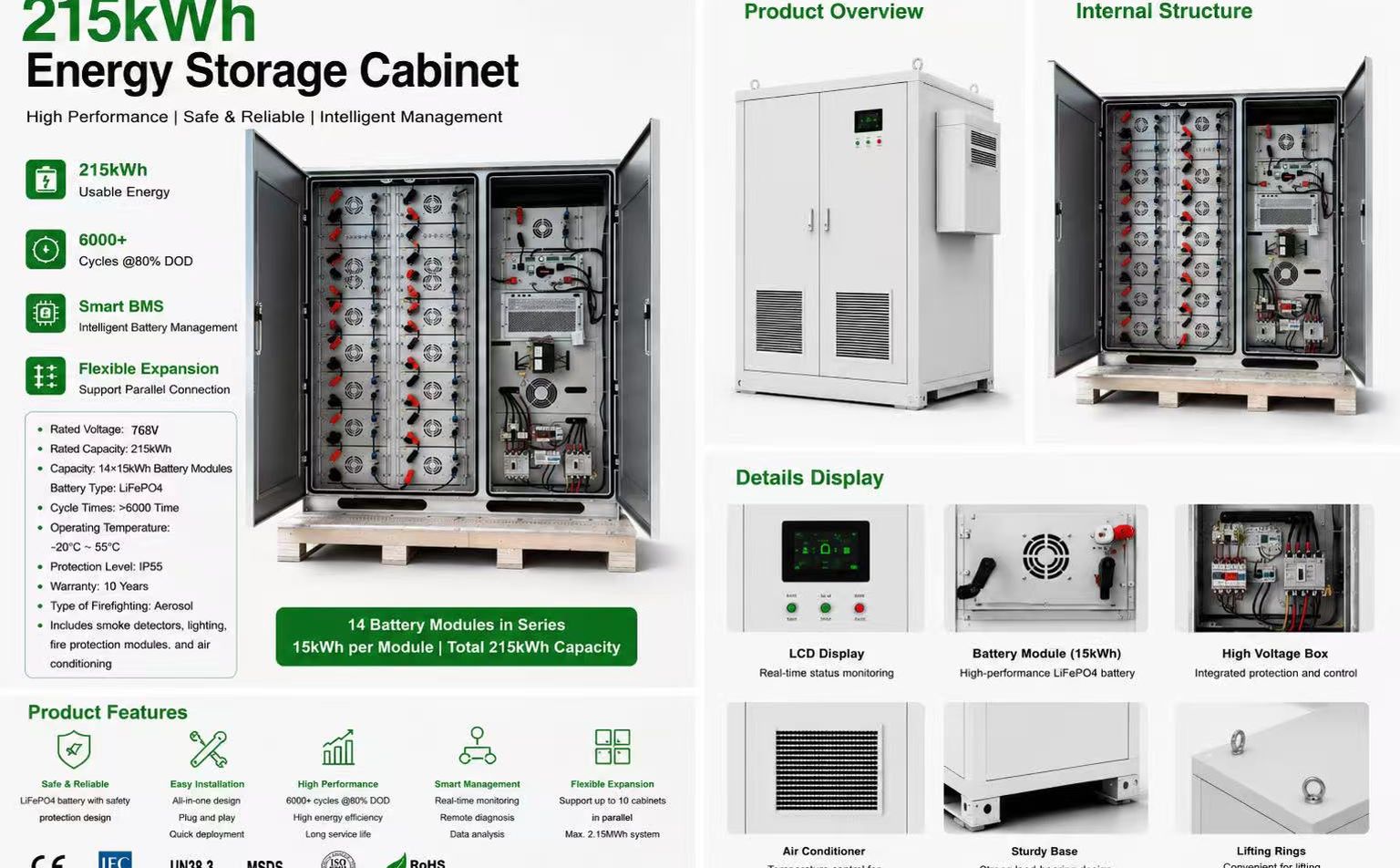
Battery sizing: 150 kWh night block, one day of autonomy, 85% depth of discharge and 90% round-trip efficiency gives roughly 196 kWh of nameplate LFP, rounded to a 200 kWh cabinet. Array sizing on an off-grid solar Philippines project: 220 kWh daily consumption plus losses and a poor-weather allowance lands around 80 kWp. Inverter: 60 kW grid-forming covers the peak with the pump and chillers starting together.
The result is an off-grid solar Philippines plant that runs the resort on solar and battery through the day and most of the night, with the genset reduced to a backup role. Our 60 kW solar and storage resort project in Cebu follows the same logic, and the 30 kW cafe with 60 kWh of storage shows the small end of the same sizing method.
Cost order of magnitude for this class of project: the battery block is roughly half the equipment cost, the array and mounting about a quarter, and the inverter, switchgear and controls the remainder. Freight to the island and local installation are additional and vary more than the equipment does.
Working on an island project right now? Send the room count, the pump rating and your diesel consumption — we will sanity-check the sizing free of charge.
Check my island sizing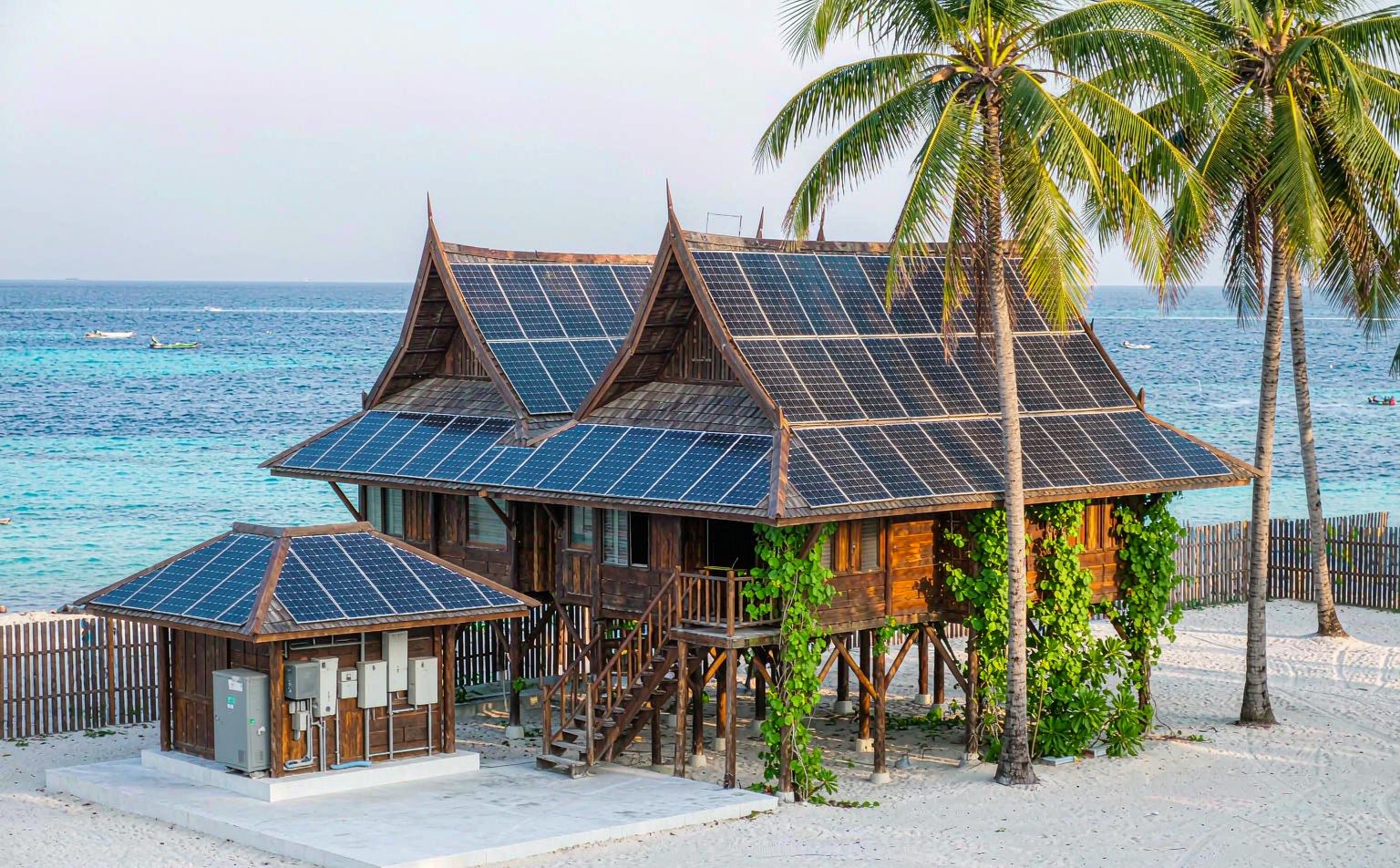
1. Sizing from average consumption instead of the worst week. An array that matches the annual average will strand the site in August. Off-grid solar Philippines designs must be built around the worst consecutive cloudy days the site will tolerate.
2. Removing the generator entirely. Almost every serious off-grid solar Philippines design keeps a genset as insurance, sized to carry the critical load and charge the battery at the same time. Deleting it saves capital and buys a reputation for outages.
3. Ignoring the surge loads. Compressors, pumps and welding sets draw multiples of their running current at start. If the inverter cannot hold the surge, the plant trips and the battery is blamed.
4. Buying nameplate kWh instead of usable kWh. Depth of discharge, temperature derating and end-of-warranty capacity all shrink the number that actually reaches the load. Compare quotations on usable energy at the design temperature.
5. Treating freight and installation as a footnote. On a remote island these lines can match the equipment cost. A supplier who quotes ex-works only has not quoted your project.
How much does an off-grid solar Philippines system cost per kW? Indicative 2026 factory-direct pricing runs US$700–1,100 per kWp for a complete system including storage, and US$180–300 per kWh for LFP battery capacity depending on whether it is rack-mounted or in a container. The storage-to-solar ratio moves the number more than any other variable, so ask for the quote split by block.
How long does an off-grid battery last? A well-specified LFP bank cycled once a day to 80–90% depth of discharge is normally warranted for a defined number of cycles or years, whichever comes first, with a guaranteed retained capacity at the end of that term. Ask for both figures in writing, and ask what ambient temperature the guarantee assumes.
Can I keep my diesel generator? You should. A generator kept as backup covers the worst cloudy spell, lets you size the battery for one day of autonomy instead of three, and cuts both capital cost and battery stress. A hybrid off-grid solar Philippines design with a small genset behind it is usually the cheapest reliable configuration.
Do I still need a permit if there is no utility connection? Yes. An off-grid solar Philippines installation still needs local government electrical permits, a Certificate of Final Electrical Inspection and the electrical plan approval still apply, and the build must be signed off by a licensed electrical engineer. Ask your supplier for the documentation package early — it is usually the pacing item.
How do I get a container to a small island? Normally by container ship to Manila, Batangas or Cebu, then by barge or ro-ro to the island, then by truck or boat to site. Crates should be packed to the handling limit of the final leg, and lithium batteries need dangerous-goods documentation and UN 38.3 test summaries before they will be accepted for loading.
What spare parts should I hold on site? At minimum a spare inverter or PCS module, a battery module, DC and AC surge protection devices, fuses, communication modules, and the tools to replace them. On an island, the alternative to a spare is a two-month outage.
Is there any Philippine content on the grid-tied side I should read? Yes — the sizing logic for storage carries across. Our Philippines solar BESS cost guide covers peak shaving and demand charges, and the 2026 Philippines solar panel price guide breaks down what grid-tied systems cost per kW.
Send us the island, the daily energy requirement and whether a generator can remain as backup. We will come back with an off-grid solar Philippines sizing sheet, the equipment that suits the site, and an indicative factory-direct price within 24 hours. We supply modules, mounting, PCS and LFP storage as a matched package, and we will tell you plainly if your site is better served by a hybrid design.
Chat on WhatsAppGrid-tied or hybrid in the same market: solar panel price Philippines 2026, Philippines solar BESS cost and sizing guide, et how to launch a Philippine solar import business.
Industrial buyers: solar power for factories in the Philippines et our Philippines solar system supply page.
Reference projects: 60 kW solar and storage for a Cebu resort, 300 kW solar for an Isabela cold storage plant, 400 kW solar and battery storage, et 100 kW cold storage system.
Island and weak-grid reading from other markets: Caribbean solar and BESS costs, 100 kW 215 kWh BESS cabinet specifications, and the Philippines solar import and BPS guide. Full technical details are on the Philippine Department of Energy renewable energy portal.

 English English
  Arabic
 Spanish
 French
 Dutch
Dutch
 Portuguese