Langue
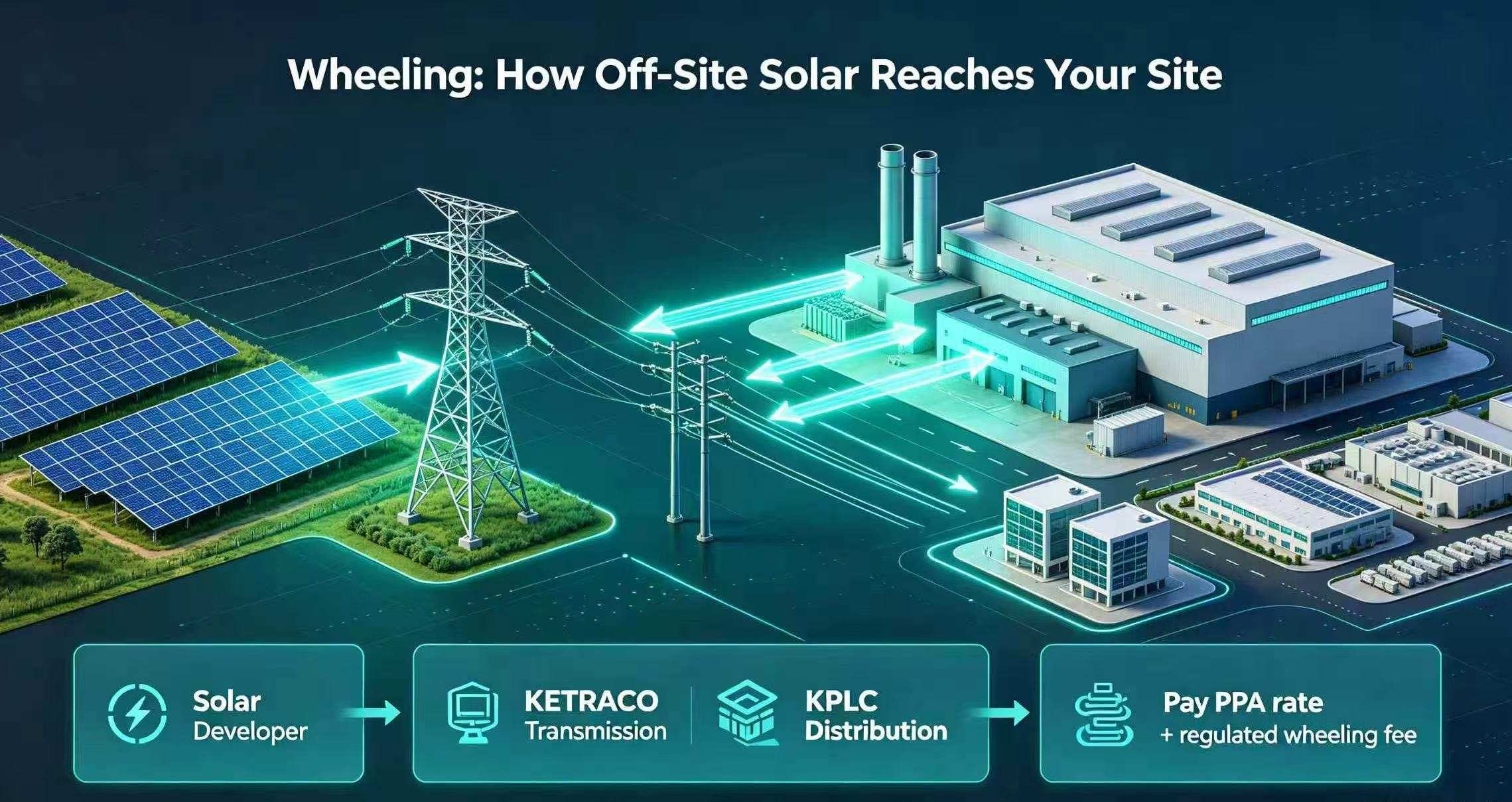
Contrat d'achat d'électricité solaire au Kenya est désormais accessible à tous les grands consommateurs d'électricité, et pas seulement aux services publics. En vertu de la Règlement de 2026 relatif à l'énergie (marché de l'électricité, approvisionnement en gros et libre accès), conformément à la décision publiée au Journal officiel par l'Autorité de régulation de l'énergie et du pétrole (EPRA), une usine, un parc industriel, un centre de données ou un complexe commercial peut signer un Contrat d'achat d'électricité d'une durée de 10 à 20 ans conclu directement avec un promoteur de projets solaires — et KPLC n'est plus l'acheteur obligatoire intermédiaire. Il vous suffit de payer au promoteur le prix convenu dans le contrat d'achat d'électricité (PPA) par kWh, majoré d'une redevance réglementée de “ transport ” pour l'utilisation des lignes de transport de KPLC et de KETRACO.
Il s'agit du plus important changement structurel apporté au marché de l'électricité au Kenya depuis la loi sur l'énergie de 2019, et il vise directement les entreprises qui paient actuellement les tarifs les plus élevés. Voici en détail ce qui a changé, comment fonctionne un contrat d'achat d'électricité solaire (PPA), quel en est le coût et si cette solution est adaptée à votre site en 2026.
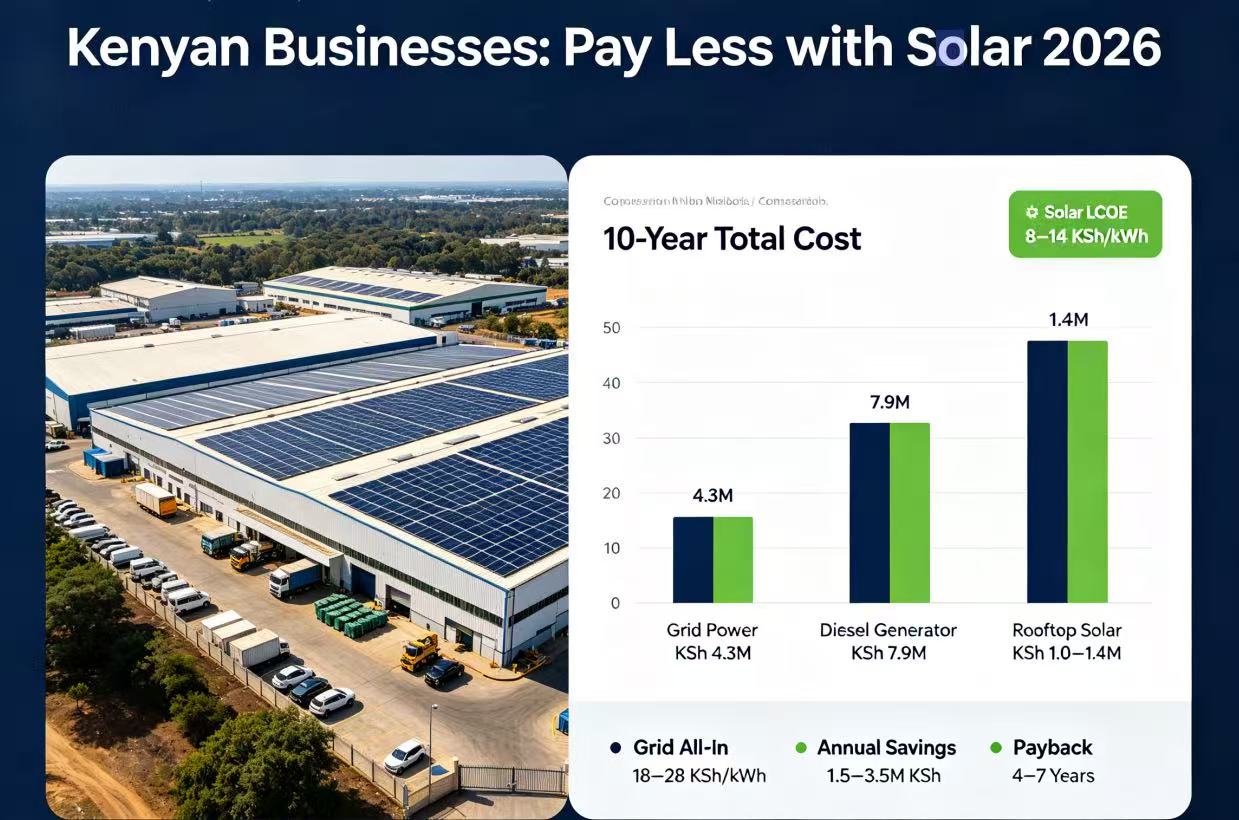
Les entreprises kenyanes versent depuis longtemps une partie des les prix de l'électricité pour les professionnels les plus élevés d'Afrique centrale et orientale — une solution efficace 18 à 28 KSh par kWh, tout compris une fois pris en compte les frais liés au coût du carburant, les ajustements de change, les taxes et la TVA 16%. Les grands consommateurs industriels (représentant 70% du chiffre d’affaires de la KPLC) subventionnaient jusqu’à présent les tarifs résidentiels, moins élevés. La réglementation sur le libre accès de 2026 permet à ces mêmes consommateurs industriels de contourner la marge de vente au détail de la KPLC et de passer directement un contrat avec un producteur d’énergie solaire, ce qui leur garantit souvent un tarif bien inférieur à celui du réseau.
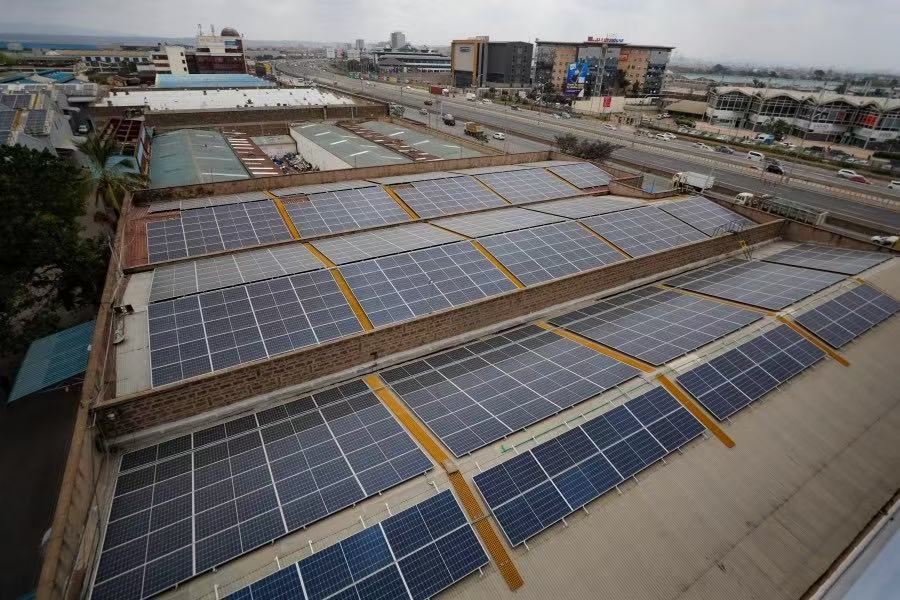
Un contrat d'achat d'électricité (CAE) est un contrat à long terme dans le cadre duquel un promoteur solaire construit, détient et exploite l'installation, et vous vous engagez à acheter l'électricité qu'elle produit à un prix fixe par kWh. Vous n'avez rien à payer d'avance : c'est le promoteur qui finance le projet, et vous commencez à réaliser des économies dès le premier jour.
| Étape | Ce qui se produit |
|---|---|
| 1. Faisabilité | Le promoteur évalue votre charge, votre toiture/terrain et votre profil de consommation. |
| 2. Signature du contrat d'achat d'électricité (PPA) | Convenir d'un prix fixe de ₹/kWh (KSh) pour une durée de 10 à 20 ans, souvent assorti d'un plafond annuel d'indexation. |
| 3. Permis | Conformité aux normes EPRA, homologations NEMA, raccordement au réseau KPLC : pris en charge par le promoteur. |
| 4. Construction | Le promoteur finance, construit et met en service la centrale. |
| 5. Fonctionnement | Vous ne payez que les kWh d'électricité solaire que vous consommez, au tarif prévu par le contrat d'achat d'électricité (PPA). |
Les deux modalités de mise en œuvre d'un contrat d'achat d'électricité solaire (PPA) au Kenya après l'entrée en vigueur de la réglementation de 2026 :
Les tarifs commerciaux et industriels sont en constante évolution, car l'EPRA ajuste chaque mois les suppléments liés au carburant et aux taux de change. Voici la situation réelle pour 2026.
| Composant | Coût type pour 2026 |
|---|---|
| Tarif de base KPLC pour les clients commerciaux et industriels (CI1, 400 V) | 13,44 KSh/kWh |
| Supplément pour le coût du carburant (FCC) + Change (FERFA) | 4 à 7 KSh/kWh, tarif mensuel variable |
| Redevances REP + ERC + WRMA | ~0,50 à 0,55 KSh/kWh |
| 16% TVA + forfait de consommation | appliqué par-dessus |
| Tarif de réseau tout compris en vigueur | 18 à 28 KSh/kWh |
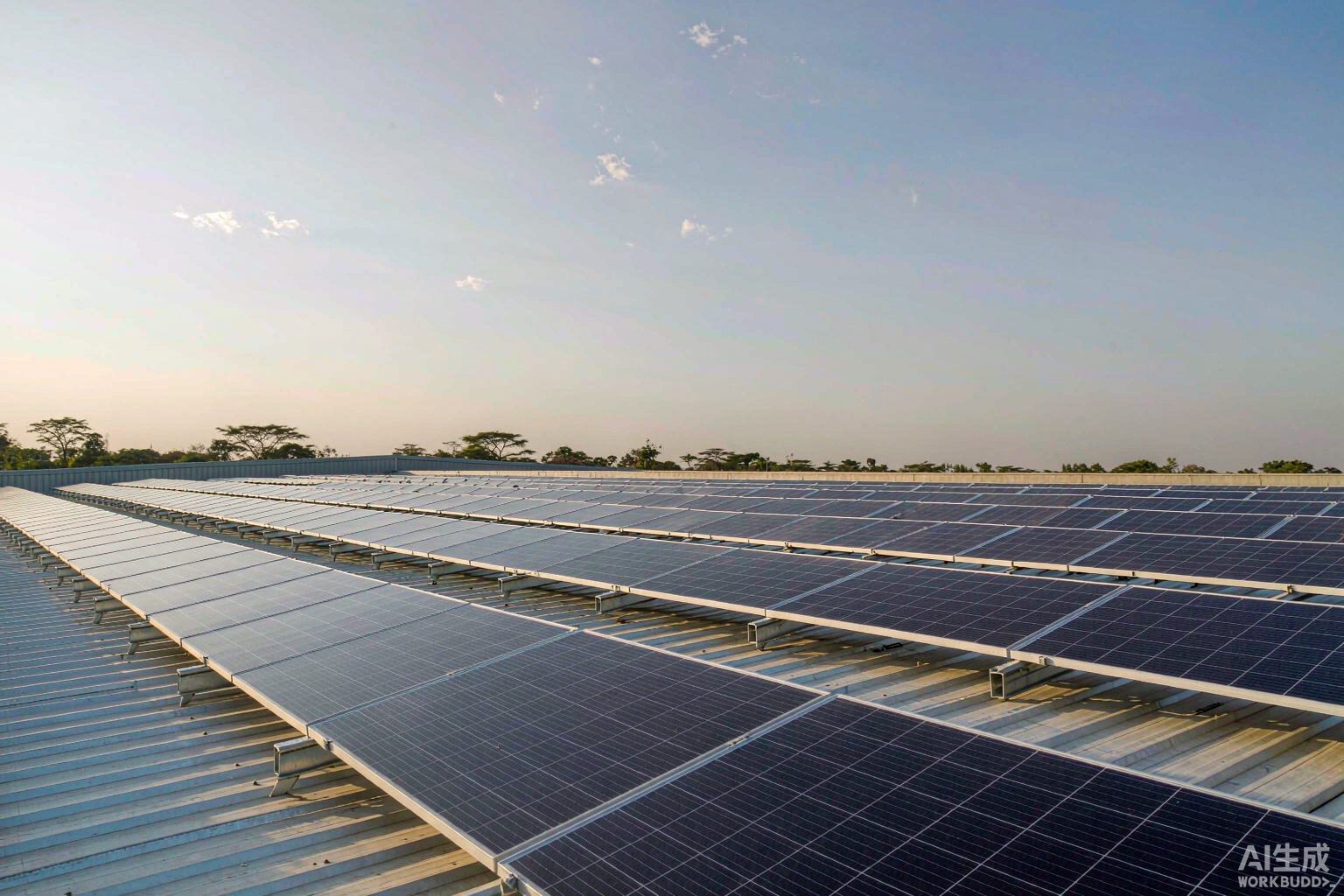
Une installation solaire commerciale correctement dimensionnée fournit de l'électricité à un Coût moyen actualisé de l'électricité (LCOE) compris entre 8 et 14 KSh/kWh sur 25 ans — environ de la moitié à un tiers de la grille. Une installation de 200 kW installée sur le toit d'une usine de Nairobi produit environ 290 MWh par an et réduit la facture d'électricité annuelle de 1,5 à 3,5 millions de KSh, avec un 4 à 7 ans retour sur investissement.
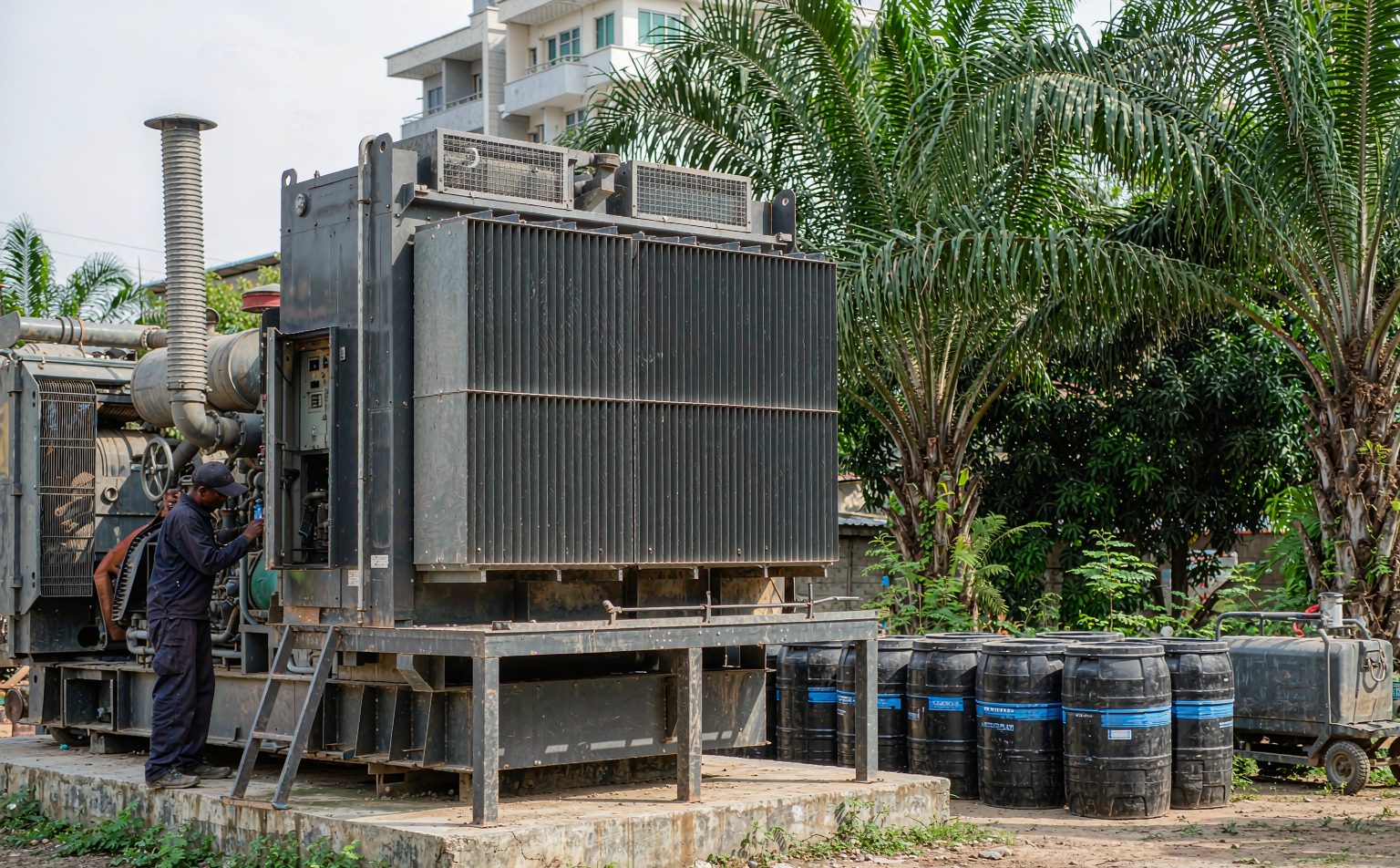
Même comparée au diesel utilisé comme source d'appoint — que de nombreuses usines kenyanes exploitent plusieurs heures par jour —, l'énergie solaire est nettement moins coûteuse. Sur une période de dix ans, l'électricité du réseau coûte à une PME type environ 4,3 millions de shillings kenyans et les générateurs diesel environ 7,9 millions, tandis que l'énergie solaire ne représente qu'entre 1,0 et 1,4 million de shillings kenyans, entretien compris.
Le Règlement de 2026 relatif à l'énergie (marché de l'électricité, approvisionnement en gros et libre accès) a officiellement mis fin au droit quasi exclusif dont bénéficiait la KPLC d'agir en tant que contrepartie dans le cadre de contrats d'électricité de grande envergure. Les principales dispositions sont les suivantes :
| Disposition | Ce que cela signifie pour vous |
|---|---|
| Contrats d'achat d'électricité (PPA) directs | Les producteurs d'électricité peuvent vendre directement aux gros consommateurs — sans qu'un contrat d'achat d'électricité (PPA) avec la KPLC soit nécessaire. |
| Accès libre / fauteuil roulant | KPLC et KETRACO doivent garantir un accès non discriminatoire au réseau moyennant une redevance réglementée. |
| Seuil d'approvisionnement en gros | Les consommateurs dont la consommation est supérieure à ce seuil peuvent conclure un contrat pour un parc solaire n'importe où au Kenya. |
| Concurrence dans le secteur de la distribution | Les détaillants titulaires d'une licence peuvent acheter et revendre de l'électricité aux entreprises. |
Cela s'inscrit dans la continuité de la novembre 2025 la levée du moratoire de deux ans sur les contrats d'achat d'électricité (CAE), qui a également permis de libeller les nouveaux CAE en shillings, en devises étrangères ou dans une combinaison des deux — réduisant ainsi le risque de change pour les projets financés localement. L'énergie solaire et le stockage par batterie constituent les moyens les plus rapides de développer de nouvelles capacités, et la première mise aux enchères d'énergie renouvelable est prévue pour fin 2026.
Le cadre fiscal du Kenya permet d'importer du matériel solaire à bas prix. Les cellules et modules solaires bruts sont exonéré de droits d'importation et de TVA (Loi de 2013 relative à la TVA, article 15, point n)). Le Projet de loi de 2026 portant modification de la législation commerciale va plus loin en proposant de réduire la TVA à l'importation sur une gamme plus large d'équipements liés aux énergies vertes, la faisant passer de 16% à 8%. Une mise en garde toutefois : une autre proposition du projet de loi de finances 2026 pourrait faire passer les batteries d'un taux zéro à une exonération de TVA, ce qui entraînerait une hausse de leur prix. Il est donc conseillé de finaliser dès que possible les devis comportant une part importante de batteries.
Qu'est-ce qu'un contrat d'achat d'électricité solaire (PPA) au Kenya ?
Un contrat d'achat d'électricité dans le cadre duquel un promoteur solaire construit et détient l'installation, et où vous achetez l'électricité à un tarif fixe — aucun coût initial, des économies dès le premier jour.
Puis-je désormais acheter de l'électricité solaire sans passer par la KPLC ?
Oui. La réglementation de 2026 sur l'accès ouvert permet aux gros consommateurs de signer des contrats d'achat d'électricité (PPA) directement avec des promoteurs de projets solaires, en utilisant le réseau de KPLC/KETRACO uniquement pour le “ transport d'électricité ” à un tarif réglementé.
Combien un contrat d'achat d'électricité solaire (PPA) peut-il faire économiser à mon entreprise ?
Le coût de l'énergie solaire à usage commercial est compris entre 8 et 14 KSh/kWh, contre 18 à 28 KSh/kWh pour le réseau tout compris — ce qui représente généralement une réduction de 40 à 60% sur la partie de votre facture liée à l'énergie solaire.
Dois-je payer quelque chose d'avance ?
Non. Dans le cadre d'un contrat d'achat d'électricité (PPA), c'est le promoteur qui finance la centrale ; vous ne payez que l'électricité que vous consommez, au tarif convenu.
Mon entreprise remplit-elle les conditions requises ?
Sont éligibles les usines, les parcs industriels, les centres de données, les cimenteries et les grands complexes commerciaux dépassant le seuil d'approvisionnement en vrac. Les sites de plus petite taille peuvent toujours recourir à l'énergie solaire sur site (captive) d'une puissance inférieure à 1 MW sans licence EPRA.
Les grands consommateurs d'électricité dépassant le seuil d'approvisionnement en gros : usines, parcs industriels, centres de données, cimenteries et grands complexes commerciaux. Un contrat d'achat d'électricité solaire (PPA) de ce type au Kenya permet à un site de passer un contrat directement avec un développeur solaire au lieu de s'approvisionner au tarif de détail de la KPLC. Les sites de plus petite taille ne sont pas exclus de l'énergie solaire ; ils ont simplement recours à une production captive sur site inférieure à 1 MW, qui ne nécessite pas de licence EPRA, plutôt qu'à un contrat d'achat d'électricité solaire hors site au Kenya.
Tout dépend de la surface de votre toiture. Si celle-ci peut supporter l'installation, un contrat d'achat d'électricité solaire (PPA) sur site au Kenya vous permet d'éviter totalement les frais de transport d'électricité et de bénéficier d'une alimentation directement sur votre propre compteur. Si vous avez besoin de plus de 5 MW, ou si votre site ne dispose pas de toiture exploitable, la solution de contrat d’achat d’électricité solaire hors site au Kenya fait appel à un parc solaire situé ailleurs, KPLC et KETRACO assurant le transport de l’énergie moyennant des frais d’accès réglementés.
Un tarif fixe en KSh par kWh pendant 10 à 20 ans, généralement assorti d’une indexation annuelle plafonnée plutôt que libre. Le point de référence pertinent est le suivant : l’énergie solaire commerciale est produite à un coût moyen actualisé (LCOE) d’environ 8 à 14 KSh par kWh sur 25 ans, contre 18 à 28 KSh par kWh pour l’électricité du réseau, tous coûts compris. Un contrat d'achat d'électricité (PPA) solaire bien structuré au Kenya se situe entre ces deux extrêmes, en répartissant l'écart entre le rendement du promoteur et vos économies.
C'est cette clause qui détermine si l'accord est sûr. La plupart des contrats deachat d'électricité solaire (PPA) au Kenya sont de type «take-or-pay» (achat obligatoire) sur un volume d'énergie minimum ; ainsi, un arrêt de production ou une baisse de la demande oblige tout de même au paiement. Avant de signer un contrat PPA solaire au Kenya, simulez votre pire année de production réaliste et vérifiez que le volume d'achat minimum se situe en dessous de ce niveau. Si ce n'est pas le cas, négociez un engagement moins élevé plutôt qu'un tarif plus bas.
Votre générateur injecte de l'électricité dans le réseau et vous vous alimentez à partir de celui-ci ailleurs ; KPLC et KETRACO acheminent l'énergie et facturent des frais d'accès réglementés pour l'utilisation du réseau. Vous versez au promoteur le prix convenu dans le contrat, majoré de ces frais. La réglementation de 2026 a explicitement défini cette voie pour la première fois à l'échelle commerciale, ce qui a permis l'émergence au Kenya de contrats d'achat d'électricité solaire (PPA) allant au-delà du modèle de contrepartie des services publics.
En partie, et uniquement si le développeur les répercute. Les cellules et modules solaires nus sont exonérés de droits d'importation et de TVA en vertu de la loi de 2013 sur la TVA, et le projet de loi de 2026 portant modification des lois sur les entreprises propose un allègement fiscal plus large en faveur des énergies vertes. Comme c’est le promoteur d’un contrat d’achat d’électricité solaire (PPA) au Kenya qui achète ce matériel, cette exonération réduit son coût d’investissement — demandez-lui directement dans quelle mesure cela se répercute sur le tarif qui vous est proposé.
Propriété et bilan. Dans le cadre d’un contrat d’achat d’électricité solaire (PPA) au Kenya, le promoteur finance, détient et exploite l’installation, tandis que vous achetez des kWh ; il n’y a donc aucun investissement initial, mais l’installation n’apparaît pas non plus dans votre bilan. Dans le cadre d’un contrat EPC, vous êtes propriétaire du système et conservez l’intégralité des économies réalisées, mais vous supportez le coût d’investissement et le risque lié à la performance. Pour un site capable de financer l'investissement initial, la propriété s'avère généralement plus avantageuse qu'un contrat d'achat d'électricité solaire (PPA) au Kenya sur une période de 25 ans.
Grâce à un plafond d'indexation fixe inscrit dans le contrat. Une structure courante consiste en un tarif forfaitaire en KSh avec une faible révision annuelle, ce qui protège l'acheteur des surcoûts liés au carburant et aux fluctuations des devises, car ceux-ci ne se répercutent absolument pas sur le prix d'un contrat d'achat d'électricité solaire (PPA) au Kenya. Cette immunité constitue un avantage discret : les tarifs du réseau varient chaque mois en fonction des ajustements liés au carburant et aux devises, contrairement au prix d'un contrat d'achat d'électricité solaire (PPA) au Kenya.
Douze mois de factures d'électricité, les données de consommation par intervalle ou toutes les demi-heures si votre fournisseur d'énergie les fournit, les plans du toit ou du terrain, ainsi qu'un schéma unifilaire du raccordement existant. Sans données de consommation par intervalle, une proposition de contrat d'achat d'électricité solaire (PPA) au Kenya repose sur une moyenne qui masque vos pics de consommation, et la taille de l'installation sera erronée. Notre Prix des panneaux solaires au Kenya en 2026 Ce guide présente les coûts par composant qui composent ce devis.
Le promoteur, puisqu’il en est propriétaire. Cela est stipulé dans un contrat d’achat d’électricité solaire (PPA) au Kenya en tant qu’obligation d’exploitation couvrant le nettoyage, l’entretien des onduleurs, l’inspection des modules et la communication de rapports de performance par rapport à un rendement garanti. En contrepartie, vous n’avez aucun contrôle sur les décisions d’entretien et n’en tirez aucun bénéfice ; c’est pourquoi les garanties de disponibilité et de rendement figurant dans le contrat de PPA solaire au Kenya sont les éléments sur lesquels il convient de négocier le plus fermement.
Sources : Règlement EPRA Energy (marché de l'électricité, approvisionnement en gros et libre accès) de 2026 ; barème tarifaire Kenya Power/EPRA 2025/2026 ; Guide SurgePV Kenya sur le solaire pour les entreprises et les particuliers (avril 2026) ; Guide KI Energy-Tech sur le retour sur investissement des installations solaires commerciales 2026.
Vous souhaitez bénéficier d'une étude de faisabilité gratuite pour votre site ? Contactez-nous pour obtenir une Citation WhatsApp ou envoyez un e-mail à info@marssolargroup.com.

 English English
  Arabic
 Spanish
 French
 Dutch
Dutch
 Portuguese