
Taal
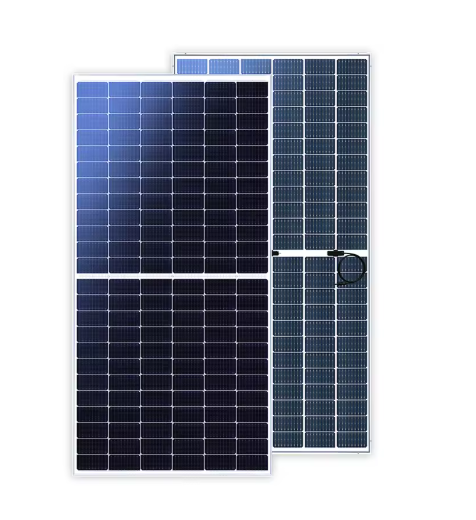
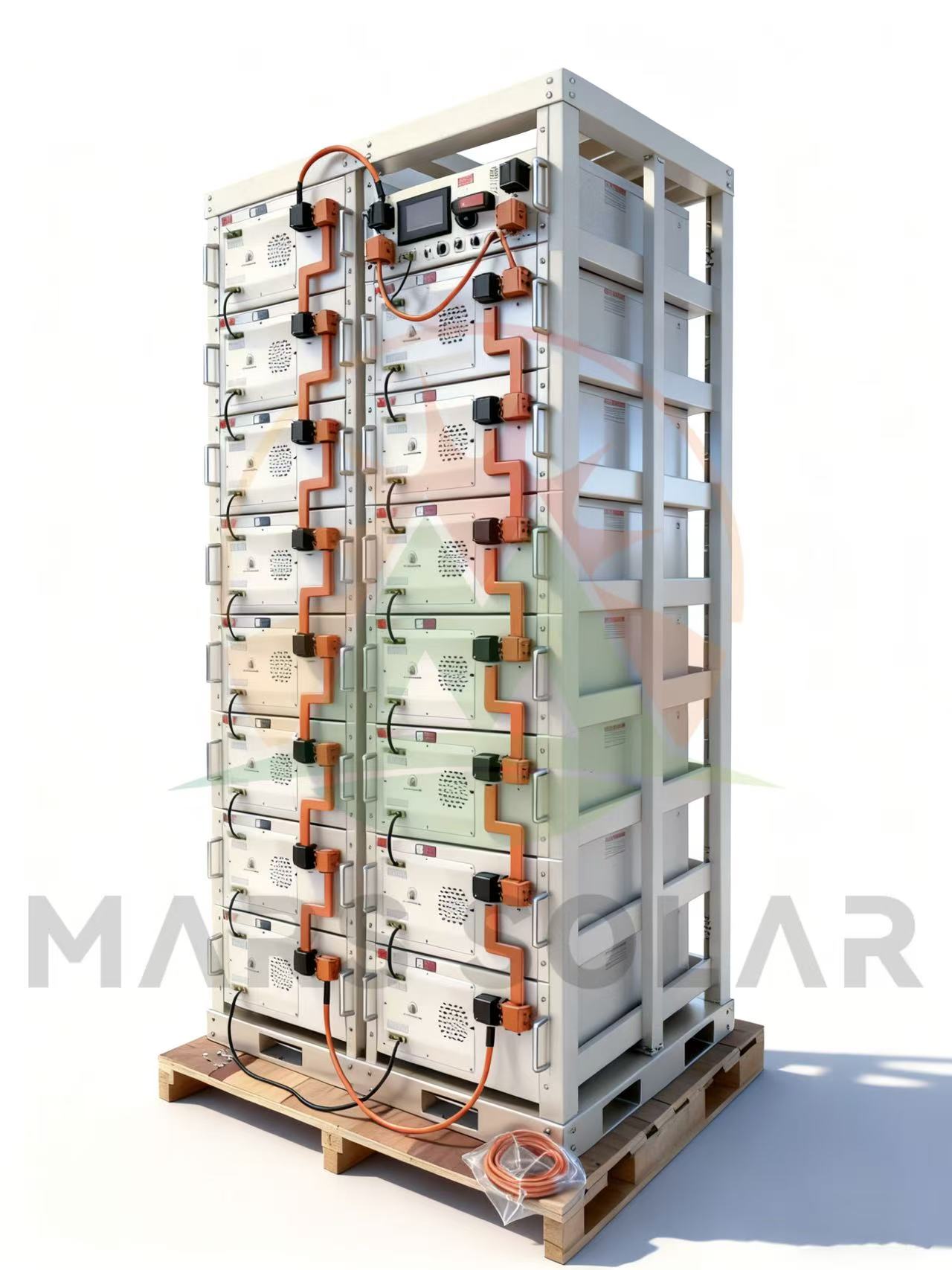
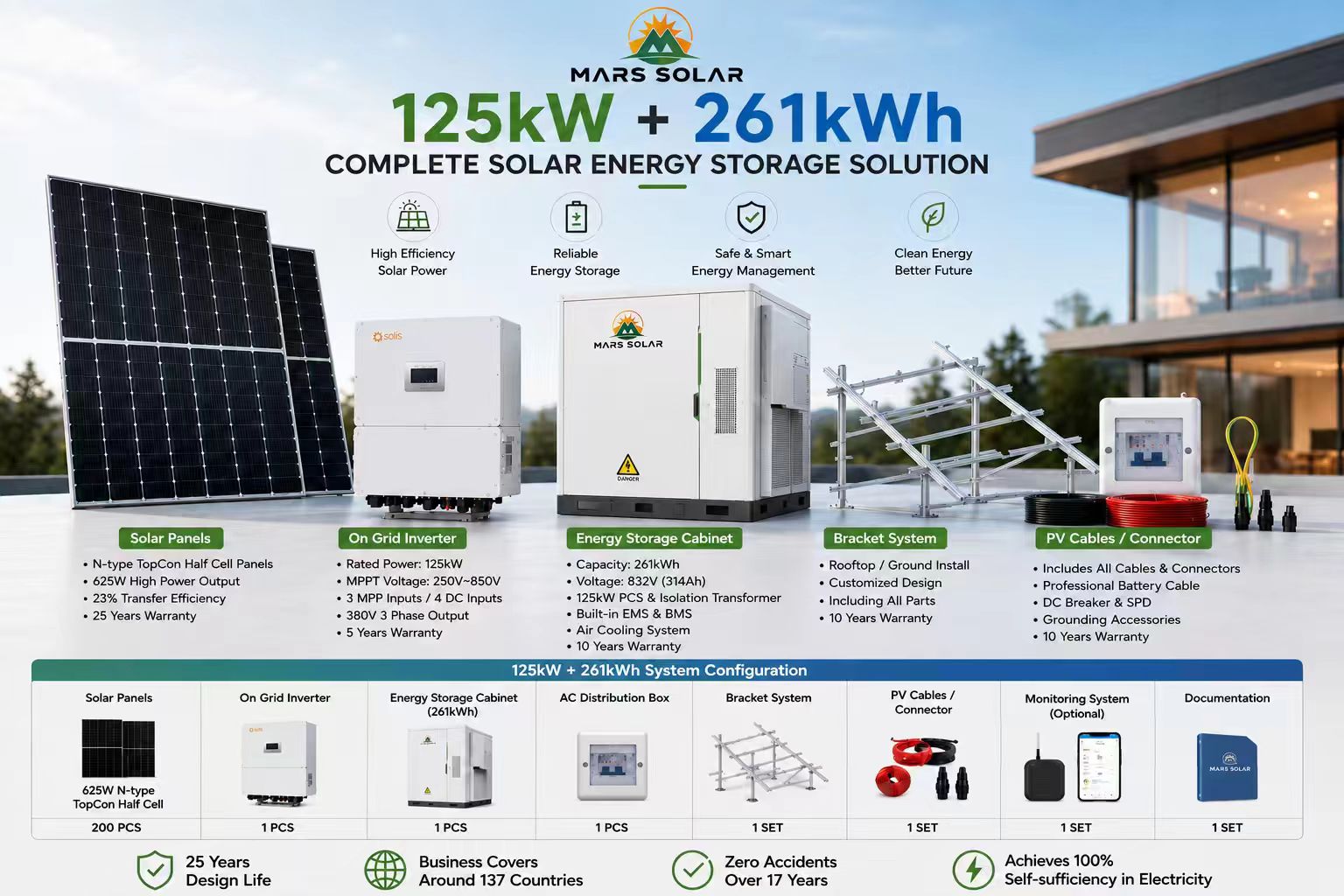
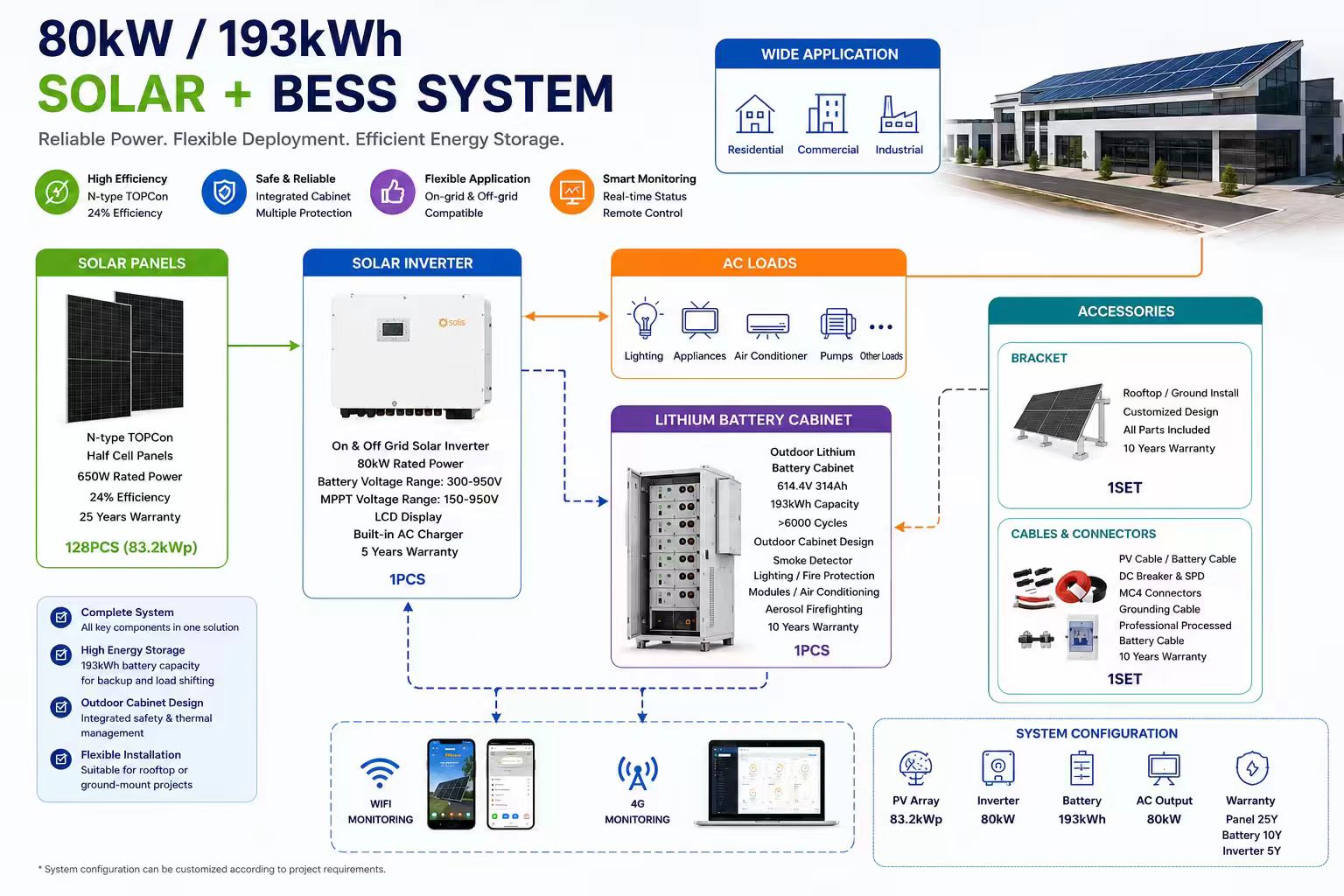
A complete solar system for cold storage includes: high-efficiency solar panels, sturdy corrosion-resistant solar mounting brackets, long-cycle solar batteries supporting over 6,000 charge-discharge cycles at 80% DoD, a solar inverter integrated with MPPT controller (conversion efficiency ≥95%), high-temperature resistant solar cables and waterproof MC4 connectors. A solar system for cold storage also covers the mounting, protection and monitoring hardware needed to run compressor racks, defrost heaters and control circuits without interruption.
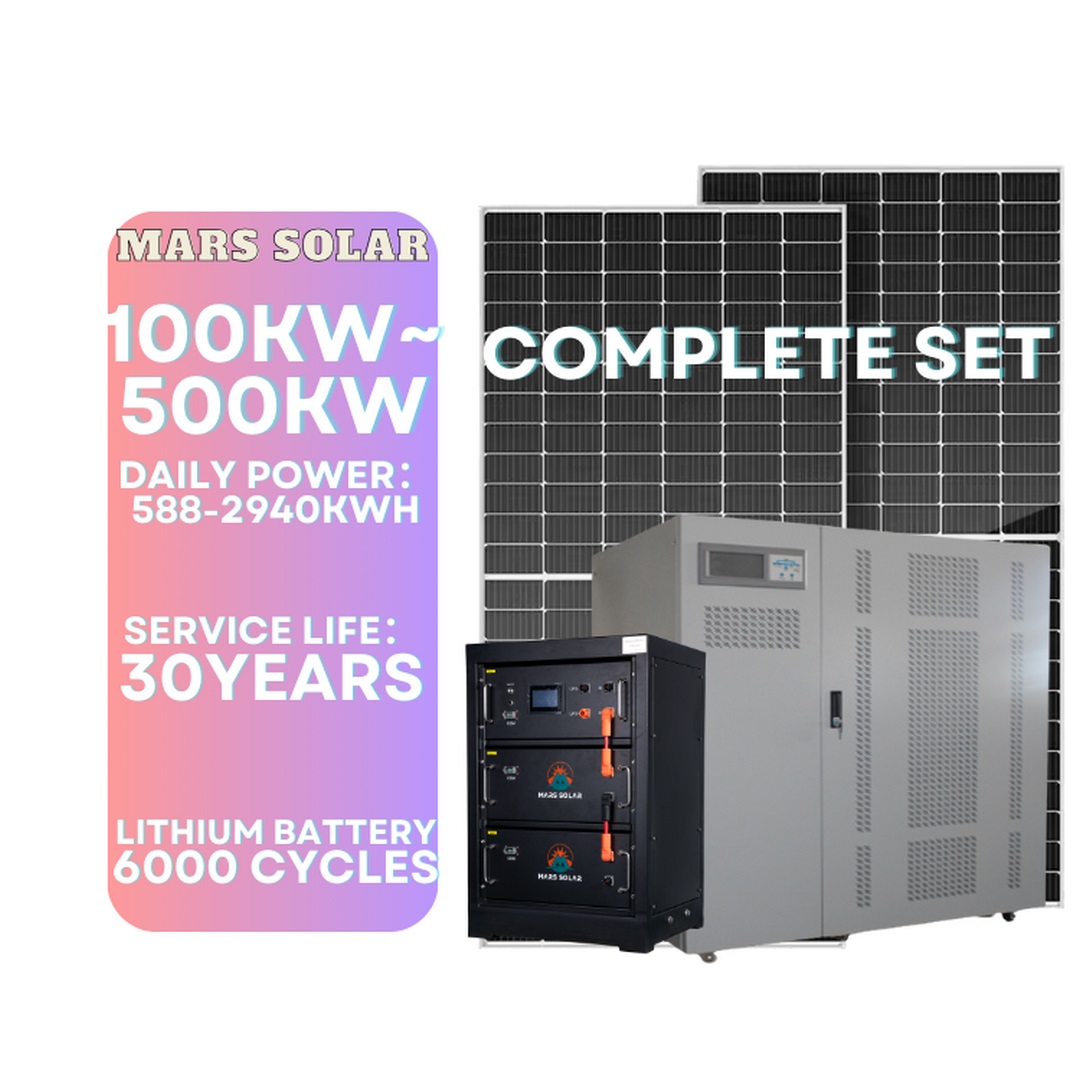
Our cold storage solar power system is available from 100KW to 600KW, supporting both single-phase and three-phase power output to match refrigeration plant standards. It covers a wide voltage range: DC 110V/220V/380V to AC 110V~480V, making it suitable for chill rooms, frozen stores, blast freezers and cold chain distribution centres.
Minimale bestelhoeveelheid: 1 set, OEM & ODM mogelijk.
Certificaten: TUV, ETL, ISO, CE, RoHS
Betalingsmethoden: T/T, L/C, PayPal, Western Union

A solar system for cold storage converts sunlight into savings more directly than almost any other commercial load, and the reason is structural: the refrigeration load never stops. Compressors cycle around the clock, and they work hardest on hot, sunny afternoons, which is exactly when a PV array peaks. That alignment decides how much of your generation is consumed at the full retail tariff instead of exported at a fraction of it.
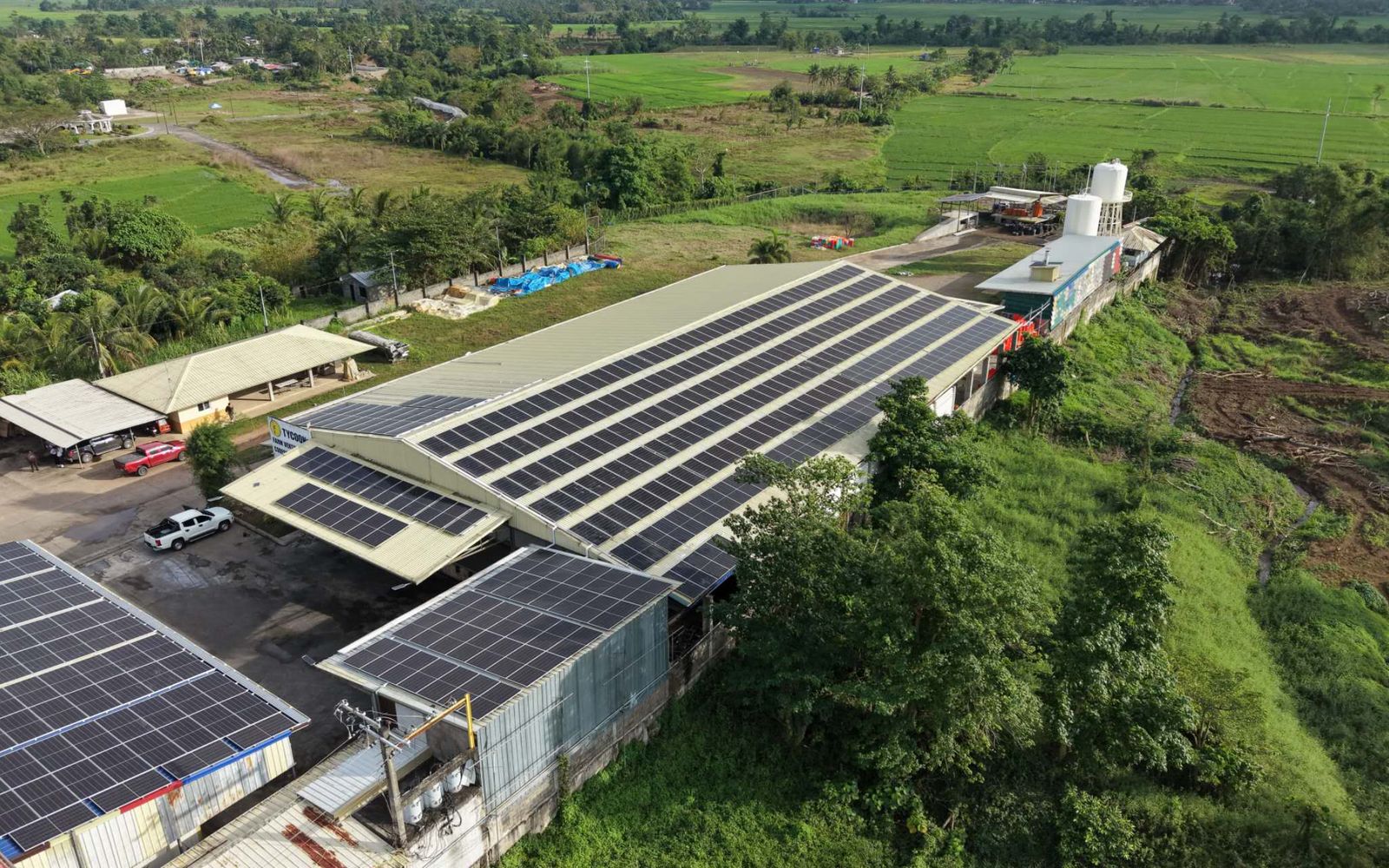
Our own cold chain projects show the size of the effect. At 300 kWp on a cold store in Isabela, Philippines, 97 percent of generation is self-consumed at ₱13.80 per kWh, giving verified savings of ₱470,000 — about USD 8,100 — per month against a factory-direct investment of USD 195,000 to 225,000, a 25-month payback. A 100 kW cold storage system in the Philippines saves 1,400 to 2,500 USD per month at 0.20 USD per kWh, paying back in 23 months.
Cold stores also come with the roof the array needs: large, flat, unshaded, and already engineered to carry insulation and equipment loads. That removes the two items that slow other projects down — shading mitigation and roof reinforcement.
Sizing a solar system for cold storage starts from heat, not from panels. The load is set by room volume, the setpoint, the thermal mass of the product, ambient temperature, insulation condition and how often the doors open. Two stores of identical floor area can differ by 40 percent in daily kWh, so we size from your measured consumption wherever a year of bills exists, and from a heat-load calculation where it does not.
Compressor duty cycle is the base. Refrigeration does not run flat out; it cycles to hold a setpoint, and duty rises with ambient temperature. Defrost is added on top: electric defrost heaters are a discrete block of load, typically three to four cycles a day, and wherever the schedule is flexible we move them inside the solar window so they are fed by PV rather than by the grid after dark.
Start-up surge is the third input, and the one most often missed. A compressor draws several times its running current for the second or two it takes to start. If four racks restart together after an outage, the inverter sees that surge simultaneously and trips. We size inverter headroom for the surge and program staggered restart so the racks come back one at a time.
Refrigeration capacity and rating terminology on this page follows the definitions maintained by the International Institute of Refrigeration, so the kW and kWh figures on your quote mean the same thing as the figures on your compressor nameplates.
A cold storage system is specified as a matched set, not a list of parts. PV array — N-type modules on wind-zone-rated mounting fixed into verified purlins, not self-tappers into thin sheet. Hybride omvormer — sized for compressor surge and rated to ride through the voltage sags and brief outages common on cooperative and municipal feeders, restarting automatically without tripping the compressors.
LFP battery storage where the brief calls for it — sized either for evening shoulder shifting or for a defined hold time on the critical set. Monitoring — per-string yield with alerts when a string underperforms, because an undetected string fault quietly erases the savings figure. Protection and documentation — DC cabling sized for tropical ambient temperatures, a single-line diagram, panel and inverter certificates, and the net metering application file prepared for your utility or cooperative.
Batteries are optional, and genuinely so. At a 97 percent daytime self-consumption rate, the marginal battery on a grid-tied cold store can take far longer to pay back than the array itself. We model both and show you the payback on each.
A solar system for cold storage bought direct removes the distributor margin. On the Isabela project, factory-direct pricing landed the 300 kW system 25 to 35 percent below local installer quotations for the same equipment class. You are buying from the production line that made the panels, inverters and mounting, so the configuration is specified by the people who build it rather than by a reseller reading a datasheet.
Delivery is engineered as a sequence, because the cold chain cannot stop. Roof structure is verified before layout, mounting goes in with the rated hardware, then DC cabling and a ventilated inverter room commissioned string by string. On the Isabela project the whole installation took under four weeks with zero interruption to the cold chain.
OEM and ODM configurations, mixed container loads, and documentation in the language your installer works in are all available. Remote monitoring is included, so your facility manager — or ours, under a service agreement — can see yield and alarms from the first day.
Worked example for sizing discussion, not a project measurement. A cold store drawing about 1,932 kWh a day, served by 300 kWp of PV at Philippine irradiance — roughly 1,400 kWh per kWp per year, about 1,150 kWh a day — with battery optional. The profile is what a 24-hour refrigeration duty looks like: lowest in the cool hours before dawn, highest through the hot afternoon.
| Time | Main loads | Average kW | kWh in block | Supply and battery |
|---|---|---|---|---|
| 00:00–06:00 | Compressors at low ambient, defrost cycles, door heaters | 58 | 348 | Grid; battery if fitted |
| 06:00–10:00 | Pull-down after loading, doors active, defrost window | 92 | 368 | PV rising, grid tops up the difference |
| 10:00–16:00 | Peak ambient, compressors at highest duty | 108 | 648 | PV direct, covers most of the block |
| 16:00–20:00 | Load still high, PV falling away | 78 | 312 | PV tail, then battery covers the shoulder |
| 20:00–24:00 | Night, ambient falling, compressors easing | 64 | 256 | Grid, or battery down to its floor |
Reading the day: the store draws 1,932 kWh across 24 hours, an average of 80 kW. The array produces about 1,150 kWh on an average day and roughly 1,120 kWh of that is absorbed by the compressors as it is generated — the 97 percent self-consumption rate measured on our Isabela cold storage project. The remaining 812 kWh still comes from the grid. That split, not the panel rating, is what decides the bill.
kW is power; kWh is energy. kW is the rate you draw at any instant: it sets the inverter size and decides whether the system can start the load at all. kWh is energy over time: it sets the battery size, how much of the bill you displace, and how long a backup lasts. A 108 kW afternoon peak says the inverter must carry 108 kW at once. 1,932 kWh a day says how much energy has to come from somewhere across 24 hours.
The same split applies inside the battery, and it is where quotes go wrong. A battery has a kWh rating En a kW rating. A 215 kWh LFP cabinet discharged at 0.5C delivers about 107 kW — enough to carry a cold store’s overnight critical set, but not the full 108 kW afternoon peak plus defrost. Both numbers belong in the quote.
Whole-site backup versus critical-load backup. Whole-site backup keeps every circuit alive through any outage — compressors, defrost, blast freezers, lighting and office — and needs storage sized to the full daily load, which is rarely economic. Critical-load backup keeps only the rooms holding product, plus controls and alarms. On a cold store the two are usually separated by a factor of three or more in battery cost. Decide which one you are buying before the battery is sized.
Room schedule — dimensions, setpoint for each room, product stored, and whether it is chill (0 to 4 °C) or frozen (−18 to −25 °C). Compressor data — nameplate kW, starting method (direct-on-line, star-delta or soft starter), and how many racks can start at once. Defrost — method, cycles per day, duration and heater load, and whether the schedule can move.
Twelve months of electricity bills — kWh and demand, not just the total; this is the single most useful document you can send. Outage history — how often, how long and at what time of day, because that is what the battery is actually for. Hold time required — how many hours the product can sit without cooling before it is at risk.
Roof or ground area — drawings if available, plus the construction, because purlin spacing and thickness matter more than total area. Ambient range — summer design temperature and the seasonal spread. We size in three parts — compressor base load, defrost and start-up headroom, then controls and alarms — because each part is governed by a different rule.
Compressors set the base load. Refrigeration does not run flat out; it cycles to hold a setpoint, and the duty cycle rises with ambient temperature and with how often doors open. That is why a cold store’s daily kWh peaks in the hottest months, in step with the array’s best generation — the rare case where the load curve and the generation curve genuinely help each other.
Defrost is a schedulable block of load, and that makes it an opportunity. Electric defrost heaters draw a fixed, predictable kW for a fixed number of minutes, three or four times a day. Because the timing is ours to choose, we move defrost into the solar window wherever the product allows it, so the heaters are fed by PV at the moment it is free rather than by the grid after dark.
Start-up surge is where undersized systems fail. A compressor motor draws several times its running current for the seconds it takes to start. Restart four racks simultaneously after an outage and the inverter sees the combined surge and trips — which is the worst possible moment to lose cooling. The fix is two-sided: inverter headroom sized for the surge, and staggered restart with 30 to 90 seconds between racks so they never start together.
Every cold store has two classes of equipment, and only one of them needs a battery, which is why a solar system for cold storage is sized on hold time rather than on floor area.
Cannot lose power. Compressor racks on rooms holding product; the control and monitoring system; the alarm gateway; and door-frame and airlock heaters, where losing them lets ice build up and jams the door. Can wait. Defrost heaters, once rescheduled; blast freezers already holding frozen product; lighting in non-working areas; office air conditioning; and any processing that can be shifted into daylight hours.
Hold time is the number that sizes the battery. Not “how big is the store” but “how many hours can the product sit without cooling before it is at risk.” The arithmetic is direct: backup kWh equals the critical set in kW multiplied by the hold hours you need. A store whose critical set draws 60 kW and needs four hours of protection needs about 240 kWh of usable battery, not the whole daily load. That is the difference between a battery that pays back and one that never does.
If your brief is to keep everything running through any outage, say so and we will price it — but expect storage to dominate the quote, and check it against what the product actually requires.
An outage on a cold store is not an outage — it is a slow temperature rise, and the clock starts the moment the compressors stop. A frozen room at −18 °C in a 30 °C ambient begins climbing immediately; how fast depends on insulation, room volume and how much frozen product is inside acting as thermal ballast. The product, not the power bill, sets how long you have.
Measure the rise rate before you buy the battery. We ask for it because it is the only honest input: log the room temperature through a real outage, or during a deliberate test, and you have the actual minutes of headroom the product has. Everything else in the backup design follows from that number.
The alarm gateway needs its own UPS, and it is almost always forgotten. A temperature alarm or monitoring gateway wired to the same circuit as the compressor tells you nothing at the moment you most need it — when the compressor breaker trips or the room loses power. Put the controller, the alarm gateway and the network device on a small dedicated UPS sized for at least four hours, independent of the main battery. It costs a fraction of the system and it is the only thing that wakes someone up at night.
Alarms should be actionable, not just loud. High and low temperature limits per room, door-open duration, and a defrost-failed signal, delivered by SMS or email to more than one person. On our projects the same monitoring app that reports per-string PV yield carries these alerts, so one screen shows both the energy and the cold chain.

 English English
  Arabic
 Spanish
 French
 Dutch
Dutch
 Portuguese