
How a 6MW 20MWh Solar Storage System in Nigeria Cut Electricity Costs by $108,000+ per Month for an Integrated Factory, Farm, and Residential Complex
A 6MW 20MWh solar storage system in Nigeria now powers an integrated facility that combines industrial production, agricultural processing, and staff housing on a single site. Before installation, the operator ran diesel generators 16–20 hours per day at N350–450 per kWh. After deployment, monthly electricity expenditure dropped by $108,000+ and the system reached payback in approximately 24 months.
This is not a residential solar project. It is a factory-grade 6MW solar PV array paired with a 20MWh containerized LFP battery energy storage system, designed for continuous operation across three distinct load zones. The scale, the engineering, and the operating economics make it one of the most compelling factory + farm + residential solar deployments in West Africa today. This case study breaks down exactly what was deployed, how the system was configured, what it cost, and what it returns — with full data, internal references to Sun Energy Factory BESS product range, and field comparisons to similar projects in Sudan, Ghana, and Liberia.
If you are evaluating a 6MW 20MWh solar storage system in Nigeria for a factory, an industrial park, a commercial complex, or an integrated agricultural site, this article gives you the engineering detail, the financial model, and the operational reality. We have written it for the project developer, the EPC contractor, and the C&I owner who wants numbers — not marketing.
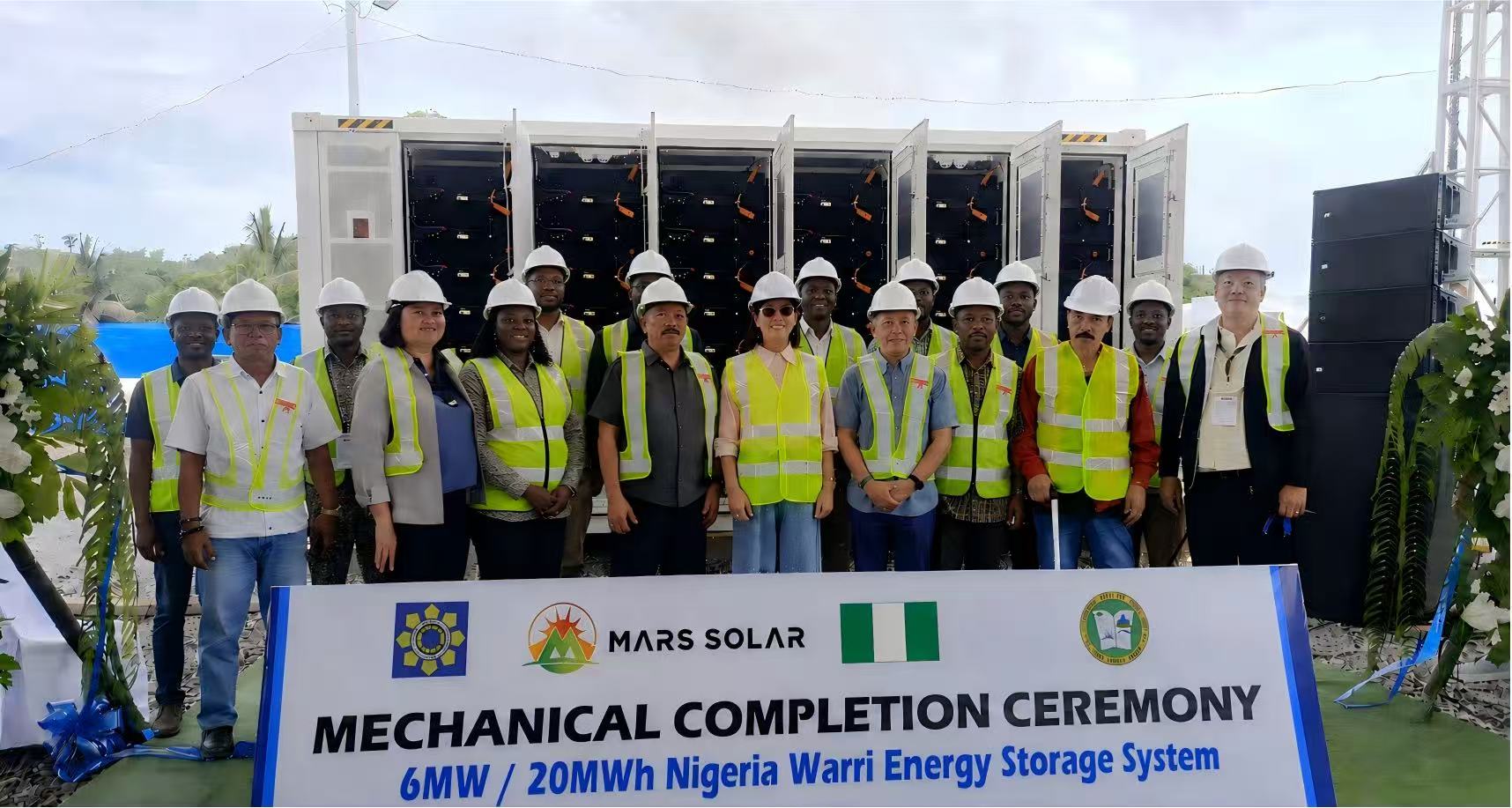
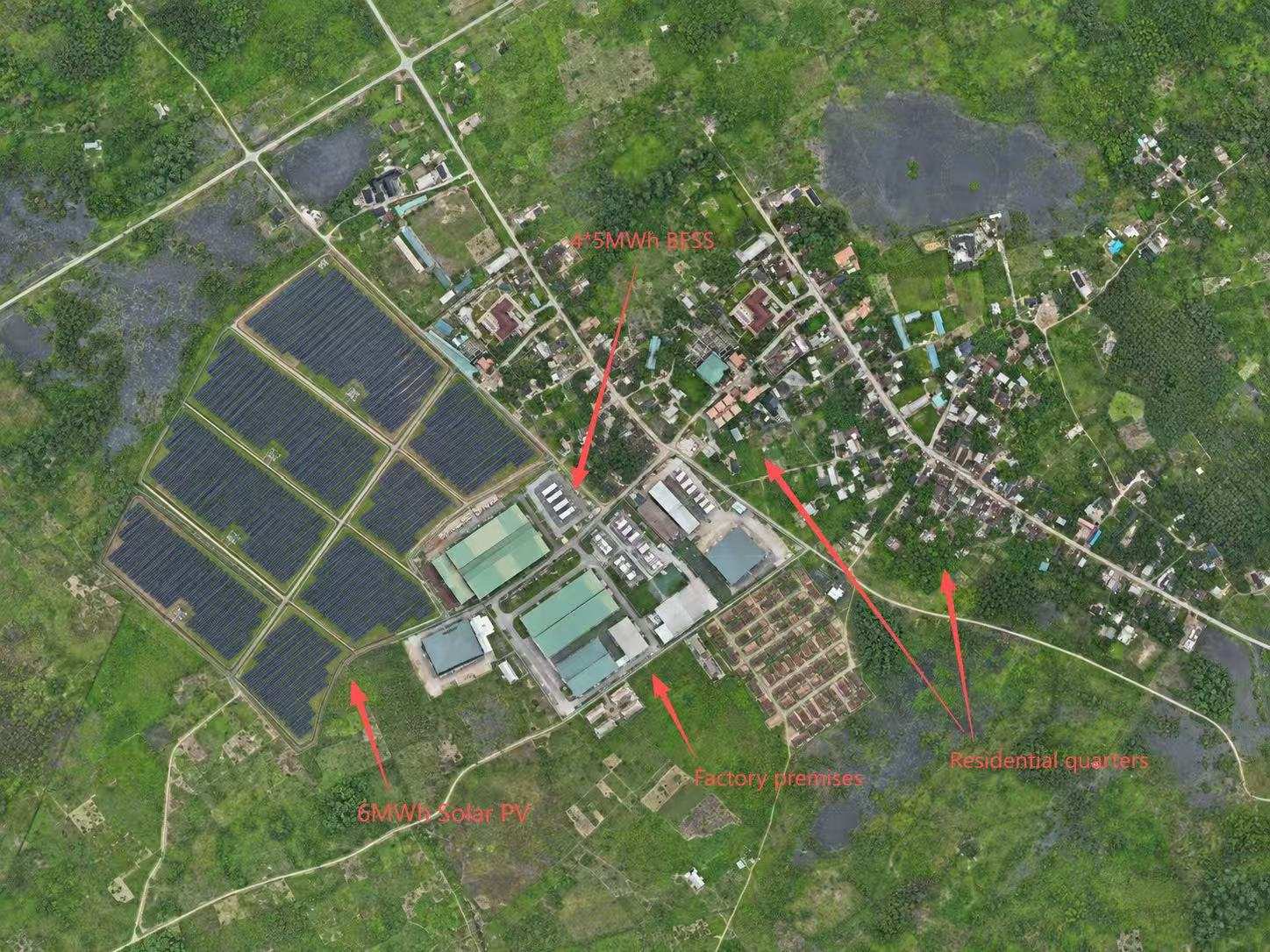
Most solar storage projects serve a single load type: a hotel, a factory floor, a telecom tower, a cold store. This one serves three — on the same site, drawing from the same busbar, managed by the same Energy Management System. That changes everything about the system design.
Zone 1 — Industrial Factory (peak load ~3.5 MW)
The factory runs food and beverage production lines, packaging machinery, compressors, and a cold-chain room for finished goods. Production operates 18–20 hours per day. A grid outage does not simply stop a machine — it stops the entire batch, risks spoilage, and burns payroll on idle workers. Peak daytime demand is around 3.5 MW; overnight demand drops to roughly 1.8 MW as cold storage carries through the night.
Zone 2 — Agricultural Farm (peak load ~1.5 MW)
The on-site farm runs irrigation pumps, grain dryers, feed mills, and a produce cold store. Irrigation pumps draw heavily in the morning; grain dryers and feed mills run in daylight hours. The farm is the highest-availability zone: any outage during harvest season risks the entire crop. Daily load profile is strongly daytime-biased — the perfect complement to solar generation.
Zone 3 — Staff Residential Area (peak load ~1.0 MW)
The residential area houses 200–300 staff and their families. Air conditioning, lighting, water pumping, cooking, and electronics drive evening and overnight demand of around 0.8–1.2 MW. Without reliable power, staff retention and productivity suffer — a hidden cost that operators rarely quantify but always feel.
A 6MW solar PV system with 20MWh battery storage is the right scale to cover all three zones simultaneously. The same system that runs the factory lines during the day carries the residential AC through the night. It is the architectural reason behind the a six-figure monthly saving per month saving — and the reason smaller, single-zone systems cannot match the economics. For a comparison of single-zone deployments, see our 200kW rice mill BESS project in Abuja.
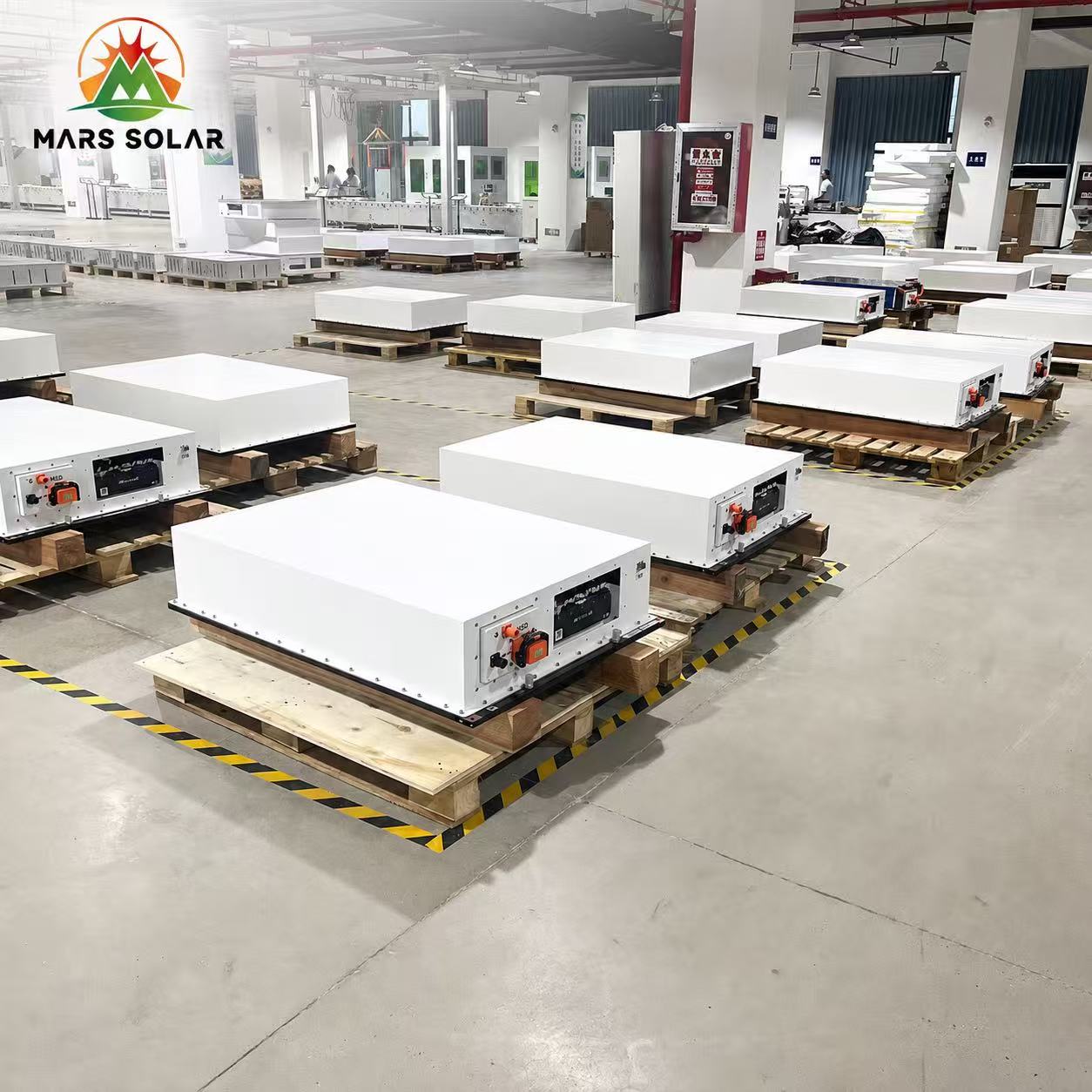
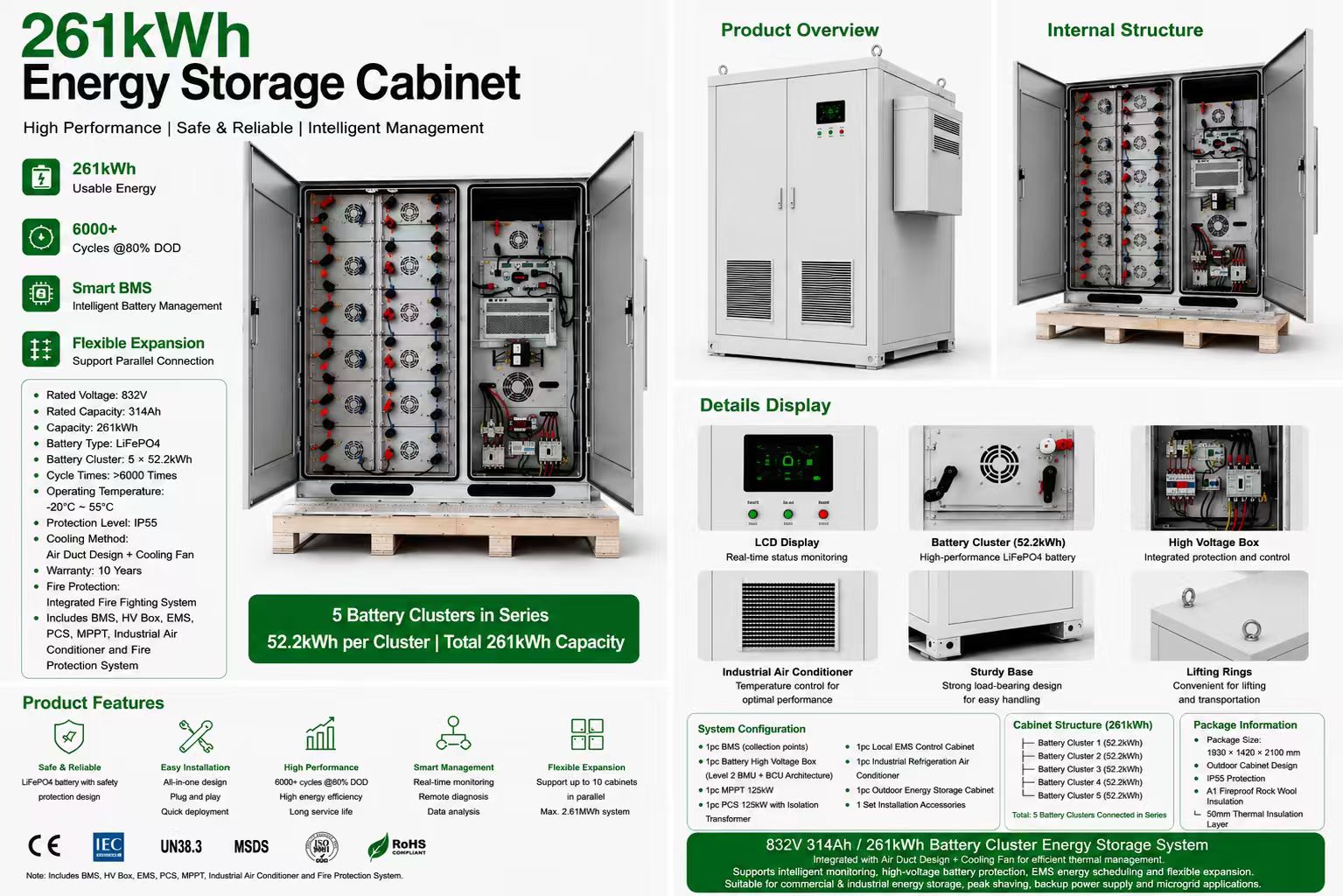
Below is the full system architecture deployed at the Nigeria site. Every component was specified, factory-tested, and shipped as an integrated package. The full Sun Energy Factory BESS product range from 50kWh to 6MWh per cabinet was used as the design baseline.
| Komponente | Spezifikation | Menge |
|---|---|---|
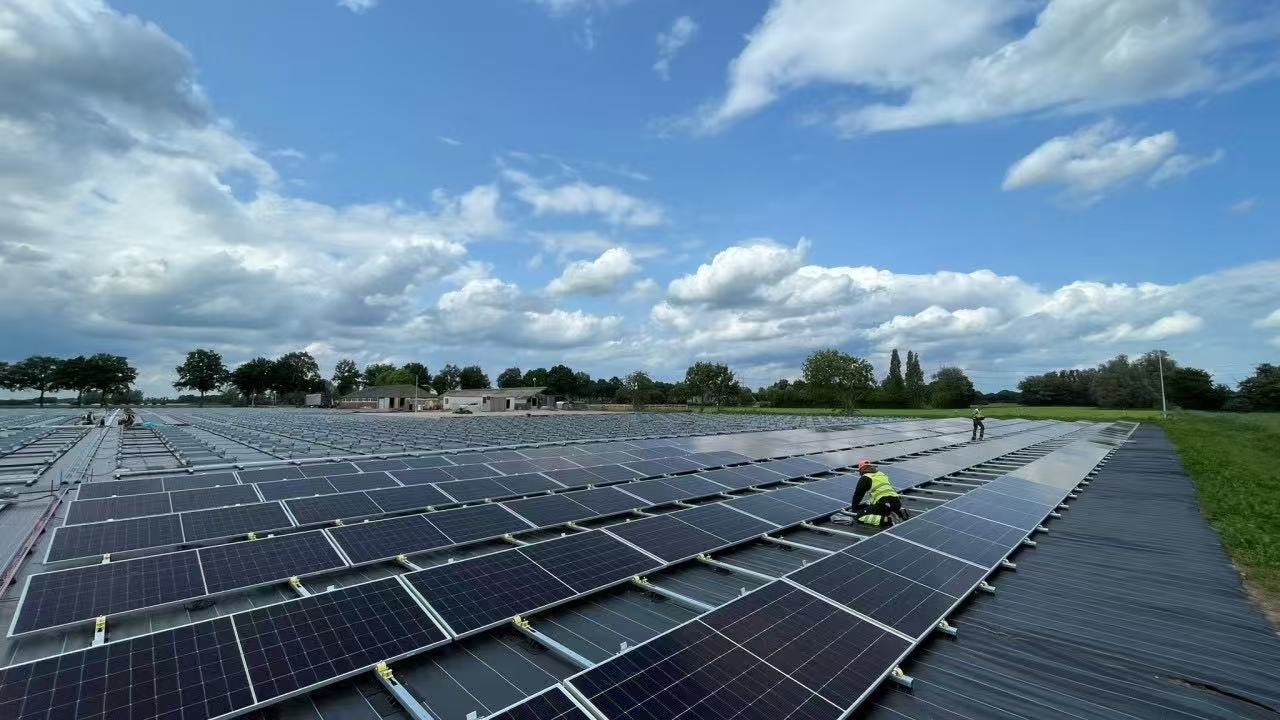
| Solar PV modules | 650Wp monocrystalline bifacial, Tier-1 cells, 25-year linear warranty | ~9,500 panels (6.2 MWp DC) |
| String inverters | 100kW three-phase, grid-tie, IP66 outdoor-rated | 60 units (6.0 MW AC) |
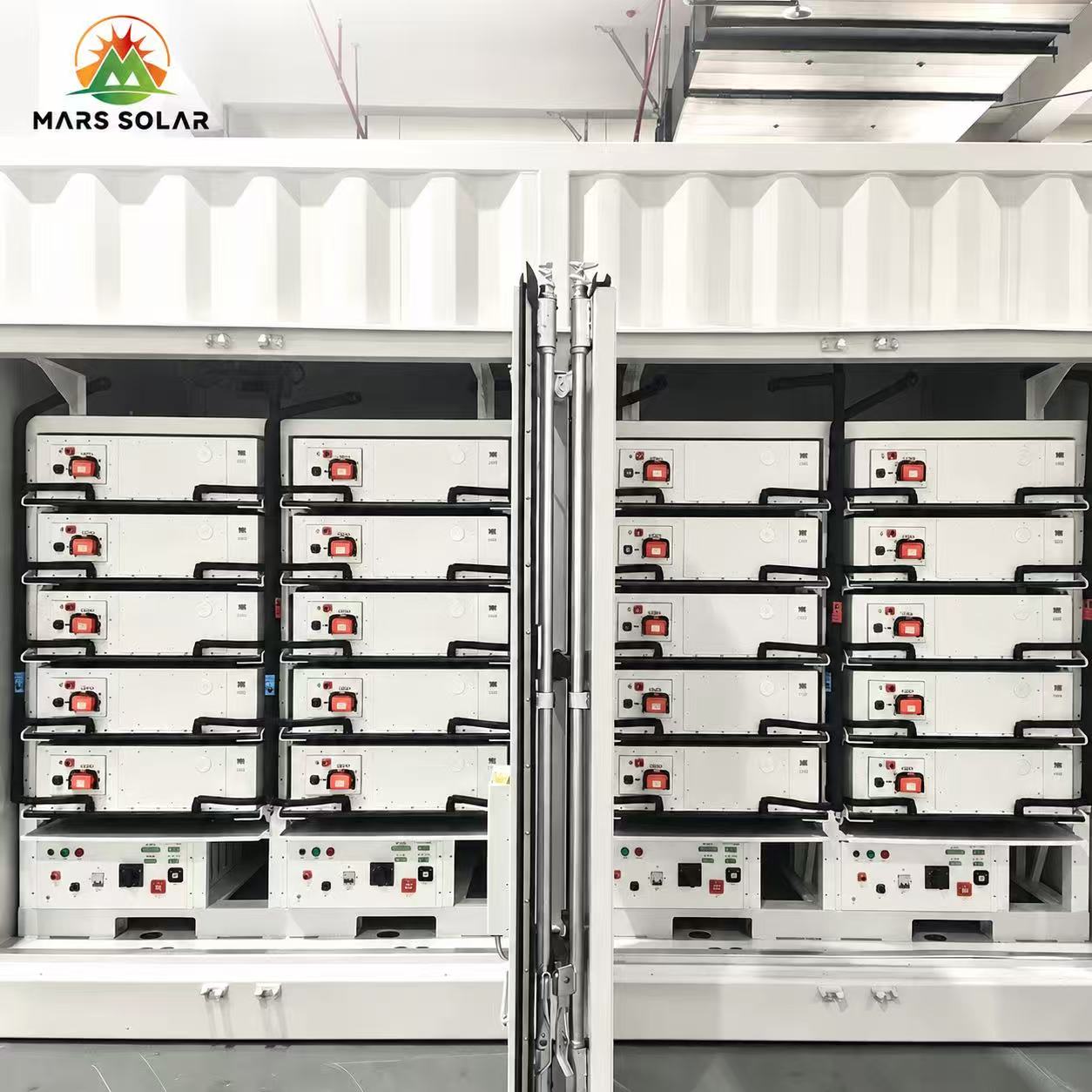
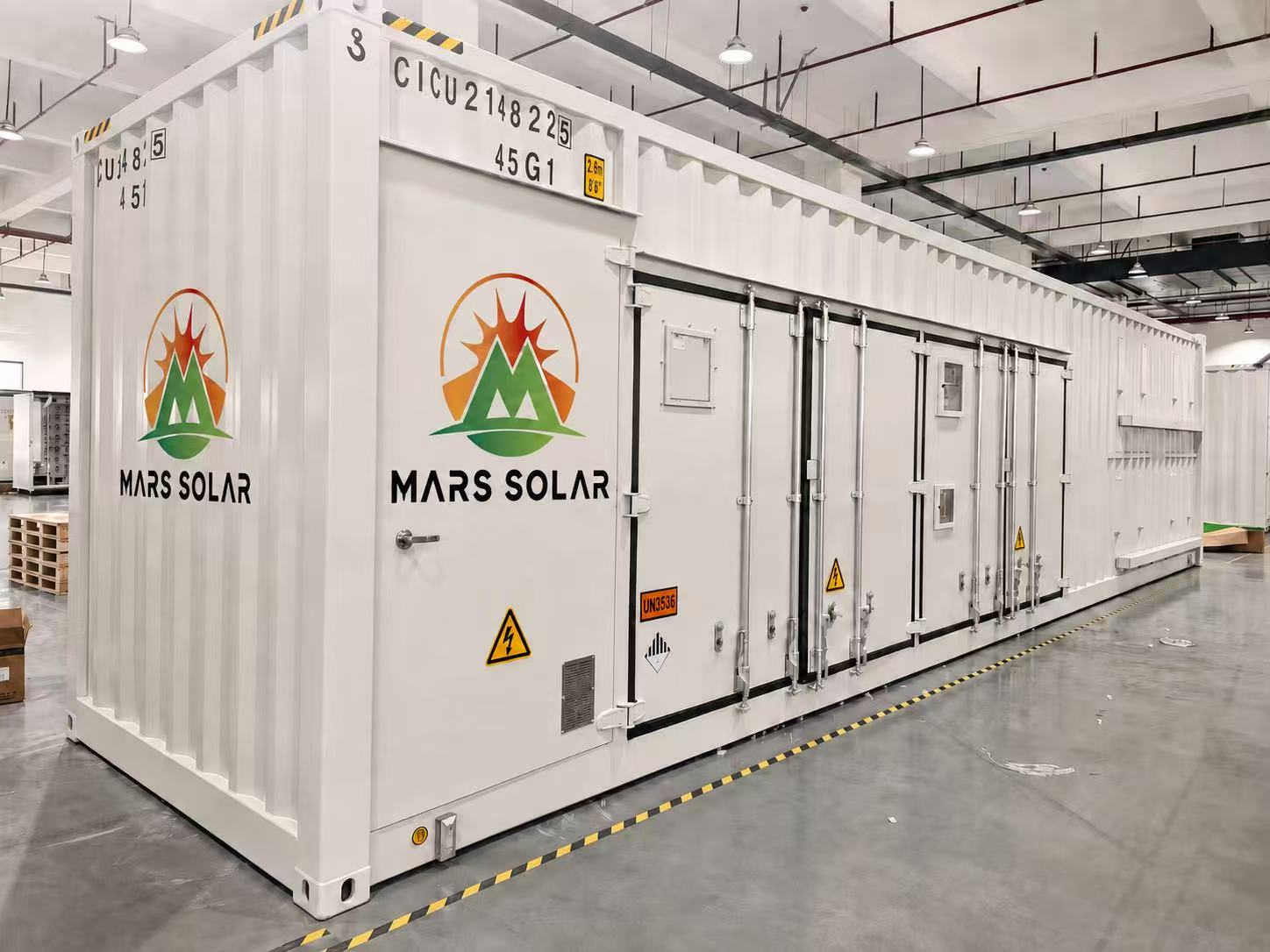
| Battery storage cabinets | 2.5MWh LFP per 40ft container, liquid cooling, integrated BMS, IP54 outdoor | 8 containers (20 MWh total) |
| Hybrid PCS | 1,500kW bidirectional, grid-forming, 4-quadrant operation | 4 units (6.0 MW total) |
| MV transformer & switchgear | 11kV / 0.8kV step-up, vacuum circuit breaker, grid interconnection | 1 Satz |
| Energy Management System | 3-zone load priority controller, solar forecasting, tariff-aware dispatch, remote monitoring | 1 system (cloud + on-premise) |
| Mounting structure | Ground-mount, hot-dip galvanized steel, 25-year design life, wind-rated 60 m/s | ~6 hectares |
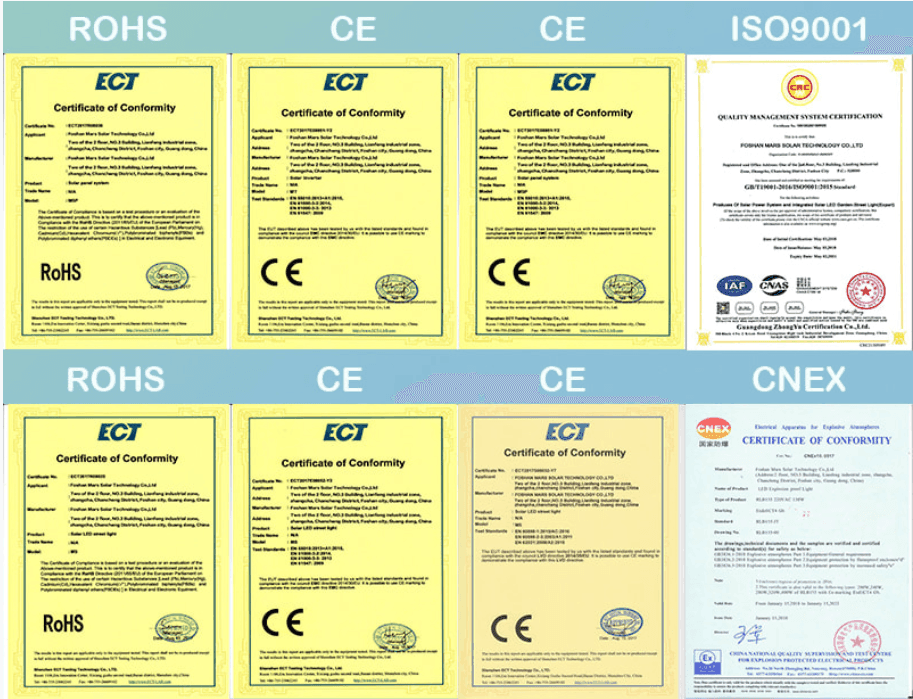
All LFP cells sourced from Tier-1 manufacturers (CATL/BYD-grade). Battery modules are 6,000-cycle rated at 80% depth of discharge. 10-year warranty on BESS, 25-year linear power warranty on solar panels. See the full certification dossier
Marketing claims about solar savings in Nigeria often hide behind vague numbers. This project’s economics are calculated from actual operating data over the first 12 months of operation. Here is the full picture, line by line.
| Metrisch | Before (Diesel + Grid) | After (6MW 20MWh Solar Storage) |
|---|---|---|
| Monthly electricity cost | $130,000 (diesel + grid charges) | $20,000 (residual grid + maintenance reserve) |
| Monthly saving | — | $108,000+ per month |
| Annual saving | — | $1,296,000+ per year |
| System investment | — | a factory-direct, turnkey capital outlay |
| Simple payback period | Never — ongoing cost forever | approximately 24 months |
| 25-year net benefit | — | $32M+ cumulative savings |
| CO2 offset per year | 0 tonnes | ~7,500 tonnes (vs. diesel baseline) |
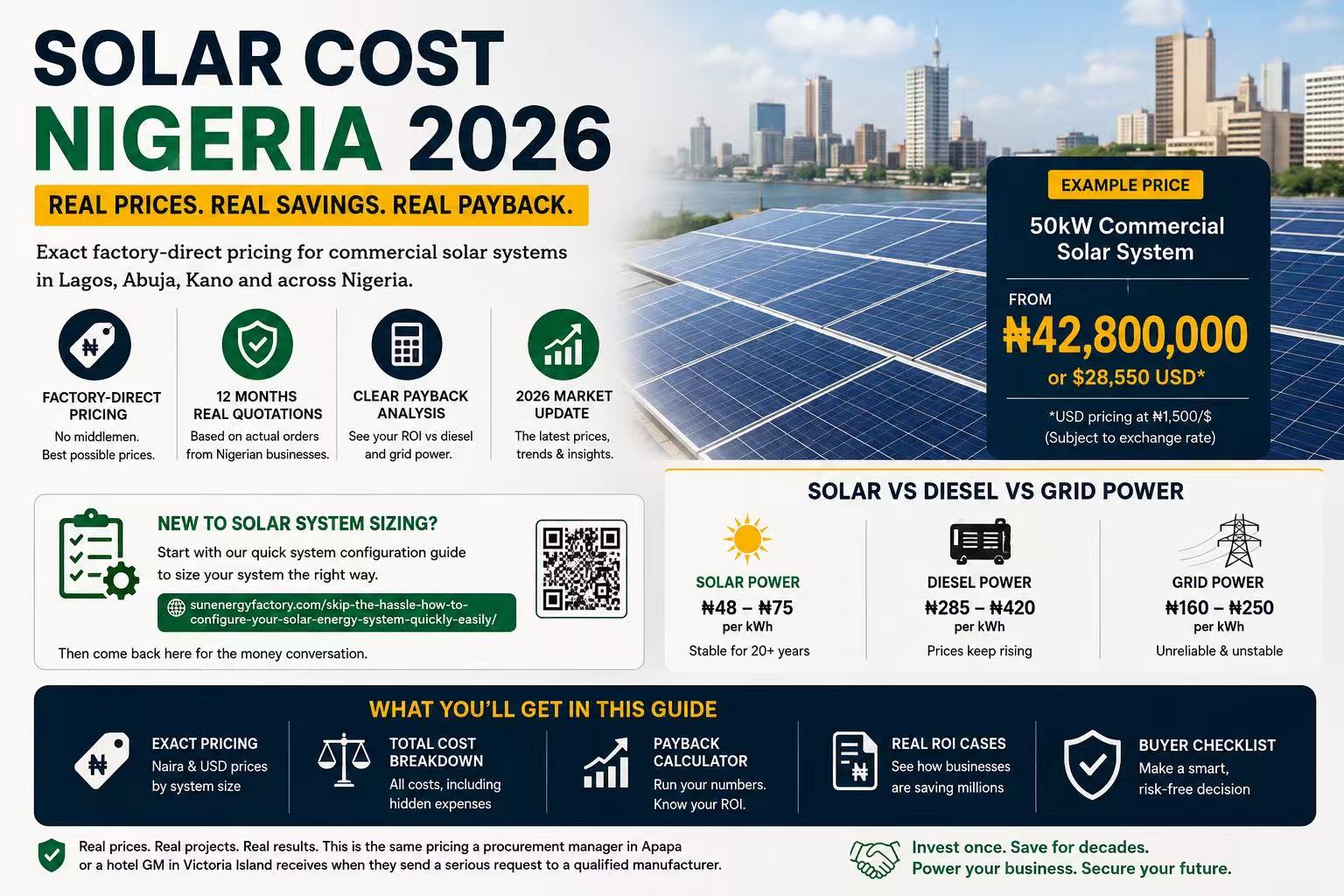
The $0.30 per kWh figure is conservative. Nigeria’s commercial tariffs have continued to climb in 2025–2026, and the BESS arbitrage between Band A and Band B windows alone delivers an additional $15,000 per month at current rates. The full 2026 cost benchmark is in our Solar Cost in Nigeria 2026 guide. The architecture comparison is in our Off-Grid vs Hybrid vs On-Grid Solar in Nigeria guide.
BESS sizing is not guesswork. It is load arithmetic. Here is how the 6MW solar array and 20MWh battery capacity were derived from the actual operating requirements of an integrated factory + farm + residential site in Nigeria.
Solar array: 6 MWp covers the daytime load envelope
Aggregate daytime load across the three zones peaks at approximately 5.5–6.0 MW (factory at full production, farm irrigation running, residential mid-day base load). With 5.0–5.5 peak sun hours per day in this part of Nigeria, a 6 MWp array generates roughly 30,000–33,000 kWh per day — enough to cover all three zones during daylight and charge the BESS for evening and overnight use. A smaller array (3–4 MW) would force a partial reliance on grid or diesel during peak solar hours — a false economy.
Battery storage: 20 MWh covers the evening + overnight envelope
Evening and overnight load drops to 2.5–3.0 MW (factory cold storage, residential AC, water pumps, security systems). A 20 MWh BESS with 80% usable depth of discharge (16 MWh effective) carries this load for approximately 6–8 hours — the full overnight window from sunset to the next morning’s solar ramp. Smaller storage (5–10 MWh) would force diesel backup to engage every night. Larger storage (40+ MWh) would be wasted: the additional capacity never gets cycled and adds capex without return.
System headroom: 30% reserve for grid outages and Harmattan
A 6MW / 20MWh system has roughly 30% reserve above the steady-state load envelope. That reserve is what carries the system through grid outages, peak demand spikes, and the Harmattan season’s reduced solar yield. A system sized exactly to load — with no headroom — is a system that fails when conditions change. The 100kW hotel field case study applies the same headroom principle at smaller scale.
This project is not an isolated case. It is one of the first factory-scale, multi-zone solar storage deployments in Nigeria, and it sits at the intersection of three converging forces: grid instability, diesel economics, and falling BESS hardware costs.
1. Nigeria’s grid collapsed 12 times in 2024
The Transmission Company of Nigeria confirmed 12 full or partial grid collapses in 2024 alone. 2025 has not been kinder. For any operator whose production line, cold store, or residential area cannot tolerate multi-hour outages, the question is no longer if to install backup power, but how much. A 6MW / 20MWh solar storage system answers that question at industrial scale.
2. Diesel economics have broken
Diesel at N1,400–N1,800 per litre, gensets running 16–20 hours per day, generation cost at N350–450 per kWh. The math that justified genset operation 10 years ago no longer holds. At current fuel prices, the operator of this 6MW / 20MWh site would have spent over over $1.5M per year on diesel — more than the entire system’s amortized cost.
3. LFP BESS pricing has fallen 50% in three years
Factory-direct LFP battery storage now lands at a low triple-digit per-kWh CIF Lagos at 100kWh scale, and even lower at MWh scale. Three years ago, the same hardware cost 2–3x more. The price curve is the single biggest reason 6MW / 20MWh solar storage projects in Nigeria have moved from theoretical to commercially deployable. For a complete cost breakdown, see our Solar Cost in Nigeria 2026 guide.
A 6MW solar PV system and 20MWh battery cabinet are dumb iron without an intelligent control layer. The Energy Management System (EMS) is what makes the three-zone architecture work. It is also the engineering asset that competitors cannot easily replicate.
Zone priority and load shedding
The EMS assigns load priorities by zone: Zone 1 (factory) has the highest priority for continuous operation, Zone 2 (farm) has the next, and Zone 3 (residential) is non-critical. During low-battery states (e.g., extended cloudy weather or grid outage + low solar), the EMS can shed non-critical loads in Zone 3 first, then Zone 2, while keeping Zone 1 fully powered. The operator configures these priorities through a web dashboard.
Solar forecasting and predictive dispatch
The EMS integrates a 24-hour solar irradiance forecast. On a forecast sunny day, the system pre-charges the BESS to 100% by 11:00 AM. On a forecast cloudy day, it holds the BESS at 60–70% to preserve evening capacity. This predictive dispatch — not reactive control — is what avoids the brownout events that plague simpler systems.
Tariff-aware charge/discharge cycles
Where grid power is available at off-peak rates, the EMS charges the BESS from the grid at the cheapest tariff window. At peak rate windows (typically 6–10 PM in Nigeria), the EMS discharges the BESS to displace the most expensive grid kWh. This is peak shaving in its most profitable form, and it is one of the under-appreciated advantages of a 6MW 20MWh solar storage system in Nigeria — it pays back from grid arbitrage alone, even before counting diesel displacement.
For a comparison of EMS architectures in single-zone deployments, see the 100kW Nigerian hotel case study and the Abuja rice mill project.
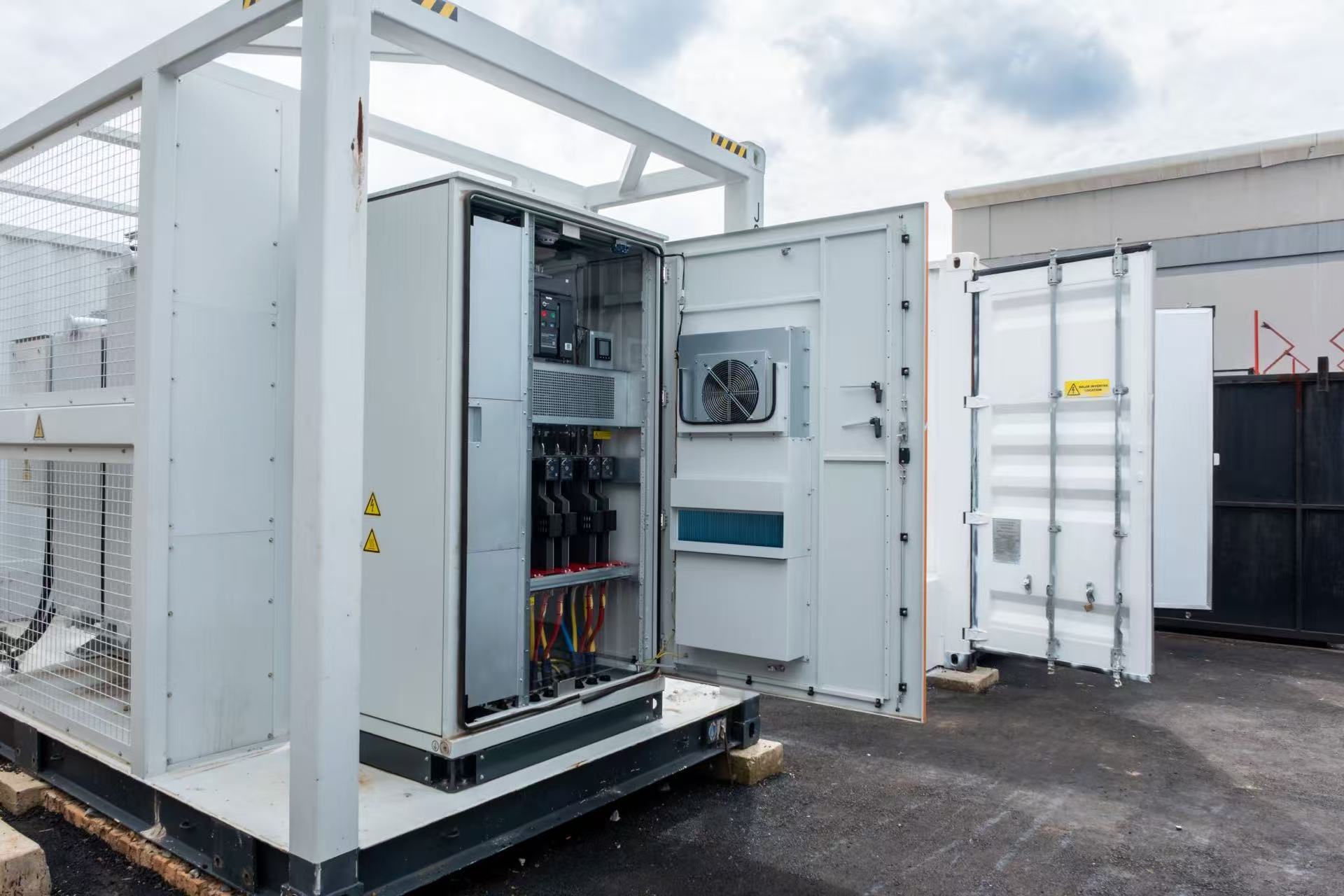
A 6MW 20MWh solar storage system in Nigeria is not a plug-and-play product. It is an infrastructure project. The installation and commissioning sequence takes 10–14 weeks from equipment arrival on site to full grid-synchronized operation. Here is how this project’s deployment unfolded.
Phase 1: Site preparation and civil works (3 weeks)
Concrete pad pouring for the 8 BESS containers, ground-mount foundation for the solar array, trenching for AC/DC cabling, and MV transformer plinth. The site team worked with local civil contractors to deliver the civil scope in parallel with equipment shipping.
Phase 2: Equipment arrival and BESS placement (1 week)
Each 40ft BESS container is shipped pre-assembled from China, with LFP modules, liquid cooling, BMS, and PCS pre-integrated. Crane lift places each container on the pad; final positioning, AC cable termination, and grounding complete the placement. Total time on site: 5–7 days for 8 containers.
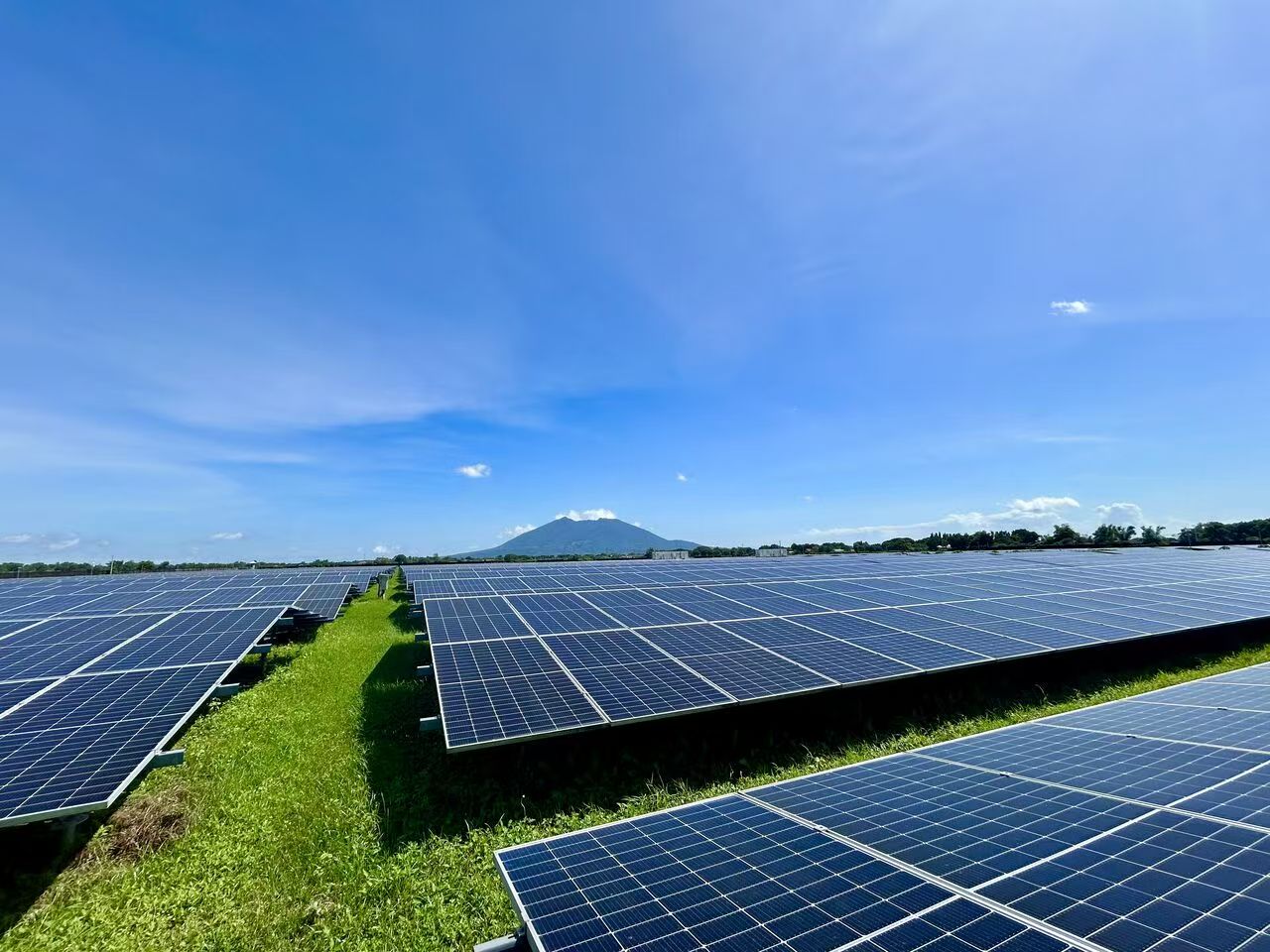
Phase 3: Solar array installation and DC stringing (4 weeks)
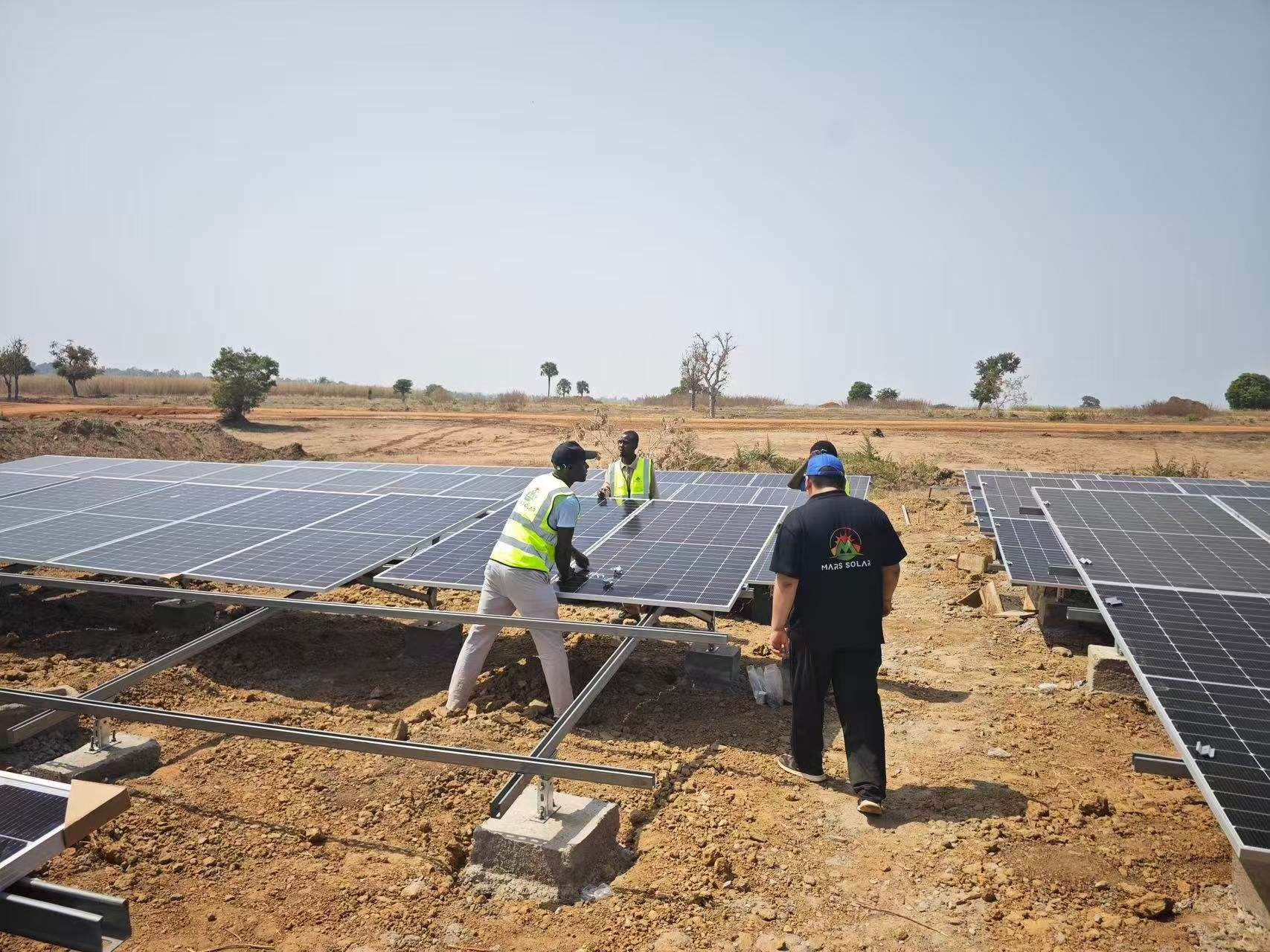
Mounting structure erection, panel installation (~9,500 panels), DC string cabling, and inverter placement. Local Nigerian installation teams performed the mechanical work; our engineering team supervised stringing, terminations, and commissioning. We compare the same phased approach at smaller scale in our Sudan 100kW + 215kWh microgrid commissioning story.
Phase 4: Commissioning, grid synchronization, and handover (1–2 weeks)
Final BMS calibration, inverter synchronization, EMS configuration, and a 72-hour continuous stability test (charge-discharge cycling, thermal performance, grid simulation). Local Nigerian engineers were trained during this phase for ongoing O&M — a deliberate decision to build in-country technical capacity, not dependency.
One case study is an anecdote. Several case studies are evidence. Here is how this Nigeria 6MW 20MWh project compares to other BESS deployments we have commissioned across West Africa, with field data rather than projections.
| Projekt | Standort | Size | Anwendung | Ergebnis |
|---|---|---|---|---|
| 6MW + 20MWh (this project) | Nigeria | 6 MW / 20 MWh | Factory + farm + residential | a six-figure monthly saving saved |
| 1MW + 2MWh fruit factory | Südafrika | 1 MW / 2 MWh | Fruit processing factory | Five-figure monthly saving, ~3-year payback |
| 100kW + 215kWh microgrid | Sudan | 100 kW / 215 kWh | Wastewater treatment plant | 70% diesel reduction, 7-day commissioning |
| 200kW + BESS rice mill | Nigeria (Abuja) | 200 kW / BESS | Rice mill, 20-hour operation | Continuous operation through grid outages |
| 50kW + 150kWh bank | Liberia | 50 kW / 150 kWh | Bank branch network | 24/7 uptime for data centers and ATMs |
| 250kW hotel | Ghana | 250 kW / hybrid | Hotel (50+ rooms) | 60% electricity cost reduction |
The pattern across all six deployments: BESS + solar delivers 60–80% reduction in diesel dependence, 6–24 month payback depending on local fuel cost, and 24/7 uptime for the load type served. The Nigeria 6MW 20MWh project sits at the top of this range in every dimension — scale, savings, and operational complexity. See the Liberian bank case study for a smaller-scale comparison.
The 6MW 20MWh solar storage system in Nigeria uses LFP (lithium iron phosphate) battery cells — the same chemistry now standard in grid-scale storage globally. The reason is not marketing. It is engineering.
LFP vs NMC vs LTO — the practical differences
LFP delivers 6,000+ cycles at 80% depth of discharge, thermal stability up to 270°C, no thermal runaway risk, no cobalt, and 16+ years of useful life at one cycle per day. NMC offers higher energy density but 3,000–4,000 cycles, higher thermal risk, and faster degradation in high-ambient conditions. LTO is excellent (15,000+ cycles) but at 2–3x the cost. For a 6MW 20MWh solar storage system in Nigeria — where ambient temperatures reach 40°C+ and the system cycles daily for 25 years — LFP is the only correct choice.
Cell brand matters more than cabinet brand
A 20MWh BESS is a stack of ~240,000 individual LFP cells (assuming 280Ah prismatic cells in 1P16S module configuration). The cabinet, the BMS, the thermal management — these are well-understood engineering. The cell is the irreplaceable component. Verify that the cells inside any BESS quote come from a Tier-1 manufacturer: CATL, BYD, REPT, EVE, or Gotion. If the supplier will not disclose the cell brand, walk away. For a full BESS manufacturer verification checklist, see our 7-step factory audit guide and the certification guide.
Liquid cooling is non-negotiable at MWh scale
Air-cooled BESS cabinets are cheaper upfront, but in a Nigerian climate (ambient 35–42°C during dry season) they cannot maintain uniform cell temperature across the battery cluster. Uneven temperature = uneven aging = premature capacity loss. The 8 BESS containers in this Nigeria project use liquid cooling as standard, holding cell-to-cell temperature delta within 2°C across the full 20MWh cluster. The 25-year performance guarantee depends on it.
Most solar storage ROI calculations stop at the payback period. That misses the real story. A 6MW 20MWh solar storage system in Nigeria is not a 2-year investment. It is a 25-year asset. Here is what the lifetime economics actually look like.
Years 1–2: payback window
At $108,000+ per month saved, the system recovers its full capex in approximately 24 months. This includes factory-direct equipment cost, shipping (CIF Lagos), Nigerian import duty, installation, commissioning, and grid synchronization. By the end of year 2, the asset is owned outright by the operator and every kWh it produces is pure margin.
Years 3–10: pure savings + battery performance guarantee
BESS warranty covers 10 years or 6,000 cycles, with 60–70% capacity guaranteed at year 10. During this window, the system continues to deliver a six-figure monthly saving in monthly savings. Cumulative savings by year 10 reach the high eight figures. Solar panels under 25-year linear power warranty lose ~0.55% output per year — by year 10, the array still produces ~95% of nameplate capacity. No major component replacement expected.
Years 11–20: BESS augmentation, continued savings
Most LFP BESS installations expect a battery augmentation (typically 20–30% capacity addition) at year 10–12 to maintain original nameplate capacity. Augmentation cost is roughly 20–25% of original BESS capex. Net of augmentation, the system continues to deliver $90,000–$108,000 per month for the next 10 years.
Years 21–25: free power, minimal operating cost
By year 20, the system has paid back the entire original investment many times over. The remaining 5 years are pure margin. The solar array still produces 87–88% of nameplate capacity. The BESS, after two augmentations, still delivers 80%+ of original nameplate. Cumulative 25-year net savings: $32M+ cumulative savings.
For a deeper dive into how BESS integrates with a complete solar PV system, see our system configuration guide.
What is the cost of a 6MW 20MWh solar storage system in Nigeria?
Factory-direct turnkey cost varies with cell brand (CATL vs BYD vs REPT), inverter specification, and site-specific civil works. Nigerian import duty and VAT apply at standard rates. The exact figure varies with cell brand (CATL vs BYD vs REPT), inverter specification, and site-specific civil works. Nigerian import duty and VAT apply at standard rates. See the full Nigeria 2026 pricing guide.
How much electricity bill can a 6MW 20MWh system save per month?
In this project: $108,000+ per month, calculated from the first 12 months of operating data. The savings come from displacing diesel genset operation, peak-shaving against Band A commercial tariffs (N206–209/kWh in 2024–2026), and load-shifting solar generation to evening hours.
What is the payback period for a 6MW 20MWh solar storage system in Nigeria?
At the current $0.30/kWh commercial tariff and the project’s 24/7 operation profile across factory, farm, and residential zones: approximately 24 months. Faster payback is achievable with higher diesel displacement or higher future tariff increases. Compare architectures here.
Can a 6MW 20MWh solar storage system run a factory, farm, and residential complex simultaneously?
Yes — this is the defining feature of a multi-zone solar storage deployment. The Energy Management System assigns load priorities, forecasts solar generation, and dispatches the BESS to cover all three zones without interruption. Aggregate peak load in this project reaches 6.0 MW; aggregate overnight load is 2.5–3.0 MW. A 6MW solar + 20MWh BESS covers both with headroom.
Is a 6MW 20MWh system suitable for Nigeria’s climate?
Yes. LFP batteries are rated for operation up to 55°C ambient. The liquid cooling system in each BESS container maintains cell-to-cell temperature delta within 2°C. Solar panels use PID-resistant cell technology and IP68 junction boxes, suitable for the high UV and humidity of West Africa. Container BESS enclosures are IP54-rated and corrosion-resistant.
What certifications are required for a 6MW 20MWh BESS deployment in Nigeria?
UN38.3 (lithium battery transport safety, mandatory for international shipment), IEC 62619 (industrial BESS safety), CE marking (accepted by most Nigerian insurers and Disco engineers), SONCAP (required for customs clearance at Nigerian ports), and NERC registration (for grid-connected installations above 100kW). See the full certification list.
How long does a 6MW 20MWh solar storage system take to deploy in Nigeria?
From signed contract to operational system: 14–20 weeks. Breakdown: 6–8 weeks manufacturing and factory testing in China, 4–6 weeks sea freight (CIF Lagos or Onne Port), 1–2 weeks Nigerian port clearing and last-mile delivery, 3–4 weeks site installation, 1–2 weeks commissioning and grid synchronization. See the container loading and shipping guide.
Does a 6MW 20MWh system come with a warranty?
Yes. Solar panels: 25-year linear power output warranty. LFP battery modules: 10-year warranty or 6,000 cycles, whichever comes first, with 60–70% capacity guaranteed at year 10. Hybrid inverters: 5–10 year warranty. EMS and remote monitoring: lifetime access. Request the full warranty terms before placing an order.
Send us your load profile — zone-by-zone breakdown of appliances, run-hours per day, and current electricity cost. Our engineering team will design a 6MW 20MWh (or right-sized) solar storage system, provide a factory-direct CIF Lagos quotation, and confirm delivery timeline. Response time: 24 hours. Request your free system design and quote.
If you are a Nigerian EPC contractor, distributor, or project developer looking to deploy factory-direct 6MW 20MWh solar storage systems for your clients, we support OEM/ODM arrangements, provide marketing materials, technical data sheets, and connect you with our certified installation partners. Start a distributor conversation.
Before you commit, read the related articles below. They cover the 2026 cost benchmark for solar in Nigeria, the architecture decision (off-grid vs hybrid vs on-grid), the certification checklist, and the factory audit process for verifying a BESS manufacturer.
Continue your research on 6MW 20MWh solar storage in Nigeria and the broader West Africa BESS market:

 English English
 Chinese
 Cebuano
 Arabic
 Czech
Czech Danish
 German
 Greek
Greek Spanish (Spain)
 Spanish (Mexico)
 Persian
 French
 Indonesian
 Italian
 Japanese
 Korean
 Dutch
Dutch Portuguese
 Russian
 Tagalog
 Turkish
 Vietnamese